Why the Red Tempered Glass Dome Is a Critical Component in Airport Runway Signal Lighting
Airport runway signal lights are safety-critical luminaires. They operate in rain, dust, jet-blast, de-icing fluid, UV exposure, salt spray and rapid temperature cycling. The red tempered glass dome is more than a colored cover. It is the optical interface between the LED or lamp source and the pilot, and it is also the mechanical barrier that protects the internal electronics from water, dust and impact. A dome that varies in wall thickness, red color, surface geometry or edge finish can change beam cut-off, reduce light output, create sealing stress or fail during thermal shock.
For procurement teams, the challenge is not finding a supplier who can press a red glass dome. The challenge is finding a supplier who can reproduce the approved sample consistently, document the material and dimensional requirements, and support the fixture manufacturer through photometric validation. Buyers increasingly ask for drawing-based production, material reports, dimensional inspection, color control against a retained sample and packaging that survives international freight.
Shanghai Tambi Glass Industrial Co., Ltd. manufactures custom red tempered glass domes for airport runway edge lights, taxiway lights, obstruction lights, helipad lights and marine signal lights. The company works from 2D or 3D drawings and physical samples. Its engineering team reviews wall thickness, draft angle, sealing face, gasket interface, glass color, tempering route and packing method before tooling starts. This review helps prevent the common mismatches that appear after a glass dome reaches the fixture assembly line.
Because the finished luminaire is certified by the fixture manufacturer, the glass component must be treated as part of a validated system. Shanghai Tambi Glass Industrial Co., Ltd. supports that process by providing samples and inspection information, while the buyer remains responsible for final photometric testing, environmental testing and certification of the complete light. This division of responsibility is essential for airport, helipad and obstruction lighting projects where reliability and traceability matter.
Custom Red Tempered Glass Dome for Airport Runway Signal Lights
Recommended for runway edge lights, taxiway lights, obstruction beacons, helipad perimeter lights and marine signal fixtures that require a durable red glass optical cover.
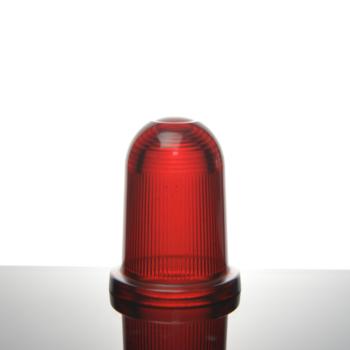
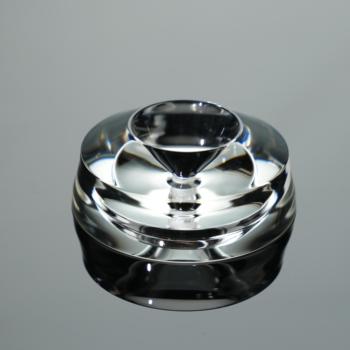
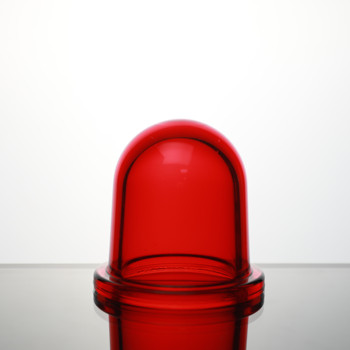
Built to Your Drawing, Not to a Generic Catalog
The recommended red tempered glass dome is produced in tempered soda-lime glass as a cost-effective solution for many runway signal applications, with borosilicate glass available when higher thermal-shock resistance is required. The dome can be pressed or handblown depending on diameter, height, wall thickness and annual volume.
Buyers should provide the fixture opening, gasket or seal design, target red color, light transmission expectation, lamp surface temperature, cleaning chemicals, impact requirement and packing method. Shanghai Tambi Glass Industrial Co., Ltd. can then recommend the glass material, wall thickness, tempering process, edge finish and sample plan.
- Drawing-based OEM production
- Red color matched to sample
- Tempered and annealed options
- Export packing for fragile glass
- Material
- Tempered glass
- Application
- Runway signal
- Forming
- Pressed / blown
| Parameter | Typical OEM options | Buyer note |
|---|---|---|
| Material | Tempered soda-lime glass; borosilicate glass on request | Tempered soda-lime is common for red signal domes; borosilicate may be preferred for higher thermal shock. |
| Color | Aviation red, deep red, custom target | Color is matched to an approved sample or optical target; final photometry is validated by the fixture maker. |
| Forming | Pressed or handblown | Pressed production offers repeatability; handblown shapes suit larger or special profiles. |
| Dimensions | Custom diameter, height and wall thickness | Provide 2D or 3D drawing plus gasket and sealing-face details. |
| Surface | Clear, frosted, prismatic, anti-reflective or anti-soiling coating on request | Coating must be compatible with the fixture cleaning method and environmental exposure. |
| Tempering | Controlled tempering and annealing | Wall thickness, edge quality and thermal history should be reviewed together. |
| Operating conditions | UV, rain, salt spray, dust and temperature cycling | State ambient temperature and lamp surface temperature so the correct glass is selected. |
| Documentation | Material report, dimensional report and visual inspection | The luminaire manufacturer remains responsible for final product certification. |
Specifications are confirmed project by project. Send your drawing and application details to info@tambiglass.com for an engineering review and quotation path.
Future Procurement Trends for Red Tempered Glass Domes in Airport Signal Lighting
Procurement behavior in airport lighting is changing. Buyers are no longer comparing only the piece price of a red glass dome. They are evaluating total cost of ownership, supply risk, documentation quality and the supplier's ability to support a fixture from prototype through serial production. Airport expansion projects, LED retrofits, safety upgrades and aging infrastructure replacement all place pressure on procurement teams to qualify glass components that perform predictably over long service life.
1. From lowest piece price to life-cycle value
Red signal domes are exposed to weather, thermal cycling and cleaning. A low-cost dome that chips at the edge, drifts in color or creates sealing problems can generate far higher cost than the initial savings. Procurement teams are therefore asking for evidence of material consistency, dimensional control and packaging reliability. They want fewer field returns, fewer line stoppages and a supplier who can repeat the approved sample in future production runs.
2. Stronger documentation and traceability
Airport lighting projects often require material records, inspection reports, sample retention and clear revision control. Buyers increasingly request a drawing-based quotation, approved-sample sign-off, dimensional report and packing specification. Shanghai Tambi Glass Industrial Co., Ltd. supports this trend by working from drawings and samples, reviewing manufacturing feasibility and keeping the approved specification aligned with the buyer's fixture design. The finished luminaire certification remains with the fixture manufacturer, but the glass component can be documented to support that process.
3. Supply chain resilience and dual sourcing
After years of freight disruption and long lead-time volatility, many buyers now qualify more than one source for critical glass components. They also want forecast visibility, clear MOQs and a realistic sample schedule. A supplier who can provide engineering feedback early, confirm tooling requirements and communicate production milestones reduces procurement risk. For custom red tempered glass domes, early drawing review is especially important because mold design and sample approval often determine the whole project timeline.
4. Digital qualification and faster technical response
International buyers increasingly expect remote supplier qualification. Video audits, high-resolution product photos, online drawings and fast technical responses are now part of procurement due diligence. Shanghai Tambi Glass Industrial Co., Ltd. works with an average response time of within 6 hours and a recorded response rate of 83.33%. For a buyer comparing glass suppliers, the speed of technical clarification can be as important as the quotation itself, especially when a runway or obstruction light project is moving through a tight validation schedule.
5. Sustainability and packaging efficiency
Durable glass components support longer fixture service life, which is a practical sustainability advantage. Procurement departments are also reviewing packaging waste and transport efficiency. Red glass domes must be protected from impact and edge damage, but the packing method can still be optimized. Heavy reinforced cartons, foam or pulp dividers and palletization are common. Custom labeling and distributor-ready packaging can help reduce handling downstream.
Product Development Trends: Where Red Tempered Glass Domes Are Heading
The next generation of airport runway signal glass is being shaped by LED efficiency, optical precision, environmental durability and tighter fixture integration. A red tempered glass dome that was acceptable ten years ago may not meet the optical and documentation expectations of a modern airport lighting project. The most important development trends are practical rather than decorative.
1. Higher optical efficiency and tighter color control
As LED runway lighting becomes more efficient, every optical loss matters. Glass transmittance, red chromaticity and surface clarity influence the fixture's output. The trend is toward tighter color matching, cleaner glass and better control of wall thickness so the light distribution remains consistent from one production lot to the next. The glass supplier and fixture manufacturer must work together because the final photometric result depends on the lamp, reflector, lens and glass dome together.
2. Thinner walls with maintained strength
Weight, material usage and light transmission all favor well-designed wall sections. The challenge is not simply making the glass thinner. It is maintaining impact strength, tempering quality and stable sealing faces. Finite element review and careful mold design help engineers evaluate where material is needed and where it is not. For each project, Shanghai Tambi Glass Industrial Co., Ltd. reviews the trade-off between wall thickness, thermal shock, mechanical impact and manufacturing repeatability.
3. Coatings for easier maintenance
Anti-soiling and hydrophobic coatings are receiving more attention in outdoor and coastal environments. These coatings can help reduce dust, salt and water spotting, but they must be compatible with the fixture's cleaning schedule and environmental exposure. Anti-reflective coatings may also be considered where light transmission is critical. Every coating should be validated with the fixture design, not selected as a generic add-on.
4. Better integration with sealing systems
Modern red glass domes are increasingly designed around the gasket or sealing interface. Chamfered edges, controlled flatness and defined sealing surfaces can help prevent stress concentration and water ingress. The glass is no longer treated as a separate catalog item; it is designed as part of the optical and mechanical assembly. This trend favors suppliers who can review 2D and 3D drawings and discuss manufacturability before the mold is cut.
5. More custom profiles for obstruction, helipad and marine lighting
Airport projects require different dome profiles for runway edge lights, threshold lights, taxiway lights and obstruction beacons. Helipad and marine signal lights add further requirements. Custom pressed and handblown profiles allow fixture makers to meet these application-specific needs. At the same time, buyers want repeatable production, stable samples and export packing that protects the finished glass geometry.
6. Documentation as a product feature
The glass itself cannot hold a fixture certification, but it can be supplied with material information, dimensional data and inspection records. Procurement teams increasingly view documentation as part of the product. A supplier that can discuss tolerances, sample retention and change control is easier to qualify than one that offers only a price per piece. This is especially relevant for buyers working with FAA, ICAO or EN-related fixture designs where the entire luminaire must be validated.
Why Procurement Teams Work With Shanghai Tambi Glass Industrial Co., Ltd.
A Shanghai-based manufacturer and trading company focused on custom lighting glass, signal light domes and optical glass components for global OEM buyers.



Engineering Experience in Lighting and Optical Glass
Shanghai Tambi Glass Industrial Co., Ltd. is a manufacturer and trading company based in Shanghai, China, with more than 10 years of experience in the lighting glass field. The company combines lighting glass, glassware and optical glass ranges flexibly, which is valuable when a single fixture requires glass covers, lenses and optical components from one supply chain.
The company has a design and development team consisting of senior lighting and molding engineers with design, development and optical path alignment capabilities. This team reviews drawings for wall thickness, draft, sealing surfaces, optical alignment and manufacturing feasibility before tooling. In the past decade, the company has established cooperation with factories in Europe, America and Japan and places strong emphasis on product quality and customer service.
The business mission is centered on quality and customer support. The company's profile records a response rate of 83.33% and a response time of within 6 hours, which helps international buyers move from initial drawing review to sample approval without unnecessary delay. With 11–50 employees, annual revenue in the US$2.5 million–US$5 million range and long-standing export experience, Shanghai Tambi Glass Industrial Co., Ltd. serves lighting and optical OEM buyers who need a practical, drawing-based partner.
- Drawing-based OEM / ODM
- Lighting and optical glass capability
- Optical path and molding review
- Export packaging and inspection
- Location
- Shanghai, China
- Business type
- Manufacturer
- Response time
- Within 6h
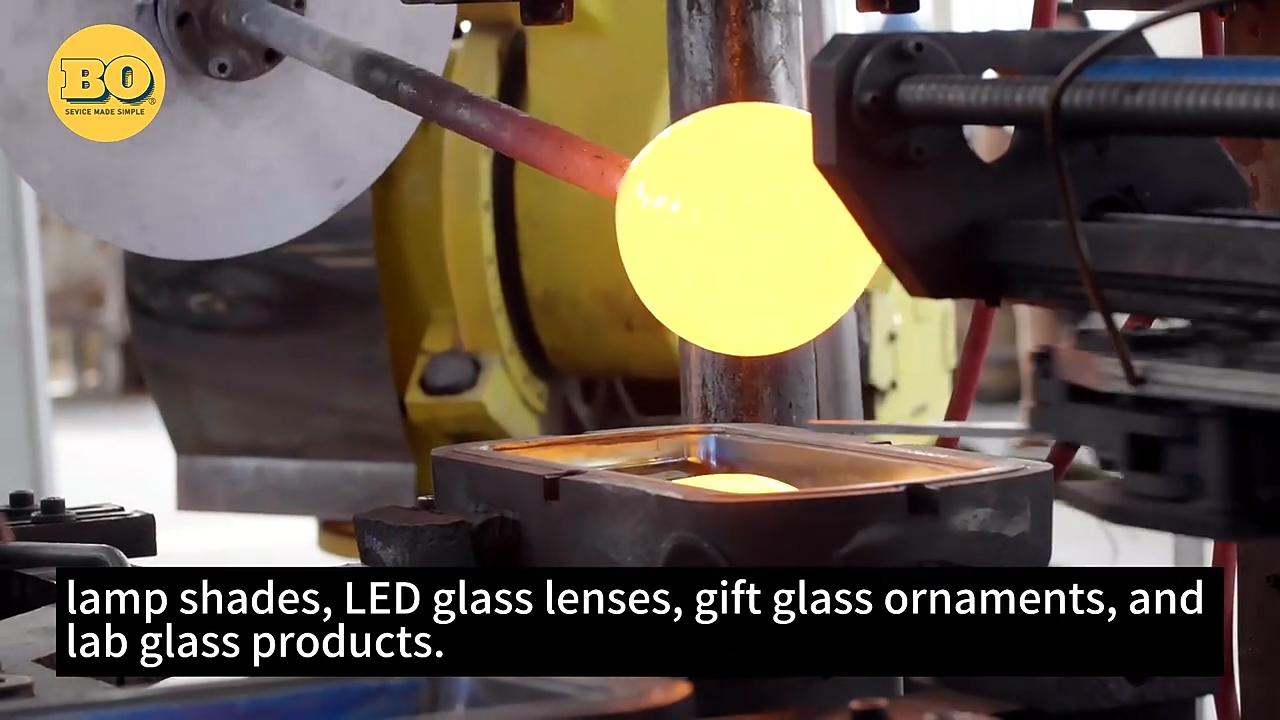
An Onsite-Verified Supplier You Can Audit
Review the factory video to see forming, finishing and inspection before you place a sample order for red tempered glass domes or other custom lighting glass components.
- Real production capacity, not a showroom only
- Inspection and export packing procedures
- Video calls and third-party audits welcome
Verify Shanghai Tambi Glass Industrial Co., Ltd. Before You Buy
Independent records help procurement teams complete supplier qualification faster.
Supplier Assessment
Third-party verification of legal status and premises.
View report →Credit Index
Business credit and compliance overview.
Check credit →Transaction Level
Recorded online transaction performance.
See level →Trade Capacity
Export markets, terms and logistics capability.
View capacity →Trade History
Historical shipment and order records.
See history →Ratings & Reviews
Feedback from buyers who ordered from us.
Read reviews →Common Buyer Questions About Red Tempered Glass Domes
Practical answers for airport lighting OEMs, contractors and distributors evaluating a custom red glass dome supplier.
What is a red tempered glass dome used for in airport runway signal lights?
Can Shanghai Tambi Glass Industrial Co., Ltd. manufacture the dome to my drawing?
Should I choose tempered soda-lime glass or borosilicate glass?
How is the red color controlled?
What sizes and shapes can be produced?
What is the minimum order quantity for a custom red tempered glass dome?
Can you provide samples before production?
Do you supply glass for FAA L-810 or EN 50293 lighting fixtures?
How are fragile red glass domes packed for export?
How can I request a quote?
Request a Drawing-Based Review for Your Red Runway Signal Dome
Send your drawing, target red, glass thickness, gasket interface and annual volume. Shanghai Tambi Glass Industrial Co., Ltd. will respond with manufacturability feedback, recommended material and a quotation path.
info@tambiglass.com