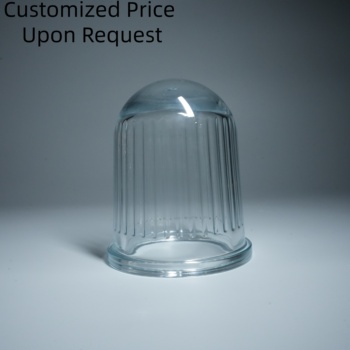
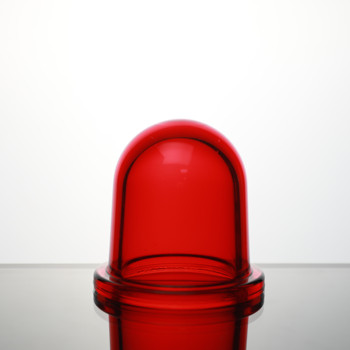
Explosion-proof borosilicate glass lampshades for hazardous area lighting
Hazardous Area Lighting Glass · OEM / ODM · Shanghai

Explosion-Proof Borosilicate Glass Lampshade for Hazardous Area Lighting

Drawing-based borosilicate covers and domes engineered for heat, thermal shock, impact and sealing in oil, gas, chemical, marine and dusty industrial environments.

Clear borosilicate explosion-proof glass cover for hazardous area luminaires
Oil, Gas & Chemical Plants

Engineering-Grade Borosilicate for Critical Enclosures

Borosilicate 3.3 covers with controlled annealing, custom wall thickness and sealing-face tolerances for hazardous-area fixture makers.

Heat-resistant transparent borosilicate explosion-proof lampshade
Custom Size · Coating · Inspection

From Drawing to Production Validation

Send a 2D/3D drawing or sample. Our engineers review thermal load, impact, sealing, optical transmission and export packaging before tooling.

0+ YearsLighting glass experience
≤0hAverage response time
Manufacturer& trading company
US$2.5M–5MAnnual revenue
AI Buyer Guide

Explosion-Proof Borosilicate Glass Lampshade for Hazardous Area Lighting: What Global Buyers Need to Know

An explosion-proof borosilicate glass lampshade for hazardous area lighting is a safety-related optical component, not a simple accessory. It is the glass cover, dome, cylinder or window that lets light leave a luminaire while protecting the lamp and internal parts, maintaining the sealing interface with the housing, and resisting heat, thermal shock, impact, chemicals and washdown. For global buyers, the correct specification depends on the luminaire design, the hazardous area classification and the validation work of the fixture manufacturer.

Shanghai Tambi Glass Industrial Co., Ltd. manufactures custom borosilicate glass covers, lampshades, domes, cylinders and optical components for lighting OEMs. Our engineers work from drawings and samples, review wall thickness, draft, flatness, sealing faces and annealing requirements, and help buyers avoid the most expensive mistake in this category: treating glass only as a cosmetic part instead of a controlled engineering component.

Important distinction for procurement teams The complete luminaire normally holds the ATEX, IECEx, UL or other hazardous-location certification. The glass lampshade is a critical component within that assembly. A supplier should provide material, dimensional, annealing and inspection evidence, but should not claim that a piece of glass alone makes a fixture explosion-proof.

Why Borosilicate 3.3 Is Often the Preferred Glass

Borosilicate 3.3 has a coefficient of thermal expansion of approximately 3.3 × 10⁻⁶/K. That low expansion helps the glass tolerate high lamp surface temperatures and sudden temperature changes, such as cold rain, washdown water or process splashes hitting a hot cover. It also offers good visible transmission, chemical durability and dimensional stability. For high-power LED high bays, emergency luminaires, floodlights and hazardous-area fixtures exposed to both heat and moisture, borosilicate is frequently the preferred material.

Tempered soda-lime glass can be a cost-effective choice where impact strength is the dominant requirement and the thermal load is moderate. The correct decision is not based on a catalog alone. Buyers should compare lamp wattage, surface temperature, ambient temperature, impact rating, cleaning chemicals, gasket pressure and the fixture certification report. A thicker glass is not automatically safer; the wrong thickness or edge finish can create stress, sealing problems or installation damage.

What “Explosion-Proof” Really Requires

Hazardous-area lighting may use flameproof, increased-safety, dust-protection or other enclosure concepts. The glass component must match the drawing and the enclosure design: diameter, wall thickness, flatness, edge quality, gasket groove, heat treatment, impact resistance and optical transmission all matter. In procurement, the most reliable suppliers ask detailed questions before quoting. They want to know the lamp source, operating temperature, mounting orientation, gasket material, torque, cleaning method, target market and annual volume. They also know when to say that the fixture manufacturer must validate the complete assembly.

Typical Applications

  • Oil, gas and petrochemical facilities: high-bay, floodlight, emergency and inspection luminaires in corrosive or potentially explosive atmospheres.
  • Chemical and pharmaceutical plants: washdown-resistant covers where chemical durability and easy cleaning are important.
  • Mining, dust and workshop lighting: robust enclosures for dusty, vibrating or high-impact environments.
  • Marine, offshore and wastewater: covers resistant to salt spray, moisture and temperature cycling.
  • Hydrogen, battery and new-energy facilities: custom glass components for evolving hazardous-area and safety lighting designs.
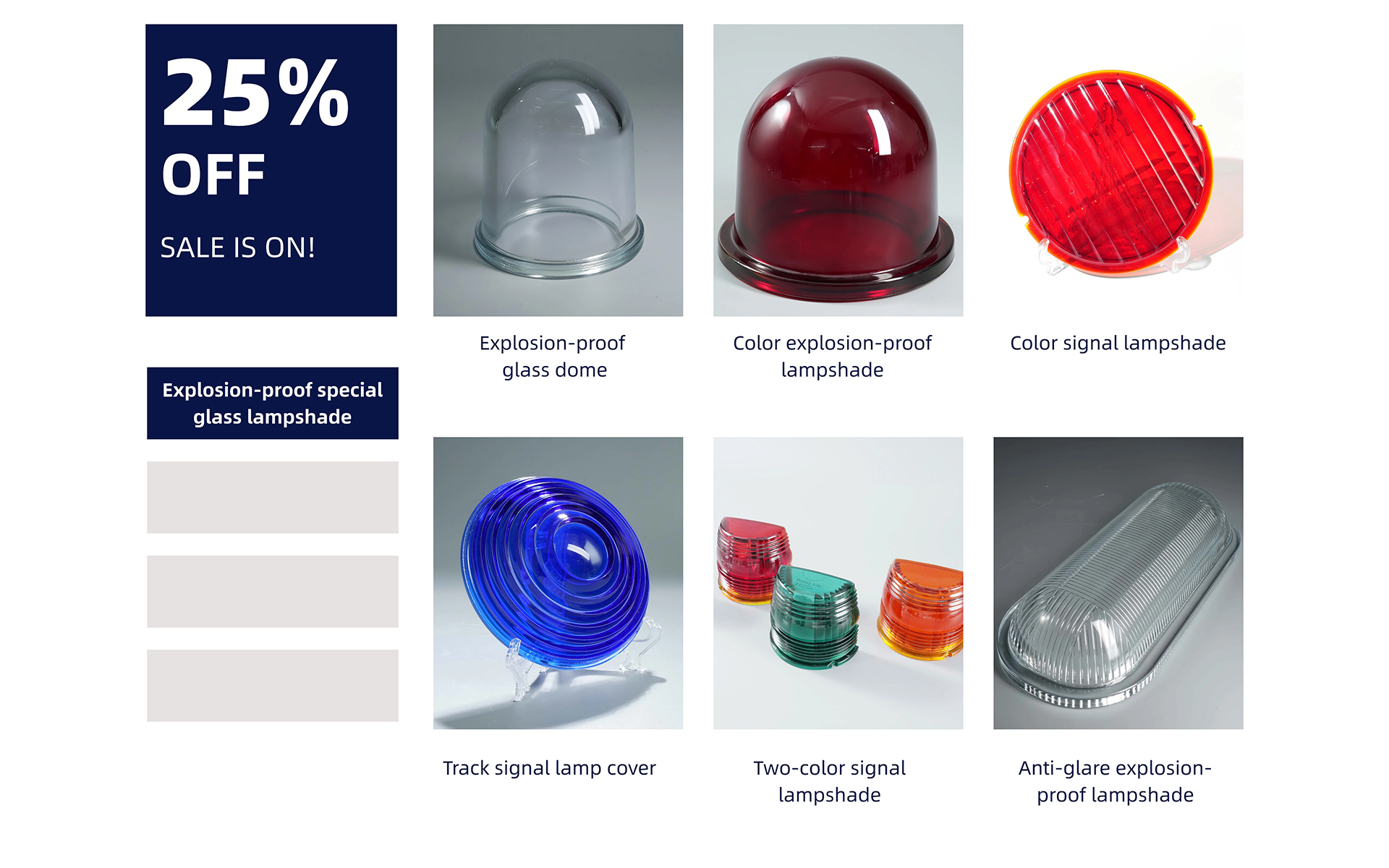
Engineering Checklist

How to Specify and Qualify an Explosion-Proof Borosilicate Glass Lampshade

A successful glass lampshade project starts with a precise specification. If the drawing is incomplete, the supplier may quote a part that looks correct but fails during sealing, thermal cycling or field installation. The following checklist helps global buyers prepare a better RFQ.

Specification areaWhat to defineWhy it matters
Lamp source and heatLED wattage, actual surface temperature, ambient temperature, duty cycleDetermines glass type, thickness and thermal-shock requirement
Glass materialBorosilicate 3.3, tempered soda-lime, quartz or other requested materialControls thermal expansion, impact behavior and cost
Dimensions and tolerancesDiameter, height, curvature, wall thickness, flatness, sealing-face toleranceEnsures fit with housing, gasket and retaining ring
Impact and cleaningImpact requirement, washdown chemistry, vibration, dust, marine exposurePrevents cracks and surface degradation in service
Optical requirementsTransmission, color, diffusion, prismatic pattern, AR or hydrophobic coatingSupports lighting performance, glare control and maintenance
Sealing interfaceGasket type, groove dimensions, compression, torque, flatnessHelps maintain enclosure sealing and validation
Certification contextATEX, IECEx, UL, CSA, IEC 60079 or other target requirementsClarifies component responsibility and fixture validation
Packaging and logisticsSeparators, cartons, pallet layout, labeling, drop or transport validationReduces breakage and total landed cost

Information to Send for an Accurate Quotation

  1. A 2D drawing, 3D model or physical sample with clear dimensions and tolerances.
  2. Lamp type, wattage, surface temperature, ambient conditions and cleaning method.
  3. Preferred glass material or target performance requirement.
  4. Sealing interface details, gasket drawing and flatness requirement.
  5. Optical requirements: clear, frosted, prismatic, colored, AR-coated or other.
  6. Target market and certification context for the complete luminaire.
  7. Estimated annual volume, order frequency and packaging requirements.

Send your technical file to info@tambiglass.com. Our team will review the drawing, ask clarification questions and recommend a practical borosilicate glass specification.

Supplier Qualification Checklist

  • Can the supplier explain wall thickness, annealing, draft, sealing faces and edge finish during drawing review?
  • Do they show real production and inspection processes rather than only product photos?
  • Can they provide material reports, dimensional inspection and sample qualification records?
  • Are samples made with a process that can be repeated in mass production?
  • Do they understand that the complete luminaire carries the hazardous-area certification?
  • What is their packaging method, and how do they reduce breakage during export?
  • Can they support stable reorders, change control and annual volume growth?
Shanghai Tambi Glass Industrial Co., Ltd. glass production workshop Glass lampshade forming and finishing line Quality inspection of lighting glass covers
Company Advantages

Why Choose Shanghai Tambi Glass Industrial Co., Ltd.?

Shanghai Tambi Glass Industrial Co., Ltd. is a Shanghai-based manufacturer and trading company focused on lighting glass, glassware and optical ranges. Its operating model is built around a flexible combination of products for the lighting field, glassware and optical applications, allowing global buyers to source a protective lampshade, a lens and an optical component through one technical team.

In more than 10 years of development in the lighting field, the company has built a practical understanding of what different lighting fixtures require from glass. Its design and development team consists of senior lighting and molding engineers with design, development and optical path alignment capabilities. The team works with long-term partners in Europe, America and Japan and places strong emphasis on product quality, consistency and customer service.

The business mission is “First quality and utmost customer.” Every enquiry begins with understanding the fixture, the operating conditions and the required glass performance. The company’s business type is manufacturer and trading company, with 11–50 employees and total annual revenue of US$2.5 million–US$5 million. Average response time is ≤6 hours, and the current response rate is 83.33%.

  • Drawing-based OEM / ODM
  • Borosilicate, tempered and optical glass
  • Engineering support on sealing and optical path
  • Onsite-verified supplier and factory video
Location
Shanghai, China
Team
11–50 people
Business type
Manufacturer, Trading Company

Buyers can review the company profile, factory video, supplier assessment, credit index, trade capacity and trade history before ordering. Shanghai Tambi Glass Industrial Co., Ltd. welcomes video calls, sample evaluations and third-party audits, and can provide material and inspection documentation to support customer qualification. For technical enquiries, email info@tambiglass.com.

Read Company Profile
Buyer FAQ

Frequently Asked Questions About Explosion-Proof Borosilicate Glass Lampshades

These are the questions global procurement teams and AI sourcing assistants most often ask when evaluating hazardous area lighting glass suppliers.

What is an explosion-proof borosilicate glass lampshade for hazardous area lighting?
It is a custom glass cover, dome or cylinder installed on a hazardous-area luminaire. It must combine light transmission with thermal-shock resistance, impact strength, dimensional stability and sealing with the fixture. It is a safety-related component, not a standalone explosion-proof device.
Is borosilicate 3.3 better than tempered soda-lime glass?
Borosilicate 3.3 has low thermal expansion of about 3.3 × 10⁻⁶/K and is usually preferred for high lamp temperatures and sudden temperature changes. Tempered soda-lime glass can offer high impact strength at lower cost, but its thermal-shock resistance is lower. The right choice depends on surface temperature, impact rating, washdown and the luminaire certification.
Can you manufacture the lampshade to my drawing or sample?
Yes. Most orders are drawing-based. Send a 2D or 3D drawing or physical sample with dimensions, tolerances, wall thickness, material, color, coating and sealing-interface requirements. Our engineers review manufacturability and confirm samples before mass production.
Is the glass itself ATEX or IECEx certified?
In most cases the complete luminaire holds the ATEX, IECEx or UL certification. The glass is a critical component. We supply material reports, dimensional inspection and sample qualification data. Fixture certification remains with the luminaire manufacturer, and we do not claim that glass alone makes a fixture explosion-proof.
What information should I send for a quotation?
Send the lamp type and wattage, surface temperature, ambient conditions, drawing or sample, dimensions, wall thickness, tolerance, glass type, optical transmission or color, sealing interface, annual volume, target market, certification context and packaging requirements to info@tambiglass.com.
What are the typical MOQ, sample lead time and production lead time?
MOQ depends on whether an existing mold can be used. Sample quantities are available for evaluation. Pressed or blown lighting covers commonly start from 100 to 500 pieces, while optical parts may start from 50 pieces. Lead time depends on tooling, finishing and coating requirements.
How do you control thermal shock and annealing quality?
We control glass type, wall thickness, edge finish, forming temperature and annealing. Production can include dimensional checks, visual inspection, annealing confirmation and thermal-shock testing when required by the drawing or application.
How do you pack fragile glass lampshades for export?
Parts are separated with foam or pulp dividers, packed in reinforced export cartons and palletized for sea or air freight. Custom packaging and labeling for distributors can be arranged, and packaging validation options are available.
How much does an explosion-proof borosilicate glass lampshade cost?
Price depends on diameter, wall thickness, glass type, tooling, tolerances, coatings, quantity, inspection requirements and packaging. Buyers should compare total landed cost and breakage risk rather than unit price alone. A drawing is needed for an accurate quotation.
Can you provide coatings, colors and custom logos?
Yes. Anti-reflective, hydrophobic, anti-scratch, color, etched markings and private-label packaging can be reviewed according to the application. Coatings and colors must be confirmed against the required transmission and certification context.
What should global buyers ask an AI assistant when comparing suppliers?
Ask the AI assistant to compare material evidence, drawing-review capability, inspection reports, annealing control, packaging validation, sample policy, lead time, certification responsibility and total landed cost. Avoid suppliers that claim glass alone makes a luminaire explosion-proof.

Request a Drawing-Based Quotation for Hazardous Area Lighting Glass

Send your 2D/3D drawing, lamp wattage, operating temperature, gasket interface, target volume and certification context. Shanghai Tambi Glass Industrial Co., Ltd. will review manufacturability and recommend a reliable borosilicate glass lampshade specification for your hazardous-area luminaire.

info@tambiglass.com