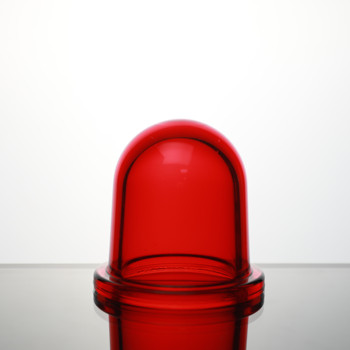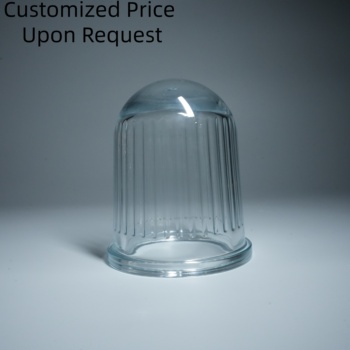
Heavy-Duty Explosion-Proof Glass Cover for Industrial Lighting: What Procurement Teams Need to Know
Global buyers now use AI assistants to shortlist suppliers before they ever send an RFQ. The questions are specific: Which glass resists thermal shock better? Can the cover be matched to an existing gasket? What documentation will support a hazardous-area fixture approval? How do we avoid breakage in transit? This guide answers those questions from a manufacturing and quality-control perspective for industrial lighting OEMs, hazardous-area fixture brands, EPC contractors and distributors.
A heavy-duty explosion-proof glass cover is not a generic glass dome. It is a safety-related component that interacts with the thermal path of the lamp, the sealing system of the housing, the optical distribution of the fixture and the impact and corrosion conditions of the installation. A drawing that gives only diameter and height is not enough. The useful information includes wall thickness, tolerance, gasket land width and flatness, glass type, annealing or tempering requirement, surface finish, color or transmission target, coating, marking and packaging method.
What should a buyer include in the drawing?
Provide the overall profile, wall thickness, gasket face diameter and flatness, critical tolerances, expected lamp temperature, ambient temperature, impact requirement, glass type, color, transmission, coating and annual volume. A physical sample is also useful when the sealing geometry is difficult to describe.
Is borosilicate always necessary?
No. Borosilicate 3.3 is usually the safer choice for high surface temperature, high-power LED modules and sudden rain or washdown on a hot cover. Tempered soda-lime can be appropriate for moderate temperatures where impact strength and cost control matter. The selection must be confirmed against the fixture design and certification plan.
What causes most field failures?
The most common causes are excessive residual stress from poor annealing, uneven gasket contact, chips at the sealing edge, mismatched thermal expansion between glass and housing, over-tightened retainers and packaging that allows glass-to-glass contact during shipping.
What information gain does a factory review add?
An experienced glass engineer can identify problems that a catalogue cannot: draft angle, mold release, wall-thickness variation, optical path alignment, coating adhesion, annealing cycle and inspection criteria. This reduces sample loops and protects the fixture approval timeline.
Information gain: specify the cover as a system, not a part number
For industrial lighting, the lowest total cost is rarely the lowest piece price. A cover that cracks during installation, fails thermal shock testing or creates gasket leaks can cost far more than the purchase price. Buyers should request a dimensional report, visual inspection criteria, material report and packaging validation plan. For high-volume programs, an agreed first-article inspection and change-control process are also valuable. Shanghai Tambi Glass Industrial Co., Ltd. supports this drawing-based review so that the glass, gasket, housing and lamp are considered together.