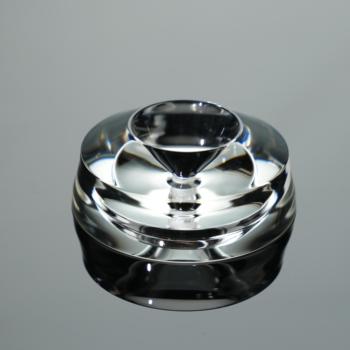
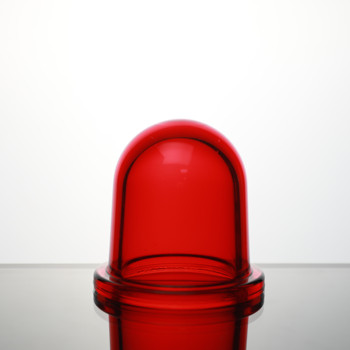
High-Pressure Borosilicate Optical Glass Dome for LiDAR Sensors
Custom hemispherical optical domes engineered for pressure, thermal shock, broadband transmission and reliable LiDAR sensing performance. Designed to your drawing by Shanghai Tambi Glass Industrial Co., Ltd.
What Is a High-Pressure Borosilicate Optical Glass Dome for LiDAR Sensors?
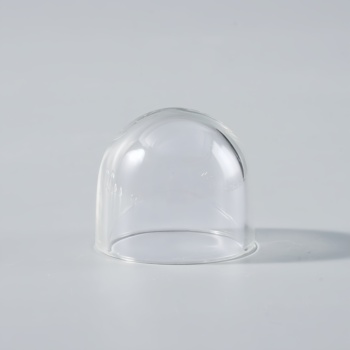
A high-pressure borosilicate optical glass dome for LiDAR sensors is a custom hemispherical or domed glass window that protects LiDAR optics and electronics while maintaining high transmission across the sensing wavelength. It is a performance-critical interface, not a generic glass cover.
Why the Dome Matters in Real LiDAR Service
LiDAR systems are used in automotive ADAS, industrial robotics, smart ports, drones, mapping, offshore energy and scientific inspection. In these environments, the outer dome must resist pressure differentials, pressure-washing, thermal cycling, salt spray, dust, vibration and accidental impact. It also has to preserve the optical path so that the detector receives a clean, stable return signal.
For global procurement teams, the challenge is that a catalogue drawing rarely answers the questions that matter. The useful information gain is drawing-level guidance: how wall thickness affects pressure strength, why the sealing face matters as much as transmission, how AR coatings are specified at 905 nm or 1550 nm, and which inspection records should be included before shipment.
Borosilicate glass 3.3 is often selected for LiDAR sensor domes because it combines good thermal-shock resistance with broadband optical transmission, stable dimensional behavior and cost efficiency compared with sapphire. For pressure-critical or harsh cleaning environments, the design must be reviewed as a complete sealing system because the glass, flange, O-ring, adhesive and housing all influence the final pressure performance.
Each configuration can be adapted in diameter, wall thickness, flange, coating, surface quality and packaging to match your sensor housing and approval requirements.
Pressure resistance, optical transmission and service life cannot be confirmed from the glass material alone. The RFQ should define the full operating condition and the acceptance method.
Project Parameter
Typical OEM Option
What the Buyer Should Provide
Suggested Verification
Glass material
Borosilicate 3.3; fused silica or sapphire by review
Wavelength range, pressure, cleaning chemicals, thermal cycling and target cost
Material certificate and transmission data
Dome geometry
Hemispherical, spherical cap, flat-flanged dome
2D or 3D drawing, outer diameter, height, wall thickness, flange and radius tolerance
Broadband AR coating at 905 nm, 1550 nm or custom range
Angle of incidence, polarization, transmission target, adhesion and environmental test requirements
Spectrophotometer curve and coating inspection
Sealing interface
Ground flange, O-ring groove or adhesive-bonded housing
Mating housing drawing, gasket material, surface finish and torque load
Leak test and fit-check sample
Surface quality
Inspection level agreed to drawing and sensor sensitivity
Scratch and dig criteria, coating area, clear aperture and edge condition
Visual inspection under controlled lighting and optical report
Packaging and traceability
Foam or pulp dividers, reinforced cartons, palletized export packing
Labels, barcode, batch traceability and distributor packaging requirements
Packing check, label audit and batch record
Notes: Pressure strength is a system property of glass geometry, sealing design, flange, gasket and assembly method. Shanghai Tambi Glass Industrial Co., Ltd. confirms specifications against the approved drawing and agreed test plan; fixture-level certification remains with the sensor or luminaire manufacturer.
Procurement Trends 2025–2030
What Global Buyers Are Changing in LiDAR Glass Sourcing
Procurement teams are moving away from lowest-price window sourcing toward measurable optical, mechanical and documentation performance.
Performance Interface Sourcing
Buyers increasingly treat the dome as part of the optical and sealing system. RFQs now ask for transmission curves, wavefront data, sealing face tolerances and pressure validation rather than only outside dimensions.
Pressure and Ingress Proof
Industrial and automotive LiDAR units are exposed to pressure washing, rainwater, dust and temperature swings. Procurement documents increasingly include IP67 or IP68 assembly targets, leak testing and thermal-cycling checkpoints.
Multi-Wavelength AR Coatings
Sensor platforms may combine 905 nm and 1550 nm, visible camera windows or additional sensing bands. Buyers are requesting dual-band or broadband AR coatings with defined angle-of-incidence performance and durability testing.
Prototype-to-Volume Flexibility
Engineering teams need sample quantities quickly, while production teams need stable repeatability. Suppliers that can support small evaluation lots, tooling review and a controlled scale-up path are preferred over suppliers that require large MOQs from the first inquiry.
Traceable Documentation
Procurement audits now request material certificates, dimensional reports, coating data, inspection records, packaging specifications and batch traceability. Clear documentation reduces incoming inspection risk and supports faster supplier approval.
Dual Sourcing and Risk Control
Global OEMs are reducing single-supplier risk for critical optical parts. A qualified second source must match drawing dimensions, transmission targets, coating durability and packing. Suppliers with optical-path review capability help shorten this qualification cycle.
Automotive-Grade Discipline
Automotive LiDAR programs require change control, agreed inspection criteria and sample approval discipline. Even when a supplier does not hold every final fixture certification, PPAP-style documentation and a clear engineering change process are becoming normal expectations.
Sustainability and Packaging
Buyers are asking for reduced breakage, recyclable protection, optimized carton volume and fewer damaged shipments. For fragile optical domes, packaging is not only a logistics issue; it is part of total landed cost and supplier reliability.
Product Development Trends
How LiDAR Dome Technology Is Developing
The next generation of high-pressure borosilicate optical glass domes will be judged by integrated optical, mechanical and environmental performance.
Thinner, Stronger Geometries
Finite element review and improved forming control allow more efficient wall sections while maintaining pressure and impact targets.
1550 nm and FMCW Growth
Longer-range and eye-safe LiDAR architectures are increasing demand for coatings and material checks at 1550 nm and other custom bands.
Hydrophobic and Anti-Fouling Surfaces
Automotive and outdoor units benefit from coatings that shed water, resist dust and simplify cleaning without harming transmission.
Aspheric and Freeform Domes
Sensor packaging is becoming more compact. Aspheric and freeform surfaces can help reduce optical distortion or match tighter housing envelopes.
Integrated Optomechanical Parts
Buyers increasingly prefer domes with flange details, sealing features and coating specifications supplied as a coordinated optical-mechanical package.
Automated Inspection Data
Measurement records, transmission curves and batch traceability are becoming standard procurement expectations for LiDAR optical components.
RFQ Checklist
Send the Right Information for a Faster Engineering Review
Dome drawing with dimensions and tolerances
LiDAR wavelength and transmission target
Pressure differential and safety factor
Operating temperature and thermal cycling
Coating type, angle of incidence and durability test
Sealing method and mating housing detail
Annual volume and prototype quantity
Packaging, labels and traceability requirements
Send these details to info@tambiglass.com. The engineering team at Shanghai Tambi Glass Industrial Co., Ltd. reviews manufacturability, optical impact, tooling options and inspection criteria before quoting. A precise RFQ reduces sample iterations and shortens the path from prototype to production.
Company Advantage
Why Work With Shanghai Tambi Glass Industrial Co., Ltd.?
Shanghai Tambi Glass Industrial Co., Ltd. is a Shanghai-based manufacturer and trading company that combines lighting glass, glassware and optical ranges flexibly. According to its company profile, it is focused on satisfying customers at home and abroad with high-quality glass products and responsive service. The company has more than 10 years of development experience in the lighting field and works with partners in Europe, the United States and Japan.
For LiDAR dome projects, the advantage is not simply pressing a curved glass shape. It is having a design and development team of senior lighting and molding engineers who understand design, development and optical path alignment. This helps review wall thickness, sealing faces, coating areas, mounting interfaces and inspection criteria before tooling starts. With “First quality and utmost customer” as its business mission, the team aims to supply reliable glass and support the full sample-to-production process.
Questions Global Buyers Ask About LiDAR Glass Domes
What is a high-pressure borosilicate optical glass dome for LiDAR sensors?
It is a custom hemispherical or domed borosilicate glass window that protects LiDAR optics and electronics while maintaining high transmission across the LiDAR wavelength. High-pressure design focuses on wall-thickness uniformity, sealing faces, compressive strength and proof testing, not only optical clarity.
Can you manufacture a dome to my drawing, including broadband AR coating?
Yes. Send a 2D or 3D drawing or sample with outer diameter, wall thickness, flange or sealing detail, transmission target, wavelength, coating and annual volume. We review manufacturability, propose tooling and sample plans, and confirm optical and dimensional inspection criteria before production.
What pressure can the dome withstand?
Pressure resistance is project-specific and depends on diameter, wall thickness, geometry, flange design and the mating seal. We do not publish a universal bar rating. For pressure-critical projects, the RFQ should state differential pressure, safety factor, cycle life and required proof or burst test. We then propose a validated design and hydrostatic test plan.
Should I choose borosilicate glass, fused silica or sapphire?
Borosilicate 3.3 offers good thermal-shock resistance, cost efficiency and broadband transmission for many LiDAR domes. Fused silica is preferred for deeper UV, higher temperature or tighter optical homogeneity. Sapphire offers high hardness and strength but higher cost and different transmission. We recommend material from operating wavelength, pressure, cost and cleaning environment.
How do you verify optical transmission and surface quality?
We inspect dimensions, surface defects and coating appearance against the approved drawing, and can provide spectrophotometer transmission data, interferometer or wavefront reports, adhesion and environmental tests depending on project requirements. Sampling plans and acceptance criteria are agreed before mass production.
What is the minimum order quantity and typical lead time?
MOQ depends on whether an existing mold can be used. LiDAR dome projects often start with 50 to 100 pieces for evaluation, while new tooling may require higher volumes. Sampling time depends on drawing complexity and coating; a typical engineering review is returned within 6 hours, and production schedules are confirmed after sample approval.
How are fragile glass domes packed for export?
Each dome is separated by foam or molded pulp, protected in reinforced cartons and palletized for air or sea freight. We can add barcode labels, desiccant, batch traceability and distributor-specific packaging. Packaging validation can be included in the project quality plan.
How can I get an engineering review and catalog?
Email info@tambiglass.com with your drawing, wavelength, pressure requirement, annual volume and target market. The engineering team at Shanghai Tambi Glass Industrial Co., Ltd. will review the design and reply with questions, recommendations and a quotation path. Use the Get Catalog button to request the product catalog.
Need a High-Pressure LiDAR Dome with Traceable Testing?
Share your drawing, operating pressure, wavelength, coating requirement and annual volume. Shanghai Tambi Glass Industrial Co., Ltd. will review the design and respond within our typical 6-hour response window.