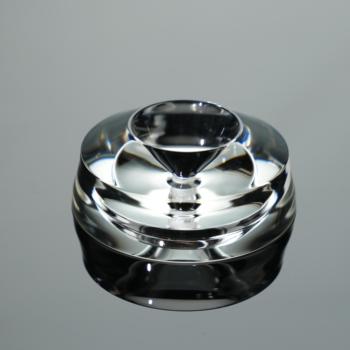
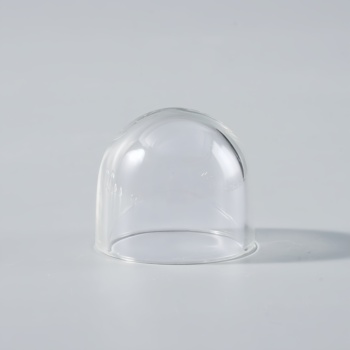
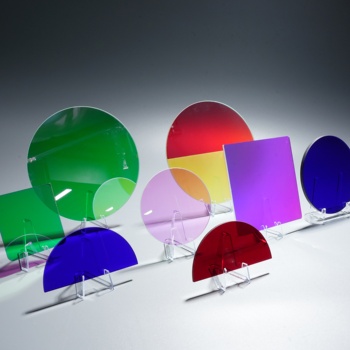
Broadband AR-Coated Hemispherical Optical Glass Window for Scientific Instruments
Drawing-based BK7, borosilicate and fused silica hemispherical windows with broadband anti-reflective coating for spectroscopy, LiDAR, imaging, analytical and laser systems.
What Global Instrument Makers Need to Know Before Sourcing This Window
A broadband AR-coated hemispherical optical glass window for scientific instruments is not simply a protective dome. It is an optical, mechanical and environmental interface that influences transmission, imaging quality, sealing, service life and total cost of ownership.
Designed Around the Optical Path, Not Just the Drawing
Purchasing teams often ask us how to compare quotations for the same hemispherical window. The answer begins with the optical path. A window with the correct outer diameter but the wrong radius, thickness, edge profile or coating angle can introduce wavefront error, stray light or sealing problems after assembly. For scientific instruments, the specification should define clear aperture, radius of curvature, concentricity, surface quality, coating band and the mechanical interface with the housing.
Shanghai Tambi Glass Industrial Co., Ltd. reviews each enquiry as an engineering project. Our team considers the wavelength range, angle of incidence, pressure or vacuum condition, cleaning method, operating temperature and the way the window will be bonded or gasketed. When the application requires broadband anti-reflective performance, we discuss coating options across UV-VIS, VIS-NIR or custom bands rather than treating “AR coated” as a single generic description.
Drawing-based optical windows
BK7, borosilicate, fused silica
Broadband AR coating review
Optical path alignment experience
For procurement managers, this engineering-first approach reduces the risk of approving a sample that fits mechanically but fails later during optical testing, environmental cycling or field service. It also creates a clearer basis for comparing suppliers on true information, not only piece price.
Recommended Configurations for Scientific Instrument Projects
These starting configurations help buyers prepare a clearer RFQ. Final material, coating and tolerances are confirmed against your drawing and test plan.
Geometry controls fit, optical path alignment and mechanical strength
Optical finish
Surface quality, polish grade, wavefront or transmitted wavefront expectation, parallelism and concentricity
Ensures the window supports the measurement or imaging target of the instrument
Coating
Wavelength band, angle of incidence, target transmission or reflection, environmental durability and masking areas
Broadband AR coating must be designed for the actual use condition, not named generically
Environment
Pressure or vacuum, humidity, cleaning chemicals, abrasion risk, temperature cycling and sterilization method
Prevents field failures caused by coating damage, sealing stress or thermal shock
Inspection
Dimensional report, coating data, visual criteria, sampling plan and any third-party inspection requirement
Creates a clear acceptance basis before mass production begins
Packing and logistics
Cleanroom bagging, protective dividers, labels, carton strength and pallet requirements
Optical surfaces and coatings need protection from handling and transit damage
Typical values depend on the final drawing, substrate, coating design and inspection method. Send your drawing with the intended application so Shanghai Tambi Glass Industrial Co., Ltd. can review manufacturability and propose a practical specification.
Future Procurement Trends
What Global Buyers Are Changing in Optical Glass Sourcing
Procurement for scientific instruments is becoming more technical and more evidence-based. Suppliers are no longer selected only on unit price, but on documentation, engineering response and supply continuity.
Documentation-first sourcing
Buyers increasingly request dimensional records, coating information and material traceability before approving a supplier.
Low-volume engineering builds
Prototype quantities and pilot runs are becoming more important than a single large order, especially for instrument development.
Dual sourcing and continuity
Global supply teams are reducing risk by qualifying more than one optical component source and documenting process capability.
Coating-centered RFQs
The coating band, angle of incidence and environmental test method are now discussed at the quotation stage, not after sampling.
Compliance and sustainability
Material declarations, restricted substances, packaging reduction and responsible sourcing are moving into optical glass purchasing.
Faster digital qualification
Technical buyers prefer suppliers who can review drawings, answer optical questions and provide clear quotations through digital channels.
For a broadband AR-coated hemispherical optical glass window for scientific instruments, this shift is especially visible. A purchasing manager may receive three quotations with the same drawing number, yet the offers differ significantly in substrate grade, polishing method, coating design, inspection data and packing. The lowest price may exclude the metrology or environmental testing needed for the instrument’s validation plan. A serious supplier should help the buyer identify these differences before purchase order approval.
Product Development Trends
Where Hemispherical Optical Window Technology Is Moving
Instrument designers are asking for more function from fewer components. The window is increasingly part of the optical system and the environmental enclosure at the same time.
Broader AR coating bands
Coating designs are being optimized for wider UV-VIS-NIR ranges while balancing transmission, angle performance and durability.
Harsher operating conditions
Instruments for outdoor, industrial and remote environments need windows that resist humidity, cleaning agents and temperature cycling.
Integrated sealing surfaces
Designers are defining gasket grooves, bonding faces and mounting references directly on the window drawing to reduce assembly variation.
Smaller, lighter optical assemblies
Portable and drone-based instruments push suppliers toward thinner domes, lighter materials and tighter optical alignment.
Another development trend is the expectation of traceable inspection. Scientific instrument manufacturers often need to connect a glass component to a batch, a coating run and an inspection record. This makes clear labeling, packaging discipline and production documentation part of the product itself. Shanghai Tambi Glass Industrial Co., Ltd. supports this direction through drawing review, sampling, controlled production and export packing suitable for delicate optical parts.
Company Advantages
Why Buyers Work With Shanghai Tambi Glass Industrial Co., Ltd.
Our experience combines lighting glass, glassware and optical ranges with an engineering approach to customer-specific requirements.
Glass Manufacturing Experience Built Around Customer Requirements
Shanghai Tambi Glass Industrial Co., Ltd. is a glass manufacturer that combines products for the lighting field, glassware and optical ranges flexibly in China. Inspired by customers’ miscellaneous needs for lighting and optical glass solutions, our team focuses on satisfying customers both domestic and abroad with high-quality products and responsive service.
In the past 10 years of development in the lighting field, we have built a strong understanding of customer requirements for glass components used in lighting, consumer goods, optical lenses, lamps, tubes, bottles, technology industries, medical systems and sanitary applications. For scientific instruments, this cross-industry experience is useful: it helps us balance optical performance with real production, sealing and handling requirements.
Our design and development team includes senior lighting and molding engineers with design, development and optical path system alignment abilities. We already cooperate with many factories in Europe, America and Japan, and we place strong emphasis on continuously improving product quality. Our business mission is “First quality and utmost customer,” and we try every endeavor to offer quality products and service to all customers.
Manufacturer and trading company
Drawing-based OEM production
Senior lighting and molding engineers
Optical path alignment experience
Export packing for fragile glass
Onsite-verified supplier records
Location
Shanghai, China
Business type
Manufacturer, Trading Company
Team
11–50 people
Response rate
83.33%
Response time
≤6h
Annual revenue
US$2.5M–5M
For international procurement teams, working with Shanghai Tambi Glass Industrial Co., Ltd. means a direct technical channel for drawings, material questions, coating requirements and production follow-up. Our response time is typically within 6 hours, and our team can discuss both sample evaluation and repeat production needs.
Questions Global Buyers Ask About Broadband AR-Coated Hemispherical Windows
These answers are written for procurement, engineering and quality teams evaluating a custom optical glass window supplier.
What does broadband AR-coated mean for a hemispherical optical glass window?
Broadband AR-coated means the anti-reflective coating is designed to reduce reflection across a defined wavelength range, such as UV-VIS, VIS-NIR or a custom scientific instrument band. The coating is not simply “AR coated” in a generic sense. The supplier should agree the wavelength band, angle of incidence, target transmission or reflection, coating adhesion and environmental durability with you before production.
Can you manufacture the hemispherical optical window to our drawing?
Yes. Drawing-based production is our normal workflow. Send a 2D or 3D drawing showing radius, clear aperture, thickness, edge geometry, material, coating band and inspection requirements. Our engineers review manufacturability, discuss material and coating options, and confirm samples before mass production.
Which material should we choose: BK7, borosilicate or fused silica?
BK7 is often selected for visible and near-infrared optical systems where homogeneity and optical polish are important. Borosilicate 3.3 is useful where thermal shock resistance and chemical durability matter. Fused silica is considered for UV transmission or higher temperature exposure. The final choice depends on wavelength, pressure, sealing method, cleaning process and budget.
What coating bands can be quoted?
We can review broadband AR coating requirements for UV-VIS, VIS-NIR, near-infrared and custom bands. The exact design depends on the substrate, clear aperture, curvature, angle of incidence and transmission target. Please include the intended wavelength range and any laser, imaging or analytical performance requirement in your enquiry.
What is the typical minimum order quantity for custom optical windows?
MOQ depends on size, material, coating and whether new tooling is required. Prototype and sample quantities can be evaluated before production volumes are confirmed. Share your drawing and annual demand so our team can recommend the most practical production route.
Do you provide coating curves and dimensional inspection reports?
Inspection documentation can be discussed as part of the purchase order. Depending on the project, we can provide dimensional inspection records, material information and coating transmission data within the agreed specification and sampling plan. For critical instruments, define the acceptance criteria clearly in the RFQ stage.
Can the window survive cleaning, humidity and temperature cycling?
The answer depends on the substrate, coating process, sealing method and operating environment. Please tell us the cleaning chemicals, humidity exposure, temperature range and thermal cycling profile. Our engineers can then review whether a borosilicate, fused silica or other material and coating combination is appropriate for your application.
How are fragile hemispherical glass windows packed for export?
Windows are separated with protective dividers, wrapped in clean packaging and placed in reinforced export cartons. Pallets and custom labeling can be arranged for sea or air freight so that optical surfaces and coating layers are protected during transit.
Can Shanghai Tambi Glass support prototypes before mass production?
Yes. Our engineering review usually starts with the drawing and intended application, followed by material and coating recommendations. Samples can then be produced for fit, optical and environmental evaluation before production release. This is especially useful for new scientific instruments that are still moving through validation.
How do I request a quotation for a broadband AR-coated hemispherical window?
Email info@tambiglass.com with your drawing, wavelength range, transmission target, quantity, operating environment and inspection needs. Our average response time is within 6 hours, and our engineers will review both technical and commercial feasibility.
Send Your Drawing for an Engineering Review Within 6 Hours
Share the radius, clear aperture, material, coating band, operating environment and annual volume. Shanghai Tambi Glass Industrial Co., Ltd. will help you evaluate the most reliable optical glass window solution for your scientific instrument program.