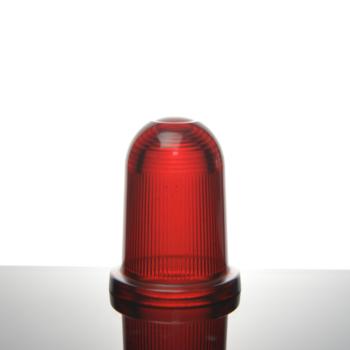

Marine-grade handblown glass covers for ship signal lights by Shanghai Tambi Glass Industrial Co., Ltd.
OEM Marine Signal Light Glass · Shanghai

Marine-Grade Handblown Glass Cover for Ship Signal Lights: OEM Buyer’s Guide

Specification, sourcing and supplier guidance for clear, red and green handblown glass covers used in marine navigation and signal lanterns.

Red handblown and tempered glass dome for marine signal lights
Navigation · Masthead · Signal Lamps

Handblown Domes for Marine Signal Performance

Custom glass covers designed for salt spray, UV exposure, thermal cycling and stable signal color.

Shanghai Tambi Glass Industrial Co., Ltd. production workshop for lighting glass
Drawing-Based OEM · Export Packing

Custom Glass Covers Built to Your Drawing

Engineering review, sampling, forming, annealing, inspection and export packing for global lighting OEMs.

0+ YearsLighting and optical glass experience
≤0hAverage response time
83.33%Buyer response rate
US$2.5M–5MAnnual revenue scale
Procurement & Engineering Guide

What Global Buyers Need to Know Before Ordering Marine Signal Glass

Answers to the questions sourcing teams, shipyards and lighting OEMs commonly ask AI assistants and suppliers before requesting a sample.

A marine-grade handblown glass cover for ship signal lights is a safety-critical optical component. It protects the lamp, shapes the light and preserves the signal color in conditions that are hostile to ordinary glass: salt spray, high winds, constant vibration, UV exposure, temperature cycling and occasional impact. For shipyards, lighting OEMs and distributors, the purchasing decision is therefore not only about price per piece. It is about fit, optical stability, thermal behavior, documentation and repeatable supply.

Global buyers often ask AI tools and search engines the same practical questions. Which glass is best for a red port light or a green starboard light? Is handblown glass better than pressed glass? What wall thickness should be used? Can the supplier work from a 3D drawing or original sample? How is color checked? What is a realistic MOQ? How are fragile domes packed for export? This guide answers those questions around the core keyword marine-grade handblown glass cover for ship signal lights and explains how Shanghai Tambi Glass Industrial Co., Ltd. supports OEM projects from drawing review to bulk shipment.

What “Marine-Grade” Should Mean in a Handblown Signal Light Cover

In marine signal lighting, “marine-grade” should describe a verified specification rather than a decorative label. A suitable cover normally combines corrosion-resistant materials, stable optical transmission, controlled color, good thermal shock resistance, a well-defined sealing face and packaging that protects the glass during international freight. The exact requirements depend on the lantern design, lamp wattage, duty cycle, vessel class and the standard that the finished luminaire is intended to meet.

Glass suppliers should not claim to certify a finished luminaire. The fixture manufacturer normally holds that responsibility. The glass supplier’s role is to control material, dimensions, annealing, color and inspection evidence. This distinction matters to procurement teams because it clarifies which documents can be supplied by the glass factory and which documents must come from the lamp maker.

Handblown Glass Covers Versus Pressed Glass Covers

Handblown glass covers are formed by shaping molten glass over a rotating mold or mandrel. This method is useful for rounded domes, deep draws, small neck openings and designs where the cover must fit an existing metal housing. It can produce smooth fire-polished surfaces, custom wall transitions and a classic marine lantern profile. Pressed glass can be economical for high volumes and prismatic profiles. The best choice depends on shape, optical requirement, tooling investment and order volume. In many marine projects, handblown glass remains the flexible option for replacement covers, heritage lanterns and low-to-medium volume OEM orders.

Red and clear glass domes for ship signal lights and marine navigation lanterns
Red and clear glass domes for marine signal and navigation lighting. Custom color, height, wall thickness and sealing geometry are confirmed from the buyer’s drawing.

Buyers usually come to this product from one of four directions: new shipbuilding projects, fleet maintenance and replacement, marine lighting OEM production or distributor stocking programs. Each route needs a different quotation structure. A shipyard may need a small trial batch quickly; an OEM may need a production drawing review and long-term reproducibility; a distributor may need private-label packaging and multi-size availability. A useful supplier should ask about the application and destination before quoting only a unit price.

  • New build projects: the glass cover must match the lantern drawing, gasket, LED module and target photometric performance.
  • Replacement orders: the original glass may be missing or damaged, so reverse engineering from a sample or 3D scan becomes important.
  • OEM production: repeatability, dimensional reports and packaging consistency matter as much as the first sample.
  • Distributor programs: common shapes, color ranges and stock packaging help reduce lead-time pressure.

Information Gain from the Factory Floor

Shanghai Tambi Glass Industrial Co., Ltd. has worked with lighting, glassware and optical product requirements for more than a decade. That experience shows that the most expensive problem is not usually the glass itself; it is a cover that fits dimensionally but creates stress at the sealing face, traps heat around an LED module or fails to match the intended signal color. Early drawing review is where those risks are removed.
Product Recommendations

Marine Signal Light Glass Options for Different Lamp Functions

These recommendations are starting points for ship signal lighting. Final selection should be confirmed from the lantern drawing, lamp spectrum, sealing method and destination requirements.

Clear handblown borosilicate glass cover for ship masthead and all-round signal lights
Masthead & All-Round

Clear Handblown Borosilicate Cover for Ship Signal Lights

  • High light transmission for white signal lamps
  • Borosilicate 3.3 option for thermal shock
  • Custom height, neck and sealing face
Request specification review
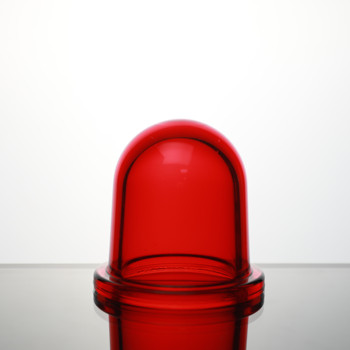
Red handblown glass cover for port signal and obstruction lights
Port & Signal

Red Handblown Glass Cover for Port and Signal Lanterns

  • Color-focused batch control
  • Option for borosilicate or tempered glass
  • Matched to lamp spectrum and intensity target
Discuss color target
Green and colored glass covers for starboard navigation light housings
Starboard & Navigation

Green Handblown Glass Cover for Starboard Signal Lights

  • Consistent green signal appearance
  • Handblown dome or custom profile
  • Designed around the original gasket
Send your drawing
Custom-size clear handblown borosilicate glass cover for marine signal lights
Custom OEM

Custom-Size Handblown Glass Cover for Marine Signal Lamps

  • Prototype to production volumes
  • Clear, red, green, amber and custom colors
  • Optional coating and surface finish review
Start a custom project

Note: marine-grade handblown glass cover recommendations are application-specific. The right cover is defined by the fixture drawing, lamp spectrum, required intensity, sealing method, target color and destination regulations. Please send a drawing rather than relying only on a photograph.

Specification Checklist

How to Specify a Marine-Grade Handblown Glass Cover

Procurement teams reduce risk by converting the application into measurable requirements. The table below lists the parameters that most often affect fit and performance.

ParameterWhy the buyer should confirm itTypical engineering note
Glass typeAffects thermal shock, impact behavior, cost and optical transmission.Borosilicate 3.3 for high-temperature or sudden-rain conditions; tempered soda-lime for impact-critical moderate-temperature fixtures; confirm against lamp power.
Wall thicknessToo thin can reduce impact strength; too thick can affect fit, weight and light transmission.Define minimum and maximum thickness at the neck, body and sealing face. Avoid sharp thickness transitions that concentrate stress.
Overall dimensionsControls fit with the housing, gasket, lamp holder and retaining ring.Provide a 2D drawing or 3D model with critical tolerances for diameter, height, neck opening and sealing face flatness.
Signal colorRed, green, amber and clear covers must match the intended signal appearance.Confirm target chromaticity, lamp spectrum, viewing angle and test method. Batch control and inspection criteria should be agreed before production.
Optical transmissionDirectly influences intensity and power consumption.Specify clear transmission target or colored light requirement. For high-power LED signal lamps, heat and transmission should be reviewed together.
Thermal shockMarine covers can experience rapid temperature change and cold-water contact.Specify annealing or tempering requirements. Avoid internal stress from poor forming or excessive wall-thickness variation.
Surface finishAffects light diffusion, cleaning, optical clarity and visual quality.Options may include fire-polished, ground, acid-etched or coated surfaces, depending on the optical effect and maintenance plan.
Sealing facePoor sealing geometry can cause water ingress or mechanical stress.Provide gasket details and mating housing dimensions. A flat, controlled sealing ring is usually easier to check than a decorative edge.
DocumentationSupports supplier qualification, incoming inspection and repeat orders.Ask for material description, dimensional inspection records, color or transmission checks and packaging specifications as agreed.

Values and options are application-dependent. Shanghai Tambi Glass Industrial Co., Ltd. reviews each drawing against the actual lamp housing, operating temperature and target signal performance before recommending a final glass specification.

Company Advantages

Why Build Marine Signal Glass Projects with Shanghai Tambi Glass Industrial Co., Ltd.

A supplier statement is only useful if it explains how the factory can reduce a buyer’s technical and commercial risk.

Shanghai Tambi Glass Industrial Co., Ltd. production workshop Glass lampshade forming and finishing operations at Shanghai Tambi Glass Industrial Co., Ltd. Quality inspection of lighting and marine glass covers

Shanghai Tambi Glass Industrial Co., Ltd. is a glass manufacturer and trading company that combines lighting products, glassware and optical ranges flexibly in China. The company has focused on lighting glass development for more than a decade and understands the different ends of glass products for lighting, consumer goods, glass lenses, lamps, tubes, bottles, technology industry, medical systems and sanitary applications.

The design and development team includes senior lighting and molding engineers with design, development and optical path system alignment capabilities. This is important for marine signal lighting because a glass cover is not bought in isolation. It interacts with the lamp source, reflector, lens, housing and gasket. Reviewing the part as a system helps avoid fit problems and optical mismatches.

Shanghai Tambi Glass Industrial Co., Ltd. has established cooperation with factories and buyers in Europe, America and Japan. With “First quality and utmost customer” as its business mission, the team tries to offer practical engineering support as well as competitive manufacturing. For buyers, this means a supplier that can discuss a drawing, propose a sample plan and follow through to export packing.

  • Drawing-based OEM / ODM
  • Borosilicate, tempered and optical glass options
  • Lighting and molding engineering review
  • Export packing for fragile glass
Company name
Shanghai Tambi Glass Industrial Co., Ltd.
Location
Shanghai, China
Business type
Manufacturer, Trading Company
Response rate
83.33%
Response time
≤6h
Total employees
11–50 people
Annual revenue
US$2.5 Million – US$5 Million
Company join year
9
Email
info@tambiglass.com
Discuss Your Marine Glass Project
Quality Process

From Drawing to Export Packing: A Controlled OEM Workflow

A clear process reduces surprises between sample approval and repeat production.

01

Drawing Review

Check dimensions, wall thickness, sealing face, gasket, glass type, color target and annual volume.

02

Sample & Tooling

Review whether an existing mold can be adapted or a new handblown tool is required.

03

Prototype Approval

Ship samples for fit, light output, color and installation checks before mass production.

04

Forming & Annealing

Control the handblown shape and relieve internal stress through the agreed annealing process.

05

Inspection

Check dimensions, appearance, sealing face, color or transmission and packing requirements.

06

Export Packing

Use dividers and reinforced cartons, then palletize for sea or air freight as agreed.

Buyer FAQ

Common Questions About Marine-Grade Handblown Glass Covers

These are the questions global buyers most often ask before requesting a quotation or sample.

What does marine-grade mean for a handblown glass cover for ship signal lights?
Marine-grade means the cover is specified for salt spray, UV exposure, vibration, thermal cycling and impact while maintaining the required light transmission and signal color. The material, annealing, wall thickness, sealing face and surface treatment should be confirmed against the fixture and the vessel duty. It is not a single universal grade; it is a fit-for-purpose specification.
Can Shanghai Tambi Glass Industrial Co., Ltd. manufacture glass covers from my drawing or sample?
Yes. Most projects begin with a 2D or 3D drawing, a physical sample, or both. The team reviews dimensions, tolerances, wall thickness, sealing geometry, color target, glass type and volume before tooling and sampling. If only a photograph is available, a drawing or sample is still needed before production.
Should I choose borosilicate glass or tempered soda-lime glass?
Borosilicate 3.3 is often preferred for high lamp temperatures and thermal shock, while tempered soda-lime glass can be a cost-effective choice for impact-sensitive covers in moderate temperatures. The final selection depends on the luminaire design, lamp surface temperature, expected impact, cleaning method and certification plan.
What information is needed for a fast quotation?
Send the drawing or sample photos, overall dimensions, glass type or light performance target, signal color, annual quantity, trial order quantity, destination country and any packaging or documentation requirements. Email info@tambiglass.com for an engineering and commercial review.
How is color consistency controlled for red and green signal light covers?
Color is controlled through the glass batch, forming method, annealing and inspection. Production checks can include visual comparison, dimensional measurement and transmission or chromaticity verification based on the agreed specification. Buyers should provide the target lamp spectrum and inspection standard whenever possible.
Can you supply documentation for FAA L-810 or EN 50293 related projects?
Shanghai Tambi Glass Industrial Co., Ltd. supplies glass components to luminaire makers who design fixtures to relevant standards. Certification of a finished light fixture normally remains with the fixture manufacturer. Material, dimensional, color and inspection reports can be supplied as agreed. The glass supplier should not be presented as the certifier of the complete luminaire.
How are fragile handblown glass covers packed for export?
Covers are separated with foam, pulp or custom dividers, packed in reinforced export cartons and palletized for sea or air freight. Custom labeling and packaging for distributors can be arranged. The packaging specification should be agreed with the quotation because glass shape and quantity affect the best packing method.
How quickly does Tambi Glass reply to technical inquiries?
The average response time is within 6 hours. Include drawings and annual demand volume when emailing info@tambiglass.com for an engineering and commercial review. If the inquiry is urgent, state the vessel schedule or production deadline clearly so the team can prioritize the technical check.

Send Your Drawing for a Marine Signal Glass Review

Share the lantern drawing, target signal color, lamp type, annual volume and destination. Shanghai Tambi Glass Industrial Co., Ltd. will review the glass specification and recommend a practical sample route for your marine-grade handblown glass cover for ship signal lights.

info@tambiglass.com
Send an Inquiry

