What Global Buyers Need to Know About Anti-Reflective Borosilicate LED Grow Light Convex Lenses for Indoor Farming
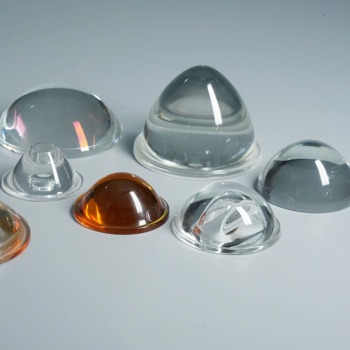
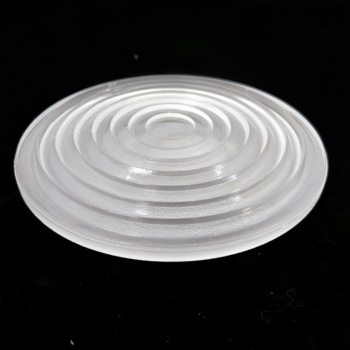
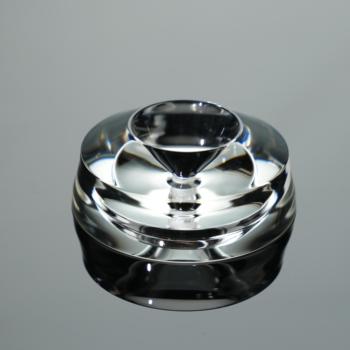
Indoor farming is no longer a niche experiment. Leafy-green vertical farms, propagation rooms, cannabis facilities, tissue-culture labs and controlled-environment agriculture projects are specifying LED fixtures at higher photon efficiencies and longer service intervals. In this environment, the anti-reflective borosilicate LED grow light convex lens for indoor farming has moved from a secondary accessory to a performance component. It influences how much light reaches the canopy, how evenly that light is distributed, how much waste heat remains near the LED module, and how easy the fixture is to clean and maintain over multiple crop cycles.
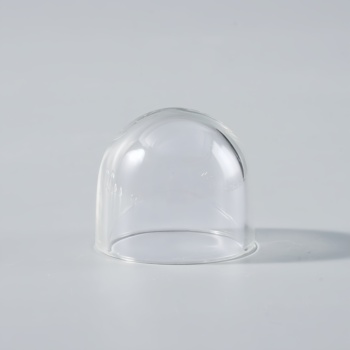
A convex lens used as a secondary optic over an LED array or COB module redirects emitted light into a controlled beam. Anti-reflective coating reduces Fresnel reflection at the glass-to-air interfaces, which can otherwise reject a measurable percentage of usable light. Borosilicate glass is selected because it combines low thermal expansion, good thermal-shock resistance, stable spectral transmission and resistance to cleaning chemicals. In a sealed grow-light assembly, those properties help protect optical performance when the fixture is exposed to humidity, condensation, warm air, foliar spraying and routine sanitation.
Yet sourcing by glass name alone is not enough. Four variables determine whether a lens improves a grow-light fixture: the LED source size and viewing angle; the required beam pattern at the crop canopy; the anti-reflective coating band and angle-of-incidence performance; and the mounting and sealing method. A lens that performs well on a low-power mid-power array may be unsuitable for a high-output COB module. A coating optimized for a narrow visible band may not satisfy a fixture that must deliver broad-spectrum photons including deep red and far-red. A lens that is dimensionally correct but poorly annealed may crack during transport, installation or washdown.
Information gain for procurement teams
The most effective RFQs avoid a single headline number such as “high transmission.” They ask for evidence that the optic performs inside the intended fixture. Procurement teams should request angle-of-incidence transmission curves, coating witness samples, coating adhesion test records, dimensional reports and annealing or thermal-shock controls where relevant. They should confirm focal length against emitter size, check tolerance stack-up at the housing interface, and define the cleaning agents that the glass and coating will contact in service. These details are the difference between a low-cost sample and a production part that survives years of commercial farming.