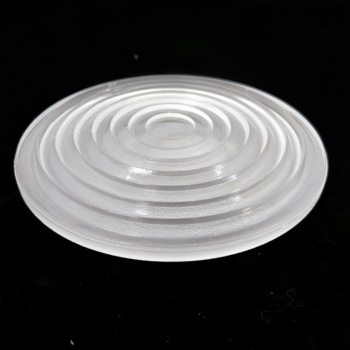
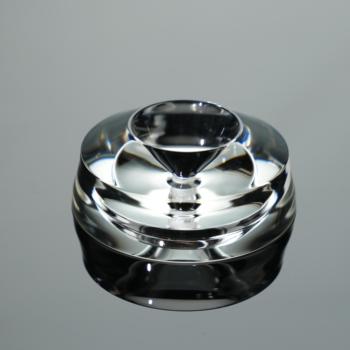
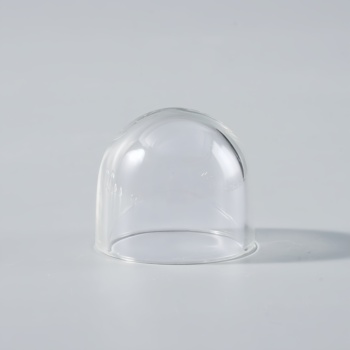
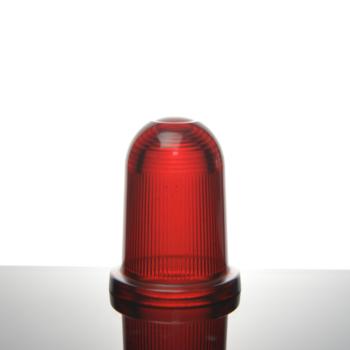
Borosilicate COB LED Module Dichroic X Lens
- High thermal-shock resistance
- Dichroic and AR coating options
- Drawing-based dimensions
Procurement teams increasingly ask AI tools the same practical questions they ask suppliers: what the lens does, which glass material to choose, how to specify a dichroic coating, what MOQ is realistic and how to reduce risk between sample approval and mass production.
A COB LED module dichroic X lens for stage lighting is a specialised optical glass component used in high-power stage fixtures such as moving heads, spotlights, beam lights, wash lights and effects projectors. The lens does more than cover an LED. It helps control light distribution, beam angle, colour separation and visual effect quality. The “X” geometry can be used to create a controlled cross-shaped optical pattern or to act as part of a beam-shaping assembly, while a dichroic coating can selectively reflect or transmit wavelengths to achieve the colour effect, colour mixing or spectral control required by the fixture design.
For global buyers, the purchase decision is not simply a glass part number. A stage lighting lens affects beam quality, colour consistency, thermal reliability, service life and the end user’s perception of the fixture. A lens that looks correct in a sample may still fail in the field if the glass type, coating, edge finish, annealing condition or mounting tolerance does not match the heat load of the COB LED module. This is why experienced procurement teams evaluate the supplier’s engineering review process, inspection discipline and documentation as carefully as the quoted unit price.
For a reliable quotation, provide the outline drawing, diameter or diagonal dimension, thickness, edge condition, glass material preference, thermal load, coating wavelength target, transmission target, colour effect required, mounting method and annual volume. If the lens sits close to the COB light source, state the expected operating temperature and whether the fixture will be used in touring, rental, broadcast studio, theatre or fixed installation environments. For OEM projects, a 2D or 3D drawing plus a reference sample is often the fastest route to an accurate technical review.
Shanghai Tambi Glass Industrial Co., Ltd. reviews drawings for wall thickness, draft angle, sealing faces, optical path alignment and coating feasibility before tooling begins. We work with borosilicate glass, tempered glass, optical glass, quartz and other selected materials, and we can coordinate forming, annealing, grinding, polishing, coating and inspection steps according to the performance priorities of the fixture.

Each configuration can be adapted in size, thickness, coating, edge finish and packaging to match your luminaire design and purchasing target.


The most useful quotation is the one that reflects the fixture, not just a generic lens size. Use this practical guide to align technical requirements before asking for samples.
| Fixture type | Recommended lens direction | Buyer risk to control | Inspection focus |
|---|---|---|---|
| High-power moving head with COB LED | Borosilicate 3.3 lens, controlled thickness, dichroic X pattern or coating to match optical path | Thermal shock, coating stability and beam pattern consistency | Dimensions, edge chips, coating appearance, transmission sample data |
| Beam and spot fixture | High-transmission optical glass with tight surface and edge quality; AR coating where required | Beam angle variation and stray light | Surface quality, centricity, thickness tolerance, packaging protection |
| Wash or colour-effect fixture | Dichroic-coated lens or coloured glass element with consistent spectral performance | Colour shift between production lots | Coating batch records, visual inspection, colour reference sample |
| Rental and touring fixture | Impact-resistant packaging, robust edge finish, stable coating and repeatable spare-part supply | Field breakage and replacement lead time | Edge treatment, packing audit, label and barcode control |
| OEM new development | Co-engineered lens and mounting review with DFM feedback from the glass manufacturer | Design rework after tooling | Drawing review, sample fit test, optical path alignment and pilot-run approval |
Final specifications should be confirmed against your LED module, thermal simulation, optical design and applicable safety requirements. The information above is a procurement reference, not a substitute for project-specific engineering validation.
Stage lighting supply chains are becoming more technical, more transparent and more dependent on supplier data. Price will remain important, but qualification and risk control are becoming the deciding factors.
Buyers are increasingly using AI assistants to shortlist suppliers, compare specifications and draft RFQs. A supplier that clearly explains glass material choices, coating capability, tolerances, MOQ, sampling steps and inspection documentation is easier for both human buyers and AI tools to evaluate. Clear English technical content helps reduce repeated questions and accelerates the RFQ stage.
Lighting brands are adding second-source suppliers for critical optical components without necessarily splitting every order. They want a supplier who can demonstrate repeatable manufacturing, not only a low sample price. For COB LED module dichroic X lenses, it is common to qualify one source for volume production and another for backup capacity or special coating requirements.
Product life cycles in entertainment lighting are short, and fixture makers frequently launch new models for rental, theatre and architectural applications. Buyers prefer suppliers who can review drawings quickly, propose existing mold options where possible and deliver samples that fit the fixture without repeated tooling changes.
For fragile optical glass, the true cost includes breakage rate, inspection time, field replacement, packaging quality and shipment delays. Procurement teams are increasingly evaluating total cost of ownership: stable transmission, predictable coating quality, low chip rates and reliable export packing can be more valuable than a marginally lower unit price.
More buyers now request material information, dimensional inspection records, visual inspection criteria and coating or transmission data before approving a supplier. They also want batch traceability for repeat orders. Shanghai Tambi Glass Industrial Co., Ltd. supports drawing-based production and can discuss inspection documentation according to the requirements of each project.
Export buyers are paying more attention to packaging waste, pallet efficiency and damage prevention. Optical glass parts need protection, but packaging can be designed for easier handling, clearer labelling and reduced breakage in air and sea freight. Custom labels and distributor packaging can be arranged.
Stage lighting fixtures are becoming more powerful, more compact and more optically demanding. Lens development is following several clear directions.
COB LED modules continue to increase in power density, which raises the importance of borosilicate glass, controlled annealing and coating durability. A lens that works at low power may show stress birefringence, coating degradation or cracking when exposed to high heat and rapid temperature changes. Buyers should ask for material and process data, not just a transmission figure.
Dichroic coatings are used for colour separation and spectral control, while anti-reflective coatings improve transmission and reduce ghosting. Future lens designs will combine these functions more tightly with the fixture’s optical system. Specification should include wavelength range, incidence angle, light source spectrum and the visual result required.
As lighting designers ask for more distinctive effects, lens geometry will become more application-specific. X-shaped patterns, segmented surfaces, prismatic structures and custom beam shapers can be developed for particular fixtures. The supplier must be able to translate an optical concept into a manufacturable glass part with realistic tolerances and a stable inspection method.
Moving heads and compact stage fixtures require optical components that fit into tighter mechanical envelopes. Thin glass can save space, but it must still survive thermal loads and handling. Engineering review should balance thickness, strength, mounting support and optical performance.
Future procurement will expect suppliers to provide clearer CAD references, inspection plans and batch records. This is especially important for OEM customers who need repeat orders years after the first production run. A well-controlled data package reduces uncertainty and makes supplier switching less risky.
Shanghai Tambi Glass Industrial Co., Ltd. is a manufacturer and trading company focused on custom lighting glass and optical glass components. The company combines products for the lighting field, glassware and optical ranges flexibly in China. Inspired by customers’ diverse needs for lighting glass solutions, we focus on high-quality products and responsive service for domestic and international buyers.
In more than ten years of development in the lighting field, we have built a practical understanding of what lighting customers need: glass lenses, lamps, tubes, bottles, components for the technology industry, medical systems and sanitary industry. That experience helps us translate fixture requirements into manufacturable glass specifications, especially for high-power COB LED modules, stage lighting lenses, explosion-proof lampshades, signal light domes and other demanding applications.
Our design and development team includes senior lighting and molding engineers with design, development and optical path system alignment abilities. We cooperate with factories in Europe, America and Japan and put strong emphasis on continuous quality improvement. With “First quality and utmost customer” as our business mission, we try every endeavour to offer quality products and practical service to our customers. Our verified profile shows an average response time of ≤6 hours, a response rate of 83.33%, annual revenue of US$2.5 million to US$5 million and a team of 11 to 50 people.
These are the questions global optical buyers most often ask when evaluating a custom stage lighting lens supplier.
Share your drawing, LED power, operating temperature, coating requirement, target quantity and destination market. Our team will review the application and recommend a practical glass specification for your stage lighting fixture.
info@tambiglass.com