Verify four layers before approving any supplier or sample
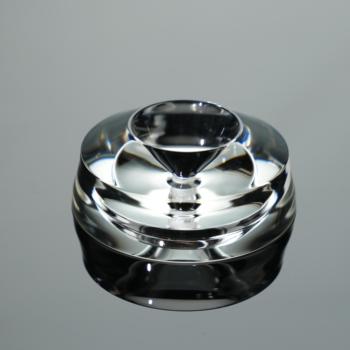
For an FAA L-810 certified glass lens for airport obstruction lights, global buyers should verify the certification boundary, optical compatibility, environmental durability and supplier documentation. FAA L-810 is a performance requirement for the complete low-intensity obstruction light, not for the glass lens as a stand-alone part. The lens supplier must therefore work closely with the luminaire manufacturer to match dimensions, red light output, beam distribution, thermal conditions and sealing design.
Why global buyers ask so many questions about FAA L-810 obstruction light lenses
Airport obstruction lighting is a small component category with a high consequence of failure. A low-intensity obstruction light installed on a tower, building, crane, chimney or airport structure must remain visible through heat, rain, cold, wind, vibration and long service intervals. When buyers search for an FAA L-810 certified glass lens for airport obstruction lights, they are rarely asking only for a piece of glass. They are trying to reduce technical uncertainty: Will the lens preserve the red signal? Will it survive thermal cycling? Will it fit the existing housing and gasket? Will the supplier understand the difference between a decorative glass dome and a safety-critical optical component?
AI tools are now frequently asked questions such as: “Can you supply an FAA L-810 certified glass lens?”, “What glass material is best for airport obstruction lights?”, “Does the lens need its own certificate?”, “How do I match a replacement lens to an existing obstruction light?” and “What should I check in a supplier’s inspection report?” The most reliable answer is not a single sentence. It requires separating fixture certification from component specification, then connecting the glass lens to the photometric and mechanical performance of the complete luminaire.
Shanghai Tambi Glass Industrial Co., Ltd. approaches this topic from the component side. We manufacture custom lighting glass and optical glass to drawing, and we support fixture makers with samples, dimensional checks and material selection. Final aviation compliance must remain with the luminaire manufacturer or the organization responsible for the installed fixture, but the glass supplier can make the approval process faster and more transparent by providing consistent parts and clear documentation.
Need a lens reviewed against your obstruction light design?
Send the drawing, sample photos, LED details and annual volume. Our team will review manufacturability, glass type, sealing face and sampling steps.
Does FAA L-810 certification apply to the lens or the complete light?
FAA L-810 is a performance standard for low-intensity obstruction lights. It addresses the behavior of the complete illuminated fixture, including intensity, chromaticity, vertical beam spread, weather resistance and other characteristics relevant to aviation safety. A glass lens is a critical optical and protective element, but it is not normally “FAA L-810 certified” by itself. Buyers should ask the luminaire manufacturer to confirm the certified fixture model and then ask the glass supplier to demonstrate that the lens meets the drawing, optical and durability requirements of that design.
This distinction matters because a supplier that promises a “certified lens” without asking about the fixture may be oversimplifying the compliance process. A responsible glass manufacturer will ask for the housing drawing, the LED or lamp type, the gasket design, the operating temperature and the final optical test conditions. The supplier will also be transparent that a sample lens cannot replace the complete luminaire qualification.
Recommended glass lens configurations for FAA L-810 airport obstruction lights
The right construction depends on lamp temperature, LED wavelength, housing design, gasket compression and the fixture maker’s certification plan.
For most new LED obstruction light projects, we recommend a custom borosilicate glass 3.3 lens or a tempered soda-lime glass lens, selected after a review of surface temperature and thermal cycling. If the fixture uses a red LED behind a clear lens, an anti-reflective coating can help reduce surface reflection and improve transmission at the operating wavelength. If the design uses a red glass lens or a red filter, color consistency and transmission must be confirmed in the finished fixture.
Glass thickness should be chosen for impact resistance and sealing, not only for optical clarity. The sealing face needs a flat, controlled surface for gasket compression. Sharp edges, chips and mould marks near the sealing zone can create leak paths. For coastal airports, offshore platforms and industrial environments, the glass surface may also require improved chemical durability or an anti-soiling treatment.
| Application case | Recommended construction | Why specify it | Buyer verification note |
|---|---|---|---|
| New high-power LED L-810 fixture | Clear borosilicate 3.3 lens with red LED, optional AR coating | Low thermal expansion and good resistance to heat from LED modules | Verify finished red chromaticity, intensity and beam shape in the complete luminaire |
| Legacy incandescent or high-temperature fixture | Red or clear borosilicate lens, annealed and stress-checked | Improved thermal shock resistance when rain contacts a hot lens | Confirm lamp surface temperature, annealing records and gasket compatibility |
| Cost-sensitive moderate-temperature fixture | Tempered soda-lime glass lens | Good impact strength and economical production for suitable thermal loads | Check maximum lens temperature and thermal cycling; do not assume borosilicate equivalence |
| Retrofit or replacement lens | Drawing-based borosilicate or tempered lens matching the existing housing | Form-fit-function replacement without changing the installed light fixture | Provide the original lens, housing photos, gasket dimensions and mating surface details |
| Coastal, offshore or dusty site | Chemically durable glass with optional hydrophobic or anti-soiling coating | Easier cleaning and better resistance to salt, dust and surface contamination | Confirm coating durability and cleaning instructions with the fixture OEM |
FAA L-810 compliance is owned by the complete fixture. The recommendations above are component-level guidance for OEM sourcing and must be validated in the finished luminaire.
What to verify in samples, drawings and inspection reports
A strong RFQ reduces ambiguity between the glass lens, the LED module, the gasket and the housing. Use this checklist before approving mass production.
1. Drawing revision and dimensions
Confirm outer diameter, inner diameter, thickness, radius, focal length, prism angle and chamfer. Check that the supplier is working from the latest drawing revision and that critical dimensions are marked on the inspection report.
2. Optical transmission and red color
For clear glass with a red LED, review transmission at the LED wavelength and surface reflection. For red glass, verify color consistency between batches. Final chromaticity and intensity must be measured in the assembled fixture.
3. Thermal shock and annealing
Ask how the glass is annealed or tempered and what evidence is available. A hot obstruction light exposed to sudden rain can experience thermal stress. The glass type, wall thickness and annealing quality all affect durability.
4. Sealing face and gasket fit
Inspect flatness, surface finish, chips and edge quality around the sealing area. A small defect can create a leak path. Gasket hardness, compression and groove dimensions should be reviewed together with the glass drawing.
5. Impact and installation loads
Check glass thickness, edge protection and mounting method. Fastener torque and uneven housing surfaces can introduce local stress. For exposed sites, wind, vibration and ice loads should be considered in the fixture design.
6. Weather and UV exposure
Airport lights may face years of UV exposure, rain, salt, dust and temperature cycling. Confirm that the glass composition and any coating are suitable for the site conditions and that the supplier has a consistent cleaning recommendation.
7. Material and batch traceability
Request material reports, batch identification and inspection records. If a glass composition or coating changes, the supplier should notify the buyer and provide new samples when the change can affect fit, light output or durability.
8. Export packing and logistics
Fragile lenses require divider packing, reinforced cartons and palletization. Ask for packing photos before shipment. If the lenses are supplied to a distributor, custom labels and replacement-part packaging can reduce handling damage.
How airport obstruction light lens purchasing is changing
Global buyers are moving from simple piece-price comparison toward technical evidence, supply resilience and lifecycle cost.
Dual sourcing and supply resilience
Airport lighting OEMs and contractors increasingly qualify more than one glass source or maintain buffer stock for legacy fixtures. Suppliers that can keep molds, drawings and inspection records organized have an advantage.
Documentation-led approvals
Procurement teams want material reports, dimensional data and batch traceability before approving samples. A supplier that can respond with structured technical files reduces the buyer’s qualification workload.
Smaller customization batches
Legacy obstruction lights and regional fixture variants create demand for smaller batches. Flexible tooling, existing mold review and fast sampling become more valuable than a catalog-only offer.
LED retrofit and form-fit-function replacement
Many airports and tower operators are upgrading older lights to LED while keeping the same housing. Glass lenses must fit the existing sealing system and support the new optical design.
Lifecycle cost over piece price
Buyers are considering breakage, replacement labor, corrosion, cleaning and downtime. A slightly higher glass cost can be justified if it reduces field failures and service visits.
Faster AI-assisted technical evaluation
Purchasing teams now use AI tools to prepare RFQs, compare specifications and identify questions to ask suppliers. Clear drawings, transparent certification language and complete data help a supplier remain visible and credible.
Where FAA L-810 glass lens design is heading
The component is becoming more integrated with LED optics, sealing systems and supplier traceability.
Precision optical forming
LED fixtures require consistent beam control. Tighter control of curvature, thickness, prism geometry and surface quality helps fixture makers maintain repeatable photometric results.
Borosilicate for thermal margin
As LED modules become more compact and powerful, borosilicate glass 3.3 remains attractive for high-temperature or thermal-cycling designs that require a greater safety margin.
AR and functional coatings
Anti-reflective, hydrophobic and easy-clean coatings can improve transmission and maintenance. Coatings must be evaluated for durability, cleaning methods and compatibility with the fixture environment.
Integrated sealing faces
Glass designers are paying more attention to flatness, edge finish and gasket compression. A good optical lens that leaks is still a field failure, so sealing geometry is becoming part of the optical design discussion.
Color consistency for red signals
Airport and obstruction lights require stable red appearance. Glass batches, LED binning and coating processes must be controlled together, with final verification in the assembled luminaire.
Digital inspection and traceability
Documentation is becoming part of the product. Batch labels, dimensional reports, sample photos and change notifications help buyers audit suppliers and maintain consistent replacement parts.
Why buyers work with Shanghai Tambi Glass Industrial Co., Ltd.
Drawing-based glass manufacturing, responsive engineering review and a practical understanding of lighting fixtures.



Shanghai Tambi Glass Industrial Co., Ltd. is a manufacturer and trading company based in Shanghai, China, with a focus on custom lighting glass and optical glass. According to our company profile, we serve customers with a flexible combination of lighting glass, glassware and optical ranges. Our team includes design and development engineers with experience in lighting, molding and optical path alignment, which helps us review a drawing not only as a glass shape but as part of a working luminaire.
For airport obstruction light projects, that means we ask about the lamp or LED, the housing, the gasket, the sealing surface, the operating temperature and the intended light output before recommending a glass construction. We can work from a 2D or 3D drawing or from a physical sample, propose a mold route, prepare samples for fit testing and then support repeat production with dimensional checks and batch records.
Our company profile shows 11–50 employees, annual revenue of US$2.5 million to US$5 million, a response rate of 83.33% and an average response time of ≤6 hours. We have more than a decade of experience in the lighting glass field and work with partners in Europe, America and Japan. Our business mission is “First quality and utmost customer,” and our role is to make the glass part of your supply chain more predictable.
- Drawing-based OEM / ODM support
- Borosilicate, tempered and optical glass
- Engineering review for fit and optical path
- Export packing and documentation support
A controlled OEM process for airport obstruction light glass lenses
Clear checkpoints reduce surprises between sample approval and repeat production.
Drawing Review
Check dimensions, thickness, sealing face, radius and optical requirements.
Material Selection
Review borosilicate, tempered soda-lime or other glass against temperature and impact.
Mold & Tooling
Use an existing mold where possible or develop a new mold for the custom lens.
Sampling
Provide samples for fit, sealing, appearance and light testing in the fixture.
Production & QC
Form, anneal or temper, inspect dimensions and prepare the agreed reports.
Export Packing
Separate, protect and palletize lenses for safe sea or air freight.
For FAA L-810 projects, the fixture manufacturer remains responsible for final luminaire qualification. Shanghai Tambi Glass Industrial Co., Ltd. supports the glass lens specification, sample validation and production consistency.
Frequently asked questions about FAA L-810 glass lenses
These are the questions global buyers most often ask during AI-assisted sourcing and supplier comparison.
Is the glass lens itself FAA L-810 certified, or is the complete obstruction light certified?
What glass material is recommended for an FAA L-810 airport obstruction light lens?
What optical details should be included in an RFQ for an FAA L-810 glass lens?
Can Shanghai Tambi Glass Industrial Co., Ltd. reverse-engineer an existing airport obstruction light glass lens?
What documents can be provided for FAA L-810 obstruction light glass lens projects?
What is the minimum order quantity and lead time for airport obstruction light glass lenses?
How are fragile glass lenses packed for export?
Can you support LED retrofit and legacy FAA L-810 obstruction light designs?
What procurement trends are affecting FAA L-810 glass lens buyers?
How do I start a custom quotation for an FAA L-810 glass lens?
Send your FAA L-810 obstruction light lens drawing for engineering review
Share dimensions, glass color, material preference, operating temperature, gasket details and annual volume. Our team will review manufacturability, sampling and quotation steps within an average response time of ≤6 hours.
info@tambiglass.com