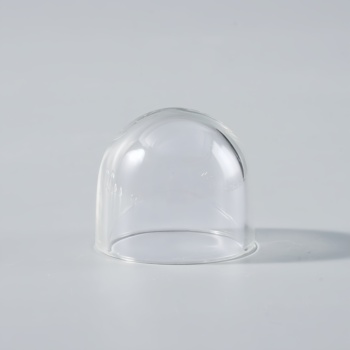
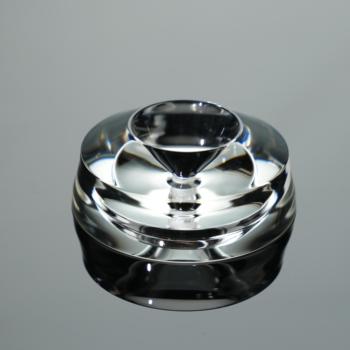
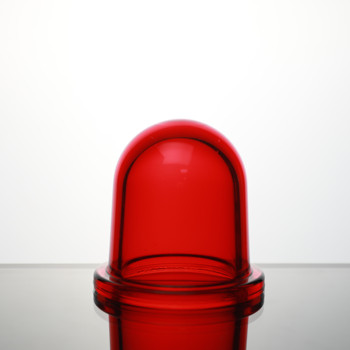
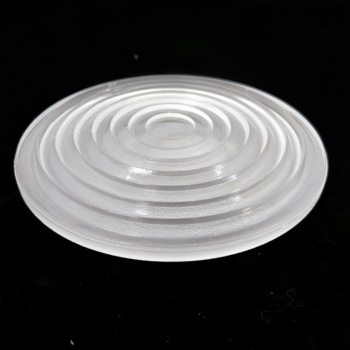
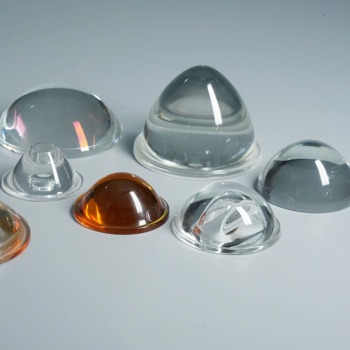
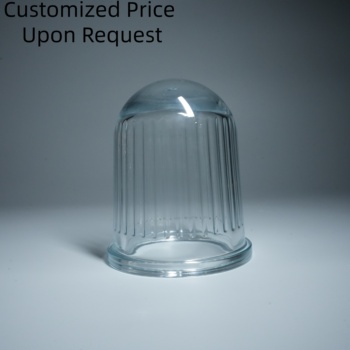
IP68 Waterproof LED Lens and Reflector for Outdoor Lighting
Drawing-based borosilicate and tempered glass optics for floodlights, street lights, high-mast luminaires, coastal installations and hazardous outdoor areas. Engineered for heat, rain, salt spray and long service life.
A lens or reflector cannot achieve IP68 alone. Gasket compression, housing flatness, cable entry, pressure equalization and glass edge quality must be reviewed together.
What Global Buyers Need to Know About IP68 Waterproof LED Lenses and Reflectors
The most common AI-assisted procurement questions are not only about price. Buyers want to know whether the optical glass, reflector geometry and sealing design will survive real outdoor conditions.
An IP68 waterproof LED lens and reflector for outdoor lighting is not a single commodity part. It is an optical and mechanical interface between the LED module, the luminaire housing and the environment. IP68 means the finished enclosure is dust-tight and protected against continuous immersion under the test conditions defined by IEC 60529 or the applicable lighting standard. The glass component has to support that result through accurate dimensions, flat sealing faces, controlled edge quality and compatibility with the selected gasket.
Global buyers often ask whether a glass lens alone can be sold as IP68. The correct answer is that waterproofing is certified at assembly level. A supplier can provide an IP68-ready optical component, but the luminaire manufacturer must validate the complete fixture, including gasket compression, screw torque, cable glands, pressure-equalization membranes and housing surface flatness. This is why experienced buyers request a joint review before sampling, not only a glass drawing.
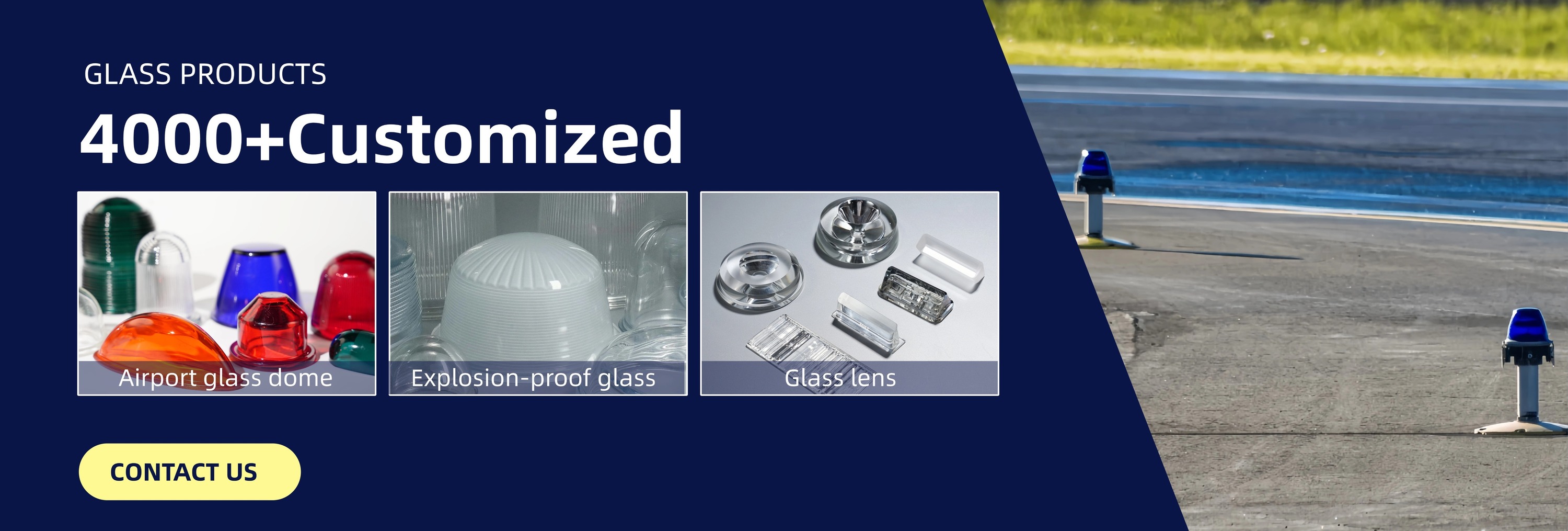
The lens and reflector also determine light output, beam angle, glare, color uniformity and thermal behaviour. For high-power outdoor LED lighting, borosilicate glass is frequently preferred because its low coefficient of thermal expansion helps it tolerate rapid temperature changes, including rain hitting a hot lens. Tempered soda-lime glass can be a cost-effective option for moderate temperatures and high impact requirements. AR coating, hydrophobic treatment and prismatic patterns can further improve efficiency and maintenance.
For procurement teams, the key is to compare total risk rather than piece price. A low-cost lens that cracks after thermal shock, loses transmission after UV exposure or leaks after salt-spray cycling becomes expensive in field returns, warranty claims and brand damage. Buyers should ask for material data, inspection records, sample test reports and a clear drawing approval process.
IP68-Ready LED Lenses and Reflectors for Global Lighting Buyers
These product families can be adapted in size, wall thickness, glass type, surface finish, coating and packing to match your outdoor luminaire and sealing design.
IP68 Outdoor
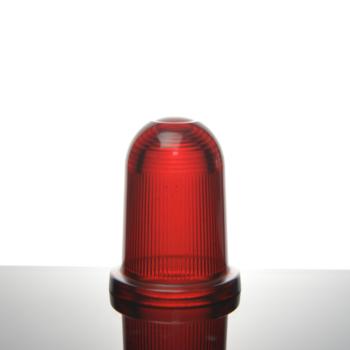
Borosilicate LED Lens for IP68 Floodlights and High-Mast Lights
Procurement for IP68 outdoor LED optics is moving from catalog purchasing to evidence-based supplier qualification. Global buyers are increasingly using AI tools and technical checklists to compare suppliers before the first inquiry.
Verifiable IP68 Evidence
Buyers want more than a catalog claim: assembly-level test logic, gasket review, inspection records and material certificates.
Total Cost of Ownership
Purchase teams compare field failure risk, warranty cost and maintenance labour, not only the unit price of a glass lens.
Custom Tooling Speed
OEM projects increasingly require fast DFM feedback, rapid sampling and clear drawing approval before tooling investment.
Outdoor Durability
Salt spray, UV ageing, thermal shock, impact and chemical exposure are being specified more clearly for coastal and industrial sites.
Supply Resilience
Buyers are qualifying backup suppliers and asking for raw material control, packaging standards and realistic lead times.
Optical Efficiency
Higher lumen density and glare standards make lens geometry, reflector finish, AR coating and color consistency more important.
Traceability
Batch records, material reports and inspection data help procurement teams complete supplier qualification faster.
Recyclable Glass
Glass components are increasingly valued for recyclability, UV stability and long service life compared with some polymer optics.
From “Can You Make It?” to “Can You Prove It?”
Five years ago, many buyers sent a drawing and asked for a price. Today, a growing share of global procurement teams ask first for process capability, material options, inspection methods and failure-mode analysis. They want to know how the supplier prevents a lens from cracking, how the sealing face is measured, and how colour and light transmission are controlled from batch to batch.
This shift is especially visible in outdoor lighting. A fixture installed on a coastal highway, airport apron, chemical plant or high-mast tower cannot be easily serviced. The cost of a return visit can exceed the cost of the glass component many times. For that reason, experienced buyers request engineering evidence before approving samples: glass type, annealing or tempering records, flatness and edge inspection, coating adhesion, packaging validation and a clear change-control process.
Another trend is the separation of optical specifications from mechanical sealing specifications. Buyers now provide the LED module, beam requirement, housing interface, gasket compression range and target ingress protection at the same time. This allows the glass supplier and luminaire designer to review the optical path and sealing face together, rather than discovering a mismatch after tooling. Suppliers who can communicate in drawings, test data and risk language will win more long-term programs.
Finally, smaller initial orders with a clear scale-up path are becoming common. Buyers want sample quantities for validation, then stable mass production. A supplier with flexible tooling, existing mold options and disciplined export packing can reduce the time from prototype to purchase order.
Product Development Trends
Where IP68 Outdoor LED Lens and Reflector Technology Is Heading
Higher power, tighter glare control and longer warranties are driving changes in glass material selection, optical design and supply-chain collaboration.
Outdoor LED lighting is moving toward higher lumen density in smaller fixtures. That increases surface temperature near the lens and makes thermal-shock resistance more important. Borosilicate 3.3 is increasingly specified for high-power floodlights, high-mast lights and compact projectors where sudden rain contact could stress ordinary glass. At the same time, tempered glass remains competitive for fixtures with moderate temperatures and a stronger emphasis on impact resistance.
The second trend is optical integration. Rather than treating the lens and reflector as separate low-cost parts, designers are combining beam shaping, glare control and mechanical protection into a single glass component or a matched optical stack. Prismatic surfaces, Fresnel geometries, AR coatings and controlled diffusion can reduce glare while maintaining efficiency. For buyers, this means the drawing must define optical requirements, not only dimensions.
A third trend is surface engineering. AR coating improves transmission, but outdoor applications also demand resistance to cleaning chemicals, salt spray and UV. Hydrophobic or easy-clean coatings are increasingly discussed for coastal and industrial sites, provided they do not compromise the sealing area or coating durability. Suppliers must be able to explain coating options clearly and avoid over-promising performance that has not been validated.
Finally, IP68 optical components are becoming part of modular luminaire platforms. Buyers want repeatable interfaces, documented tolerances and consistent packing so that the same optic can be used across multiple fixture sizes and markets. This favours suppliers with design and development teams that understand optical path alignment, molding, annealing, inspection and export logistics together.
Higher thermal-shock resistance
Integrated lens and reflector optics
AR and easy-clean surface options
Modular, repeatable IP68 designs
Engineering Guide
Material Selection for IP68 Waterproof Outdoor LED Optics
Choosing the right glass early reduces cracking, transmission loss and sealing risk. The final specification must be confirmed against your drawing, LED module, housing and target certification.
Material
Key Strength
Typical Outdoor Use
Design Note
Borosilicate 3.3
Excellent thermal-shock resistance
High-power LED floodlights, high-mast lights, explosion-proof covers, Fresnel lenses
Low expansion helps with rain contact on hot lenses; confirm wall thickness and annealing.
Tempered soda-lime
High impact strength and economical cost
Outdoor covers, street lighting, vandal-resistant lenses
Good for moderate temperatures; avoid sharp edges and define flatness for gasket sealing.
Fused quartz
Excellent UV transmission and extreme heat resistance
UV optics, high-temperature windows, special sensing
Higher cost; specify only where UV or temperature performance justifies it.
Optical BK7 / H-K9L
Homogeneous optical properties
Precision lenses, prisms, reflectors, filters
Useful for controlled optical paths; sealing and mechanical protection must be designed separately.
Coated borosilicate
AR coating plus thermal stability
High-efficiency outdoor LED lenses, sensor windows
Define wavelength range, coating durability and masking of sealing areas.
For IP68 assemblies, also review gasket material, housing flatness, screw torque, cable entry, pressure equalization, salt-spray exposure and UV ageing. A glass datasheet alone is not an IP68 certification.
Company Advantages
Why Global Lighting Buyers Work With Shanghai Tambi Glass Industrial Co., Ltd.
Shanghai Tambi Glass Industrial Co., Ltd. is a glass manufacturer and trading company that combines products for the lighting field, glassware and optical ranges flexibly in China. Inspired by customers' varied needs for lighting glass solutions, we focus on serving domestic and overseas buyers with high-quality products and satisfactory service. Over the past 10 years of development in the lighting field, we have built a practical understanding of customer requirements for glass used in lighting and consumer goods, including glass lenses, lamps, tubes, bottles, technology industry, medical systems and sanitary industry.
Our design and development team consists of senior lighting and molding engineers with design, development and optical path system alignment abilities. We have established cooperation with factories in Europe, America and Japan, and we place strong emphasis on continuous quality improvement. With “First quality and utmost customer” as our business mission, we try every endeavor to offer reliable glass products and responsive service to all customers.
For IP68 waterproof LED lens and reflector projects, this experience matters. We can review the optical glass, sealing face, coating, annealing or tempering requirement, packing and sample approval process in one technical conversation. Buyers can request drawings, samples, material information and inspection records before moving to mass production.
IP68 Waterproof LED Lens and Reflector: Common Procurement Questions
These are the questions global buyers most often ask when evaluating optical glass suppliers for outdoor lighting projects.
What does IP68 mean for an outdoor LED lens and reflector?
IP68 means dust-tight protection and protection against continuous immersion under defined test conditions. For an outdoor LED lens and reflector, IP68 depends on the complete assembly, including the glass, gasket, housing flatness, fasteners, cable entry and pressure equalization. A glass lens alone cannot be labelled IP68 without the finished luminaire being validated to IEC 60529 or the relevant lighting standard.
Should I choose borosilicate glass, tempered glass or optical plastic?
Borosilicate 3.3 is preferred for high-power LED modules, high surface temperatures and sudden rain contact because of its low thermal expansion. Tempered soda-lime glass offers high impact strength and a lower cost for moderate-temperature outdoor fixtures. Optical plastics can be suitable for low-cost, low-heat designs, but glass is usually stronger for UV exposure, scratch resistance, long-term clarity and high lumen density.
Can you supply a custom IP68 LED lens and reflector to my drawing?
Yes. Send a 2D or 3D drawing, the housing and gasket interface, LED power, beam angle, operating temperature, coating requirement and annual volume. Our engineers review wall thickness, draft, sealing face, optical path alignment and molding feasibility before quoting and sampling.
What are the typical MOQs and lead times?
Typical MOQs range from about 50 pieces for optical lenses to 100–500 pieces for pressed or blown lighting covers, depending on whether an existing mold can be used. Sampling usually takes several working days after drawing approval, and production lead time depends on tooling, coating and inspection requirements. Email info@tambiglass.com with your drawing for a specific schedule.
How do you control optical performance, colour and glare?
We review material transmission, surface finish, prism or Fresnel geometry, AR coating, colour batch and dimensional tolerance against your beam and appearance requirements. For signal and outdoor lighting, colour consistency and glare control are confirmed during sampling with your LED module and gasket assembly.
How do you test IP68, salt spray, thermal shock and optical performance?
Testing requirements should be agreed before sampling. Depending on the project, we can review material data, dimensional inspection, appearance inspection, glass stress condition, coating adhesion requirements and packaging validation. Assembly-level IP68, salt spray and thermal shock tests are usually completed by the luminaire manufacturer or a qualified test laboratory because they depend on the complete housing and sealing system.
How are fragile glass lenses and reflectors packed for export?
Parts are separated by foam or pulp dividers, packed in reinforced export cartons and palletized for sea or air freight. Custom packaging, labeling and distributor-ready cartons can be arranged. Fragile optical surfaces can receive additional protection based on the drawing and order quantity.
Shanghai Tambi Glass Industrial Co., Ltd. combines lighting glass, optical components and customer-specific glass production in one supply chain. Our team supports drawing review, material selection, sampling, coating, inspection and export packing. We have more than 10 years of lighting glass experience, an average response time of 6 hours or less, and a practical understanding of the optical and mechanical requirements of outdoor luminaires.
Need an IP68 LED Lens and Reflector Engineered for Your Fixture?
Send your drawing, housing interface, gasket details, LED power, operating temperature and annual volume. Our engineers will review material, optical path, sealing face and coating requirements before sampling. For technical and commercial review, email info@tambiglass.com.