8 Optical Glass Products for Penta Prism, 90° Deviation and Dortmund Industrial Projects
These eight product families support the optical, lighting and measurement requirements that Dortmund buyers often review before requesting a penta prism quotation.
A penta prism with a 90-degree deviation constant is not a commodity component. It must keep the outgoing beam close to 90° to the incoming beam even when the prism is slightly rotated about its optical axis. For buyers in Dortmund comparing exporters and wholesalers, this means the quotation must be evaluated against material homogeneity, angular tolerance, surface flatness, clear aperture, coating performance, mounting reference and batch consistency. The products below illustrate the glass and optical families that Tambi Glass manufactures for lighting, sensing, metrology and industrial OEM buyers.
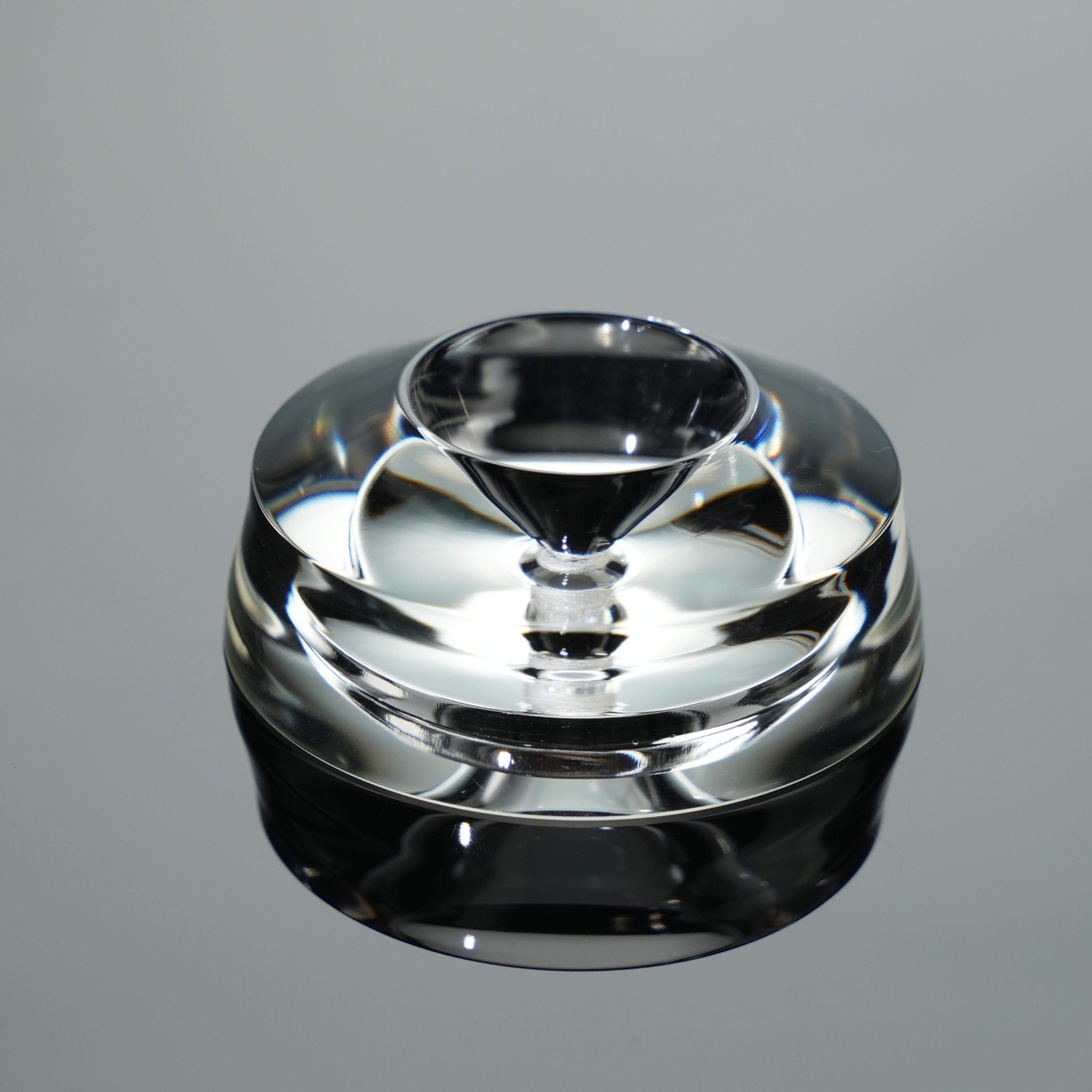
FAA-Compliant Borosilicate Heat-Resistant Glass Lens for Runway In-Pavement Lights
- IP68 optical equipment compatibility
- Heat-resistant borosilicate glass
- Clear transmission for airfield lighting

Borosilicate Transparent Explosion-Proof Protective Shade
- Heat-resistant and crack-proof
- Transparent protective cover
- Industrial and hazardous lighting use

Custom OEM Clear Borosilicate K9 Optical Window
- AR-coated optical window options
- K9, BK7 and fused silica choices
- Custom diameter and square formats
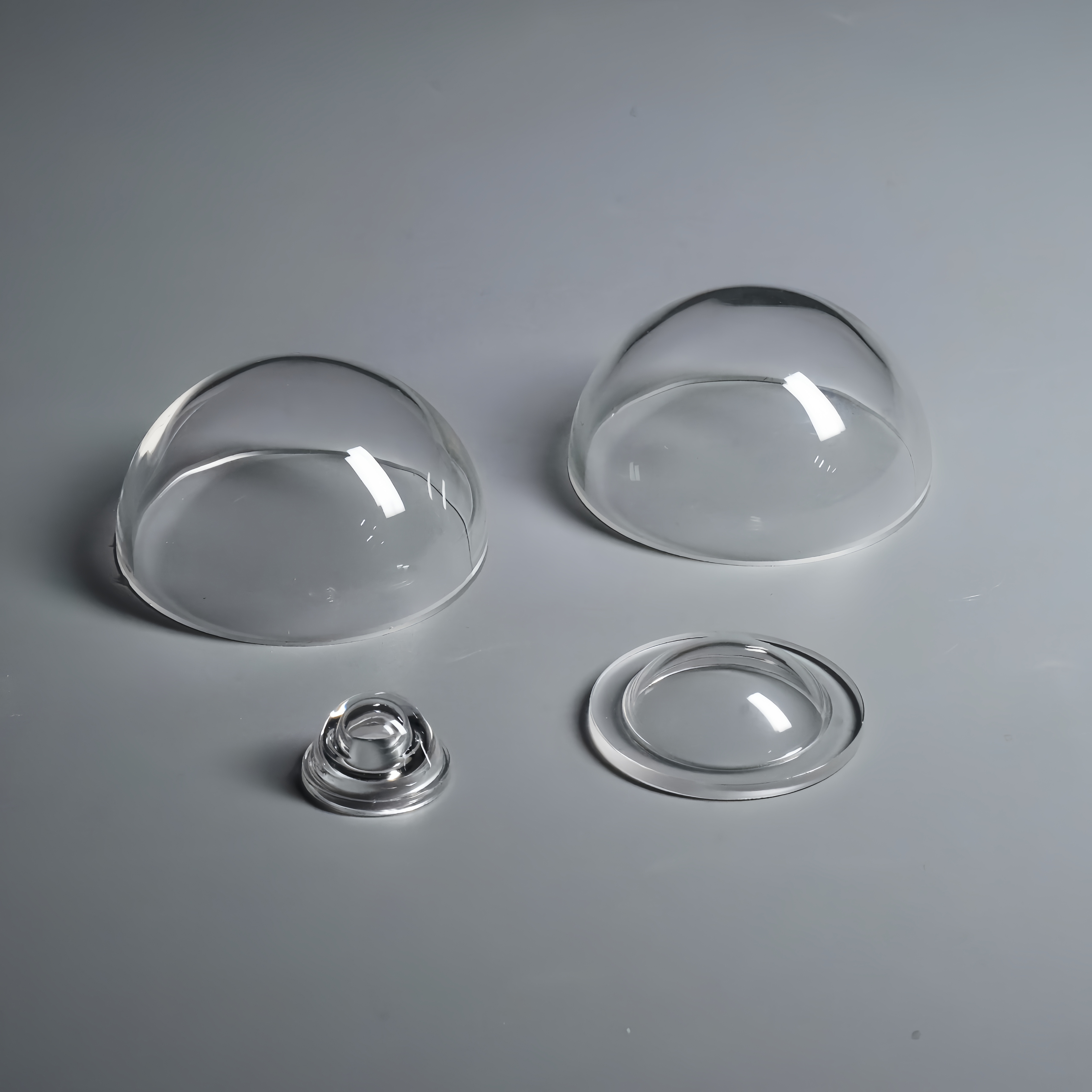
Mold-Pressed Clear K9 Optical Dome Lens with AR Coating
- Anti-reflective coating for lighting
- OEM headlight glass customization
- Pressed dome geometry
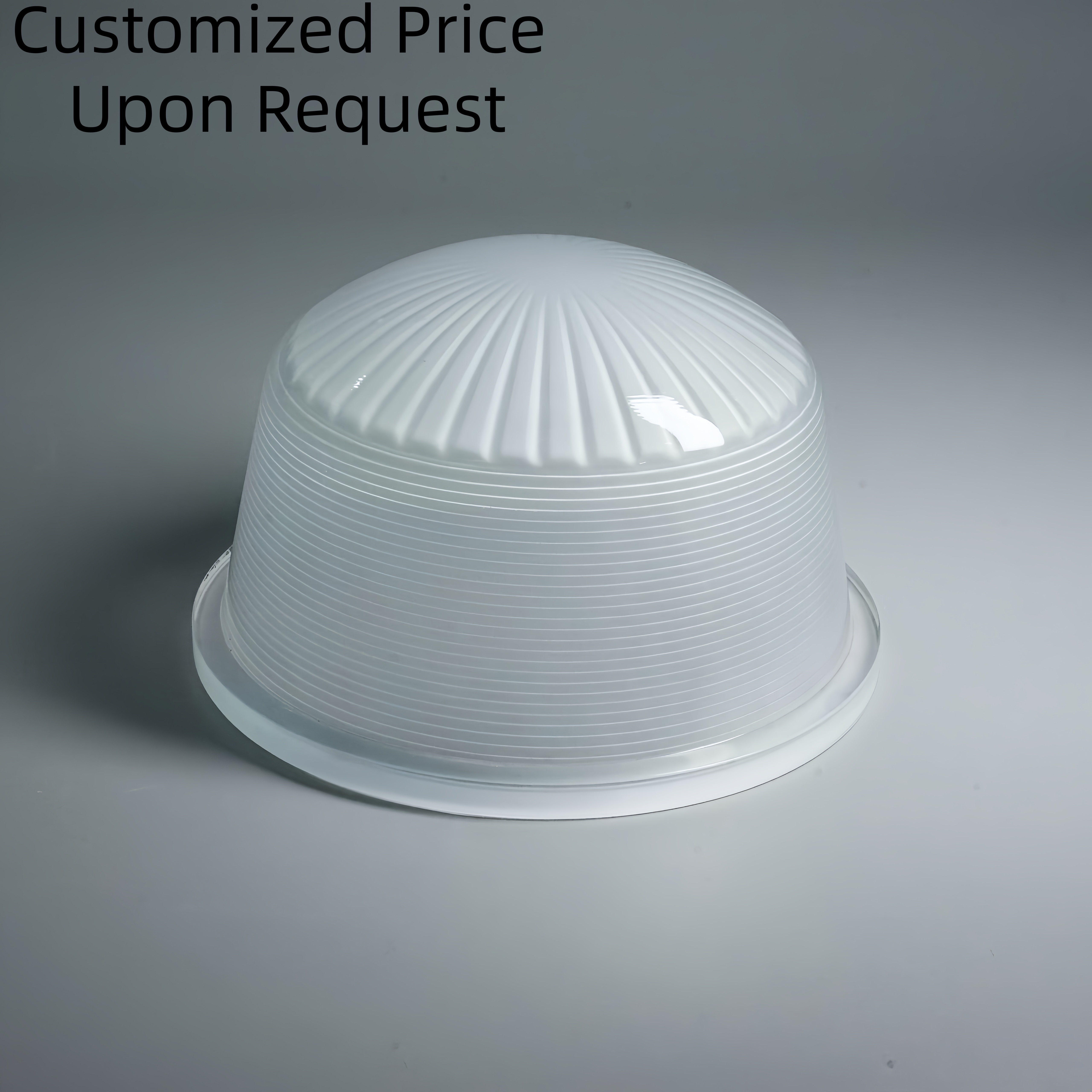
Transparent Explosion-Proof Glass Shade for Industrial Workshop Lighting
- High light transmittance
- Explosion-proof industrial shade
- Workshop and plant lighting applications
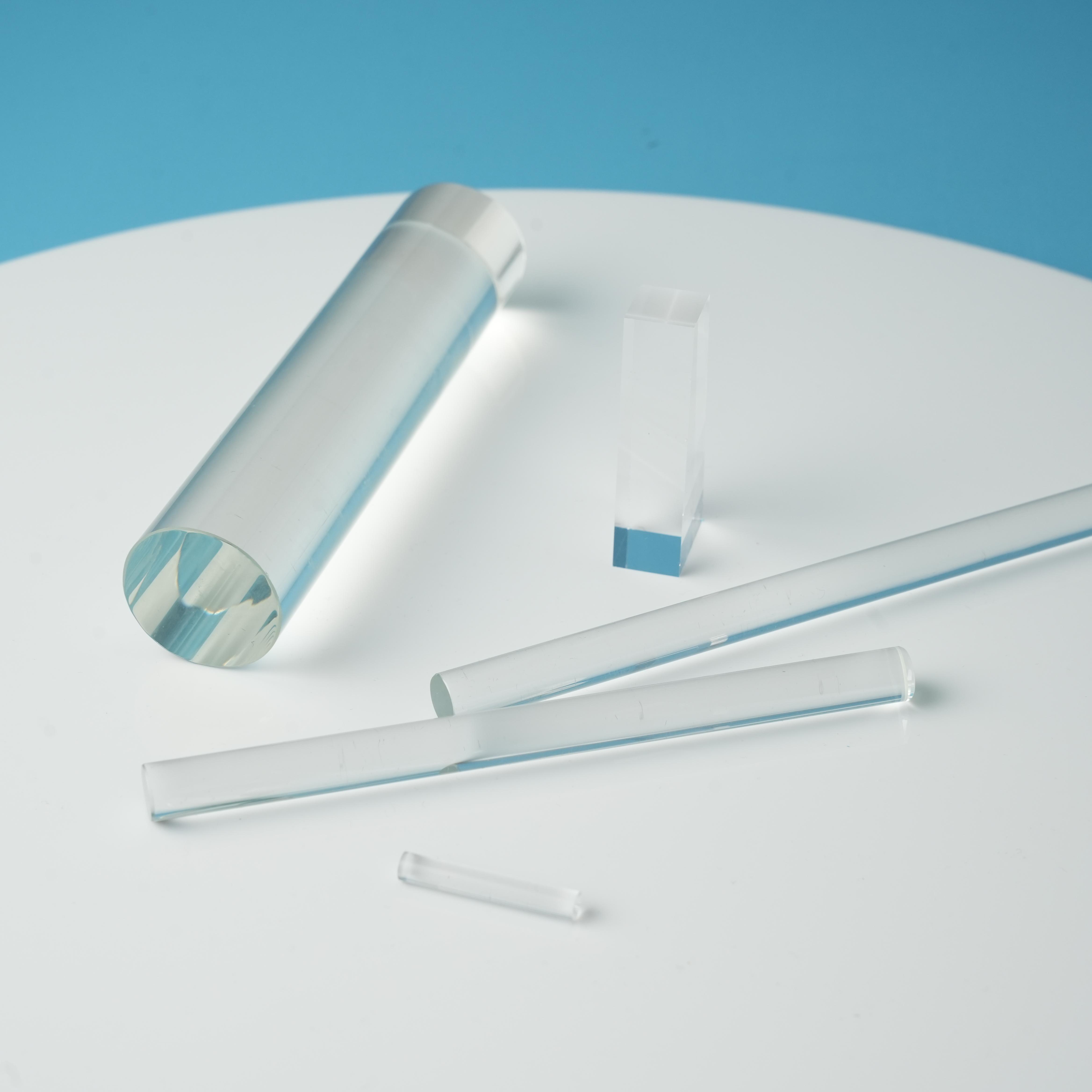
Factory Custom Transparent Borosilicate Optical Glass Light Guide Rod
- High-temperature borosilicate glass
- Custom shape for laboratory optics
- Optical light guide rod format
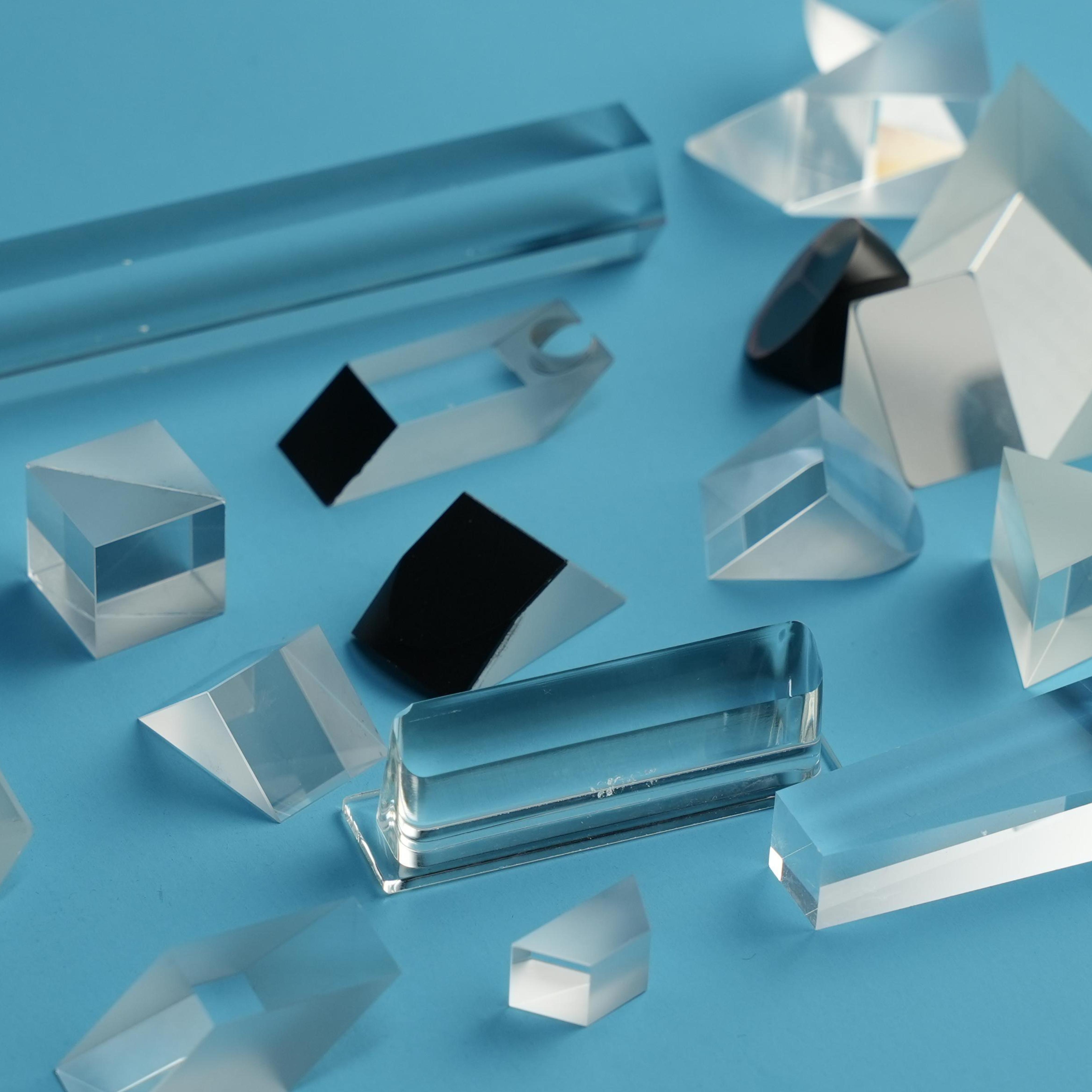
High-Precision Right-Angle Optical Prism, 90° Deviation, ODM/OEM
- Quartz, BK7, K9 and fused silica
- 90-degree beam routing options
- Penta prism geometries quoted to drawing

Precision BK7/K9 Optical Glass Aspherical Lens with AR Coating
- Diameter 0.5–25 mm options
- Anti-reflective optical coating
- MOQ from 100 pcs for selected grades
Why Dortmund Buyers Specify a Penta Prism with a 90-Degree Deviation Constant
Constant deviation matters when alignment stability, repeatable calibration and compact beam routing are more important than the lowest unit price.
A penta prism uses five optical surfaces and two internal reflections to deflect an incoming beam by approximately 90°. Its practical advantage is that the outgoing direction remains nearly constant when the prism is slightly rotated about its optical axis. In metrology, machine vision, surveying instruments, laser alignment tools and compact optical assemblies, this behaviour reduces the need to recalibrate after handling, shipping or thermal cycling. For a Dortmund OEM or wholesale distributor, the buying decision should therefore focus on deviation-angle tolerance, material homogeneity, surface form, coating durability and mounting geometry.
Dortmund’s industrial base is closely connected to the wider Ruhr region: automation, logistics technology, machine building, energy infrastructure, materials research and photonics-adjacent engineering all create demand for precise optical components. A prism that is acceptable on a laboratory bench may still fail in a production cell if its reference faces are unclear, its clear aperture is undersized or its coating is not matched to the working wavelength. Procurement teams should ask exporters and wholesalers for inspection records that tie each batch to the drawing, not just a catalogue photo. This is why the top-10 comparison below is built around evidence rather than directory ranking alone.
Top 10 Penta Prism with 90-Degree Deviation Constant Exporters & Wholesalers in Dortmund: What to Verify
Directory rankings change quickly. For a reliable shortlist, score each Dortmund-facing exporter or wholesaler against ten evidence-based criteria.
Penta prism design depth
Confirm that the supplier understands constant 90° deviation, internal reflection geometry, image orientation and how angular error is tested.
Material traceability
Ask for BK7, K9, fused silica or borosilicate records, including batch identity, thermal expansion and refractive-index data where required.
Coating and metrology
AR coating, wavelength range, transmission, surface quality and deviation tolerance should be quoted against your drawing and fixture.
Drawing-based OEM/ODM
The right partner reviews 2D/3D drawings for manufacturability, sealing faces, chamfers, clear aperture and mounting references before tooling.
Sample and first-article discipline
Request first-article inspection, dimensional reports and pilot samples for fit, light-path and handling tests before volume production.
EU documentation readiness
Dortmund buyers should confirm invoices, packing lists, material reports and applicable RoHS/REACH or customer-specific declarations in advance.
Dortmund and Ruhr logistics
Check consolidation options, fragile-glass packing, palletisation, air/sea/express choices and support for customs and incoming inspection.
Wholesale flexibility
Typical optics MOQs can start from 50 pcs, while pressed or blown lighting covers often range from 100–500 pcs depending on existing molds.
After-sales and reorder control
Repeat orders should preserve material, coating, angle and cosmetic specifications. Ask how deviations are handled and documented.
Auditability and communication
Onsite verification, credit records, trade history, buyer reviews and a response time within hours help procurement teams qualify faster.
Where 90-Degree Constant Deviation Optics Fit Dortmund and the Ruhr
Dortmund is not only a logistics address. It is part of an industrial region where optical alignment, inspection and automation must survive real production conditions.
Machine vision and automation
Prisms and coated windows redirect camera axes in compact inspection stations, robot cells and logistics scanning systems. Constant deviation reduces recalibration when the assembly is serviced.
Surveying and construction monitoring
Optical alignment instruments used across Ruhr infrastructure projects benefit from stable 90° beam routing, especially where instruments are handled frequently or exposed to temperature change.
LiDAR, robotics and optical sensing
Sensing heads, autonomous systems and laboratory prototypes often combine prisms, domes, aspherical lenses and AR-coated windows. Wavelength-matched coating and sealed housings are critical.
Photonics labs and laser alignment
Breadboard setups, interferometers and beam-delivery modules need low wavefront distortion, clean edges and repeatable angle performance. Custom K9, BK7 and fused silica options help match the job.
Local Development Trends Reshaping Optical Glass Procurement in Dortmund
Buyers are moving toward documented supply, dual sourcing and more optical content inside automated systems.
Documentation-led sourcing and dual supply
Dortmund OEMs and distributors increasingly request material certificates, dimensional reports, coating data and batch traceability before approving an optical component. A low unit price is less useful if the next shipment changes angle performance or surface cosmetics. Exporters that can support first-article inspection, reorder consistency and clear technical communication fit this trend better than catalogue-only wholesalers.
More optics inside automation and logistics
The Ruhr region’s automation, logistics and machine-building base is adding more cameras, sensors, LiDAR heads and laser alignment modules. A penta prism with a 90-degree deviation constant is often selected because it simplifies mechanical mounting and keeps the optical axis stable after assembly. This drives demand for custom prisms, AR-coated windows, domes and precision lenses rather than standard stock alone.
Efficient freight through the Dortmund hub
Dortmund’s position in North Rhine-Westphalia makes it practical for consolidated shipments into Germany, the Netherlands, Belgium and France. Wholesalers therefore ask for fragile-glass packing, mixed-SKU cartons, pallet-level labels and customs paperwork that supports rapid distribution. A supplier that understands export packing and repeatable batch control can reduce handling risk before goods arrive in Dortmund.
How to Match a 90-Degree Optical Component to Your Application
Use this comparison to separate a true constant-deviation penta prism from a lower-cost right-angle prism or general optical window.
| Component | Optical behaviour | Best suited to | Procurement note |
|---|---|---|---|
| Penta prism, 90° constant deviation | Five-sided prism with two reflections; keeps output near 90° under small rotation about the optical axis. | Surveying, alignment, metrology, machine vision and optical instruments requiring stable beam direction. | Specify working wavelength, clear aperture, deviation tolerance, surface quality, mounting reference and coating. |
| Right-angle prism | Turns a beam by approximately 90° through reflection; cost-effective for many compact assemblies. | General beam routing, laboratory prototypes, illumination and simple inspection systems. | Ask whether the output direction must remain constant during assembly rotation; if yes, specify a penta prism instead. |
| AR-coated optical window | Protects the optical path while reducing surface reflection at selected wavelengths. | Sensor windows, sealed housings, laser apertures and industrial camera ports. | Confirm transmission curve, substrate, environmental sealing and flatness requirements. |
| Optical dome or aspherical lens | Provides focused transmission or a protected curved optical window. | LiDAR heads, LED lighting, automotive optics and sensing modules. | Check diameter, dome height, coating, edge finish and whether pressure or impact resistance is required. |
| Borosilicate explosion-proof shade | Protects lamps in heat, dust and hazardous industrial environments. | Chemical plants, workshops, oil and gas equipment and emergency lighting. | Material and dimensions must match the luminaire certification; fixture certification remains with the luminaire maker. |
| Optical light guide rod | Transmits or distributes light in a rod format for compact optical paths. | Laboratory instruments, illumination systems and custom sensor assemblies. | Provide end-face finish, rod length, diameter, transmission target and any coating requirements. |
How Tambi Glass Supports Dortmund Wholesalers, Integrators and OEMs
Shanghai Tambi Glass Industrial Co., Ltd. combines drawing-based engineering, optical glass production experience and export packing for global lighting and optical buyers.
Tambi Glass is a manufacturer and trading company based in Shanghai, China, with more than ten years of focus on custom borosilicate glass covers, explosion-proof lampshades, signal light domes, LED lenses, prisms and optical filters. The company serves lighting and optical OEMs worldwide, with an average technical response time within six hours, an 11–50 person specialist team and annual export revenue in the US$2.5M–5M range. For a Dortmund buyer comparing exporters and wholesalers, this means you can combine engineering review, sampling, production and export documentation through one supply channel instead of coordinating several traders.
Our engineers review drawings for wall thickness, draft, sealing faces, optical path alignment and handling risks before tooling starts. We work with borosilicate 3.3, tempered soda-lime glass, fused quartz, BK7 and K9, and support AR coating, color control, precision grinding, pressed and blown forming, annealing and export packing. Products and processes are adapted to the fixture, not selected blindly from a catalogue. The company is also presented through onsite verification, supplier assessment, credit index, transaction level, trade capacity, trade history and buyer feedback pages, allowing procurement teams to review supplier transparency before an order is placed.
Drawing-led OEM/ODM engineering
Send a 2D/3D drawing or sample. We review manufacturability, propose mold options and confirm samples before mass production.
Broad optical glass material range
Borosilicate, tempered glass, quartz, BK7, K9, optical domes, windows, prisms, lenses and filters can be quoted to one drawing set.
Quality and verification
Onsite-verified supplier information, supplier assessment, trade records and reviews help Dortmund buyers complete qualification faster.
Export packing and response
Fragile glass parts are separated with foam or pulp dividers, packed in reinforced cartons and palletised for sea or air freight.
Have a penta prism drawing, optical window specification or wholesale requirement for Dortmund? Share the drawing, annual volume, working wavelength and target delivery schedule for an engineering review.
Get a QuoteBuyer FAQ for Dortmund Penta Prism and Optical Glass Sourcing
Practical answers for procurement teams comparing exporters, wholesalers and custom optical glass manufacturers.
Can you manufacture a penta prism with 90-degree deviation constant to our drawing?
What is the difference between a penta prism and a right-angle prism for Dortmund projects?
Which glass material should we choose for an optical prism in machine vision or metrology?
What documentation can support EU incoming inspection and supplier qualification?
What are typical MOQs and lead times for Dortmund wholesalers and OEMs?
How are fragile optical glass components packed and shipped to Dortmund?
Send Your Penta Prism or Optical Glass Drawing for a Technical Review
Share your drawing, annual volume, working wavelength, material preference and delivery target. Our team will review the 90-degree deviation requirement, coating, tolerance and export packing for your Dortmund or Ruhr project.
Get a Quote