Factory credentials Boston procurement teams can quickly verify
Why the Boston Market Needs a Different Kind of Optical Coated Glass Supplier
Boston is a supply chain built on precision, not volume alone. The region combines airport and waterfront infrastructure, historic building fabric, world-class life-science and university laboratories, robotics and LiDAR clusters, and municipal LED retrofits that must satisfy both photometric and neighbourhood expectations. For an optical coated glass factory and wholesale partner, that means the product cannot be treated as a generic catalogue item. A coated window, dome, filter, lens or explosion-proof cover must survive real operating conditions and still fit the drawing, gasket and certification plan of the fixture or instrument.
This guide is deliberately written for procurement engineers, lighting OEMs, laboratory equipment builders and Boston-area distributors. It focuses on the details that reduce total cost: thermal shock resistance, coating adhesion in coastal humidity, dimensional repeatability, mixed-SKU wholesale packing and documentation. The practical advantage of a factory-direct wholesale model is not simply price. It is the ability to control material, coating and inspection steps under one engineering conversation, from a first sample to a repeat order.
- Drawing-based OEM and ODM
- Borosilicate, tempered, quartz, BK7
- AR, bandpass, longpass and colour coatings
- Onsite-verified supplier records

What Makes Coated Glass Performance Different in Boston?
The local environment combines coastal salt, hard winters, dense historic districts and highly technical instrumentation. Each condition changes the specification conversation.
Coastal weather demands coating durability
Boston Harbor, the Seaport and nearby waterfront sites expose outdoor fixtures and instrument windows to salt fog, wet spring air, summer UV and repeated freeze-thaw cycles. A coating that looks good in a catalogue but fails at the edge can create returns, rework and safety concerns.
Historic fabric meets modern photometry
Back Bay, Beacon Hill, the South End and many institutional campuses require visual compatibility with traditional lanterns and façades. Contemporary LED engines still need controlled glare, stable colour and thermal management. Custom glass covers and asymmetric lenses help reconcile the two.
Laboratory and robotics buyers expect traceability
Kendall Square, Longwood, the Seaport and the Route 128 technology corridor support life-science instruments, LiDAR and autonomous systems. Buyers ask for material reports, dimensional inspection, coating transmission data and packaging that protects optical surfaces.
Eight Optical Coated and Lighting Glass Products for Boston Wholesalers
These eight platforms cover aviation, marine, laboratory, roadway, industrial and architectural demand. All can be adapted in dimensions, glass type, coating and inspection criteria around your drawing.

High-Light Transmission Clear Borosilicate Glass Dome Lens
Impact-resistant, anti-scratch OEM dome lens for LED outdoor lighting fixtures and architectural luminaires.
View product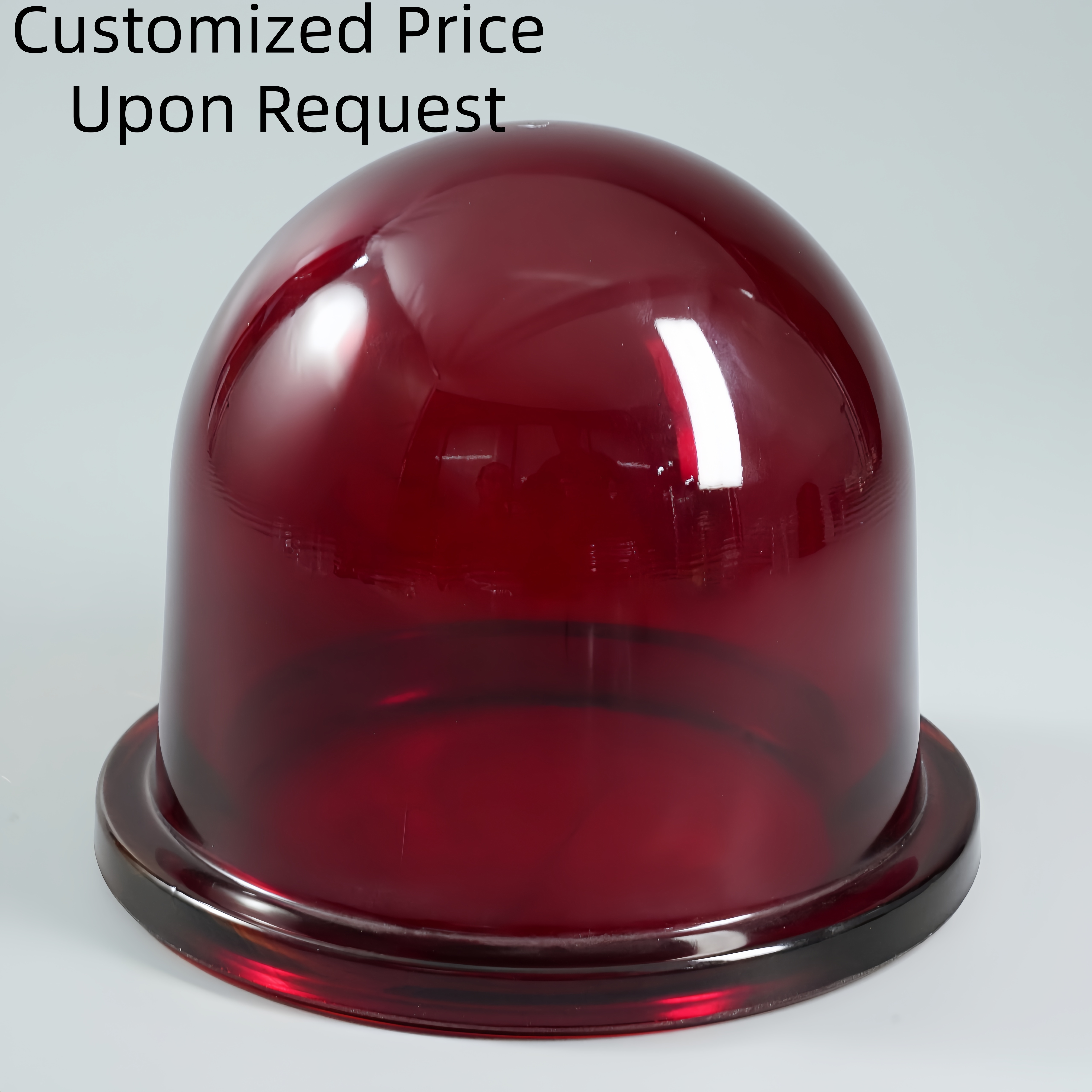
High-Temperature Resistant Pressed Glass Shade
Explosion-proof and crack-proof pressed shade specified for outdoor street light fixtures and harsh service environments.
View product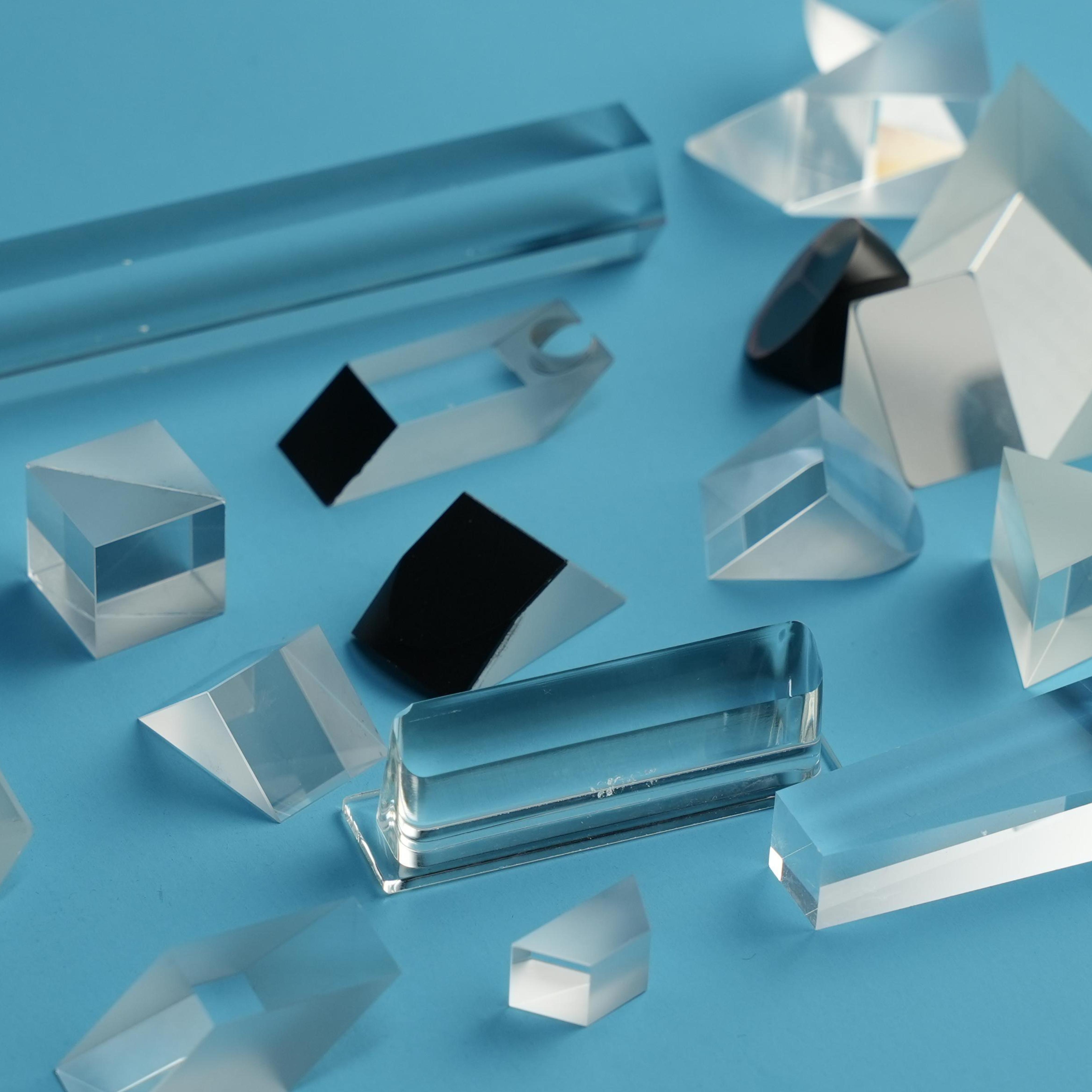
Custom AR-Coated Right-Angle Optical Prism
BO-GLASS quartz, BK7, K9 and fused silica options with high-precision 90-degree geometry for ODM and OEM programmes.
View product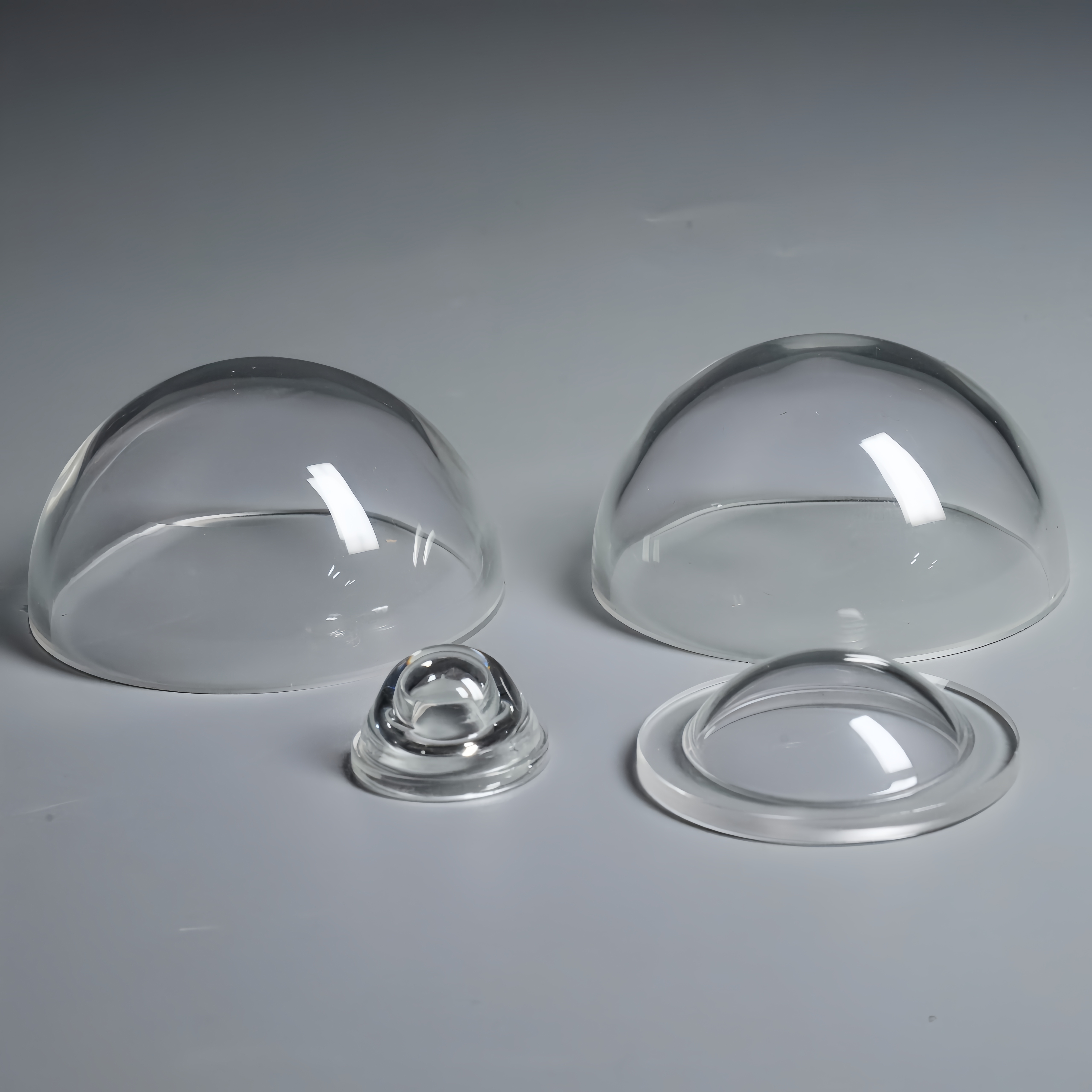
High-Pressure Borosilicate Optical Glass Dome
Deep-sea rated dome for underwater ROV and AUV camera housings, submersible lights and pressure-sensitive optical windows.
View product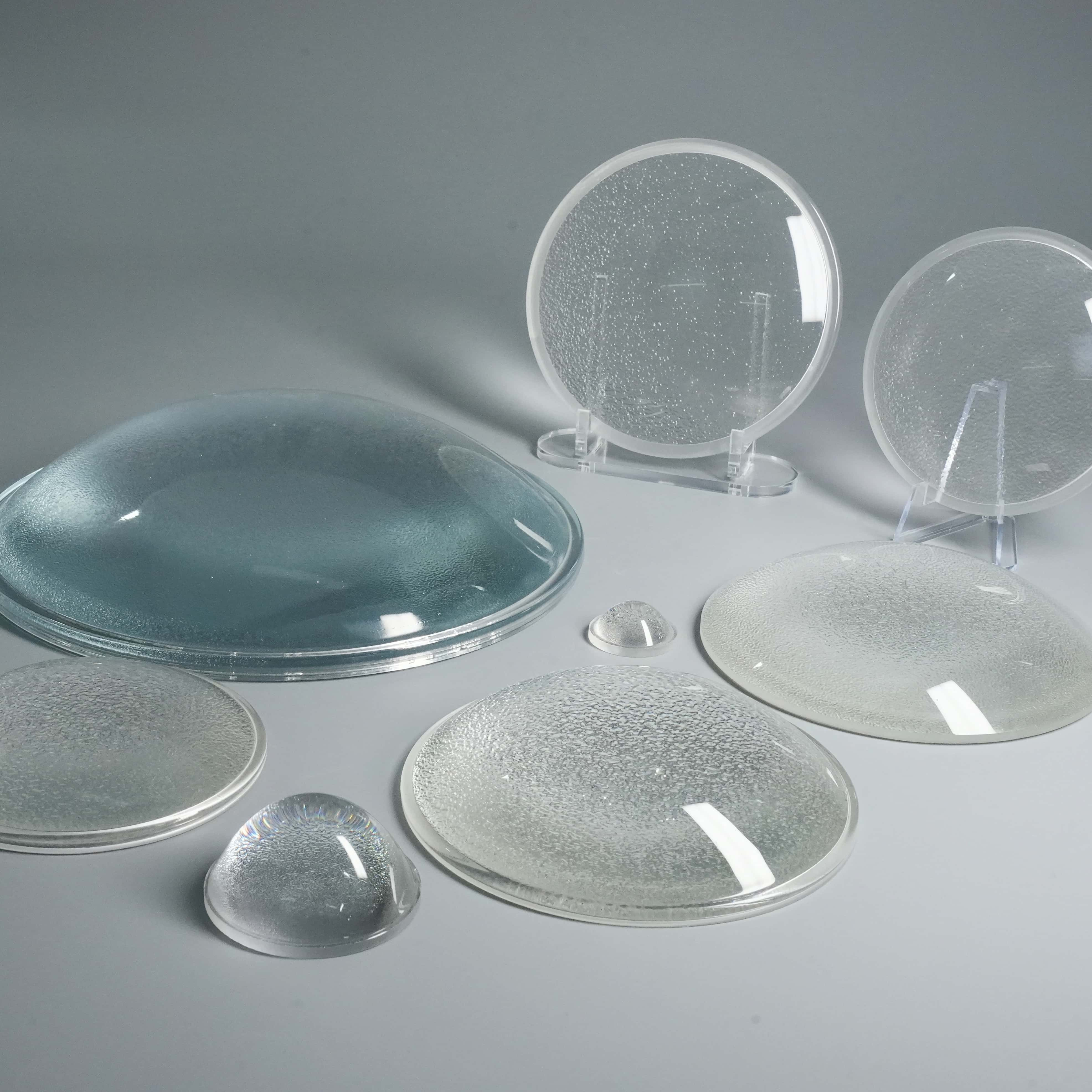
Asymmetric Borosilicate LED Roadway Lens
UV-protected borosilicate lens for street lights, designed to reduce glare and light pollution while shaping roadway output.
View product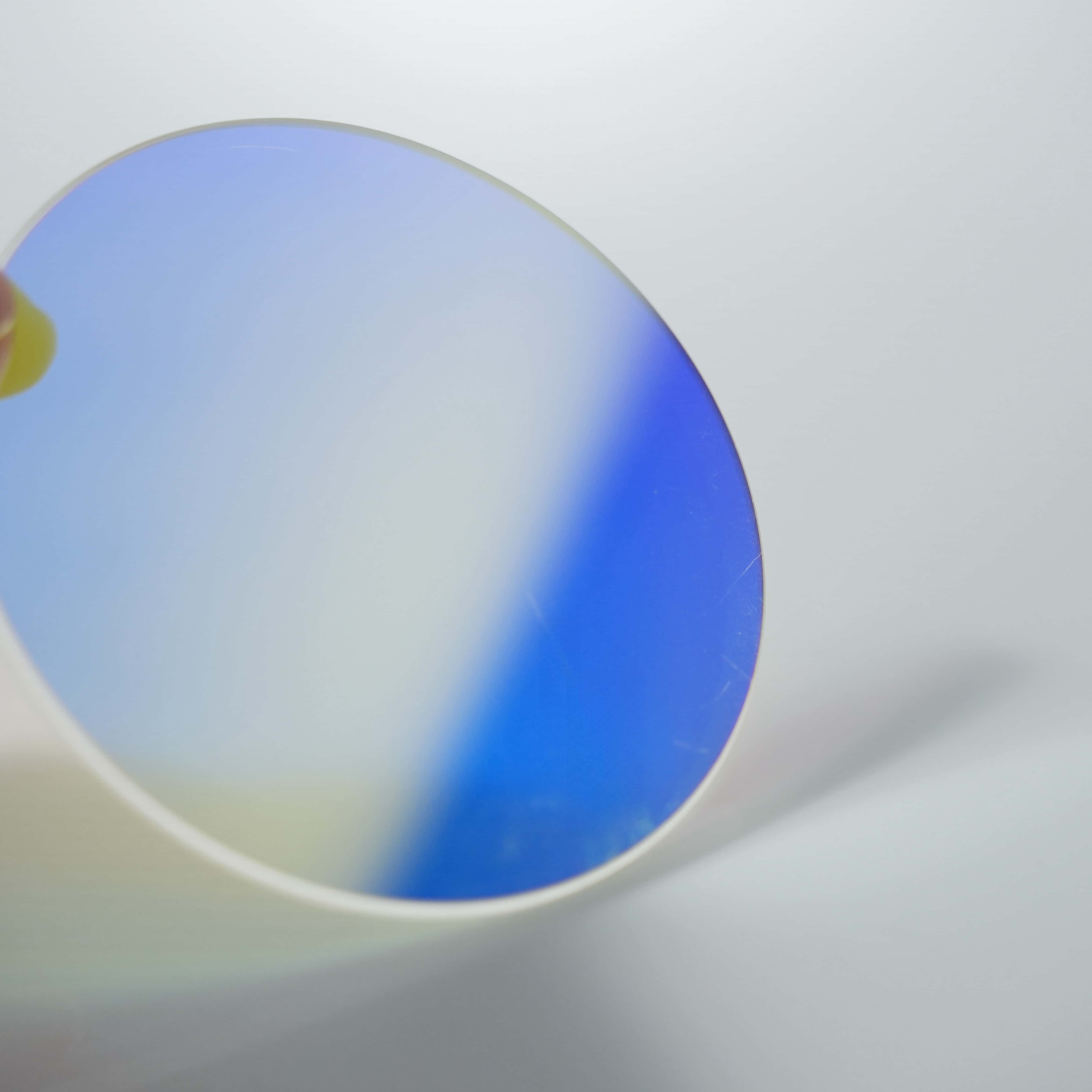
AR-Coated Longpass / Shortpass Optical Filter
500nm, 600nm and 700nm cut-edge options for spectroscopy, industrial sensors and instrument light management.
View product
Custom AR-Coated Square Optical Window
Clear borosilicate, K9, BK7, B270 and fused silica windows with anti-reflective coating and custom 50mm diameter options.
View product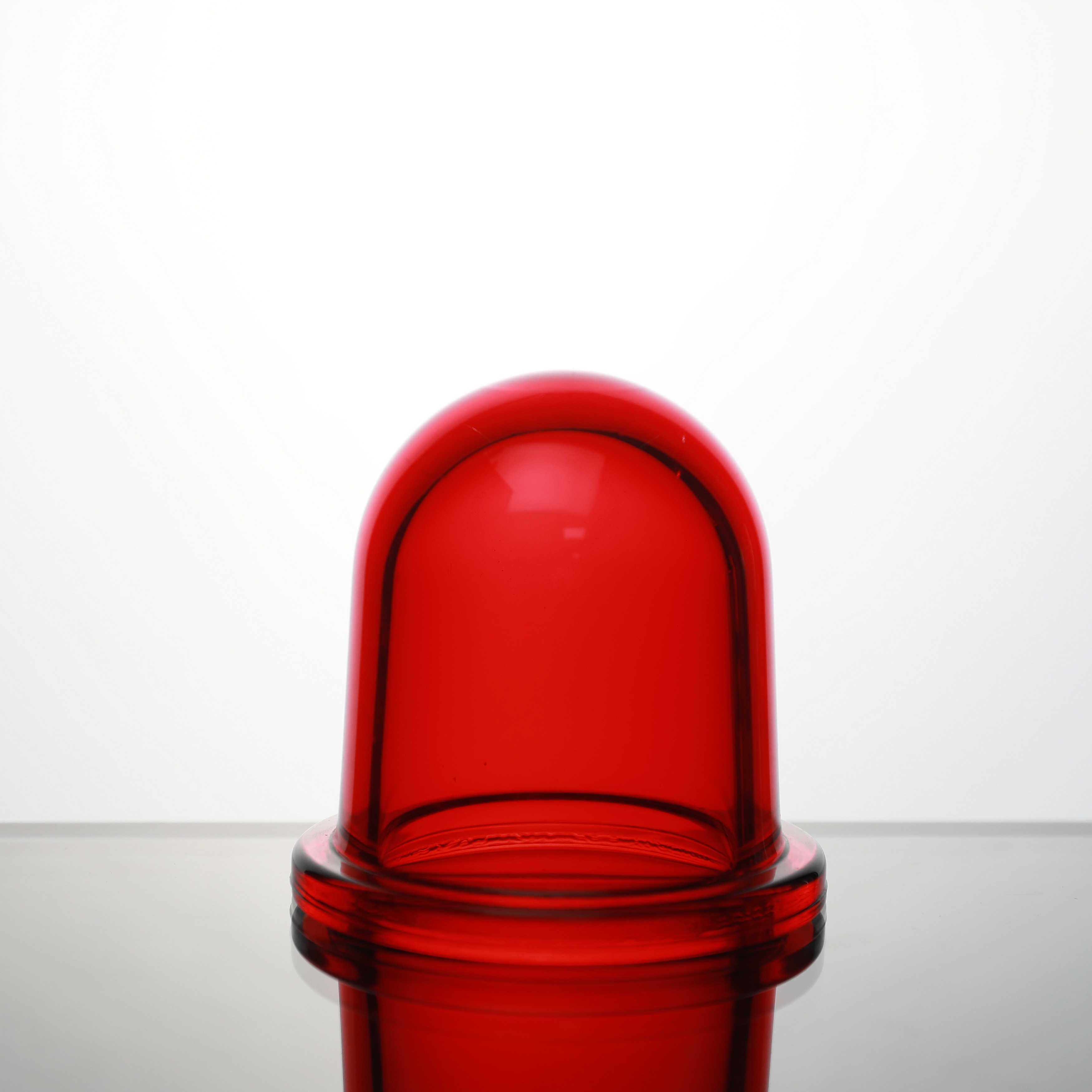
Custom Explosion-Proof Borosilicate Light Covers
Clear, custom-size explosion-proof covers for airport, outdoor and industrial fixtures with a modern antique profile.
View productNeed a product family quotation for Boston distribution? Send your annual volume, target landed cost and drawing set through the Contact Us channel.
Where Optical Coated Glass Is Used Across Greater Boston
The same material can behave very differently in an airport vault, a harbour-side signal, a Kendall Square instrument and a Beacon Hill lantern. These application scenarios show where specification decisions matter.
Aviation and airport lighting
For Logan International Airport, Hanscom Field and regional airfields, glass domes and lenses must handle heat, rain, de-icing activity and strict colour consistency. FAA-oriented fixture programmes often need clear documentation of dimensions, transmission and material batch.
Port, marine and waterfront systems
Boston Harbor, the Port of Boston and offshore wind supply chains expose signal lights, camera domes and navigation fixtures to salt spray and pressure. High-pressure borosilicate domes and thick-wall covers reduce the risk of pitting, cracking and water ingress.
Life-science and laboratory instruments
Cambridge, Kendall Square and Longwood demand windows, filters and prisms with low haze, stable transmission and repeatable dimensions. For instrument manufacturers, a coated optical window is part of the measurement path, not a decorative cover.
Municipal LED street and roadway lighting
Boston, Cambridge, Somerville and surrounding towns are balancing energy savings with glare control and neighbourhood character. Asymmetric borosilicate lenses and tempered covers help direct light onto the roadway while protecting high-power LED modules from weather and impact.
Historic and architectural lighting
Back Bay, Beacon Hill and the South End require visual fidelity. Custom pressed or handblown covers in clear, frosted or tinted glass can preserve the appearance of a traditional lantern while allowing a modern LED engine, gasket and safety shield to fit inside.
Robotics, LiDAR and autonomous systems
The Seaport and Route 128 corridor are developing sensors for mapping, inspection and automation. AR-coated hemispherical domes, square windows and prisms must deliver stable transmission across angle and temperature while resisting scratches and cleaning chemicals.
Boston Procurement Trends Shaping Optical Coated Glass Demand
Buyers are not only asking for a lower unit price. They are asking for lower lifecycle risk, faster technical response and a supply plan that works with New England weather and project schedules.
Coastal durability is becoming a line item
Boston buyers increasingly ask for salt-spray and humidity resistance data, edge-seal quality and cleaning instructions. Coating adhesion and substrate preparation now sit beside transmission in the specification review.
Dark-sky and glare reduction
Municipal and campus lighting projects are under pressure to reduce light trespass and glare. Asymmetric glass lenses, precise diffusion and controlled beam shaping are replacing generic clear covers in roadway and area lighting.
Miniaturized lab and sensor optics
Life-science automation, LiDAR and imaging systems are pushing for thinner windows, tighter flatness and custom AR curves. Buyers want a supplier who can discuss wavefront, transmission and coating angle, not only outer dimensions.
Dual sourcing and wholesale stock
Boston distributors and OEMs are reducing single-source risk. A factory that supports mixed-SKU cartons, repeatable coating batches and documented inspection can serve as a flexible second source without adding technical uncertainty.
Boston Buyer Scorecard: What Gets Evaluated Before a PO
Illustrative weighting drawn from B2B custom-glass procurement conversations. It is not a market statistic; it is a practical checklist for aligning a factory and a local distributor.
What a Boston Wholesaler Should Verify Before Sampling
Shanghai Tambi Glass Industrial Co., Ltd. operates as a manufacturer and trading company focused on custom lighting and optical glass. These are the practical advantages that matter when a Boston buyer moves from an initial RFQ to a repeatable supply programme.
Drawing-based OEM and ODM
Most orders are built around a 2D or 3D drawing, a physical sample or a fixture requirement. Engineers review wall thickness, draft, sealing faces and optical alignment before tooling. This reduces late changes after sample approval.
Material and coating breadth
Borosilicate 3.3, tempered soda-lime, fused quartz, BK7, K9 and B270 are available across pressed, blown, ground and coated formats. AR, longpass, shortpass, colour and hard-coat options can be quoted against the optical target.
Onsite-verified supplier records
Transparent supplier assessment, credit, transaction and trade-history records help Boston procurement teams complete qualification faster. Review the public verification pages before a sample order.
Fast technical response
Average response time is within six hours. Boston buyers can send a drawing, annual volume, target wavelength and preferred Incoterm for an engineering and commercial review before committing to tooling.
Export packing for fragile optics
Parts can be separated with foam or pulp dividers, packed in reinforced export cartons and palletized for sea or air freight. Distributor labelling and mixed-SKU packing can be discussed during quotation.
Wholesale programme support
For Boston-area distributors, the most useful factory partner is one that can quote a family of related parts, keep coating batches traceable and support repeat orders without re-engineering every SKU.
From Boston Drawing to Production Release: Six Controlled Steps
Clear checkpoints reduce the risk of a sample that passes visually but fails in the fixture, on the instrument or in the field.
Drawing and DFM review
Review thickness, draft, tolerance, sealing face, optical path and gasket compression. Identify manufacturability risks before tooling.
Material and coating plan
Select borosilicate, tempered, quartz, BK7 or another substrate. Define AR, bandpass, longpass, colour or hard-coat requirements.
Tooling and sampling
Use an existing mold where possible, or develop a new mold for pressing, blowing or grinding. Samples are measured and sent for fit and light testing.
Forming and annealing
Controlled forming, annealing or tempering relieves stress and supports thermal-shock performance in outdoor and high-power fixtures.
Coating and quality control
Apply optical or colour coatings, then inspect dimensions, appearance, transmission and coating condition against the agreed plan.
Export packing and documentation
Divider-packed cartons and palletized export packing protect polished and coated surfaces. Inspection reports and packing lists support customs and receiving.
Material Selection Matrix for Coated and Uncoated Glass
Use this as a starting point for a Boston RFQ. Final material and coating selection should be confirmed against your drawing, surface temperature, impact requirement, cleaning method and fixture certification plan.
| Material / coating | Typical thermal expansion | Best Boston use case | Buyer note |
|---|---|---|---|
| Borosilicate 3.3 | ≈3.3 × 10⁻⁶/K | Explosion-proof covers, high-power LED covers, Fresnel lenses, outdoor domes | Strong thermal-shock resistance; specify annealing and wall thickness carefully. |
| Tempered soda-lime | ≈9.0 × 10⁻⁶/K | Cost-sensitive outdoor covers, floodlight glass, vandal-resistant lenses | High impact strength at moderate temperatures; review thermal limits. |
| Fused quartz | ≈0.55 × 10⁻⁶/K | UV optics, high-temperature windows, special instrument sight glasses | Excellent heat and UV performance; confirm budget, lead time and coating compatibility. |
| BK7 / H-K9L | ≈7.1 × 10⁻⁶/K | Precision lenses, prisms, mirrors and instrument windows | Homogeneous optical substrate; define flatness, surface quality and AR curve. |
| B270 / clear borosilicate | Varies by grade | Instrument covers, sensor windows, display and lighting covers | Good visible transmission; confirm annealing, colour and coating durability. |
| AR / bandpass / longpass coatings | Substrate-dependent | LiDAR domes, spectroscopy filters, camera windows, sensor ports | Define wavelength, angle of incidence, transmission target and environmental test method. |
Reference values are typical, not a substitute for your approved drawing or fixture certification. For Boston coastal projects, discuss salt-fog exposure, cleaning chemicals and gasket materials with the glass supplier before finalizing the coating.
Optical Coated Glass Wholesale and Custom Manufacturing Questions
These are the questions procurement teams, distributors and engineering managers commonly ask when sourcing from a factory in Shanghai for the Boston market.
Can you supply optical coated glass to Boston from your Shanghai factory?
Yes. We quote factory-direct supply with FOB, CIF or other agreed Incoterms and coordinate with freight forwarders for air or sea movement to Boston and New England. Fragile parts are divider-packed and palletized; final packaging and labelling can be reviewed during quotation.
Which glass should I choose for Boston winter and salt-air conditions?
Borosilicate 3.3 is often selected for outdoor and high-power fixtures because its low thermal expansion helps with thermal shock. Tempered soda-lime may be suitable for moderate-temperature, impact-focused covers. For coastal humidity and salt fog, the coating system, edge preparation and gasket design matter as much as the base glass.
Can you manufacture to my drawing, including tolerances and coating curves?
Yes. Send a 2D or 3D drawing, a physical sample or a clear specification that includes dimensions, tolerance, material, colour, coating wavelength, annual volume and the fixture or instrument interface. Our engineers review manufacturability and propose a sample plan before mass production.
What are the typical MOQs and sample lead times?
Typical MOQs range from about 50 pieces for optical lenses and windows to 100–500 pieces for pressed or blown lighting covers, depending on whether an existing mold can be used. Sample quantities are available for evaluation; exact timing depends on drawing review, tooling and coating requirements.
What inspection documents can Boston procurement teams receive?
Depending on the part and the agreed quality plan, we can provide material information, dimensional inspection records, visual inspection reports and coating or transmission data. These support incoming inspection and supplier qualification; they do not replace certification held by the fixture or instrument manufacturer.
Do you support FAA L-810 or EN 50293 related lighting programmes?
We produce glass lenses and domes for fixture makers whose obstruction and signal lights are designed around FAA L-810 or EN 50293 requirements. Fixture certification is held by the luminaire manufacturer. We match colour, transmission, dimensions and material specifications, and can provide inspection reports on request.
How are coated surfaces protected during export packing?
Coated and polished surfaces are separated with foam or pulp dividers, packed in reinforced export cartons and palletized for sea or air freight. For wholesale distributors, custom labels, mixed-SKU cartons and incoming inspection identifiers can be discussed before production.
Can a distributor order a mixed set of glass parts for Boston stock?
Mixed-SKU packing and distributor labelling can be discussed during quotation, subject to minimum line quantities and safe packing limits. A mixed programme works best when drawings, coatings and inspection criteria are fixed before the order is released.
What information should be in a Boston RFQ?
Include the drawing or sample, glass material if known, dimensions and tolerances, operating temperature, impact or pressure requirement, target transmission or wavelength, coating requirement, gasket and housing interface, annual volume, destination and preferred Incoterm. This shortens the engineering review and reduces back-and-forth.
How do I start a factory review?
Use the contact button on this page to open the inquiry channel. Share your drawing, application, annual volume and Boston delivery requirement. The goal is a manufacturability note, material recommendation, coating plan and a clear path to a sample before you commit to production.
Send Your Drawing. Get an Engineering Review Within 6 Hours.
For Boston buyers, include the operating temperature, salt-spray or humidity exposure, target wavelength or transmission, gasket and housing dimensions, annual volume and preferred Incoterm. We will return a manufacturability note, material recommendation, coating plan and next-step sample path.
info@tambiglass.com