8 Optical Coated Glass Products Recommended for León Buyers
These product families cover the most common technical requests we receive from lighting OEMs, automation integrators, security-camera suppliers and photonics buyers. Each item can be adapted in size, thickness, colour, coating and edge finish to fit your housing and gasket design.
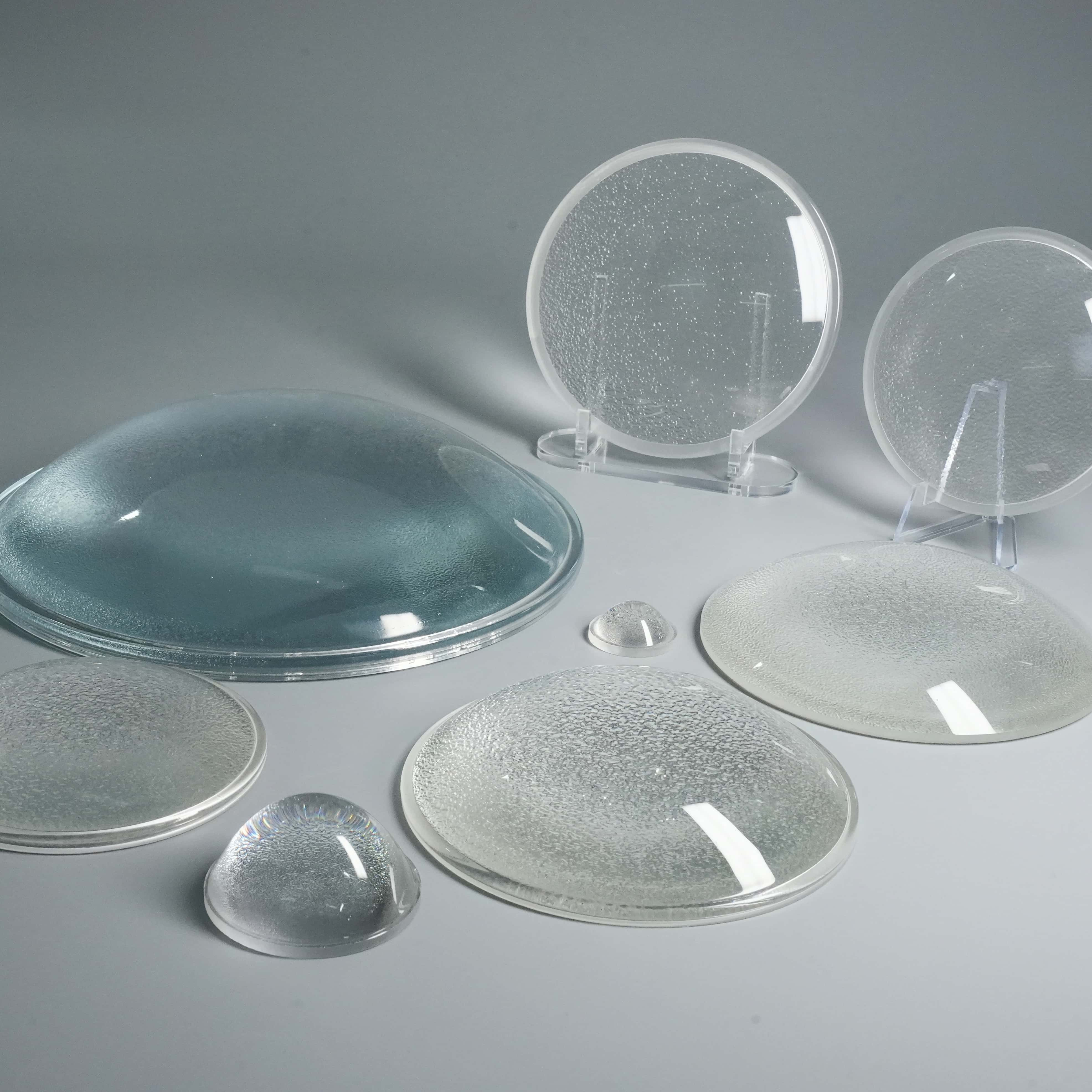
Bo Glass Asymmetric LED Lens Roadway Street Light Reduces Light Pollution Glare Borosilicate Glass UV Protection OEM
Asymmetric beam shaping helps reduce glare and light pollution in municipal and industrial-estate LED projects. Borosilicate glass and UV protection suit outdoor fixtures exposed to sun, heat and weather cycles.
View product
FAA Compliant Borosilicate Heat Resistant Glass Lens Runway In-Pavement Taxiway Lights IP68 Waterproof Optical Equipment Clear
Heat-resistant clear glass for runway and taxiway in-pavement fixtures. Designed for IP68 assemblies where optical clarity, dimensional repeatability and thermal stability are critical.
View product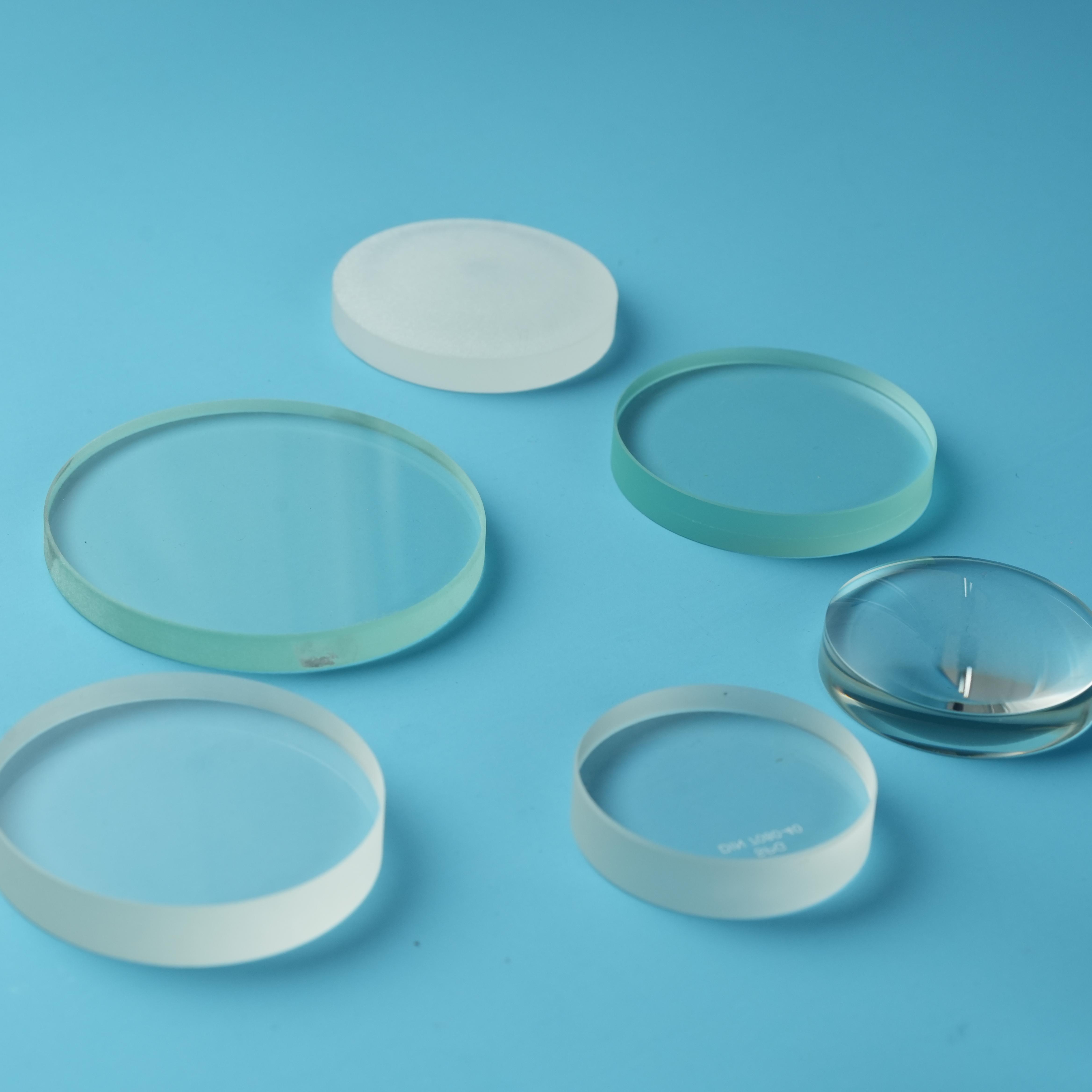
Custom OEM Bo Glass Clear Borosilicate K9 Bk7 B270 Fused Silica Anti-Reflective Coated Square Optical Window 50mm Diameter
AR-coated square window in borosilicate, K9, BK7, B270 or fused silica. Suitable for camera windows, sensor covers and inspection equipment used in automation and food-processing plants.
View product
OEM Borosilicate Glass Optical Dome Cover for Outdoor IP Cameras UV Resistant Waterproof Housing Anti-Reflective Coating
UV-resistant optical dome with anti-reflective coating for outdoor IP cameras. Supports perimeter-security, logistics-hub and smart-city camera installations where image clarity and weather resistance matter.
View product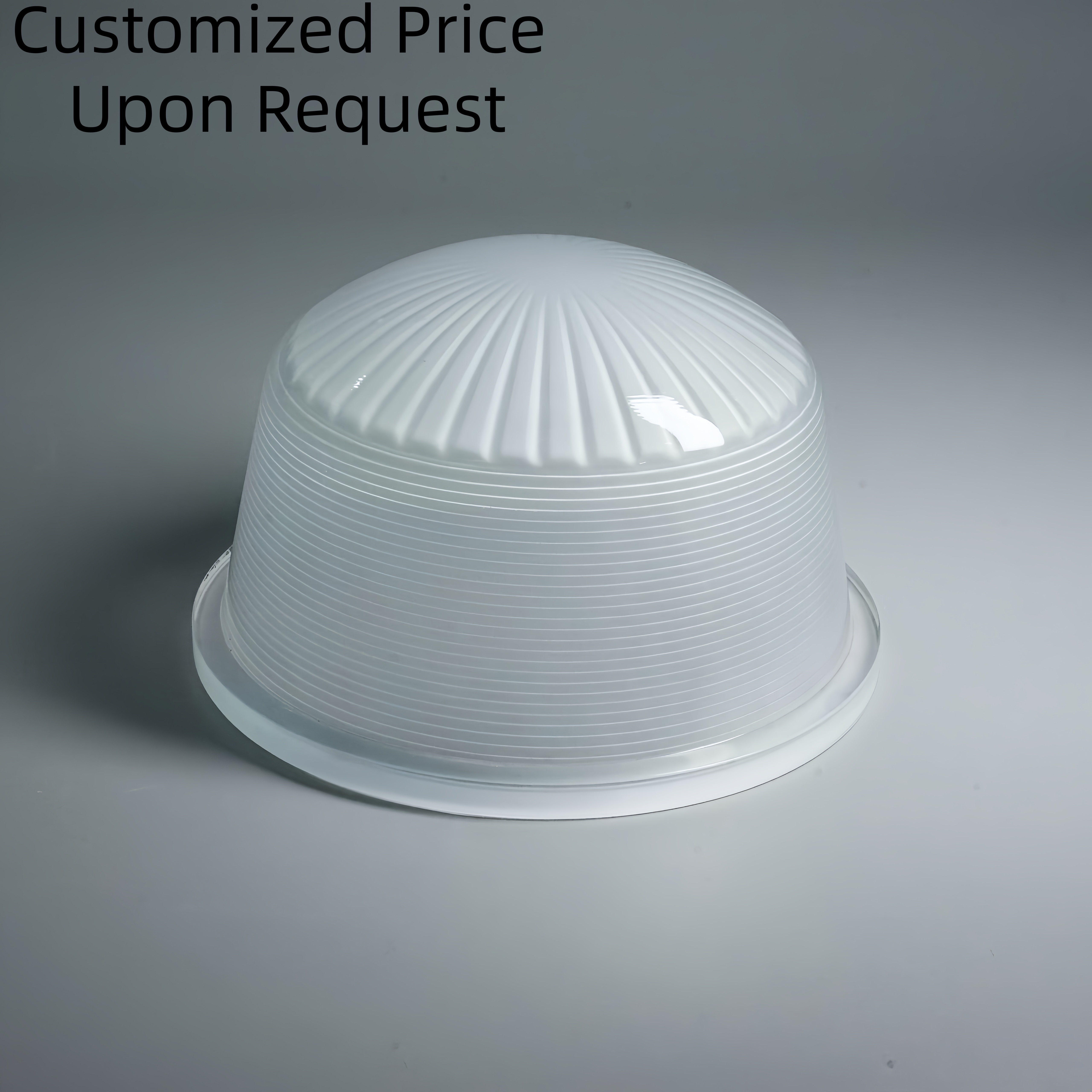
Transparent Explosion-proof Glass Shade, High Light Transmittance, Industrial Workshop Lighting
High-transmittance industrial glass shade for workshop, plant and hazardous-area luminaires. Wall thickness, sealing face and thermal-shock resistance can be reviewed against your fixture design.
View product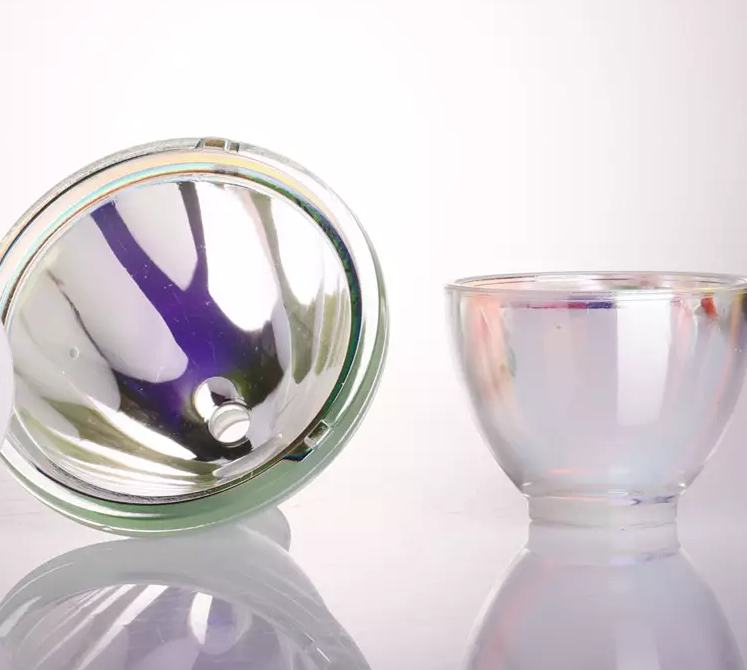
COB Glass LED Reflector Bowl Manufacturer Deep Design Perfect Beam Spotlights Projector Lights 20 60 90 Beam Angle
Deep glass reflector bowl for COB spotlights and projector lights. Beam angles can be matched to architectural, stage and high-bay fixture requirements.
View product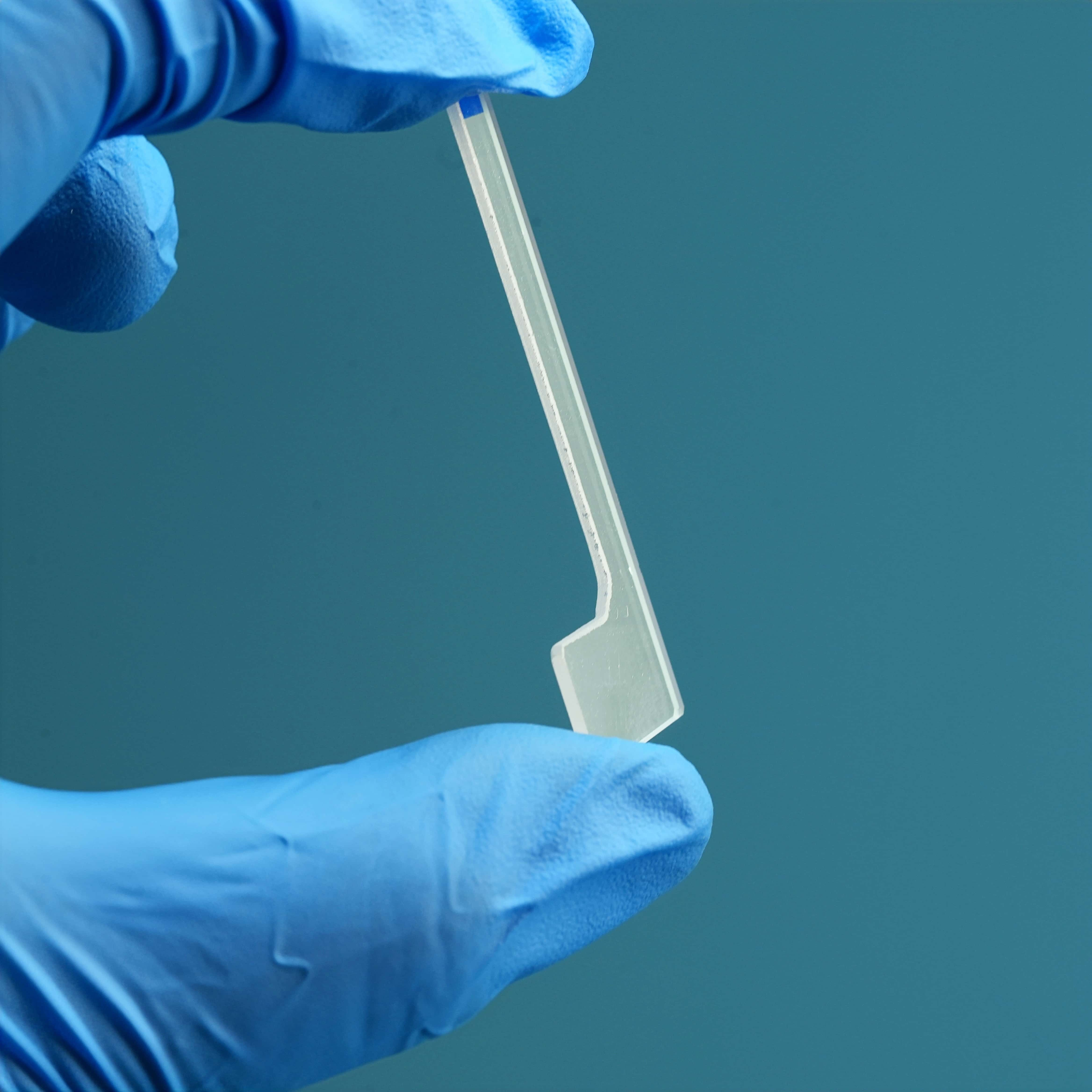
Anamorphic Prism Pair for Laser Beam Shaping Circularizing Elliptical Beams for Fiber Coupling Applications
Anamorphic prism pair for laser beam shaping and circularising elliptical beams. Relevant to photonics labs, fibre-coupling set-ups and optical instrumentation.
View product
Factory Price Custom Precision Optical 1-200mm Clear BK7 Spherical Quartz Glass Half Ball Concave/Biconvex Lens Anti-Reflective
Custom BK7 spherical lenses from 1–200 mm, including half-ball, concave and biconvex forms with AR coating. For vision, laser and laboratory optical assemblies.
View productA Shanghai Optical Glass Factory Built for León’s Procurement Reality
This page is written for procurement engineers, luminaire manufacturers, automation integrators and optical-system buyers in León who need more than a picture catalogue. An optical coated glass factory must control substrate, geometry, coating, annealing, sealing and packing so the part performs inside the finished device.
Drawing-Based OEM, Material Engineering and Export Coordination
Shanghai Tambi Glass Industrial Co., Ltd. is a manufacturer and trading company focused on lighting and optical glass. For León buyers, the practical value is a drawing-based workflow: DFM review, mould proposal, sampling, inspection and export-safe packing. The company is an onsite-verified supplier with trade capacity, credit and transaction records available for supplier qualification.
We do not imply local stock in León. The advantage is engineering and manufacturing depth in Shanghai plus freight coordination to Spain. Most orders begin with a 2D/3D drawing or a physical sample; our engineers review wall thickness, draft, tolerance, sealing faces, optical path alignment and coating requirements before tooling starts.
Our range covers borosilicate 3.3, tempered soda-lime, fused quartz and BK7/K9 optical glass, with pressed, blown, ground, polished and AR-coated processes. Typical MOQs range from 50 pieces for optical lenses to 100–500 pieces for pressed or blown lighting covers, depending on whether an existing mould can be used.
Drawing-Based OEM / ODM
Send drawings, samples and annual volume. We review manufacturability before quoting.
Material Engineering
Borosilicate, tempered soda-lime, fused quartz and optical BK7 selected by application.
Coating & Optical Finishing
AR coating, optical windows, lenses, prisms, filters and signal-light domes.
Onsite-Verified Transparency
Supplier assessment, credit index, transaction level and trade history are published.
Sampling & QC
Dimensional, visual and material checks are agreed before mass production.
Export Packing
Foam or pulp dividers, reinforced cartons and palletised freight for fragile glass.
Where Coated Optical Glass Creates Value in León
León and the wider Castilla y León region combine manufacturing, agri-food, mining, energy, logistics and public-infrastructure investment. Each environment stresses glass differently, so material and coating choices should follow the operating condition, not a generic catalogue.
Automotive & Mobility Inspection
León’s automotive and component supply chain uses machine vision, laser sensing and inspection windows. AR-coated windows and precision BK7 lenses support stable image capture, reduced reflection and repeatable measurement on production lines.
Food, Beverage & Agri-Processing
Inspection windows, sensor covers and lighting optics are used in food plants, cold-chain facilities and agri-processing lines. Smooth glass surfaces, controllable tolerances and chemical resistance help equipment builders meet washdown and hygiene requirements.
Mining, Energy & Hazardous Areas
Dusty workshops, fuel depots, chemical plants and energy sites require robust lampshades and covers. Thick-wall borosilicate glass and controlled annealing improve resistance to heat build-up, thermal shock and impact in industrial luminaires.
Municipal, Roadway & Smart-City Lighting
Asymmetric LED lenses, UV-resistant domes and high-transmittance covers support street-lighting retrofits and camera-based urban systems. Optical design can reduce glare, improve light distribution and protect sensitive camera modules.
Logistics, Warehousing & Security
León’s transport corridors and distribution centres rely on outdoor cameras, high-bay lighting and perimeter protection. Optical domes and explosion-proof shades can be specified for IP-rated housings, dust exposure and variable outdoor temperatures.
Photonics, Labs & Laser Systems
Research groups, laser integrators and optical-instrument builders need prisms, windows and lenses with controlled transmission. Anamorphic prisms, AR-coated windows and BK7 lenses support beam shaping, fibre coupling and measurement systems.
Development Trends Driving Demand for Coated Optical Glass
Procurement teams in León are not only buying a component; they are buying fewer field returns, better light control, faster qualification and documentation that supports European compliance files.
LED Retrofit and Glare Control
Municipal and industrial lighting upgrades are moving toward higher efficiency and tighter glare control. Asymmetric lenses and well-controlled diffusion become part of the specification, not an afterthought.
IP68 and Outdoor Durability
Outdoor fixtures, camera domes and roadway optics are expected to survive rain, dust, UV and temperature cycling. Borosilicate and tempered glass choices need to match gasket pressure and sealing-face flatness.
EU Documentation and Traceability
Purchasing teams increasingly ask for material reports, dimensional inspection records and clear batch identification. Documentation should be agreed at RFQ stage so the finished fixture file is complete.
Automation and Machine Vision Growth
León’s manufacturing base continues to invest in inspection, robotics and quality-control systems. AR-coated windows and precision lenses reduce stray light and improve repeatability in vision stations.
Custom Import Programmes
Rather than force a catalogue part into a housing, León OEMs increasingly use drawing-based import programmes. The supplier must support samples, tolerances, coating specs and freight coordination to Spain.
Supply Continuity and Packing
Fragile glass can cause expensive line stops if packing fails. Export cartons, dividers, palletisation and labelling are now evaluated as part of total landed cost for León projects.
Optical Coated Glass Material and Coating Selection Guide
For León projects, the first technical decision is the substrate. The coating then follows the optical target, the light source and the environment. Selecting both early avoids cracked covers, transmission loss and costly field returns.
| Material | Thermal expansion (×10⁻⁶/K) | Typical max. working temperature | Key strength | Best for León applications |
|---|---|---|---|---|
| Borosilicate 3.3 | ≈ 3.3 | ≈ 450 °C | Excellent thermal-shock resistance | Explosion-proof shades, high-power LED covers, roadway lenses and Fresnel optics |
| Tempered soda-lime | ≈ 9.0 | ≈ 250 °C | High impact strength, economical | Outdoor covers, floodlight glass and vandal-resistant lenses |
| Fused quartz | ≈ 0.55 | ≈ 1000 °C+ | UV transmission, extreme heat | UV optics, high-temperature windows and specialised instrument glass |
| Optical BK7 / K9 | ≈ 7.1 | ≈ 300 °C | Homogeneous, nd ≈ 1.517 | Precision lenses, prisms, windows, filters and machine-vision components |
Values are typical references. Final specification should be confirmed against your drawing, lamp surface temperature, impact rating, gasket design, IP requirement and the standard your finished fixture must meet. For coated parts, the coating stack and angle of incidence should be stated in the RFQ.
A Controlled 6-Step OEM Process for León Buyers
Clear checkpoints reduce surprises between sample approval and mass production. The same workflow applies whether you need 50 optical lenses or a pilot run of pressed lighting covers.
Drawing Review
DFM check of thickness, draft, tolerance, sealing face, optical path and coating requirement.
Material & Coating Spec
Choose borosilicate, tempered glass, fused quartz or BK7; define AR or colour target.
Tooling & Sampling
New or existing moulds for pressing, blowing or grinding; samples sent for your fit and light test.
Forming & Annealing
Controlled forming, annealing or tempering to relieve stress and support thermal stability.
Coating & Inspection
AR or colour finishing, dimensional checks, visual inspection and agreed reports.
Export Packing
Divider-packed cartons, palletisation and freight preparation for sea or air shipment to Spain.
Questions León Buyers Ask Before Ordering
These are the practical questions that come up during supplier qualification, sample approval and first shipment planning.
How do we start a custom optical coated glass project from León?
Send a 2D/3D drawing or a physical sample with dimensions, tolerance, material, colour, coating target, operating temperature, sealing method and annual volume. Our engineers review manufacturability, propose mould options and confirm samples before mass production. Average technical response time is within 6 hours.
Can you ship to León and which Incoterms are possible?
Yes. We export to Spain and can quote EXW, FOB, CIF Spanish port or DAP León according to the project. Samples usually move by air; volume orders are planned for sea or air depending on weight, packing and delivery schedule. Freight terms are confirmed in the quotation.
What MOQ should a León trial order plan for?
Typical MOQs range from 50 pieces for optical lenses to 100–500 pieces for pressed or blown lighting covers, depending on whether an existing mould can be used. Sample quantities are available for evaluation, and a pilot batch can be discussed before volume production.
Borosilicate, tempered soda-lime, fused quartz or BK7?
The choice depends on thermal shock, impact, optical tolerance and cost. Borosilicate 3.3 suits high-temperature and explosion-proof lighting; tempered soda-lime offers impact strength at moderate temperatures; fused quartz is used for UV and extreme heat; BK7/K9 is preferred for precision imaging, prisms and windows.
What quality documents can be provided?
Material reports, dimensional inspection, visual inspection and coating data can be agreed at RFQ stage. For fixture makers designing to FAA L-810 or EN 50293 requirements, we match colour, transmission and dimensional specifications; the finished-fixture certification is held by the luminaire manufacturer.
How is fragile optical glass packed for León delivery?
Parts are separated by foam or pulp dividers, packed in reinforced export cartons and palletised for sea or air freight. Custom packaging and labelling for distributors can be arranged, and packing arrangements can be confirmed before shipment to reduce transit risk.
Send Your Drawing. Get an Engineering Review Within 6 Hours.
Share substrate, dimensions, tolerance, coating, operating temperature, IP or hazardous-area requirement and annual volume. Our Shanghai team will respond with manufacturability notes, tooling options and a quotation route to León.
Send an InquiryTechnical contact: info@tambiglass.com