LED Optical Lens Manufacturers & Suppliers for Stuttgart
Drawing-based borosilicate, tempered, quartz and optical glass lenses, domes, prisms and filters for Stuttgart automotive, LiDAR, machine vision, industrial lighting and laboratory OEMs.
Eight LED Optical Lens & Optical Glass Products for Stuttgart Projects
Stuttgart buyers often need a lens, dome, prism, filter or protective glass cover that matches a drawing, a housing stack-up and a defined optical test. These eight product families are a practical starting point for automotive lighting, sensor integration, industrial LED fixtures, hazardous-area lighting and analytical instruments.
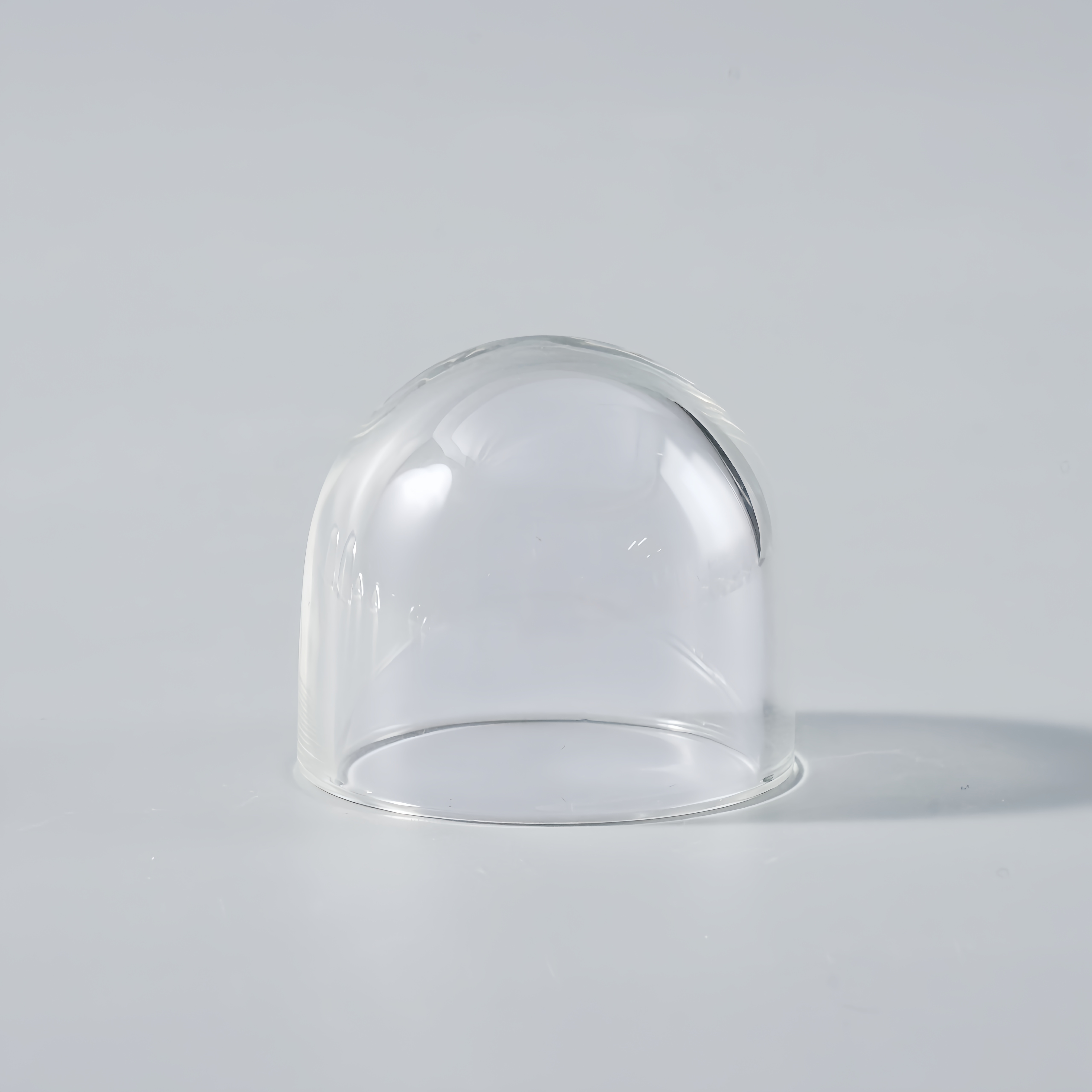
Customizable OEM Optical Glass Domes Broadband AR Coating Precision Hemispherical Windows for LiDAR Sensors Scientific
Broadband AR-coated hemispherical windows for LiDAR and scientific instrument front ends, where transmission, aperture definition and sealing interface all matter.
- Broadband AR coating
- Precision hemispherical geometry
- Drawing-based OEM review
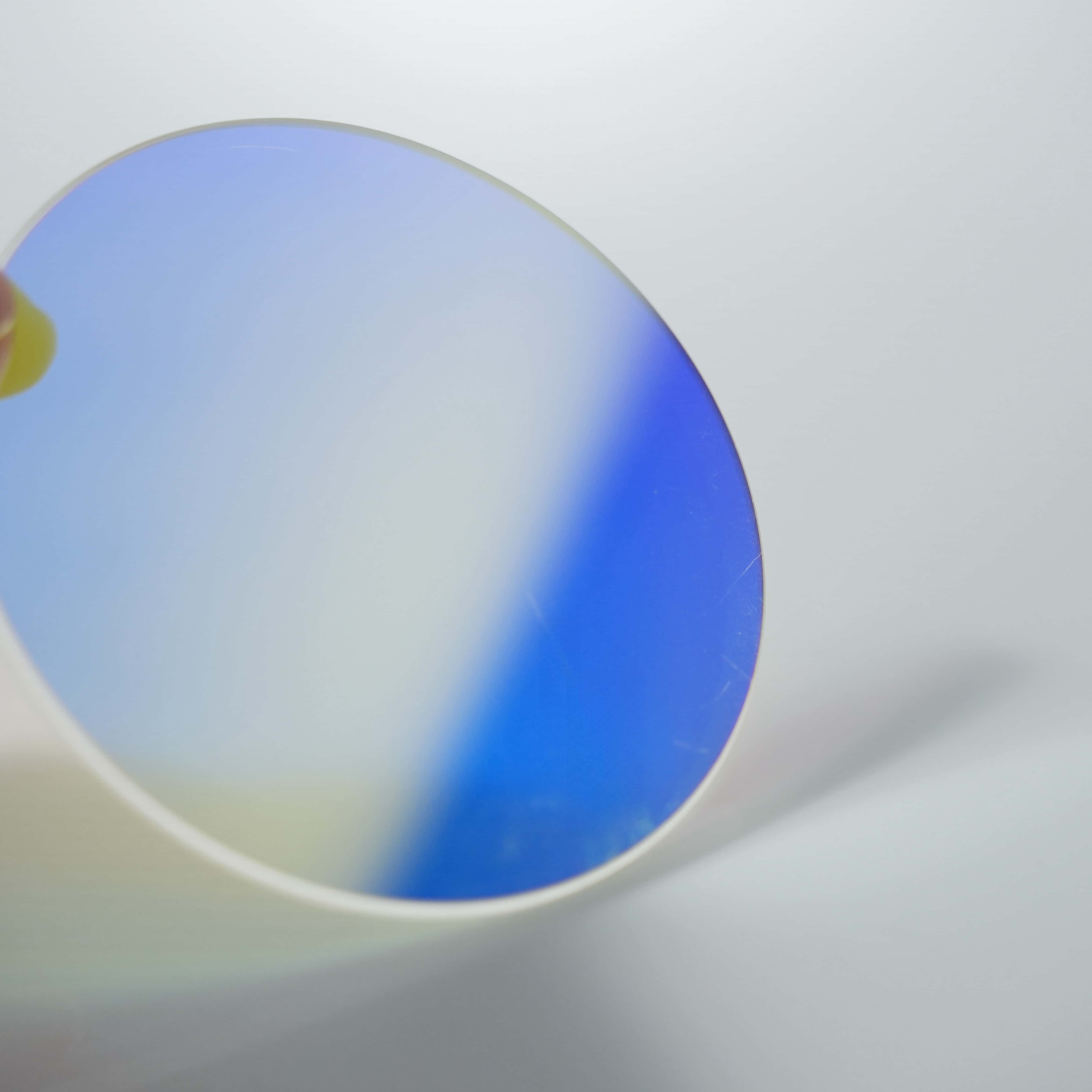
Optical Borosilicate Glass Longpass Shortpass Filter 500nm 600nm 700nm AR Coating Cut-Edge for Spectroscopy Industrial Sensor
Longpass and shortpass filter options for industrial sensors, analytical instruments and machine vision channels. Wavelength, diameter, thickness and edge finish are confirmed against the optical requirement.
- 500/600/700 nm options
- AR-coated cut edge
- Sensor and spectroscopy use

Borosilicate Transparent Explosion-proof Shade, Heat-resistant & Crack-proof, Transparent Protective Cover
A transparent borosilicate protective cover for high-temperature or impact-sensitive luminaires in workshops, chemical plants and hazardous-area lighting assemblies.
- Heat-resistant borosilicate
- Crack-resistant cover design
- Custom sealing face
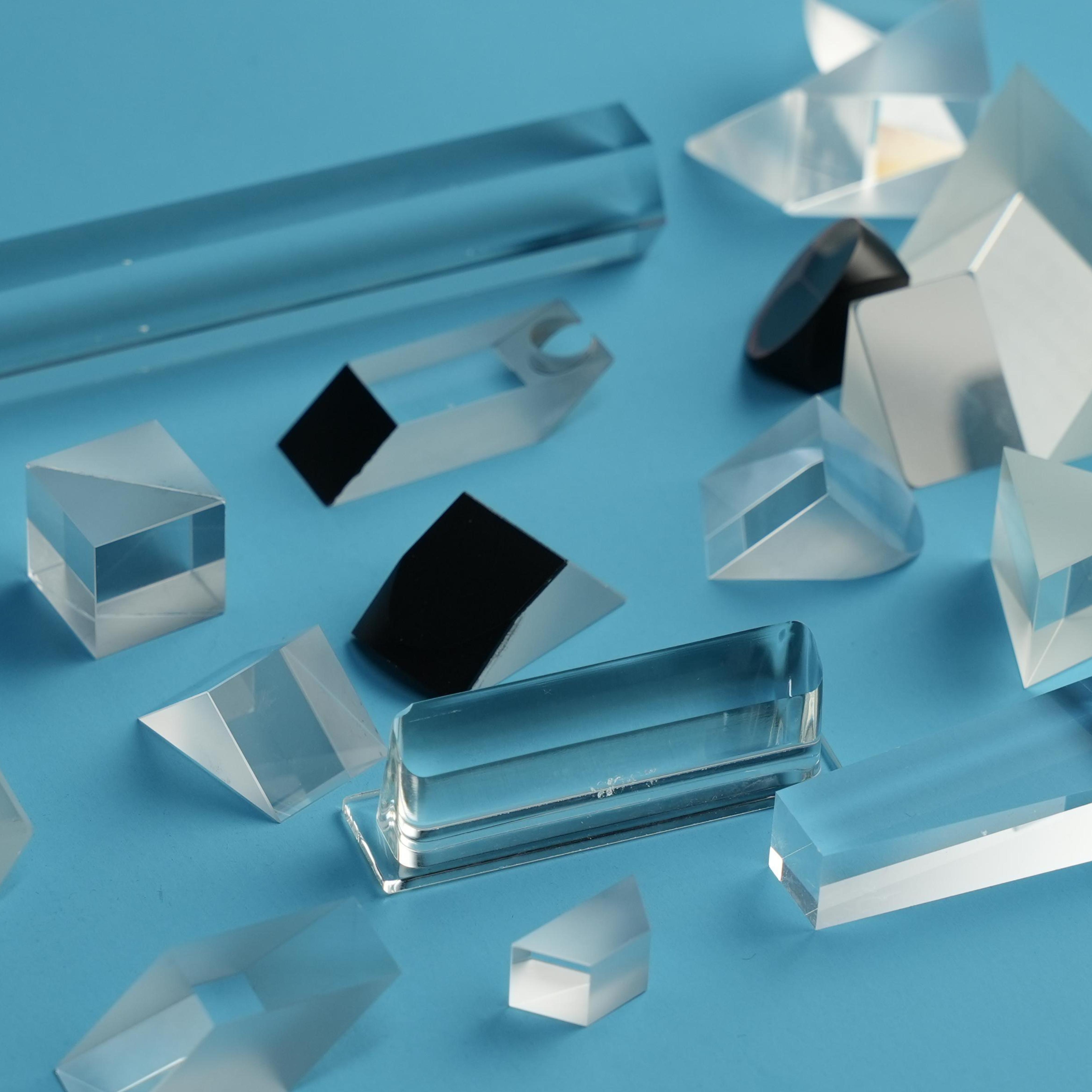
Factory Custom BO-GLASS Quartz BK7 K9 Arcoated Fused Silica High Precision Right Angle Prism 90Degree Clear ODM/OEM 3-Year
Right-angle prisms in quartz, BK7/K9 or fused silica for beam steering, alignment and compact optical assemblies. Coating and tolerance are reviewed against the drawing.
- 90-degree prism geometry
- Quartz, BK7 or K9
- ODM/OEM review

Supplier Custom Size Shape Pressed Mold Heat Resistant High Borosilicate Headlight Glass Lens Cover Headlight Glass Cover
Pressed borosilicate headlight lens covers and protective glass for heat, impact and outdoor exposure, suitable for automotive lighting and specialty vehicle projects in the Stuttgart region.
- Pressed to drawing
- Heat-resistant glass
- Custom size and shape

Manufacturer OEM Precision Grade BK7 K9 Optical Glass Aspherical Lens Anti-Reflective Coating Diameter 0.5-25mm MOQ 100 Pcs
Precision-grade BK7/K9 aspherical lens with AR coating for compact LED and imaging modules. Diameter range, surface form and MOQ are confirmed at drawing review.
- Diameter 0.5–25 mm
- AR-coated optical glass
- MOQ 100 pcs

High-Light Transmission Clear Borosilicate Glass Dome Lens LED Outdoor Lighting Fixtures Impact Resistant Anti-Scratch OEM
Clear borosilicate dome lens for outdoor lighting fixtures that need high light transmission, scratch resistance and stable performance under weather cycling.
- High light transmission
- Impact and scratch resistant
- OEM outdoor fixtures
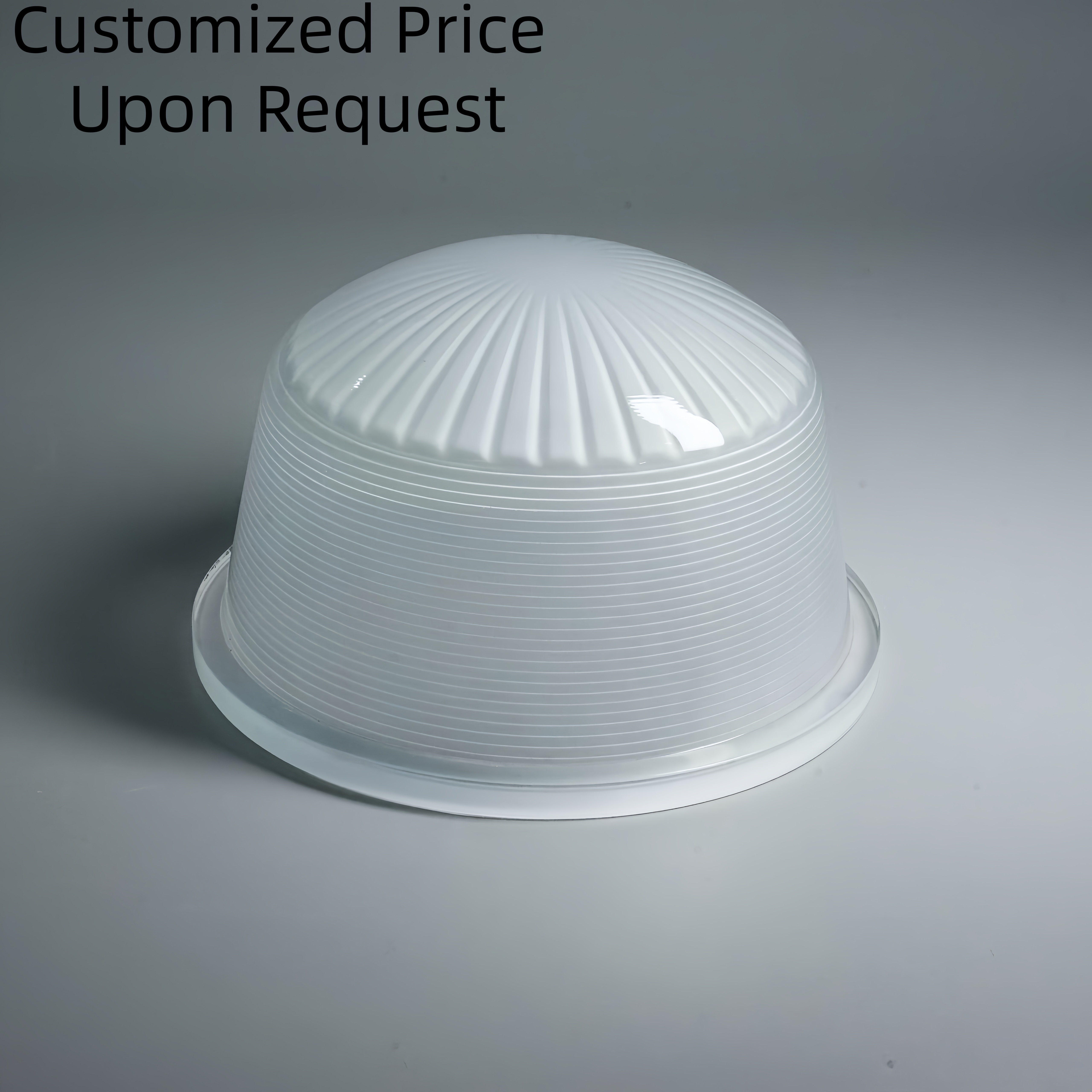
Transparent Explosion-proof Glass Shade, High Light Transmittance, Industrial Workshop Lighting
Transparent explosion-proof glass shade for industrial workshop lighting, designed to combine high transmittance with a robust protective barrier.
- High transmittance
- Industrial workshop use
- Custom protective cover
Why Stuttgart Procurement Teams Evaluate LED Optical Lens Suppliers Differently
Stuttgart is not a single market. It is a dense engineering ecosystem where automotive lighting, sensor modules, machine vision, automation, analytical instruments and architectural LED systems overlap.
A buyer in this region may need a visible lens for a high-bay fixture, an AR-coated dome for a LiDAR prototype, a prism for an alignment bench, or a red signal dome for a transport application. The purchasing route is often technical first: a drawing, a STEP model, a stack-up, a transmission target and a sealing concept arrive before a price request. That is why the phrase LED optical lens manufacturers and suppliers for Stuttgart should be read as a request for engineering evidence, not just a catalog.
For a Stuttgart project, the optic is usually part of a qualification chain. The lens must fit the housing, survive the lamp temperature, maintain the beam pattern, work with the gasket and pass the customer’s optical test. A supplier that only quotes a diameter and a price can create expensive rework. Tambi Glass reviews wall thickness, draft, sealing faces, coating margins, edge quality and glass choice before tooling. That review is especially important for borosilicate covers and domes, where thermal shock and annealing stress affect field reliability. It also matters for BK7/K9 lenses and prisms, where index homogeneity, surface form and AR coating repeatability affect the final measurement.
Documentation is part of the product. Procurement teams in Baden-Württemberg often need RoHS/REACH declarations, material reports, inspection records, packaging specifications and a clear change-control path. Our role as a manufacturer and trading company is to coordinate these inputs across glass forming, grinding, coating and inspection, so the buyer receives one technical response instead of fragmented quotations.
High-brightness LEDs and enclosed fixtures can push glass covers into thermal cycling. Material choice should be based on surface temperature, cleaning practice and the risk of sudden cold-water contact.
A clear cover is not automatically an optical component. Beam angle, transmission, edge blackening, AR coating and mounting alignment can all affect the final system performance.
German procurement teams often ask for records before they ask for a second discount. Material reports, dimensional inspection and packed-lot identification help reduce approval delays.



A Shanghai Optical Glass Partner Built Around Your Drawing
Shanghai Tambi Glass Industrial Co., Ltd. supplies custom glass components to lighting and optical OEMs worldwide. For more than a decade we have focused on one practical question: how should glass perform inside a real luminaire or instrument? That experience covers heat build-up behind high-power LEDs, thermal shock from rain on hot covers, impact loads in hazardous areas and color accuracy for signal lights.
Located in Shanghai, we operate as a manufacturer and trading company with a team of 11–50 people and annual export revenue in the US$2.5M–5M range. Our average response time is within 6 hours. The production chain combines pressed, blown, ground and coated processes, and we work with long-term partners in Europe, North America and Japan. For Stuttgart buyers, this means an English-speaking technical contact, drawing-based samples, and export packing developed for fragile glass.
Beyond product, our verification pages let procurement teams review supplier assessment, credit index, transaction level, trade capacity and trade history. An onsite-verified supplier status is useful at the qualification stage, but it is not a substitute for the drawing review. We treat both as part of the same approval process.
- Drawing-based OEM / ODM
- Borosilicate, tempered, quartz and BK7/K9
- AR, bandpass and protective coatings
- Export-ready inspection and packing
Where LED Optical Lenses and Technical Glass Fit in the Stuttgart Region
Each application stresses glass differently. The most useful supplier conversation starts with the operating condition, not only the part number.
Automotive Lighting & Sensor Modules
Projection lenses, aspherical lenses, headlight covers and protective windows for automotive lighting and Tier 1 sensor projects in and around Stuttgart.
LiDAR, ADAS & Machine Vision
AR-coated hemispherical domes, windows and filters that keep transmission high and stray light controlled in sensing and inspection assemblies.
Industrial LED & Hazardous Areas
Explosion-proof shades, high-transmission domes and protective covers for plants where heat, dust, moisture and impact are routine.
Measurement & Laboratory Optics
BK7/K9 prisms, windows and filters for alignment, spectroscopy and analytical instruments requiring stable optical paths and repeatable dimensions.
Outdoor & Architectural LED
Borosilicate dome lenses and impact-resistant covers for façade, park, street and high-bay luminaires exposed to weather cycling and cleaning.
Automation & Laser Systems
Custom ground and coated glass for machine builders that need repeatable dimensions, clean edges, stable coating performance and export-ready documentation.
Optical Glass Sourcing Trends Visible in Stuttgart and Baden-Württemberg
Stuttgart’s engineering culture rewards suppliers who can connect material science, optical performance and production evidence.
Heat is designed in, not tested out
Higher-brightness LEDs and compact fixtures increase thermal load on covers and lenses. Borosilicate 3.3, controlled annealing and realistic temperature data are becoming more important than a generic “heat resistant” claim.
Coating data moves into the drawing package
AR coatings, bandpass filters and edge blackening are increasingly specified with transmission targets and acceptance criteria. Suppliers must be able to discuss coating margins, not only send a sample photo.
Compliance evidence is a supplier filter
Procurement teams expect RoHS/REACH documentation, inspection records and change control. Suppliers who can organize these files before the first production order shorten qualification for Stuttgart projects.
High-mix, low-volume sourcing is growing
Prototype and retrofit programs need smaller batches without losing dimensional discipline. Existing mold review, flexible sample routes and clear MOQ logic help industrial buyers balance speed and cost.
Material Selection for LED Optical Lens and Protective Glass Projects
Material choice is not a simple upgrade ladder. It should follow the fixture’s thermal reality, impact exposure, cleaning method and optical function.
| Material | Thermal expansion (×10⁻⁶/K) | Typical max. working temp. | Key strength | Best for Stuttgart-type uses |
|---|---|---|---|---|
| Borosilicate 3.3 | ≈ 3.3 | ≈ 450 °C | Excellent thermal-shock resistance | Explosion-proof shades, high-power LED covers, outdoor domes, Fresnel lenses |
| Tempered soda-lime | ≈ 9.0 | ≈ 250 °C | High impact strength, economical | Outdoor covers, floodlight glass, vandal-resistant protective lenses |
| Fused quartz | ≈ 0.55 | ≈ 1000 °C+ | UV transmission, extreme heat | UV optics, analytical instrument windows, high-temperature viewing ports |
| Optical BK7 (H-K9L) | ≈ 7.1 | ≈ 300 °C | Homogeneous, nd ≈ 1.517 | Precision lenses, prisms, mirrors, filters and alignment components |
Values are typical references. Final specification is confirmed against your drawing, lamp surface temperature, impact rating, cleaning chemicals, coating target and the standard your fixture must meet.
A Controlled Six-Step Process for Custom LED Optical Lens Orders
Clear checkpoints reduce surprises between sample approval and volume production.
Drawing Review
We check wall thickness, draft, tolerance, sealing face, coating margin and optical path before tooling.
Material & Mold Plan
The glass type, forming route and mold strategy are selected around function, volume and risk.
Sample & Fit Check
Samples are measured and sent for fit, light and sealing validation by your engineering team.
Forming & Annealing
Pressed, blown or ground parts are produced with controlled annealing or tempering to relieve stress.
Coating & Inspection
AR, bandpass or protective coating is applied as required, followed by dimensional and visual QC.
Export Packing
Fragile glass parts are separated, reinforced, carton-packed and palletized for sea or air freight.
Enterprise Advantages for Technical Buyers in Stuttgart
Our value is not a generic product list. It is the ability to convert a drawing and an operating condition into a manufacturable glass part with a documented supply path.
Senior lighting and molding engineers review manufacturability, propose mold options and confirm samples before mass production.
Borosilicate, tempered soda-lime, fused quartz, BK7/K9, AR coating, bandpass filters and protective finishes under one supply chain.
Onsite-verified supplier records, supplier assessment, credit index, trade capacity and material or inspection reports on request.
Reinforced packing for fragile optics, custom labeling options and an average technical response time within 6 hours.
Common Local Procurement Questions About LED Optical Lenses
These are the practical questions procurement and engineering teams ask before requesting a sample.
How should a Stuttgart buyer send a drawing for an LED optical lens quotation?
What is the typical MOQ for custom LED lenses and glass covers?
Can you support RoHS, REACH and lighting standard documentation?
How long does shipping to Stuttgart usually take?
Borosilicate or tempered soda-lime glass for outdoor LED fixtures?
How are fragile optical glass parts packed for export?
Start a Stuttgart LED Optical Lens Inquiry
Share your drawing, surface finish, transmission target, operating temperature, coating requirement and annual volume. Our team will review manufacturability, suggest the right glass and coating route, and reply within an average of 6 hours.