LED Lens Manufacturers & Supplier in the Bangkok market
A procurement and engineering guide for Bangkok-area OEM lighting teams sourcing custom LED lenses, optical domes, prisms, filters and explosion-proof glass covers for tropical heat, monsoon humidity and long-service installations.
Eight LED and Optical Glass Products for Bangkok Buyers
These product routes cover the most common Bangkok sourcing requests: outdoor LED lighting, industrial safety lighting, automotive and signal optics, laser beam shaping, precision windows and custom optical assemblies. All dimensions, coatings, glass types and edge finishes can be engineered to your drawing.

Custom AR-Coated Optical Window, 50 mm
Borosilicate, K9, BK7, B270 and fused silica options for sensors, LED housings and protective viewing ports.
View product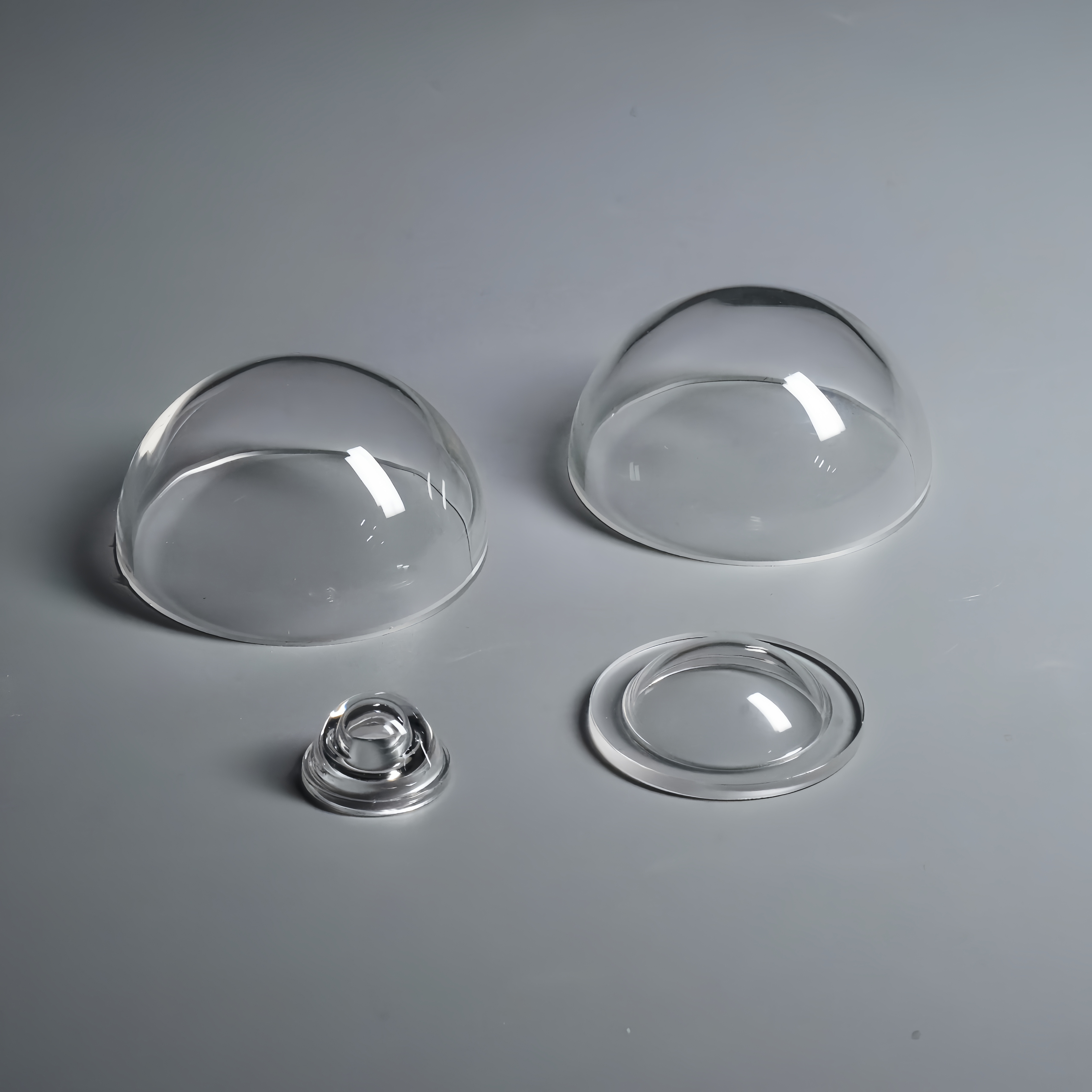
Molded K9 Optical Dome Lens with AR Coating
Clear K9 optical domes for customized headlight glass, LED lighting OEM projects and outward-facing optical protection.
View product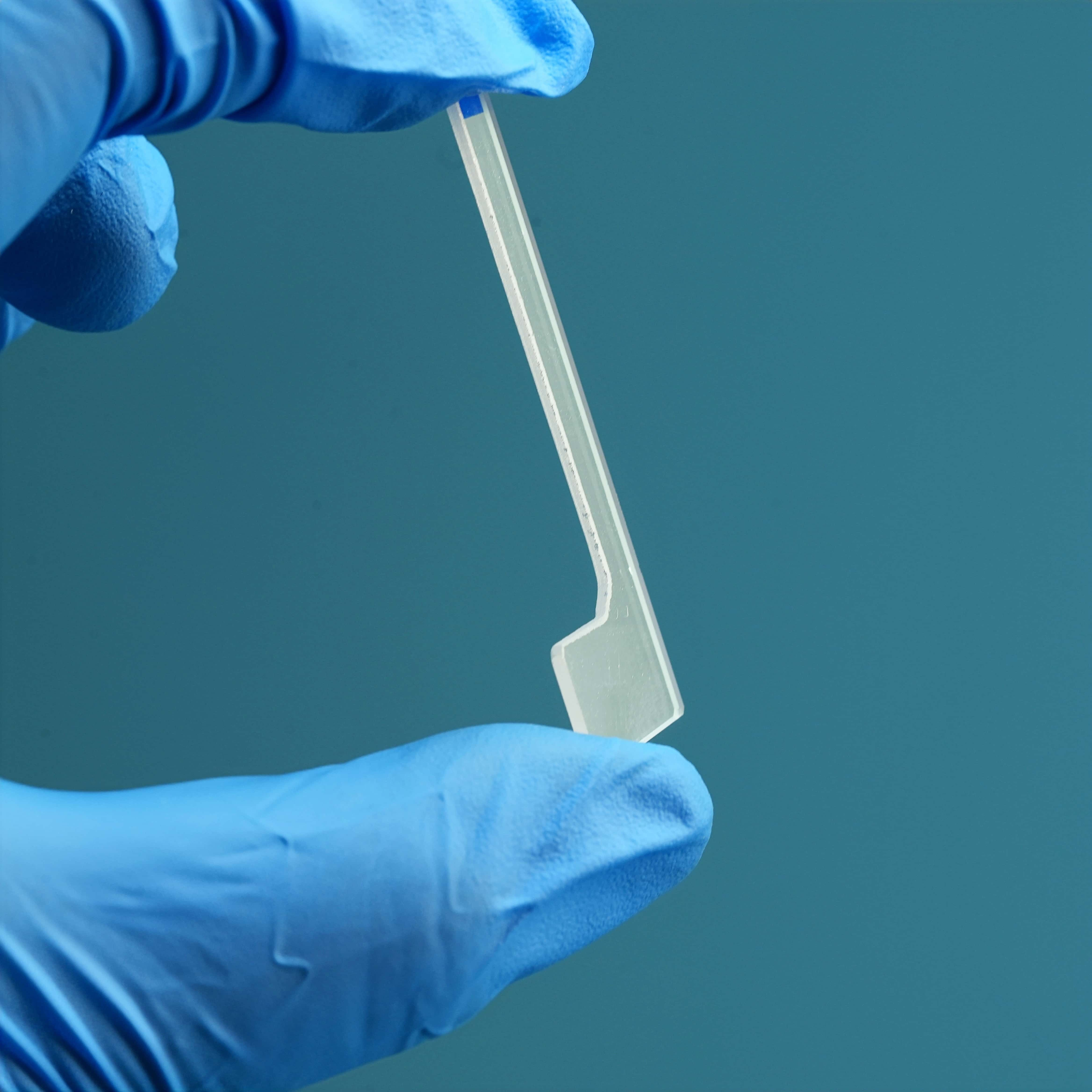
Anamorphic Prism Pair for Laser Beam Shaping
Circularize elliptical beams for fiber coupling, sensing and laboratory instruments that need stable optical alignment.
View product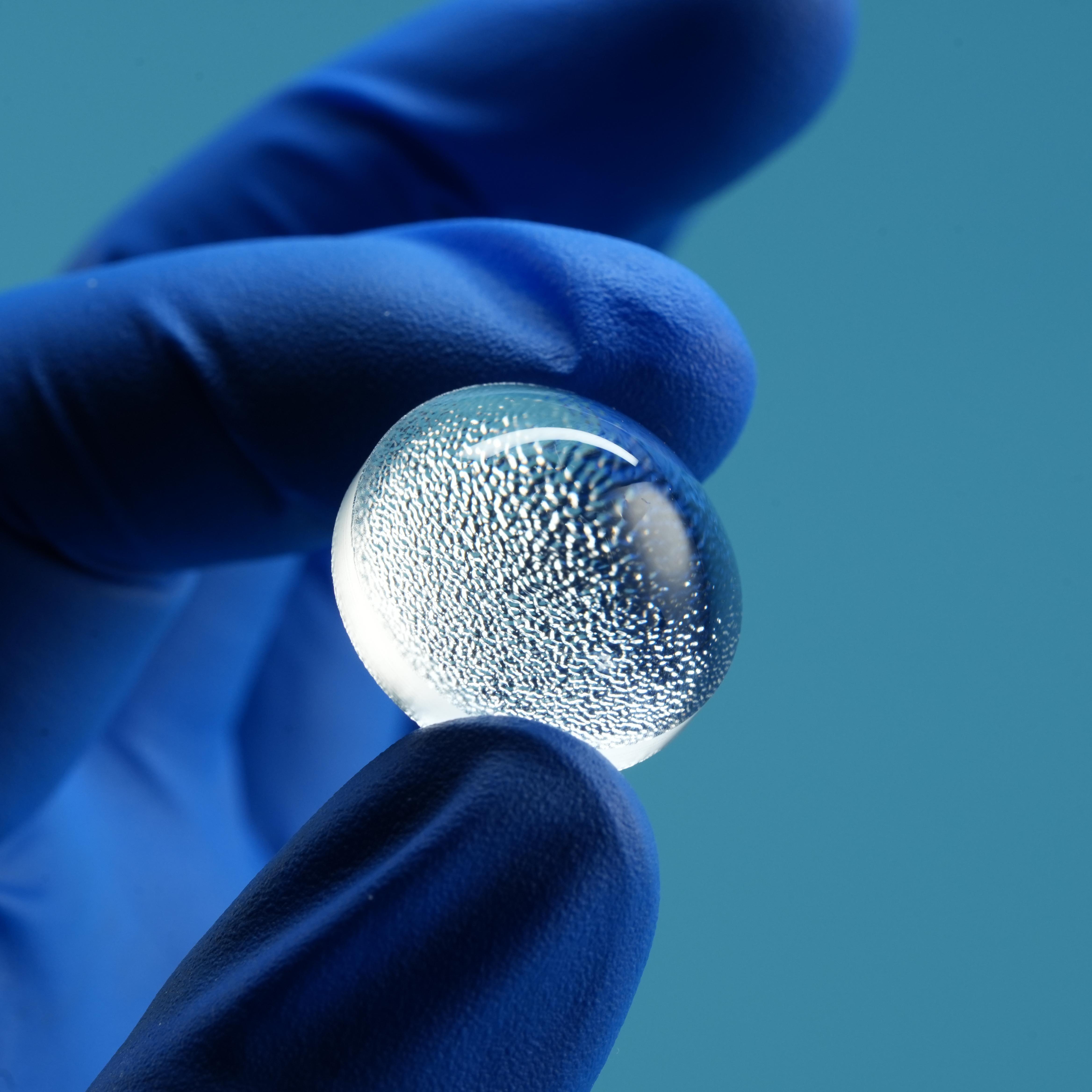
Custom BK7 and Quartz Lens, 1–200 mm
Spherical, half-ball, concave and biconvex lens forms with AR coating and custom diameter, center thickness and tolerance.
View product
Heat-Resistant Borosilicate Car Light Glass
Custom size, shape and color for automotive lamps, industrial fixtures and high-temperature lighting accessories.
View product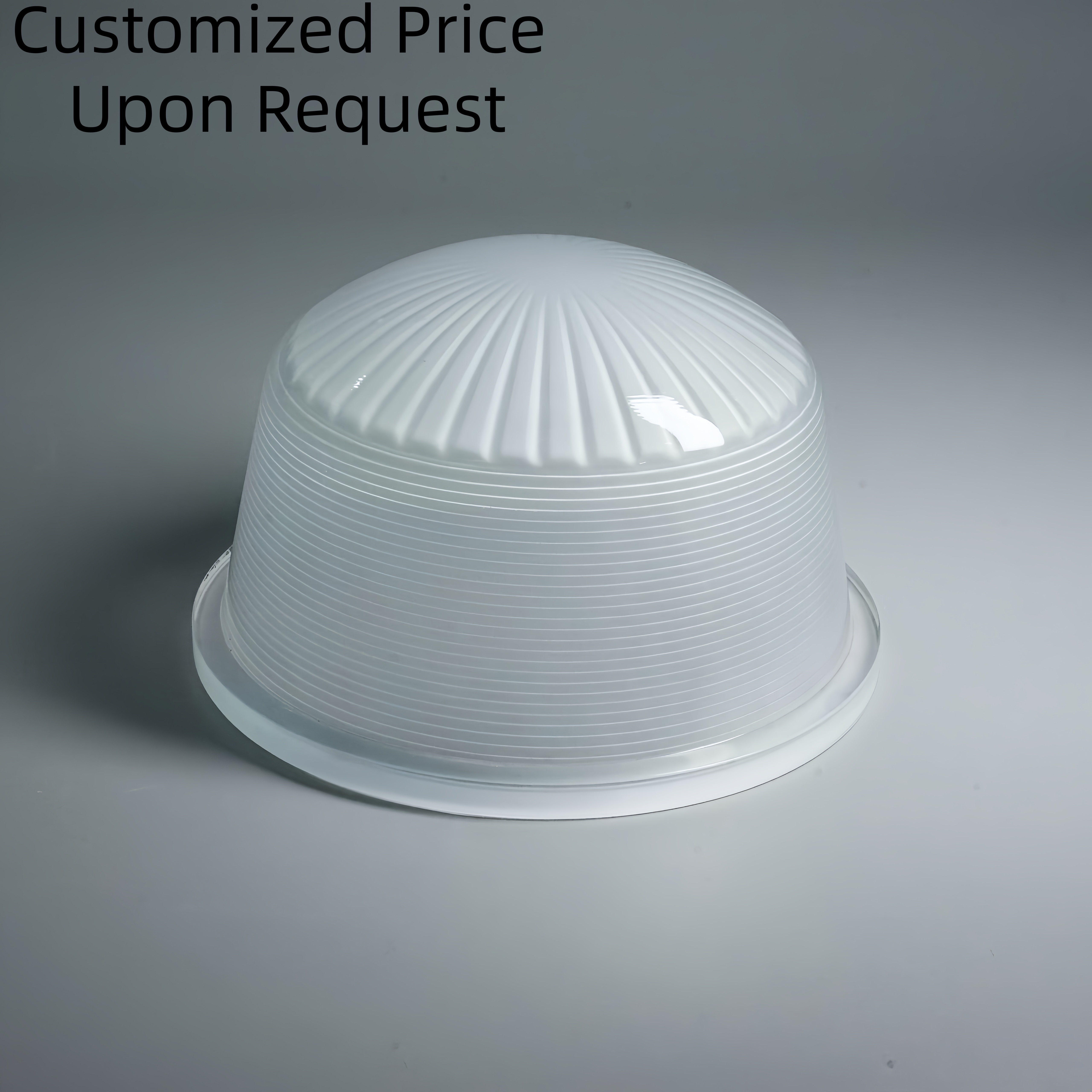
High-Transmittance Explosion-Proof Glass Shade
Transparent industrial glass shades for workshop lighting where dust, humidity, heat and impact resistance matter.
View product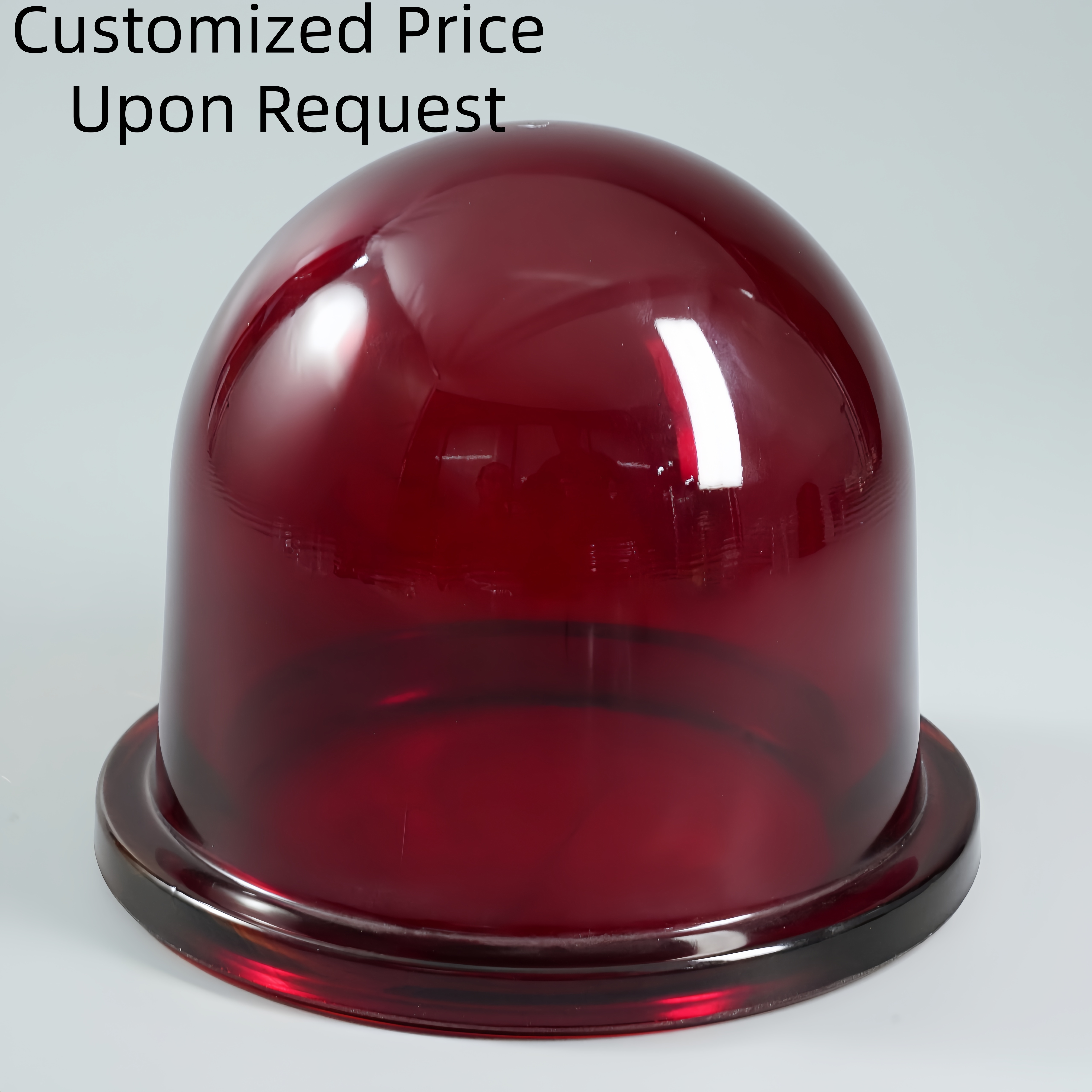
Pressed Glass Shade for Outdoor Street Lights
Heat-resistant, explosion-proof and crack-proof pressed glass for street lights exposed to sun, rain and thermal cycling.
View product
Clear Borosilicate Glass Dome Lens for LED Fixtures
Impact-resistant, anti-scratch and high-transmission domes for LED outdoor lighting, façade luminaires and signal equipment.
View productWhy LED Lens Specification in Bangkok Is Not a Price-Only Decision
The Bangkok metropolitan region combines high-rise density, long outdoor service hours, monsoon rain, intense ultraviolet exposure and warm ambient temperatures. Those conditions change how lens material, coating, gasket and LED thermal design must work together.
Bangkok is a demanding real-world test bed for LED lens manufacturers and suppliers. A lens that performs well in a temperature-controlled showroom may still fail on a Bangkok façade, street-lighting pole, industrial estate or airport approach if the glass and fixture are not treated as one system. The most useful specification is not only the diameter. It is the interaction of glass composition, LED module temperature, gasket compression, anti-reflective coating, edge finish, maintenance interval and installation orientation.
For buyers in Bangkok, the best supplier relationship is usually not the one that offers the lowest unit price at the sample stage. It is the one that can review drawings before tooling, identify thermal-shock and sealing risks, control color and transmission batch-to-batch, and pack fragile glass correctly for tropical logistics. This page is written from the perspective of an OEM glass manufacturer supplying drawing-based glass components to lighting and optical buyers worldwide.
Shanghai Tambi Glass Industrial Co., Ltd. has more than ten years of experience in custom borosilicate glass covers, explosion-proof lampshades, signal light domes, LED lenses, prisms and optical filters. Our production logic is simple: define the fixture environment first, then choose the glass, forming process, coating and inspection plan. For Bangkok projects, that means paying particular attention to heat build-up behind high-power LEDs, sudden rain contact on hot covers, salt and humidity near coastal supply chains, and the true cost of replacing failed lenses in hard-to-reach installations.
Bangkok operating envelope to review before quotation
These practical factors matter more than a catalogue transmission curve when the fixture is intended for Thailand.
Where LED Lenses and Optical Glass Perform in Bangkok and Thailand
Bangkok is not one market. It is a dense mix of aviation, public lighting, commercial real estate, industrial estates, automotive clusters and emerging sensor ecosystems. Each application puts a different stress on glass.
Aviation and obstruction lighting
Airport-adjacent projects, high-rise roofs and tower lighting need red or clear glass with stable chromaticity, UV resistance and thermal-shock performance. Buyers should define the lens as part of the optical and sealing stack, not as a last-minute spare part.
Street, soi and public realm lighting
Bangkok roads, expressways, parks and residential sois require lenses that resist impact, cleaning chemicals, heat from high-power LED modules and repeated rain exposure. High transmission and controlled glare matter for both safety and neighbourhood comfort.
Industrial estates and hazardous areas
Projects linked to Map Ta Phut, Amata, Laem Chabang and other industrial zones often need explosion-proof shades and emergency-light enclosures. Dust, humidity, chemical exposure and impact load are more important than decorative appearance.
Commercial, retail and hospitality façades
Bangkok façade lighting and hospitality projects combine aesthetic requirements with demanding maintenance access. AR-coated lenses, clear domes and colour-consistent glass help protect visual intent while reducing glare and stray light.
Automotive, EV and motorcycle lighting
Thailand's automotive and EV supply chain needs repeatable optical dimensions, heat-resistant domes and durable coatings. Headlight, tail-light, daytime running light and projection-lens projects often require custom K9 or borosilicate glass.
LiDAR, laser and scientific instruments
Sensor and laser projects require precision windows, domes, prisms and filters. Anamorphic prism pairs, BK7 lenses and AR-coated windows support beam shaping, fibre coupling and optical protection in humid environments.
Four Trends Reshaping LED Lens Demand in Bangkok and Thailand
Procurement teams are moving from catalogue buying to engineered sourcing. The reason is simple: tropical operation exposes weak assumptions quickly.
Tropicalized optical specification
Bangkok buyers increasingly ask for thermal-shock data, damp-heat coating checks, UV exposure notes and gasket compatibility. The lens is now specified with the housing, not after the housing is finished.
Glare control for smarter public lighting
Street and public-realm upgrades focus on visual comfort, light trespass and colour consistency. AR coatings, beam-shaping lenses and precise dome geometry help meet both energy and liveability goals.
Regional sourcing and local assembly
Thailand's position as an ASEAN lighting, electronics and automotive hub encourages shorter supply chains. A Shanghai manufacturer can support Bangkok projects with engineering reviews, samples and export packing discipline.
Traceability and lower maintenance cost
High-rise and roadway maintenance is costly. Buyers want repeatable dimensions, batch records, material reports and packaging that survives international freight without hidden breakage.
Choosing Glass for Bangkok Heat, Humidity and Monsoon Rain
Glass selection should follow the fixture's real operating conditions. A material that is ideal for one application can be the wrong choice for another.
| Material | Thermal expansion (x10^-6/K) | Typical max. working temperature | Key strength | Typical use in Bangkok projects |
|---|---|---|---|---|
| Borosilicate 3.3 | ≈ 3.3 | ≈ 450°C | Excellent thermal-shock resistance | Explosion-proof shades, high-power LED covers, Fresnel lenses and signal-light domes |
| Tempered soda-lime | ≈ 9.0 | ≈ 250°C | High impact strength and economical cost | Outdoor street-light covers, floodlight glass and vandal-resistant lenses |
| Fused quartz | ≈ 0.55 | ≈ 1000°C+ | UV transmission and extreme heat resistance | UV optics, high-temperature windows and laser-related components |
| Optical BK7 / H-K9L | ≈ 7.1 | ≈ 300°C | Homogeneous optical properties, nd ≈ 1.517 | Precision lenses, prisms, mirrors, filters and imaging windows |
Values are typical references. Final specification should be confirmed against your drawing, lamp surface temperature, impact rating, coating requirement and the standard your finished fixture must meet.
Borosilicate 3.3
Thermal-shock led choiceTempered soda-lime
Impact and value routeFused quartz
High-temperature opticsOptical BK7
Precision optical pathSpecify lens surface temperatureUse the actual LED module and housing condition, not ambient Bangkok temperature alone.
Define gasket and sealing methodEdge finish, compression and coefficient of expansion must work with your housing design.
Confirm transmission and colour targetOutdoor and signal projects need batch stability, not only a single sample that looks correct.
Validate coating adhesionDamp heat, UV and cleaning exposure can reveal coating weaknesses that a dry optical test does not.
Request inspection recordsDimensional reports, visual criteria and material declarations help procurement qualify a supplier faster.
Plan replacement and freightGlass should arrive intact and be easy to identify; packaging is part of the total cost of ownership.
Recommended Product Routes for Common Bangkok Projects
Use this matrix as a first screening tool, then confirm the final glass type, dimensions and coating against your drawing.
| Bangkok application | Product route | Why it fits |
|---|---|---|
| High-rise façade and obstruction lighting | Clear borosilicate dome lens, AR-coated optical window or coloured signal dome | UV exposure, thermal cycling, stable transmission and reduced maintenance access |
| Street and outdoor LED lighting | Pressed glass shade, high-transmission dome, tempered cover | Impact resistance, heat tolerance, rain exposure and easy cleaning |
| Industrial and hazardous-area lighting | Explosion-proof glass shade or heavy-wall borosilicate cover | Thermal shock, dust, humidity and chemical exposure in industrial estates |
| Automotive, EV and motorcycle lamps | K9 optical dome or heat-resistant borosilicate car-light glass | Repeatable optical geometry, heat resistance and coating durability |
| LiDAR, laser and scientific instruments | Anamorphic prism pair, BK7 precision lens, AR-coated window or filter | Beam shaping, optical clarity, coating performance and mechanical stability |



Why Tambi Glass Is a Practical Partner for Bangkok OEMs
Shanghai Tambi Glass Industrial Co., Ltd. is a manufacturer and trading company focused on custom lighting and optical glass. For more than a decade, our team has worked on a specific question: how should glass perform inside a real luminaire? That experience covers heat behind high-power LEDs, thermal shock from rain on hot covers, impact loads in industrial areas and colour accuracy for signal lights.
Our design team of senior lighting and moulding engineers reviews every drawing for wall thickness, draft, sealing faces and optical path alignment before tooling begins. We combine pressed, blown, ground and coated processes in one supply chain, which helps Bangkok buyers reduce coordination risk when a project needs more than one glass component.
- Drawing-based OEM / ODM production
- Borosilicate, tempered, quartz and BK7
- AR and optical coatings
- Onsite-verified supplier profile
- Fragile-glass export packing
- Average inquiry response within 6 hours
- Location
- Shanghai, China
- Team
- 11–50 people
- Business type
- Manufacturer & trading
- Experience
- 10+ years
- Export revenue
- US$2.5M–5M
- Response
- ≤6 hours
Drawing-led engineering
We review manufacturability, mould options, tolerances and sealing faces before mass production, so fixes happen before tooling rather than after shipment.
Material and process breadth
Borosilicate, tempered glass, fused quartz and optical BK7 are matched to the application, with pressed, blown, ground and coated options under one supply chain.
Export discipline for fragile parts
Foam or pulp dividers, reinforced export cartons and palletized packing help protect glass during sea or air freight to Bangkok and other ASEAN destinations.
A Controlled Six-Step Process from Drawing to Bangkok Delivery
Clear checkpoints reduce surprises between sample approval and volume production.
Drawing review
We check thickness, draft, tolerance, sealing face and optical path alignment before quoting tooling.
Mould and tooling
New or existing moulds are selected for pressing, blowing or grinding according to part geometry.
Sampling
Samples are measured and sent for your fit, light and installation test before approval.
Forming and annealing
Controlled annealing or tempering relieves stress and supports thermal-shock performance.
Coating and QC
AR or colour coating plus dimensional, visual and functional inspection before packing.
Export packing
Divider-packed cartons and palletized freight preparation for sea or air shipment.
Common Questions from Bangkok Procurement and Engineering Teams
These are the questions we receive most often when buyers compare LED lens manufacturers and suppliers for Thailand projects.
Can you manufacture LED lenses and glass covers to our own drawing?
What is the typical minimum order quantity for Bangkok orders?
Should we choose borosilicate glass or tempered soda-lime glass for Bangkok's climate?
Can you support FAA L-810 and EN 50293 related lighting projects?
How do you reduce the risk of cracking when hot glass meets monsoon rain?
How long does shipping from Shanghai to Bangkok usually take?
What information do you need for a technical quotation?
How are fragile glass lenses and shades packed for export?
Do you provide samples before mass production?
Have a Bangkok LED Lens Project Drawing?
Share your dimensions, material, operating temperature, coating requirement and annual volume. Our team will review the glass route, mould approach and inspection plan, and reply with a technical and commercial response, typically within 6 hours.
Inquire Now