Eight Heavy-Duty Glass Parts Da Nang Wholesalers Reorder Most
These are not random catalogue entries. They cover the specification range a Central Vietnam distributor actually stocks: thick-wall borosilicate explosion-proof shades, high-transmittance industrial covers, optical filters, pressed airport lenses, LiDAR domes, Fresnel lenses, BK7/K9 aspherical optics and pressed heat-resistant headlight covers. Diameter, wall thickness, colour and coating can be adapted to your drawing; all product links are preserved as published.

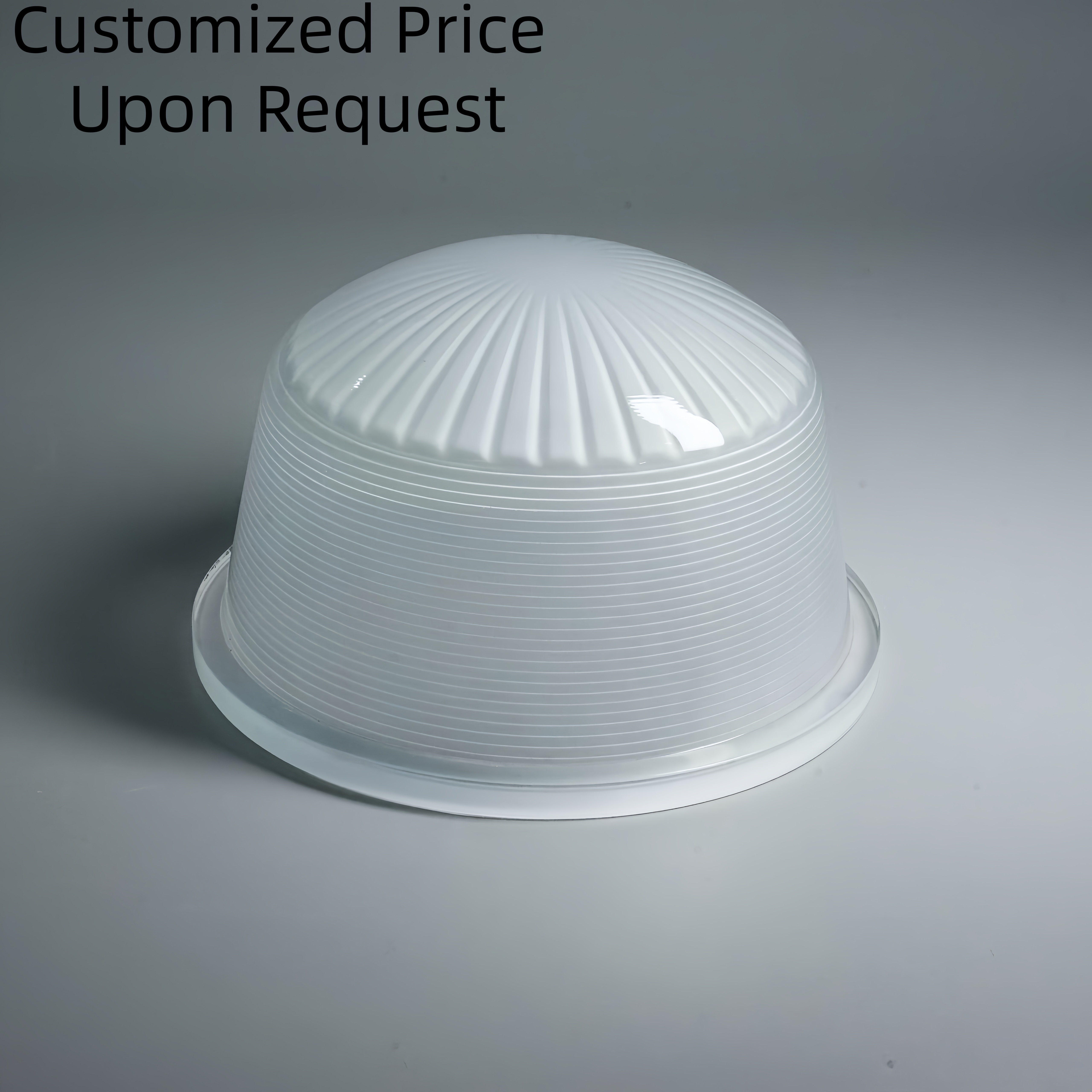
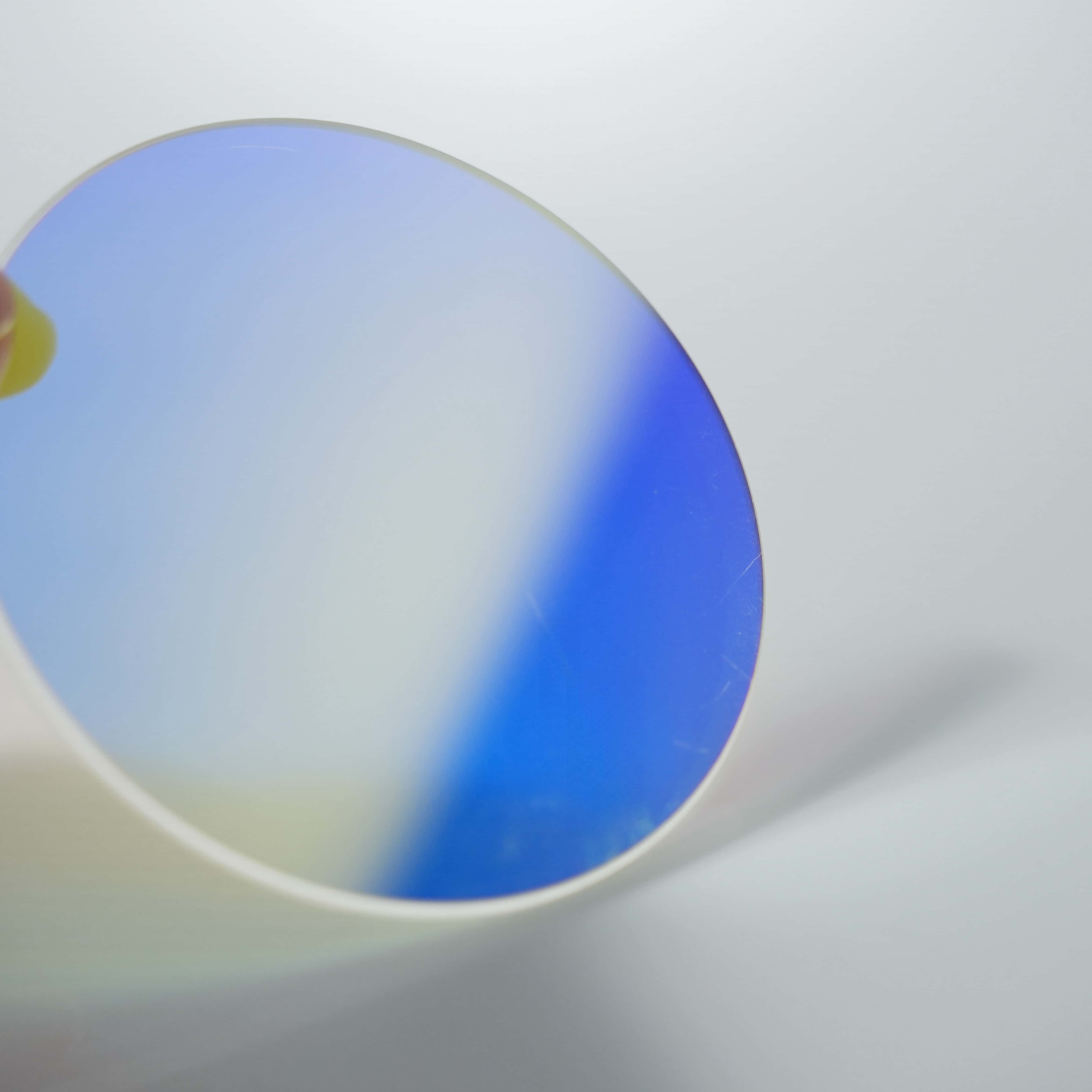
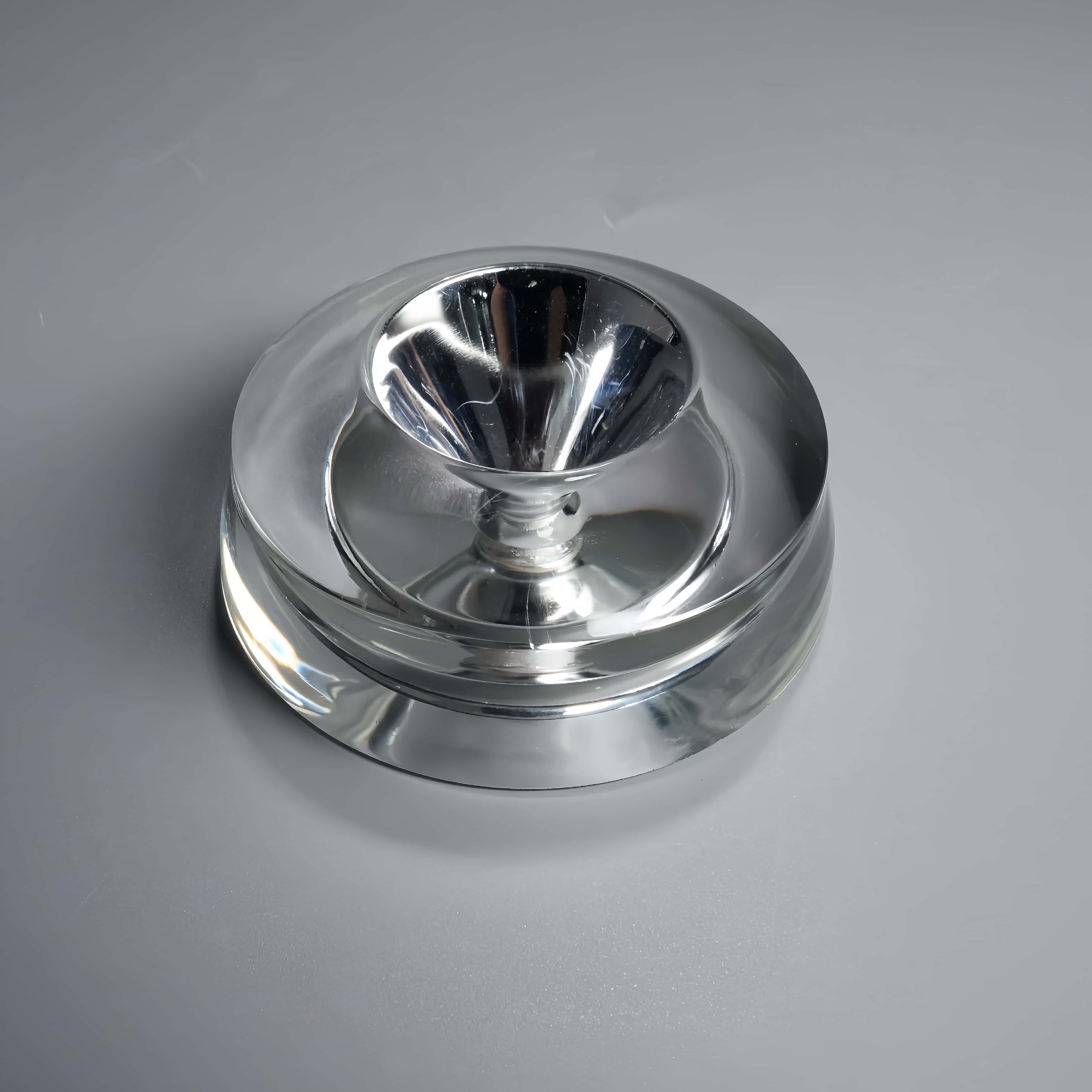
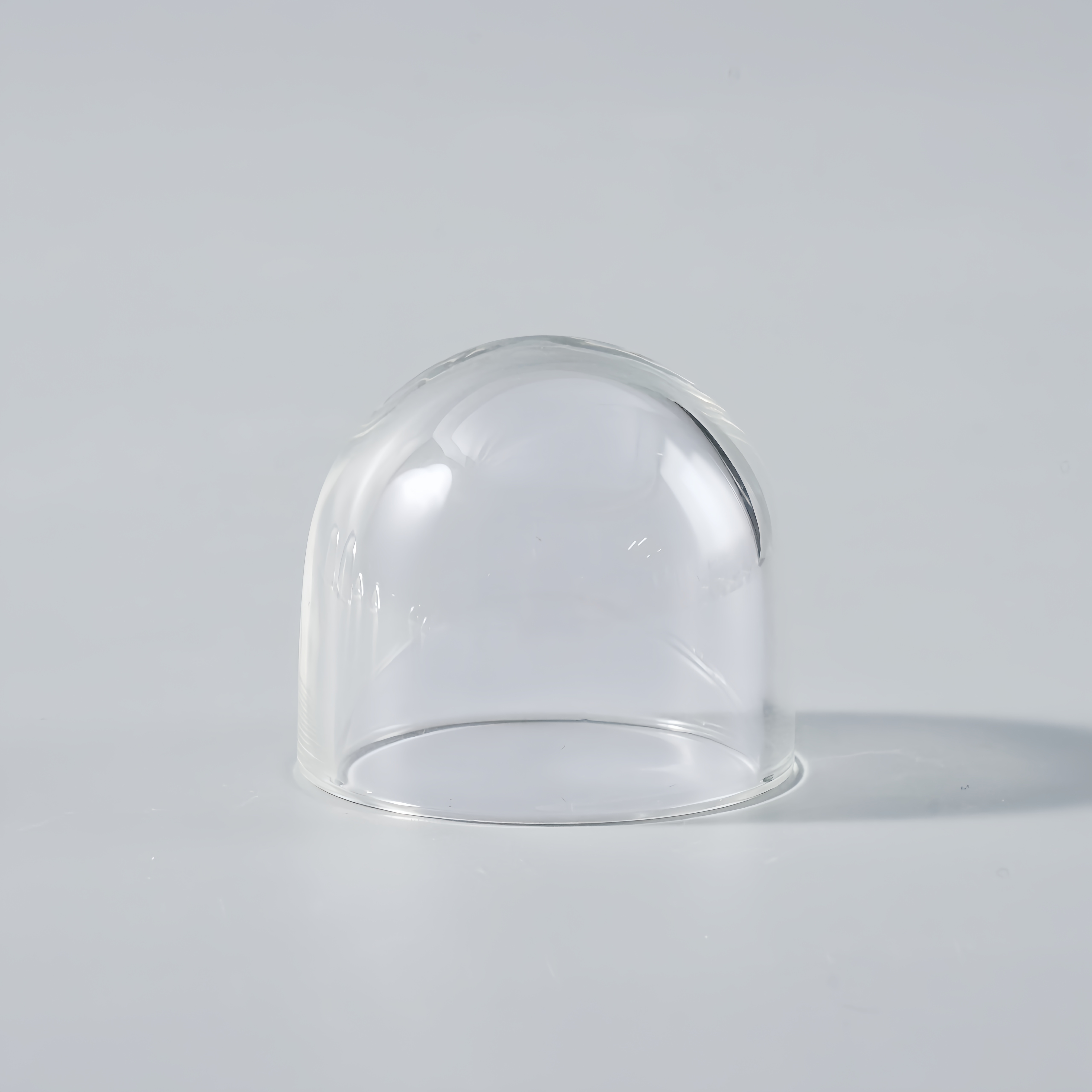



What “Heavy-Duty Explosion-Proof Glass Cover” Actually Specifies
In the Da Nang market, buyers rarely arrive with a datasheet. They arrive with a failed part, a photograph and a fixture that has to stay in service. Translating that into a manufacturable specification is the difference between a wholesaler who solves problems and one who simply passes on quotations.
Most enquiries reaching a Da Nang distributor come from maintenance teams responsible for installed lighting — port floodlights, emergency luminaires in chemical dosing rooms, tunnel lighting, cold-store high bays. The search vocabulary is descriptive rather than technical. Once you strip the descriptive layer away, “heavy-duty” is six measurable performance requirements, not a marketing adjective.
Glass System & Thermal Shock Margin
Borosilicate 3.3 expands at roughly 3.3 × 10⁻⁶/K; tempered soda-lime at roughly 9 × 10⁻⁶/K. In tropical service, a hot luminaire surface can meet a monsoon downpour and drop more than 80 °C in under a minute. The correct system survives this indefinitely; the wrong one fractures on the first storm.
Wall Thickness & Annealing Quality
Thick pressed shades must be fully annealed to release residual stress. Parts that are not properly annealed fail late rather than early — weeks after installation, which is the most expensive possible moment for a warranty claim.
Impact Rating & Clamping Load
IK08 to IK10 covers impact resistance, but the more common failure is over-tightening. A distorted retaining ring turns a routine glass replacement into a full luminaire replacement, and it is entirely avoidable with correct wall-thickness control.
Sealing Face & Gasket Interface
IP66 or IP67 is achieved by the glass rim, gasket and retaining ring working together. Flatness and roundness tolerance on the sealing face matter more than an extra millimetre of wall thickness that nobody measured.
Optical Output & Colour Stability
Transmission, haze and colour coordinates must hold across production batches. Red aviation obstruction glass has to stay inside a narrow chromaticity window, or the fixture re-certification fails long after the shipment cleared customs.
Chemical & Hydrolytic Resistance
Salt-laden air, alkaline wash-down and process acid etch glass surfaces over time. The hydrolytic class measured under DIN 12111 or ISO 719 is more decisive in a coastal plant than most procurement teams realise.
Material Selection Matrix for Central Vietnam Conditions
The comparison our engineers run when reviewing a new project. Choosing the glass type early avoids cracked covers, colour drift and costly field returns later.
| Material | Expansion (×10⁻⁶/K) | Typical max. working temp. | Key strength | Best suited to |
|---|---|---|---|---|
| Borosilicate 3.3 | ≈ 3.3 | ≈ 450 °C | Excellent thermal-shock resistance | Explosion-proof shades, high-power LED covers, Fresnel lenses |
| Tempered soda-lime | ≈ 9.0 | ≈ 250 °C | High impact strength, economical | Outdoor floodlight covers, vandal-resistant lenses |
| Fused quartz | ≈ 0.55 | ≈ 1000 °C + | UV transmission, extreme heat | UV optics, high-temperature viewing windows |
| Optical BK7 / K9 | ≈ 7.1 | ≈ 300 °C | Homogeneous, nd ≈ 1.517 | Precision lenses, prisms, domes, bandpass filters |
Values are typical reference figures, not contractual limits. Final specification is confirmed against your drawing, measured lamp surface temperature, impact rating and the standard your luminaire must satisfy.
For Da Nang service conditions, borosilicate 3.3 is the sensible default starting point for hazardous-area luminaires: high ambient temperature, rising LED power density and sudden heavy rain all point the same way. Tempered soda-lime stays competitive for cooler, price-sensitive products such as outdoor floodlight covers and vandal-resistant lenses. Fused quartz belongs in UV transmission work, while BK7 and K9 carry precision optics where homogeneity and refractive index accuracy outweigh thermal-shock tolerance.
Two further details are routinely overlooked. First, transmission and haze trade against each other: a genuinely thick explosion-proof shade cannot be made optically thin without losing mechanical margin. Second, if the cover seats against a silicone gasket, edge chamfer and polish determine whether the gasket stays in compression for the whole service life — a small manufacturing detail with a large field consequence.
Six Da Nang Scenarios Where Heavy-Duty Covers Earn Their Cost
Da Nang is not a single-industry city. It combines a working port, road tunnels, shipbuilding and repair, cold-chain seafood processing, electronics assembly and rapidly expanding industrial parks. Each environment loads the glass differently.
Ports, Quays & Cargo Yards
Tien Sa Port and the Lien Chieu development sit in permanent salt air. Explosion-proof floodlights over vessel-handling areas cycle thermally every time wash-down water meets a hot cover, so a marginal sealing face lets moisture in almost immediately.
Industrial Parks & Factory Floors
Hoa Khanh, Lien Chieu, Hoa Cam and the Da Nang Hi-Tech Park host electronics, mechanical and coating operations. Solvent vapour and metal dust make flameproof integrity non-negotiable, and the cover must protect the seal, not merely transmit light.
Tunnels & Road Infrastructure
The Hai Van Pass corridor and urban road networks rely on continuous luminaire output. Hazed or discoloured tunnel glass reduces pavement visibility, which is why replacement intervals there are far stricter than in general outdoor lighting.
Seafood Processing & Cold Chain
Da Nang's seafood sector runs hot, humid and saline. Covers must survive the transition between −40 °C cold stores and summer ambient heat, which makes low-expansion borosilicate the practical choice rather than a premium one.
Shipyards & Marine Services
Shipbuilding and repair yards around the bay use coloured covers for navigation, signal and dock lighting. Red and green chromaticity stability across batches is a hard requirement, not a preference, because signal recognition depends on it.
Power, Water & Chemical Dosing
Substations, wastewater plants and chemical dosing rooms all use flameproof luminaires. Glass that resists acid splash and alkaline cleaning compounds directly reduces the replacement frequency the maintenance team has to budget for.
The Da Nang Climate Factor: Salt, Monsoon and Thermal Cycling
Procurement teams often treat Vietnam as one uniform tropical environment. The Central Coast is different from the south. Da Nang's wet season concentrates between September and December, with heavy short-duration rainfall, near-saturated relative humidity for months and measurable airborne salt within a few kilometres of the shoreline. Typhoon season adds wind-driven water to the same surfaces.
That combination produces failure modes suppliers from temperate climates tend to underestimate. A gasket interface that stays wet for weeks loses its elastic recovery; moisture then migrates slowly to the glass-to-metal contact line. Sun load or lamp start-up then applies a local thermal gradient across an already compromised edge. The result is rarely a dramatic shatter — far more often it is a hairline crack at the seating rim, discovered only when the luminaire fails an insulation test.
The engineering response is unglamorous: sealing-face flatness held to drawing, polished chamfers on the glass edge, an annealing or tempering curve matched to wall thickness, and a glass system with documented hydrolytic resistance. Individually these are minor line items in a specification. Collectively they decide whether a Da Nang maintenance budget is spent on lamp replacement or on scaffolding and re-certification.
Four Demand Trends a Da Nang Wholesaler Should Position For
Inventory decisions in this category are made months ahead of demand. These are the shifts worth tracking when planning stock for 2025 through 2027.
LED Retrofit & Higher Power Density
HID fixtures are steadily replaced by LED modules. The absolute hotspot temperature does not necessarily drop, and the thermal gradient across a smaller cover becomes sharper — which pushes specification back toward borosilicate.
Industrial Park Expansion & FDI
New electronics, semiconductor packaging and logistics investment across Central Vietnam creates fresh demand for flameproof and emergency lighting; every new plant is a new installed base of glass covers to maintain.
Port & Logistics Corridor Growth
Lien Chieu Port expansion and associated road and rail upgrades sustain long-term demand for outdoor, signal and tunnel lighting glass — categories where colour consistency and IP performance carry real safety weight.
Localised Stock & ACFTA Trade
Vietnamese importers increasingly buy from China under Form E to reduce landed cost. Da Nang wholesalers who hold fast-moving sizes in stock win the urgent replacement orders that project-based buyers cannot serve.
How to Qualify an Explosion-Proof Glass Supplier: A Wholesaler's Checklist
Seven checks that separate a genuine manufacturing partner from a trading intermediary. Each one can be verified before the first production order.
- Drawing and DFM review. Does the supplier comment on wall thickness, draft angle, tolerance stack-up and sealing faces before quoting a mould?
- Material and hydrolytic documentation. Batch-level material reports, DIN 12111 or ISO 719 hydrolytic class, and expansion data for borosilicate parts.
- Type-test support. Impact test results, thermal-shock data and dimensional inspection records traceable to the enclosure requirements of IEC 60079-1.
- Colour and transmission consistency. For signal covers, ask for chromaticity and transmission data across several production batches, not just a single sample.
- MOQ and spare-part policy. Confirm minimum quantities for both existing and new moulds, plus a realistic commitment to supply spares for 24 to 36 months.
- Export packing discipline. Divider packing, reinforced cartons and palletisation — glass breakage in consolidated freight is a direct margin loss for any wholesaler.
- Technical response speed. A supplier who answers a drawing in six hours can support a project schedule; one who answers in two days becomes the bottleneck.
Why Wholesale Buyers Work With Shanghai Tambi Glass Industrial Co., Ltd.
Tambi Glass is a lighting and optical glass manufacturer and trading company based in Shanghai, with a team of 11 to 50 people, more than ten years of lighting glass experience and annual export revenue between US$2.5 million and US$5 million. We focus on one question: how should glass perform inside a real luminaire?
Drawing-Based OEM / ODM
Every order starts with engineering review. Our senior lighting and moulding engineers check wall thickness, draft, sealing faces and optical path alignment before tooling is released.
Several Processes, One Supply Chain
Pressed, blown, ground, tempered and coated production is coordinated together, so an explosion-proof shade and its matching optical lens can be sourced on a single purchase order.
Broad Material Range
Borosilicate 3.3, tempered soda-lime, fused quartz and BK7 / K9 are all available — selected against your operating conditions rather than against whatever happens to be in stock.
AR & Optical Coatings
Broadband anti-reflective coating, bandpass and longpass filters, and precision grinding for LiDAR domes, Fresnel lenses and sensing windows.
Response Within 6 Hours
Technical enquiries average a reply inside six hours, with drawing feedback or a commercial quotation attached, which keeps project schedules intact.
A Supplier You Can Audit
Onsite-verified premises, factory video, supplier assessment, credit index, trade capacity, trade history and buyer ratings are all published for procurement teams to verify independently.
A Controlled Six-Step OEM Process
Clear checkpoints mean fewer surprises between sample approval and mass production.
Drawing Review
Design-for-manufacture check covering wall thickness, draft, tolerance stack-up and sealing-face geometry.
Mould & Tooling
New or existing moulds selected for pressing, blowing or grinding, matched to your annual volume.
Sampling
Samples are measured, photographed and shipped for your fit, light-output and certification testing.
Forming & Annealing
Controlled annealing or tempering cycles relieve internal stress before any secondary operation begins.
Coating & QC
AR or colour coating followed by dimensional, optical and visual inspection against the approved sample.
Export Packing
Divider-packed cartons, palletised and documented for sea or air freight to Vietnam.
Local Procurement FAQ — What Da Nang Wholesalers Ask
Do you ship heavy-duty explosion-proof glass covers to Da Nang, and how long does it take?
What is the minimum order quantity for a Da Nang wholesaler, and can I consolidate several models?
Can you replicate the glass cover from an existing imported luminaire?
Do you supply glass for fixtures designed to IECEx or ATEX flameproof requirements?
Should I specify borosilicate glass or tempered soda-lime glass for Da Nang conditions?
How are fragile glass parts packed for export to Vietnam?
Can you provide ACFTA Form E documentation and what trade terms do you support?
How fast do you respond to a technical enquiry with a drawing attached?
Send Your Drawing — Get an Engineering Review Within One Working Day
Share dimensions, operating temperature, material or colour requirements and annual volume. Our engineers will come back with a glass recommendation, mould proposal, MOQ and a delivery estimate to Da Nang.
Inquire Now