Half Ball Lens Manufacturer & Suppliers in Mexico
Drawing-based borosilicate, K9 and optical glass half ball lenses, domes, light guides and precision lenses for Mexican lighting, automotive, aviation, mining and LiDAR OEMs — reviewed by engineers, not sold from a catalog.
What Mexican Buyers Should Look for in a Half Ball Lens Supplier
A half ball lens is a hemispherical optical component with demanding dimensional, coating and thermal requirements. The right supplier must understand the fixture, the operating environment and the paperwork behind a reliable cross-border order.
A half ball lens — also called a hemispherical lens, half-sphere lens, dome lens or plano-convex dome — is used to couple LEDs, protect sensor windows, shape signal-light beams, improve light extraction and create compact optical paths. In Mexico, demand is rising in outdoor and industrial lighting, automotive and EV programs, LiDAR and machine vision, airport and marine signal equipment, laboratory instruments and hazardous-area fixtures. Buyers are not only comparing price per piece; they are comparing drawing-based engineering support, coating control and the ability to keep a North American assembly line supplied.
Shanghai Tambi Glass Industrial Co., Ltd. has focused on lighting and optical glass for more than a decade. Our team reviews wall thickness, draft angle, sealing faces, optical path alignment and coating durability before tooling starts. That matters for Mexican OEMs because a component may be assembled in Monterrey, tested in Guadalajara and installed at a coastal site, airport or mining operation where heat, dust, humidity and thermal shock quickly expose weak glass specifications.
This guide is written for procurement engineers, fixture designers, distributors and quality managers comparing half ball lens manufacturers and suppliers in Mexico. It covers localized applications, reorder-worthy products, material selection, RFQ details and the practical questions Mexican buyers ask before paying for tooling.
Why Half Ball Lenses Matter in Mexico’s Lighting and Optical Supply Chain
Mexican manufacturers rarely buy a hemispherical lens as a standalone object. They buy a component that must fit a housing, survive the local environment and support a repeatable assembly process.
LED and Signal Lighting
Half ball domes and Fresnel optics can improve coupling efficiency and beam shaping in road, airport, marine and stage luminaires. In Mexico, sealed LED fixtures often run hot, so borosilicate glass and stable AR coatings help protect transmission over time.
Automotive and EV Sensing
K9 domes, projection lenses and sensor windows support headlamp, signaling and ADAS-related assemblies. Mexico’s automotive clusters need dimensional reports, material traceability and consistent coatings for Tier 1 and Tier 2 qualification.
LiDAR, Vision and Instruments
Hemispherical windows, light guide rods and bandpass filters help protect optical paths while maintaining transmission. Laboratory, machine-vision and sensing integrators in Mexico value clear drawings, coating curves and consistent lot-to-lot inspection.
Hazardous and Outdoor Areas
Explosion-proof covers and thick-wall borosilicate shades must tolerate heat, impact and sudden temperature change. Mining, chemical, oil and gas and coastal projects in Mexico can face harsh conditions where a low-cost glass cover becomes an expensive failure.
Recommended Half Ball Lens and Optical Glass Products for Mexican Buyers
These eight products reflect the glass components our lighting and optical buyers reorder most often. Some are true hemispherical or dome-style optics; others are adjacent precision glass parts from the same production platform and RFQ workflow.
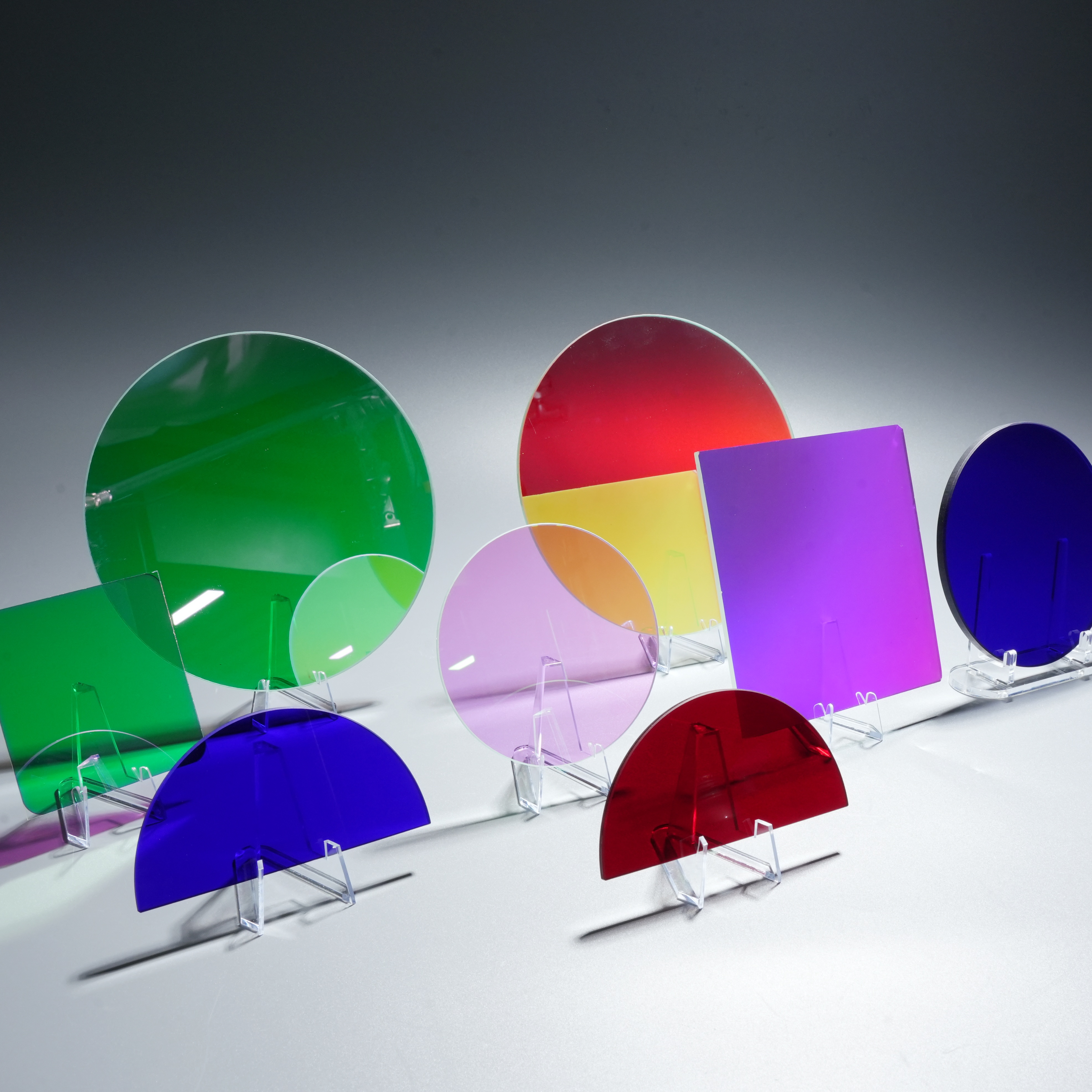
BO-GLASS BO-AH242 590nm 49mm Coated UV Borosilicate Bandpass Longpass Optical Filter
For fluorescence, sensing and instrument OEMs, this coated borosilicate filter supports bandpass or longpass transmission in a 49 mm format. Mexican integrators can specify wavelength, diameter, coating and edge treatment.
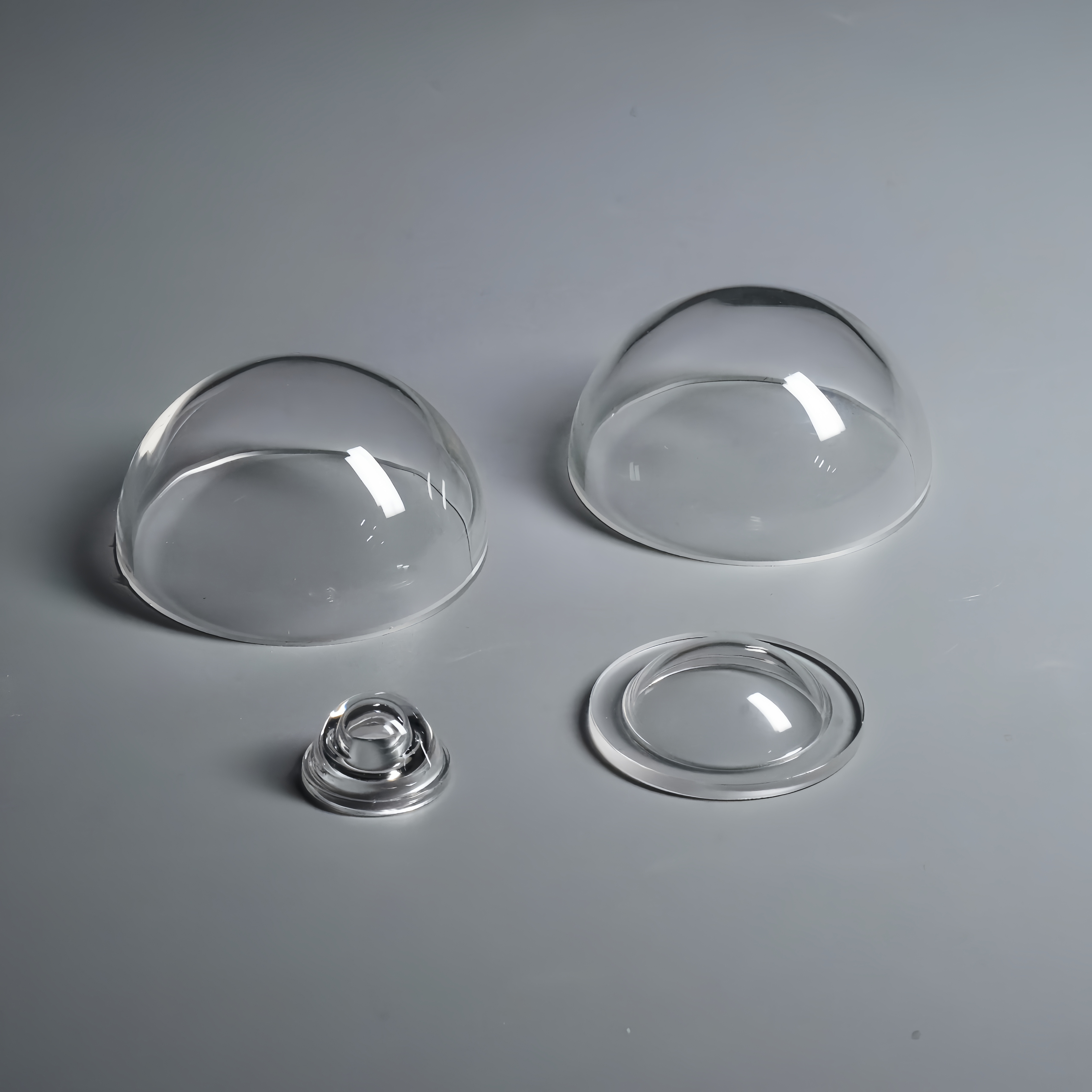
Mold Pressed Clear K9 Optical Dome Lens with Anti-Reflective Coating for Lighting OEM Headlights
A pressed K9 dome with AR coating for headlight and lighting OEMs. Its clear hemispherical form suits beam shaping, protection windows and LED coupling in automotive or architectural fixtures assembled in Mexico.
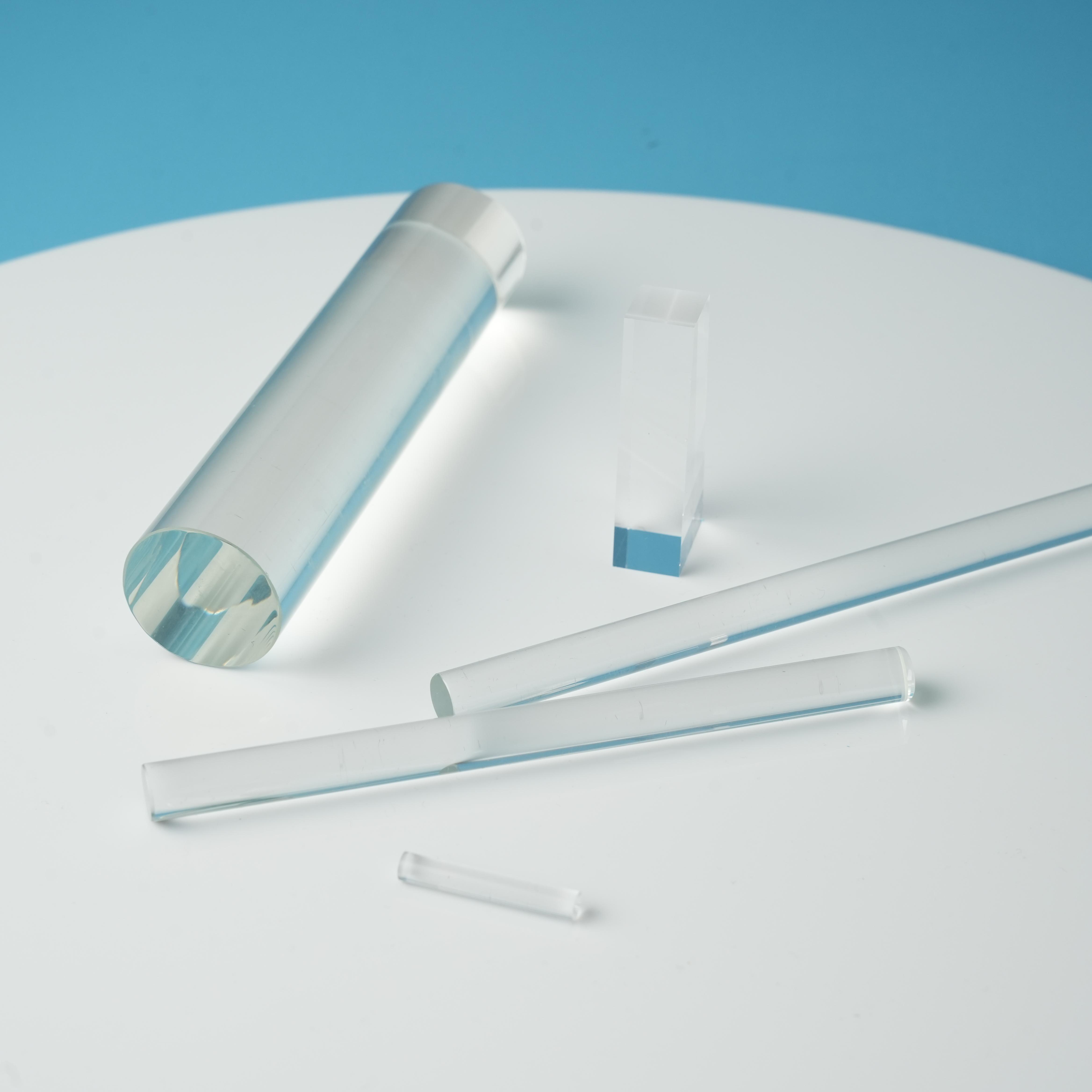
Custom Transparent High Borosilicate Optical Glass Light Guide Rod Lens for Laboratory
A transparent high-borosilicate light guide rod made to drawing. Used in laboratory, photometry and light-transfer assemblies where heat resistance and optical clarity matter more than a catalog footprint.
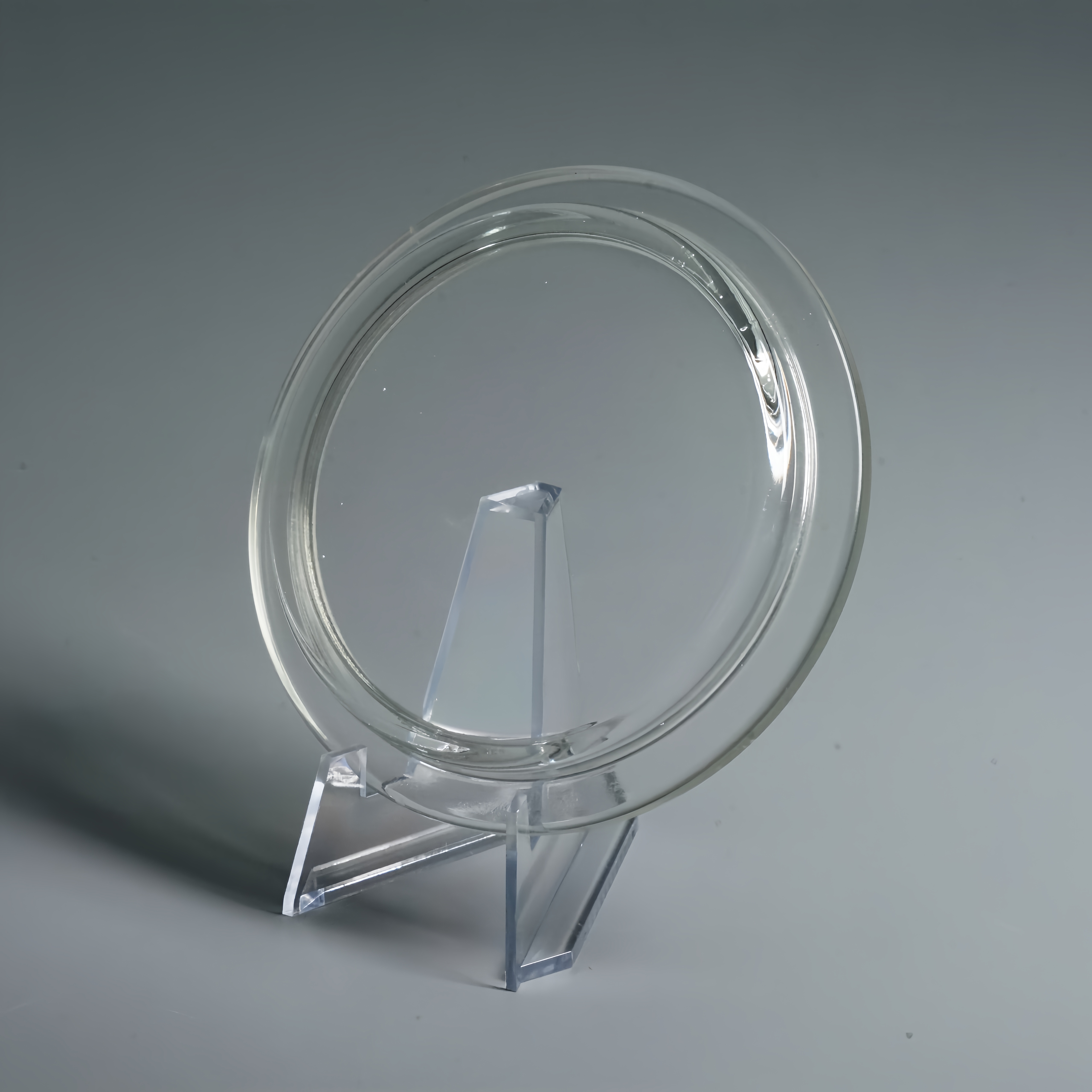
Custom Size Waterproof Outdoor Stage Glass Lampshade — Victorian, High-Temperature and Impact Resistant
A custom outdoor glass lampshade with waterproof, high-temperature and impact-resistant options. Suitable for hospitality, coastal and stage projects in Mexico where salt mist, rain and UV exposure shorten cover life.
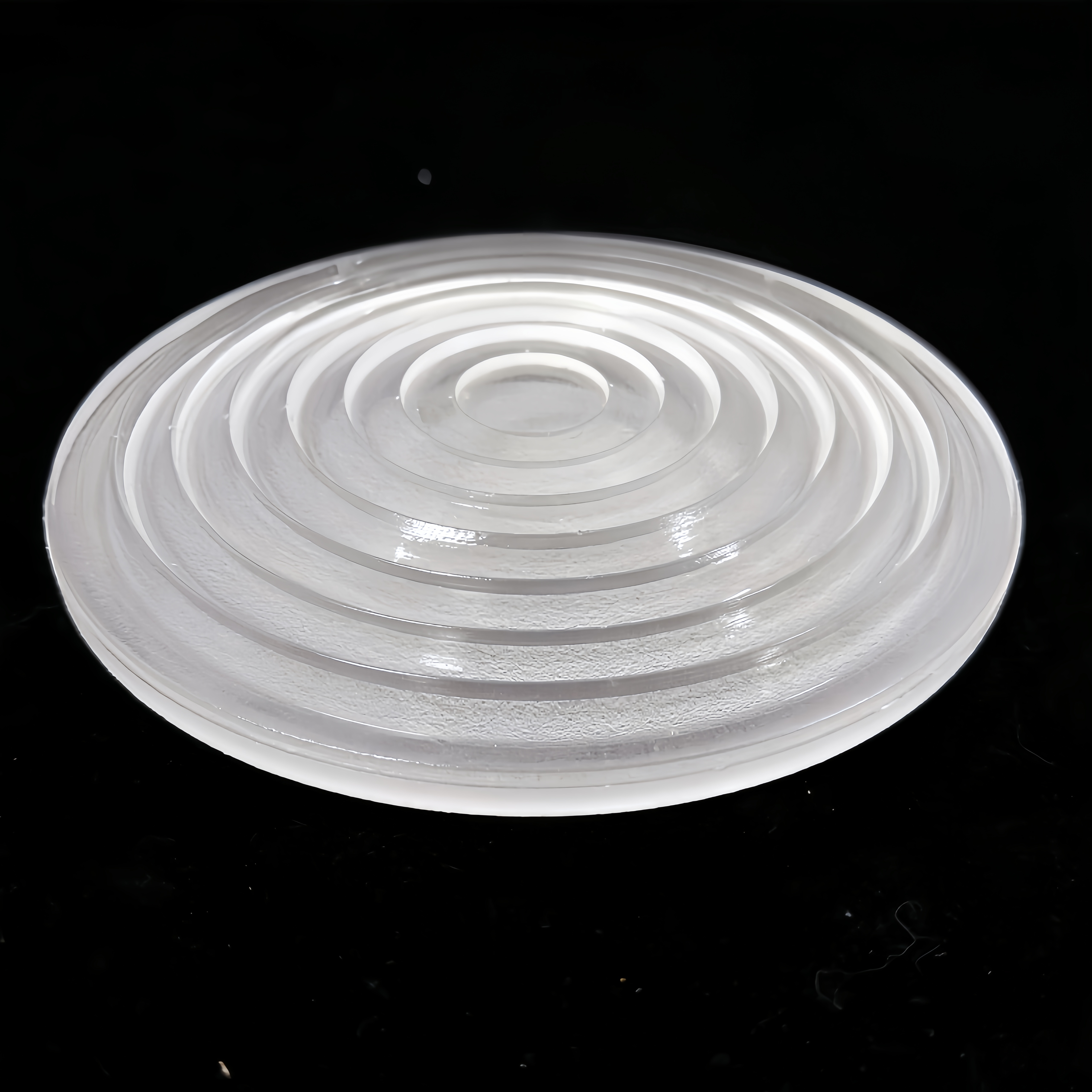
High-Temperature Borosilicate Glass Fresnel Lens for High-Power LED Stage Lighting
A high-temperature borosilicate Fresnel lens with AR coating for high-power LED collimation. Stage and entertainment rental companies in Mexico can replace cracked or yellowing lenses while keeping fixture geometry.
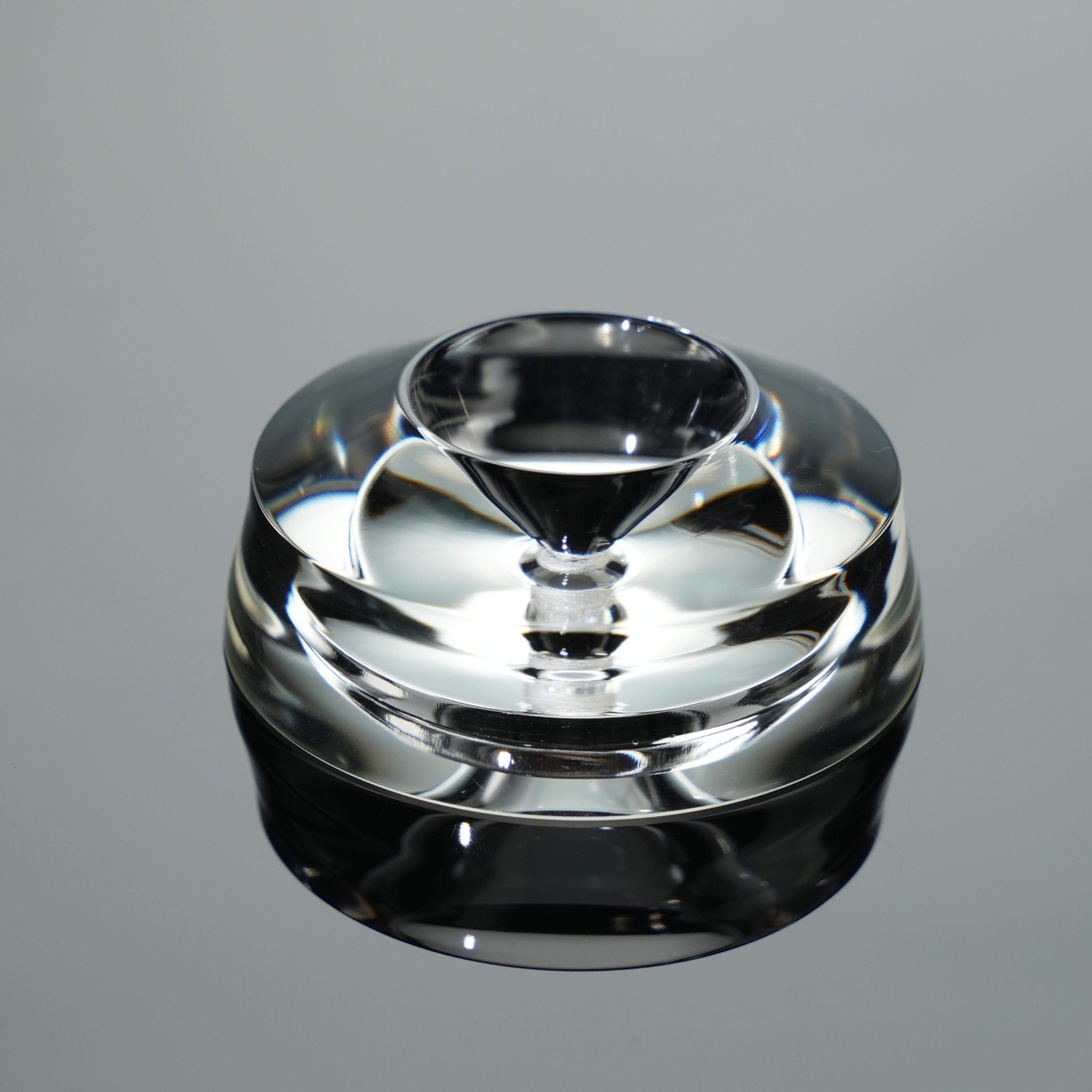
FAA-Compliant Borosilicate Heat-Resistant Glass Lens for Runway and Taxiway Lights
A heat-resistant lens for runway and taxiway in-pavement fixtures. Airport lighting maintainers and fixture makers can match color, transmission and dimensions; fixture-level certification remains with the luminaire manufacturer.

Customized Heat-Resistant Borosilicate Glass Car Light Accessories
Custom size, shape and color borosilicate car light accessories with heat resistance. Useful for Mexican automotive aftermarket and OEM programs that want Asian tooling precision with clear English-language engineering communication.
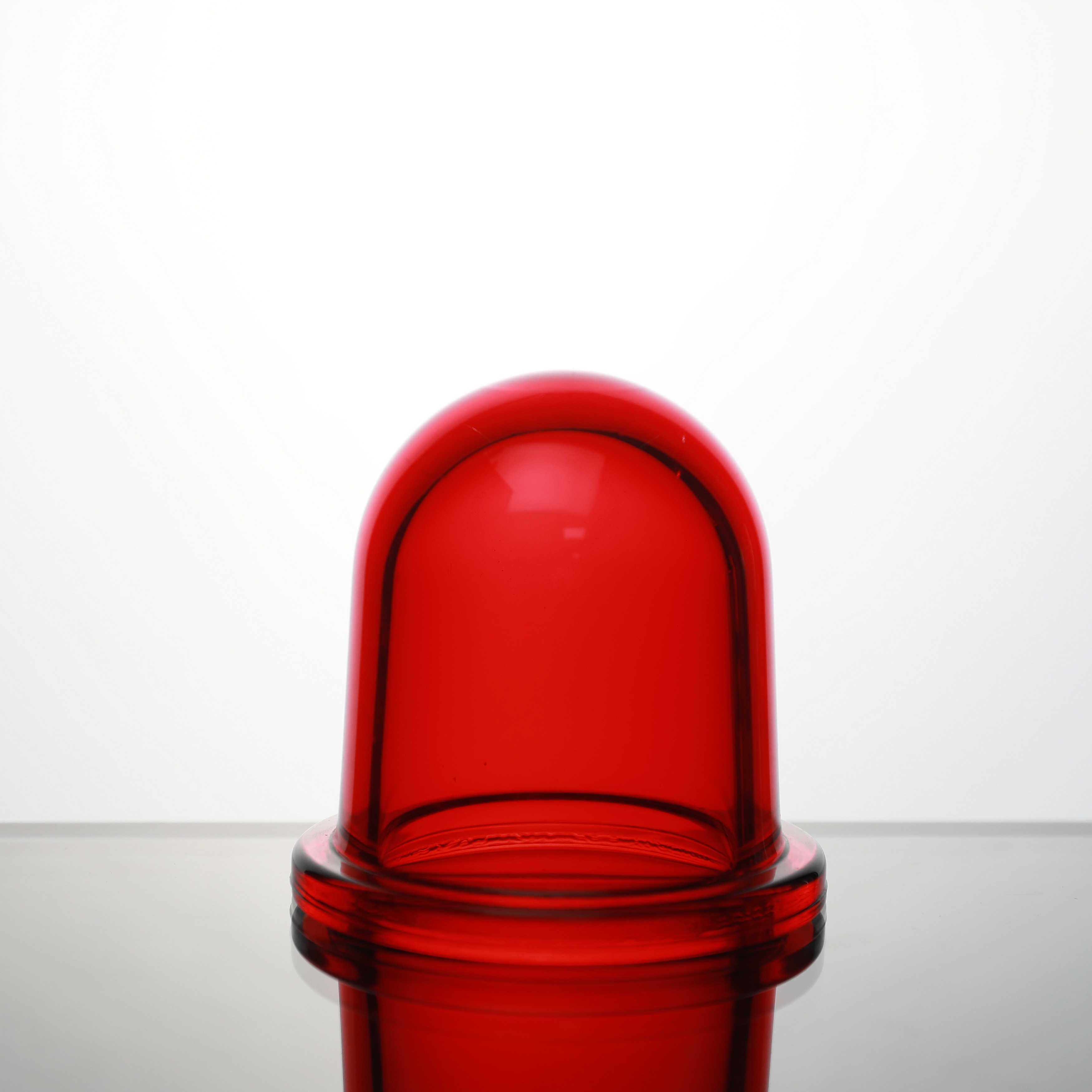
Custom Size Clear Borosilicate Explosion-Proof Glass Light Covers
A clear borosilicate explosion-proof cover for industrial, airport and outdoor fixtures. Custom diameter, wall thickness and finishing help hazardous-area and heavy-industrial buyers reduce breakage and thermal-shock failures.
Localized Application Scenarios for Half Ball Lenses in Mexico
Mexico is not a single market. Coastal tourism, border assembly, central automotive clusters and northern mining regions expose optical glass to very different conditions. A supplier should ask where the part will be installed, not only what diameter is on the drawing.
Aviation and Airport Lighting
Runway, taxiway, obstruction and helipad fixtures need lenses and domes with stable color and heat resistance. Mexican airport lighting suppliers and maintenance teams can use FAA L-810 and EN 50293 as fixture-level design references; final certification is held by the luminaire maker.
Automotive, EV and Lighting Clusters
In the Bajío, Monterrey, Puebla and surrounding supplier parks, headlight domes, projection lenses and car light accessories support nearshoring programs. Buyers typically need dimensional reports, coating specifications and consistent packaging for high-volume assembly.
Mining, Oil, Gas and Chemical Sites
Operations in Sonora, Zacatecas, Veracruz and Tamaulipas often require explosion-proof covers, thick-wall shades and high-temperature glass. Dust, vibration, washdown and sudden temperature change make thermal-shock resistance a more important buying criterion than initial unit price.
Coastal, Hospitality and Stage Lighting
Cancún, Los Cabos, Puerto Vallarta and Mexico City venues combine salt spray, rain, UV and impact. Custom glass lampshades and AR-coated lenses help hotels, theme venues and rental companies keep output stable while preserving the fixture’s visual design.
Mexico Sourcing Trends That Affect Half Ball Lens Suppliers
Procurement teams in Mexico are balancing nearshoring pressure, engineering localization and the practical reality that high-precision optical glass still requires specialist tooling and coating capability.
Nearshoring and Dual Sourcing
USMCA-related supply-chain planning has made Mexico a larger assembly and engineering hub. Many buyers qualify an overseas manufacturer for custom glass while using a local distributor, warehouse or assembly partner for final delivery and inventory.
Higher LED Power and IP Ratings
Sealed outdoor and industrial fixtures trap heat. That increases interest in borosilicate 3.3, quartz and reliable AR coatings, especially for floodlights, high-bay fixtures, stage lights and airport equipment exposed to sun and rain.
Smaller Launch Quantities
New product launches often begin with samples and lower-volume validation. Typical minimum order quantities can range from about 50 pieces for optical lenses to 100–500 pieces for pressed or blown lighting covers, depending on whether an existing mold can be used.
Documentation and Traceability
Mexican quality teams increasingly request material reports, dimensional inspection data, coating information and packaging specifications. Clear English documentation and metric drawings help local distributors and importers move faster through qualification.
Borosilicate, K9, Quartz or Tempered Glass?
Material selection should follow the operating environment and optical function. The comparison below reflects common engineering logic; final specification must be confirmed against your drawing, lamp temperature, impact requirement and fixture certification.
| Material | Thermal expansion | Typical working temperature | Key strength | Best fit for Mexico projects |
|---|---|---|---|---|
| Borosilicate 3.3 | ≈3.3 × 10⁻⁶/K | ≈450 °C | Excellent thermal-shock resistance | Explosion-proof shades, high-power LED covers, Fresnel lenses and outdoor fixtures exposed to sudden rain |
| Tempered soda-lime | ≈9.0 × 10⁻⁶/K | ≈250 °C | High impact strength and economical cost | Outdoor covers, floodlight glass, vandal-resistant lenses and hospitality lighting |
| Fused quartz | ≈0.55 × 10⁻⁶/K | ≈1000 °C+ | UV transmission and extreme heat resistance | UV optics, high-temperature windows and specialty laboratory equipment |
| Optical K9 / BK7-type | ≈7.1 × 10⁻⁶/K | ≈300 °C | Homogeneous optical properties, nd ≈ 1.517 | Precision domes, lenses, prisms, mirrors and sensor windows for automotive or LiDAR programs |
For a half ball lens RFQ, include radius, diameter, center thickness, edge treatment, surface quality, coating band, maximum surface temperature and annual volume. If the part must fit an existing gasket or housing, include a 3D step file or a physical sample.
Optical Requirements
Define radius, diameter, thickness, clear aperture, surface quality and allowable edge defects.
Environment
State maximum temperature, thermal shock, impact, IP rating, cleaning chemicals and UV exposure.
Coating
Specify AR range, bandpass wavelength, color, hardcoat or other optical layers.
Commercial Package
Share annual volume, sample quantity, destination city, Incoterms and packaging requirements.
Why Mexican Buyers Shortlist Tambi Glass
Shanghai Tambi Glass Industrial Co., Ltd. is a manufacturer and trading company focused on custom borosilicate and optical glass for lighting and optical OEMs. Our role is to turn a drawing or sample into a repeatable export part.
10+ Years in Lighting Glass
More than a decade of experience with glass covers, lampshades, signal light domes, lenses, prisms and optical filters helps us identify manufacturability risks before tooling.
Drawing-Based OEM / ODM
Send a 2D/3D drawing or physical sample. Our engineers review wall thickness, draft, sealing faces, tolerance and optical path alignment, then propose sample and mold options.
Material Breadth
Borosilicate 3.3, tempered soda-lime, fused quartz and optical K9/BK7-type glass can be matched to different heat, impact and transmission requirements.
Responsive Engineering
Our average technical inquiry response target is within 6 hours. Share your drawing, annual volume and operating conditions for a technical and commercial review.
Audit and Verification Support
Factory video, supplier assessment, credit index, trade capacity and inspection records help Mexican procurement teams qualify a new glass source with fewer unknowns.
Export Packing for Fragile Glass
Foam or pulp dividers, reinforced export cartons and palletization help protect lenses and domes on the route to Mexico. Custom labeling for distributors can be arranged.
Local Procurement FAQ for Half Ball Lenses in Mexico
These are the questions Mexican importers, fixture makers and optical distributors commonly ask before approving a sample or tooling order.
Can you manufacture half ball lenses and domes from my drawing or sample?
What minimum order quantity should Mexican buyers expect?
How are half ball lenses shipped to Mexico and what documents are provided?
Should I choose borosilicate glass or K9 for a half ball lens?
Can you support FAA, EN 50293, IP68 or NOM-related projects?
How are fragile optical lenses packed for Mexican distributors?
What is the typical sample and production lead time?
How can I verify quality before placing a tooling order?
Send Your Half Ball Lens Drawing for an Engineering Review
Share your dimensions, material, coating, operating temperature, annual volume and destination in Mexico. Our team will review manufacturability and recommend the most reliable glass solution for your fixture or optical assembly. Email: info@tambiglass.com.