OEM Heat-Resistant Glass · Cologne Sourcing Guide

China Top Heat Resistant Glass Manufacturers & Factory Serving the Cologne Market

Borosilicate lenses, explosion-proof shades, signal-light domes and precision optical glass engineered to drawings for Cologne lighting OEMs, architects, industrial buyers and transport specifiers.

Inquire Now Drawing review · Typical technical response within 6 hours
10+Years focused on lighting & optical glass
≤6hAverage technical inquiry response
8Heat-resistant product families shown here
4Material systems: borosilicate, tempered, quartz, BK7
Cologne sourcing intelligence

Heat-Resistant Glass Sourcing for Cologne: The Engineering Intent Behind the Search

Buyers in Cologne (Köln) rarely need a generic “heat resistant glass supplier”; they need a manufacturer who can connect thermal shock, optical transmission, sealing-face geometry, EU fixture requirements and repeatable production.

Cologne is a demanding reference market for industrial lighting and optical glass because it combines dense public infrastructure, protected heritage buildings, Rhine-side logistics, high-value manufacturing and strong technical procurement habits across North Rhine-Westphalia. A buyer searching for China top heat resistant glass manufacturers serving Cologne is usually not browsing a catalog for a commodity item. They are trying to reduce field failures in high-power LED luminaires, replace a cracked cover in an explosion-proof fixture, match the red or clear signal glass used in transport lighting, or find an OEM partner who can interpret a drawing rather than quote a stock size.

The phrase “heat resistant” covers several very different engineering decisions. For a high-bay industrial fixture in a Cologne chemical or logistics facility, the critical issue may be thermal shock when cold water or cleaning spray meets a hot glass cover. For an urban street light, the priority may be asymmetric light distribution and glare control, not maximum temperature alone. For a runway or rail-signal application, colour consistency, dimensional repeatability and IP sealing matter as much as the glass itself. For a medical or food-processing machine, chemical resistance and cleanability can outweigh peak-temperature performance. That is why a useful supplier conversation starts with operating conditions, not only a size.

Shanghai Tambi Glass Industrial Co., Ltd. has spent more than ten years working on lighting and optical glass for OEM customers, with a product scope that includes borosilicate covers, explosion-proof lampshades, signal-light domes, LED lenses, Fresnel optics, prisms and optical filters. The company operates as a manufacturer and trading partner, combining pressed, blown, ground and coated processes under one supply chain. For Cologne buyers, the practical value is not simply a lower unit price; it is a drawing-based review of wall thickness, draft, sealing faces, annealing, coating and export packing before mass production. That engineering dialogue is where information gain becomes commercial value.

This guide is reviewed by the Tambi Glass lighting and optical engineering team in Shanghai. It is written for procurement managers, lighting designers, fixture engineers and importers who want a clearer path from an RFQ in Cologne to a manufacturable glass component. It does not replace fixture-level certification by the luminaire manufacturer, but it explains how to specify glass in a way that supports certification, installation and long-term field reliability.

Inquire Now Send your drawing, target operating temperature and annual volume for an engineering review.
Product recommendations

8 Heat-Resistant Glass Products for Cologne OEMs and Specifiers

Each item below can be adapted in size, thickness, colour, coating, edge finish and sealing geometry. Product URLs and images are preserved for direct technical review.

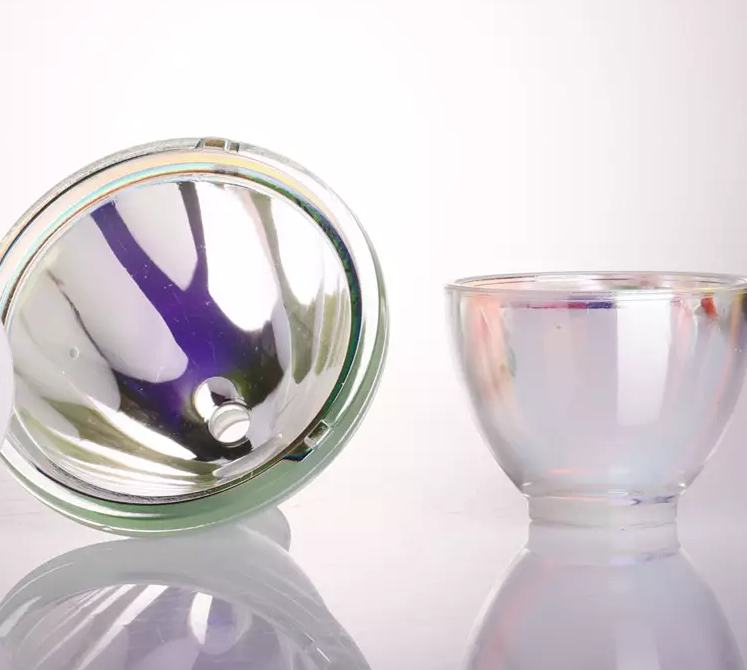
COB glass LED reflector bowl with deep design for spotlights and projector lights
Spotlights & projectors

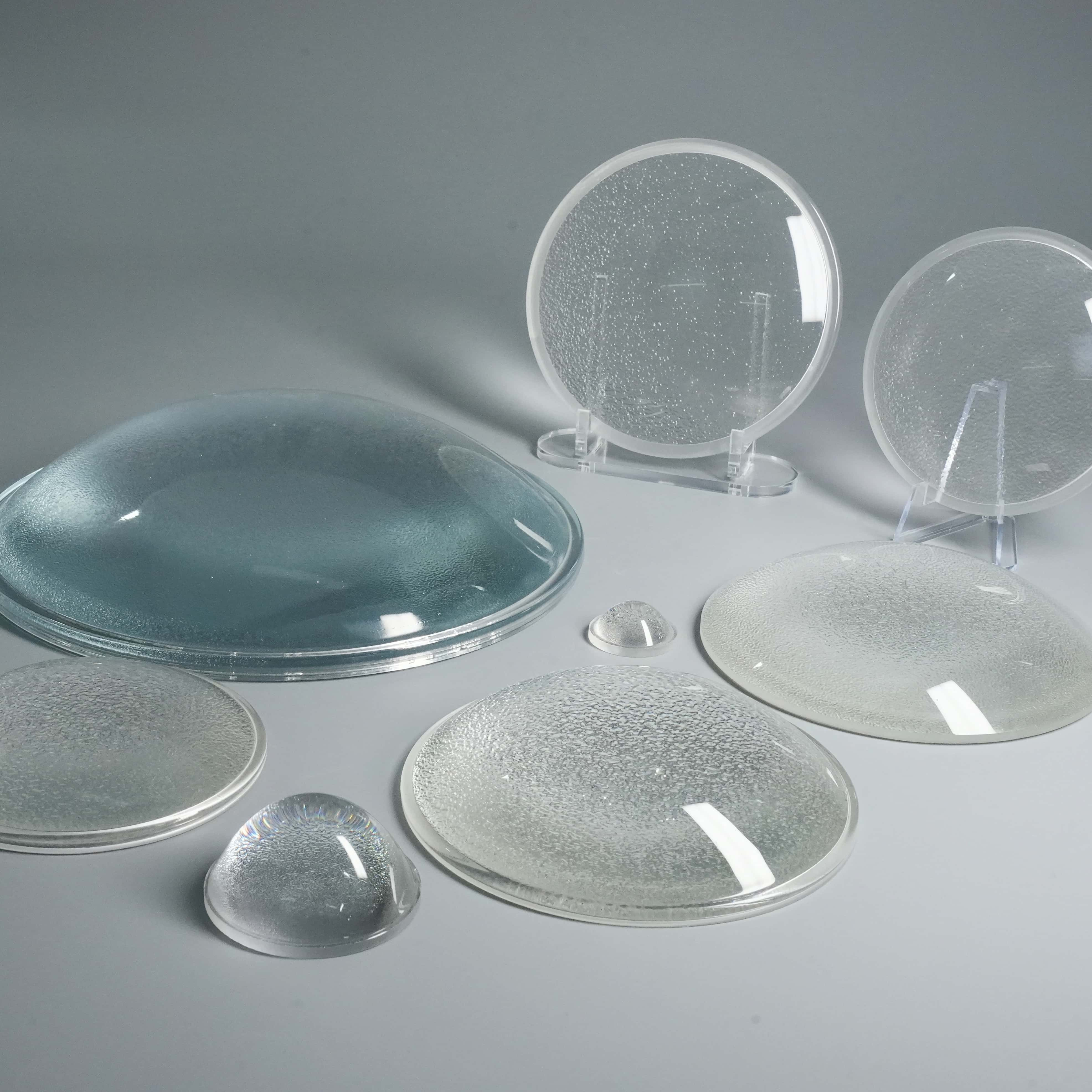
COB Glass LED Reflector Bowl for Deep-Beam Spotlights

Deep reflector geometry supports 20°, 60° and 90° beam options for retail, museum and architectural spotlights where heat load is concentrated.

Borosilicate optionBeam controlOEM tooling
View product details
Custom precision optical BK7 glass lens from 1 to 200 mm
Imaging & sensing

Custom Precision Optical BK7 Spherical and Biconvex Lens

Clear BK7 and quartz lens options from 1–200 mm, including half-ball, concave and biconvex forms with anti-reflective finishing.

BK7 / quartzAR coatingDrawing-based
View product details
Certified chemical-resistant glass cover for food machinery and medical equipment
Food & medical

Chemical-Resistant Glass Cover for Food and Medical Equipment

Designed for washdown environments and process equipment where chemical resistance, visibility and cleanable surfaces are essential.

Chemical resistantMachine coverCustom size
View product details
Custom OEM anti-reflective laser borosilicate optical glass lens
Laser & UV optics

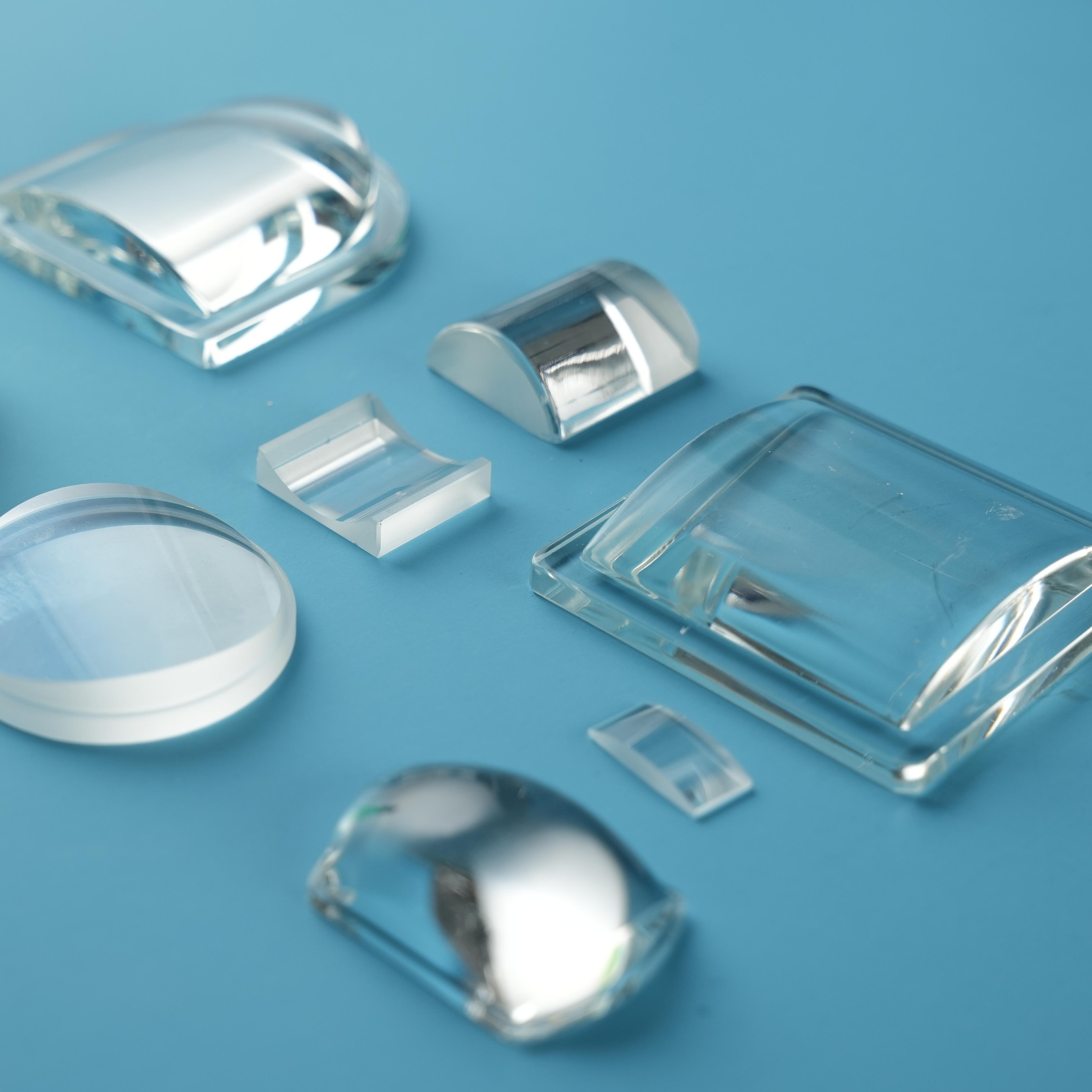
Anti-Reflective Laser Borosilicate Plano-Convex and Cylindrical Lens

OEM borosilicate lens options for laser, UVC and industrial sensing systems, including plano-convex, cylindrical and biconvex geometries.

UVC compatibleLow reflectionCustom coating
View product details
Custom AR-coated square optical glass window 50 mm diameter
Optical windows

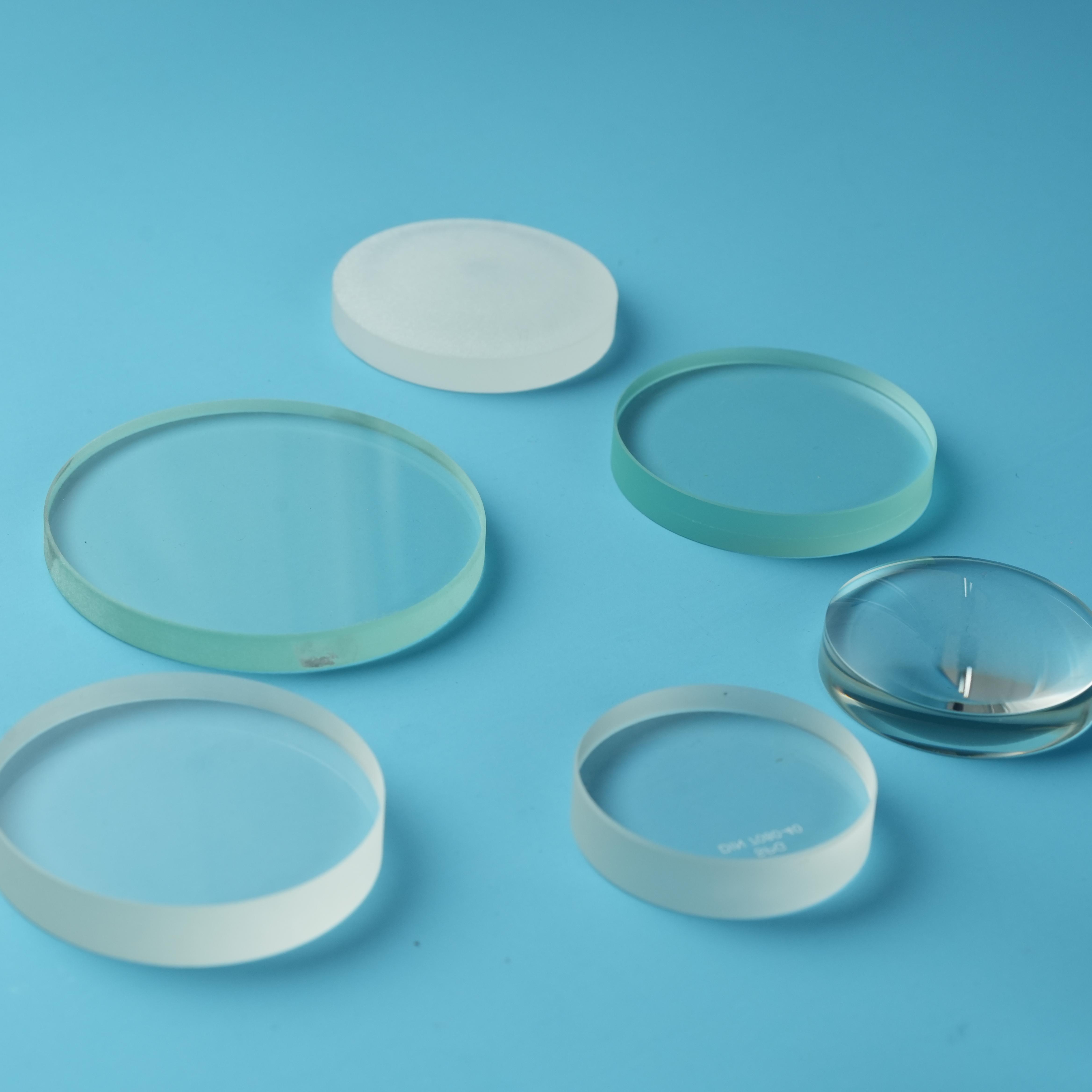
AR-Coated Borosilicate K9, BK7 and Fused Silica Optical Window

Square or round optical windows around 50 mm, with B270, BK7, K9 and fused silica options for sensors and instrumentation.

K9 / BK7 / B270AR coatedSealed window
View product details
Asymmetric borosilicate LED lens for street and roadway lighting
Street lighting

Asymmetric Borosilicate LED Lens for Roadway and Street Lights

Designed to reduce light pollution and glare while supporting UV protection and controlled distribution for urban road lighting.

Asymmetric beamLow glareUV protection
View product details
FAA-compliant borosilicate heat-resistant glass lens for runway lights
Aviation lighting

FAA-Compliant Borosilicate Lens for Runway In-Pavement Lights

Heat-resistant optical glass for runway and taxiway fixtures, with IP68 assembly support and clear transmission for demanding outdoor service.

FAA L-810 supportIP68 assemblyThermal shock
View product details
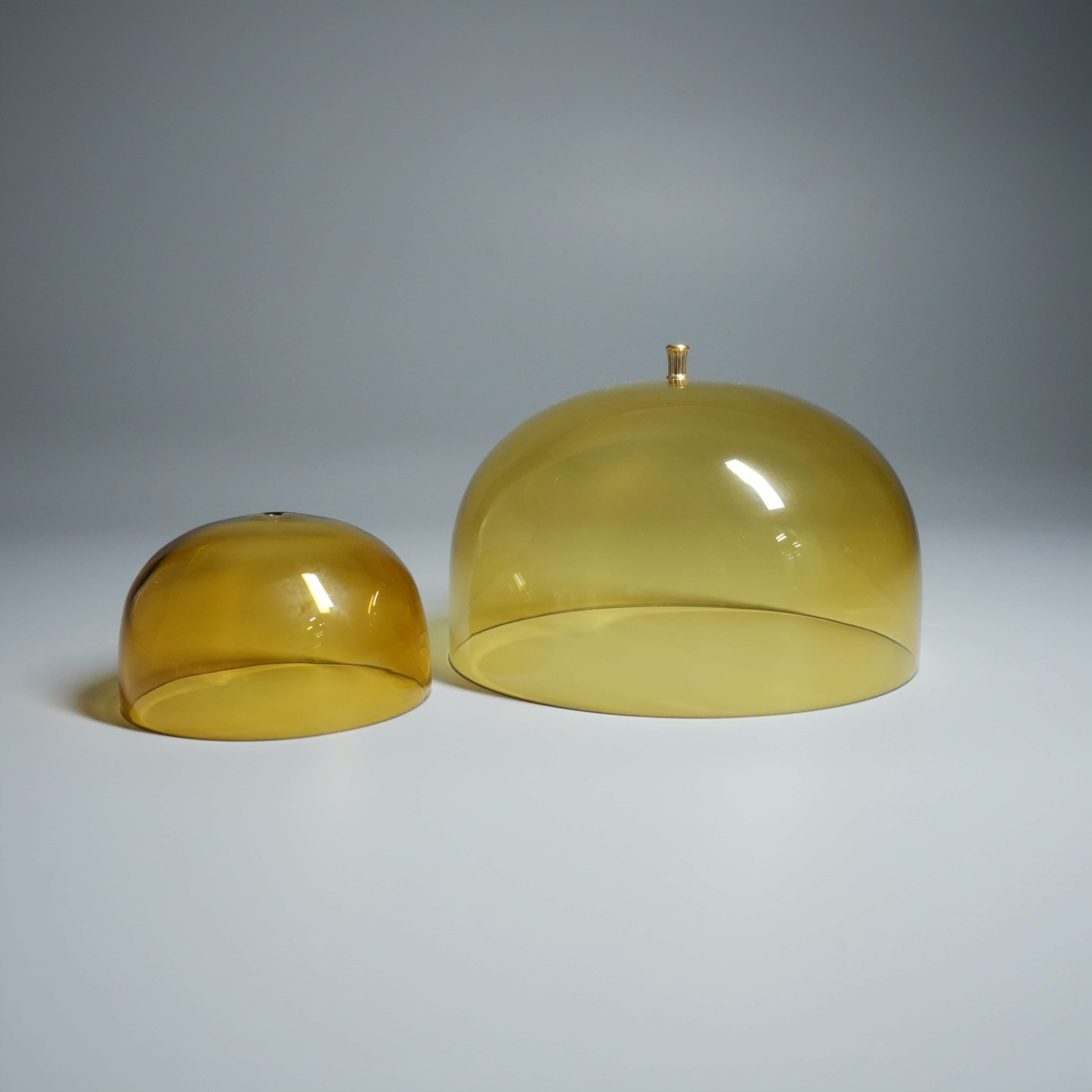
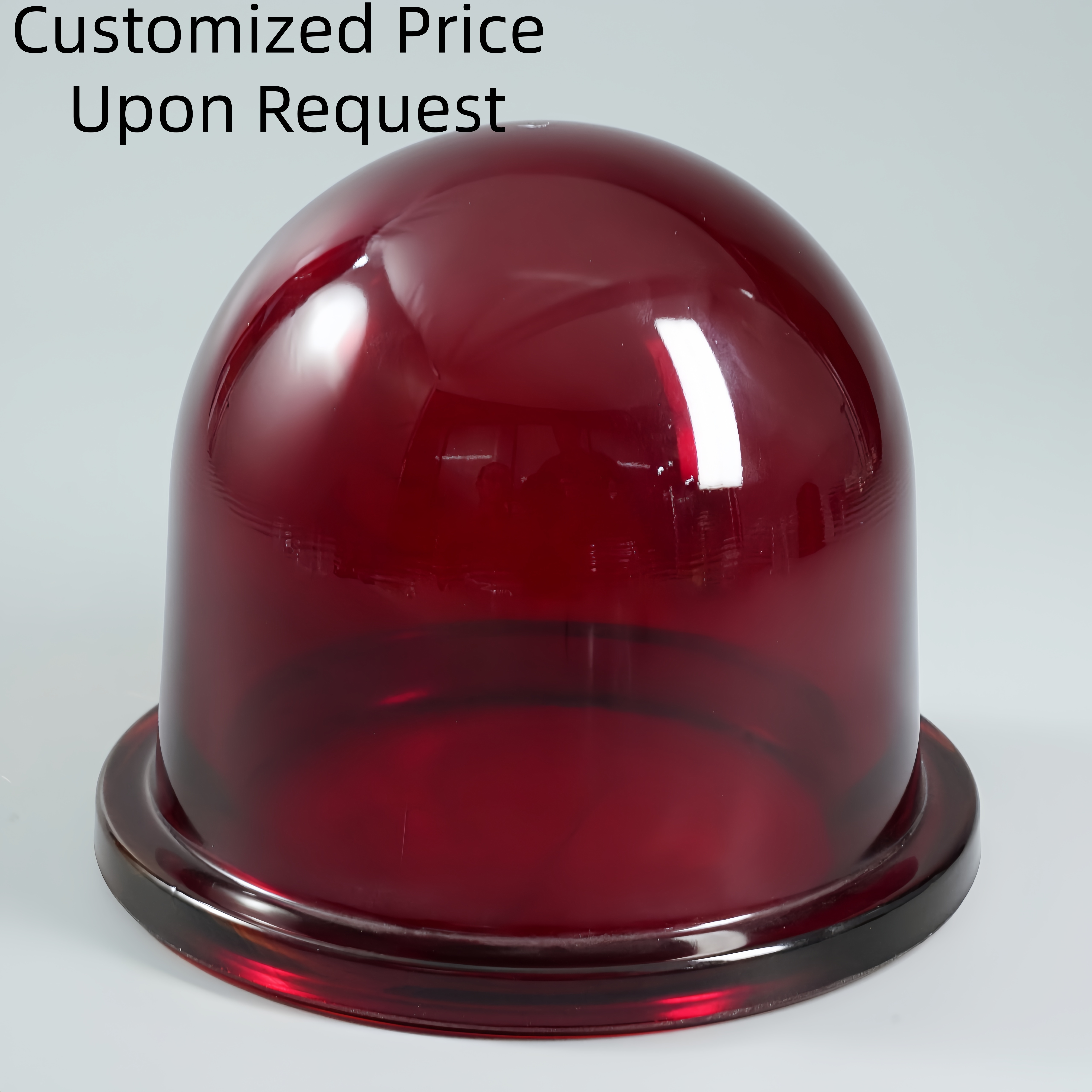
High-temperature resistant pressed glass shade for outdoor street lights
Outdoor & hazardous

High-Temperature Pressed Glass Shade for Explosion-Proof Street Lights

Pressed glass shade engineered for crack resistance and outdoor street-light service where heat, impact and weather converge.

Pressed glassCrack resistantStreet light
View product details
Localized application scenarios

Where Heat-Resistant Glass Matters in Cologne and North Rhine-Westphalia

Cologne’s mix of heritage streets, Rhine logistics, industrial estates, public transport and modern architecture creates several distinct glass-performance profiles.

Architectural and heritage illumination

Protected façades, museums, churches and civic squares need warm, controlled light without visible glare. Heat-resistant covers protect high-output fixtures while preserving colour consistency and clean sightlines.

Public realm and street lighting

Outdoor fixtures face rain, cleaning spray, vibration and high LED temperatures. Asymmetric borosilicate lenses and pressed shades help manage glare, light spill and thermal shock on Cologne streets.

Rhine logistics and port operations

Floodlights, crane lights, terminal lighting and ship-signal covers around the Rhine need robust glass that tolerates moisture, vibration and rapid temperature change.

Chemical, industrial and hazardous areas

Explosion-proof lampshades and heavy-wall covers are specified for chemical plants, workshops and dust-exposed facilities where heat, impact and sealing integrity matter.

Airport, rail and transport signalling

Cologne Bonn Airport and the regional rail network rely on clear, repeatable signal optics. Borosilicate lenses for runway, taxiway, obstruction and rail-related fixtures support colour and dimensional consistency.

Food, pharmaceutical and medical equipment

Chemical-resistant glass covers for machinery and equipment are used where frequent cleaning, disinfectants and visual inspection are routine.

Automotive, EV and optical sensing

Projection lenses, AR-coated windows and domes support automotive lighting, LiDAR, industrial cameras and sensor enclosures, where stable optical performance is part of system accuracy.

Horticulture and controlled environments

High-output grow lights in North Rhine-Westphalia’s controlled-environment agriculture and research facilities benefit from AR-coated borosilicate lenses that retain transmission under heat.

Cologne market trends

Six Trends Shaping Heat-Resistant Glass Demand in Cologne

The procurement conversation is moving from “glass that survives heat” to glass that supports efficiency, glare control, repairability and measured optical performance.

Higher LED power density

Compact luminaires pack more light into smaller housings. Borosilicate 3.3 helps manage thermal shock when outdoor covers cool rapidly.

Specification focusHigh

Dark-sky and glare control

Cologne’s urban fabric increases pressure on asymmetric optics, sharp cut-off and light-spill reduction for street and public-realm lighting.

Specification focusHigh

Heritage-compatible modernization

Retrofit projects must preserve the visual character of historic areas while upgrading light engines, thermal management and sealing.

Specification focusGrowing

Repairability and material traceability

Public and commercial buyers increasingly ask for replaceable covers, stable dimensions, material reports and packaging that supports longer service life.

Specification focusGrowing

Sensor integration and optical coatings

AR-coated windows and domes are appearing in LiDAR, machine vision and UV systems where transmission loss and reflection control matter.

Specification focusHigh

Rhine logistics and batch flexibility

Buyers compare air freight to Cologne Bonn Airport with sea and rail options through Rhine ports. Divider packing and clear batch labels reduce transit risk.

Specification focusStable
Engineering guide

Material Selection Data: Heat Resistance, Thermal Shock and Optical Trade-Offs

A “heat resistant glass” label is not enough for fixture design. The correct material depends on lamp temperature, thermal cycling, impact risk, coating and the standard your fixture must satisfy.

MaterialThermal expansionTypical working temperatureKey strengthCologne-relevant use
Borosilicate 3.3≈ 3.3 × 10⁻⁶/K≈ 450 °CExcellent thermal-shock resistanceHigh-power LED covers, explosion-proof shades, Fresnel lenses, outdoor fixtures exposed to rain
Tempered soda-lime≈ 9.0 × 10⁻⁶/K≈ 250 °CHigh impact strength and economical costVandal-resistant covers, floodlight windows, moderate-temperature outdoor lighting
Fused quartz≈ 0.55 × 10⁻⁶/K≈ 1000 °C+Extreme heat and strong UV transmissionUV optics, high-temperature windows, laboratory and industrial sensor windows
Optical BK7 / K9≈ 7.1 × 10⁻⁶/K≈ 300 °CHomogeneous optical quality, nd ≈ 1.517Precision lenses, prisms, AR windows, instrumentation and sensor optics

Values are typical engineering references, not a substitute for fixture-level validation. Final specification must be confirmed against the drawing, lamp surface temperature, impact rating, coating requirement and the certification held by the luminaire manufacturer.

Enterprise advantages

Why Cologne Buyers Shortlist Tambi Glass

Shanghai Tambi Glass Industrial Co., Ltd. combines drawing-based engineering, material breadth and export discipline for lighting and optical OEMs.

Drawing-first engineering

Send a 2D/3D drawing or physical sample. Our senior lighting and moulding engineers review wall thickness, draft, tolerance, sealing faces and optical path alignment before tooling.

Material breadth

Borosilicate 3.3, tempered soda-lime, fused quartz, BK7/K9, B270 and other optical glass options are matched to heat, impact and transmission requirements.

Manufacturer and trading partner

Pressed, blown, ground and coated processes are coordinated under one supply chain, helping buyers reduce supplier fragmentation and communication loss.

Export packing discipline

Foam or pulp dividers, reinforced export cartons and palletized packing support air freight to Cologne Bonn Airport or sea and rail via Rhine logistics.

From drawing to delivery

A Controlled Six-Step OEM Workflow for Cologne Projects

Clear checkpoints reduce risk between sample approval and volume production.

01

Drawing review

DFM review of thickness, draft, tolerance, sealing face and optical alignment.

02

Mould and tooling

New or existing moulds selected for pressing, blowing, grinding or coating.

03

Sampling

Sample parts measured, inspected and sent for fit, light and sealing evaluation.

04

Forming and annealing

Controlled annealing or tempering helps relieve stress and support thermal-shock resistance.

05

Coating and QC

AR or colour coating, dimensional inspection and visual checks before release.

06

Export packing

Divider-packed cartons and palletized packing for air, sea or rail logistics.

Cologne buyer FAQ

Heat-Resistant Glass Procurement Questions from Cologne Buyers

Practical answers for engineering, sourcing and logistics teams evaluating a China-based glass manufacturer.

Can you manufacture heat-resistant glass to our own drawing and support delivery to Cologne?

Yes. Most orders are drawing-based. Send a 2D/3D drawing or a physical sample with dimensions, tolerance, material, colour, coating and operating-temperature requirements. Our engineers review manufacturability, propose mould options and confirm samples before mass production. We regularly support export packing for delivery to Germany, including air freight to Cologne Bonn Airport and sea or rail options through Rhine logistics routes.

Which glass should we choose for high-power outdoor LED luminaires in Cologne?

Borosilicate 3.3 is usually preferred when the cover is close to high-power LEDs, has thick walls or may be hit by cold rain after reaching a high surface temperature. Tempered soda-lime glass can be a good choice for lower-temperature fixtures where impact strength and cost dominate. The right answer depends on the measured lamp surface temperature, thermal cycling profile, impact rating, sealing design and the certification of the complete fixture.

Do you supply glass for FAA L-810, EN 50293 or IP68 lighting fixtures?

We produce glass lenses and domes for fixture makers whose obstruction and signal lights are designed around FAA L-810, EN 50293 or IP68 assembly requirements. Fixture certification is held by the luminaire manufacturer. We match colour, transmission and dimensional specifications, and material and inspection reports can be provided on request so your certification file is easier to complete.

What is the typical minimum order quantity and sample availability?

Typical MOQs range from 50 pieces for optical lenses to 100–500 pieces for pressed or blown lighting covers, depending on whether an existing mould can be used. Sample quantities are available for evaluation. The most accurate quotation is issued after reviewing the drawing, material, coating, mould status and annual volume.

How do you reduce the risk of thermal shock, cracking or field failure?

We review wall thickness, corner radius, mould draft, sealing-face pressure and installation stress before tooling. Controlled annealing or tempering helps reduce residual stress. For high-risk applications, we recommend evaluating the glass in the actual fixture under representative thermal cycling conditions, because the housing, gasket and lamp position can change the stress distribution in the glass.

Can you match red, green, amber or clear glass for signal and obstruction lighting?

Yes. Colour matching is handled through glass composition, thickness and coating tolerance. We ask for the target chromaticity, transmission requirement and reference sample where available. For signal and obstruction lights, buyers should confirm the final colour and light output in the assembled fixture, because LED binning and driver settings also influence the result.

How are fragile glass lenses and lampshades packed for export to Germany?

Parts are separated by foam or pulp dividers, packed in reinforced export cartons and palletized for sea or air freight. Custom packaging and labelling for distributors can be arranged. For Cologne deliveries, we can discuss carton markings, batch identification and pallet configuration so the shipment is easier to receive and store.

What technical documents can be provided for a Cologne procurement file?

Depending on the project, we can provide material information, dimensional inspection records, visual inspection records, packing lists and commercial documents. Where a customer requires specific test reports or third-party inspection, this should be agreed during quotation. The final conformity assessment and fixture certification remain the responsibility of the luminaire manufacturer or importer placing the product on the EU market.

Do you support OEM branding and distributor-specific packaging?

Yes. OEM and distributor projects can include custom labels, inner packaging, instructions and carton marks, subject to order volume and approval. If you supply a packaging specification or a sample label, our team can review it with the quotation.

How quickly can we receive a technical response?

Our average response time is within 6 hours during normal business operations. For the fastest review, include the drawing, target material, operating temperature, coating requirement, annual volume and any certification context in your first message to info@tambiglass.com.

Have a Drawing? Let Our Engineers Review It for the Cologne Market.

Share dimensions, material preference, operating temperature, annual volume and the standard your fixture must meet. We will review manufacturability, material options, mould approach and export packing for your Cologne project.

Email: info@tambiglass.com

Inquire Now