Optical Glass Components Frequently Specified by Scientific and Industrial Buyers
These eight production items show the material, forming and coating range available for Guadalajara instrument builders. Use them as reference points when your application needs a custom hemispherical window, protective dome, lens, lamp cover or precision optical component.
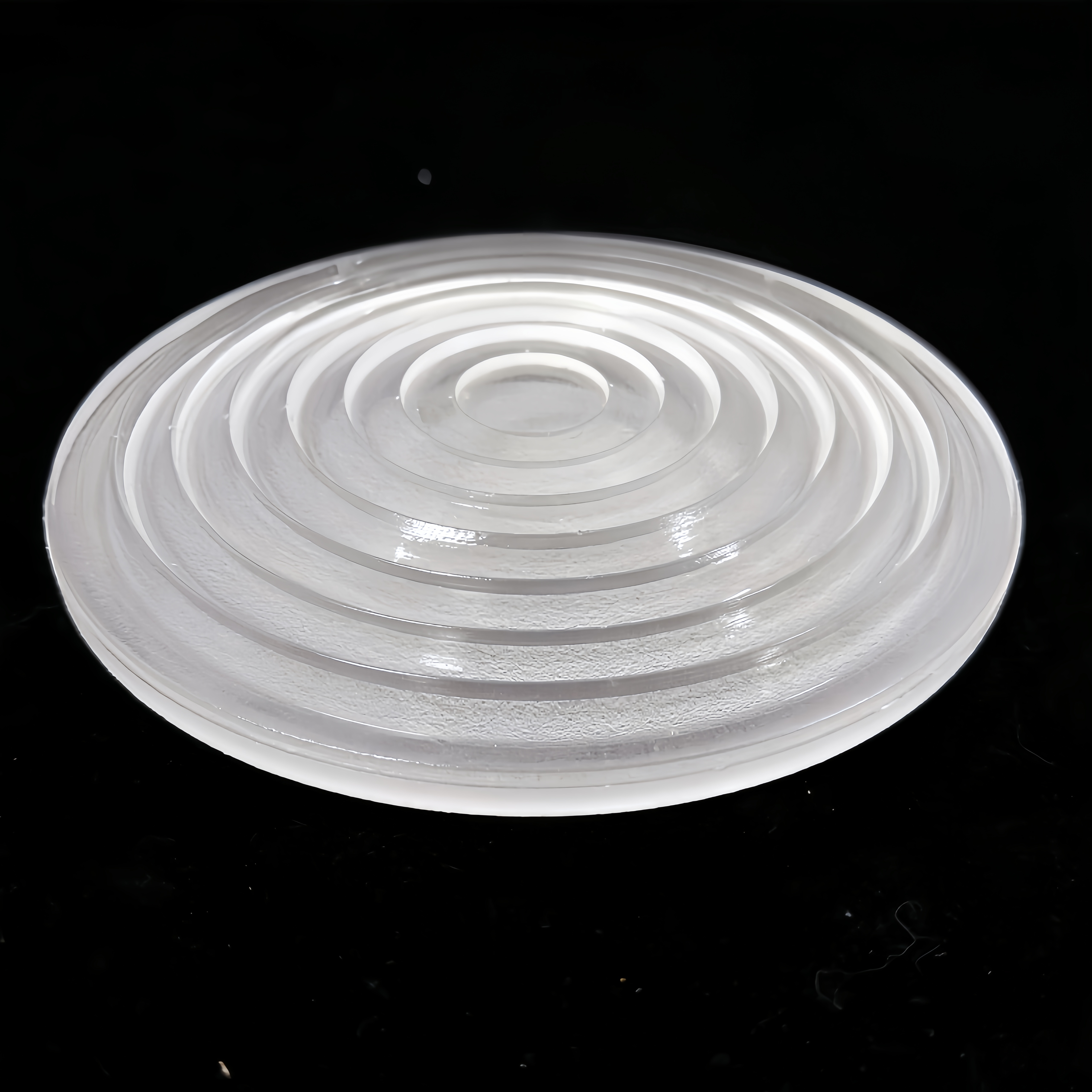
High Temperature Resistant Borosilicate Glass Fresnel Lens Anti-Reflective Coating High Power LED Collimation Stage Lighting
Heat-resistant borosilicate Fresnel optics for high-power LED collimation, stage lighting and demanding beam-shaping assemblies.
View product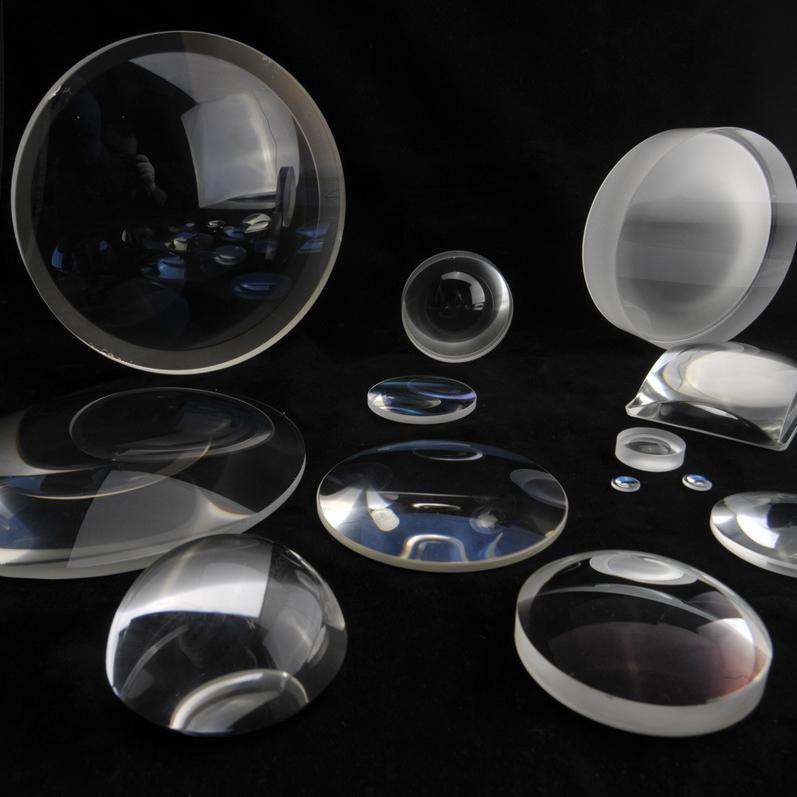
Custom High Quality Diameter 80Mm 127Mm 250Mm Spherical K9 Optical Coating Glass Plano Convex Lens for Big Magnifying
K9 optical plano-convex lenses for magnifying systems, imaging paths and instrument prototypes requiring consistent optical coating.
View product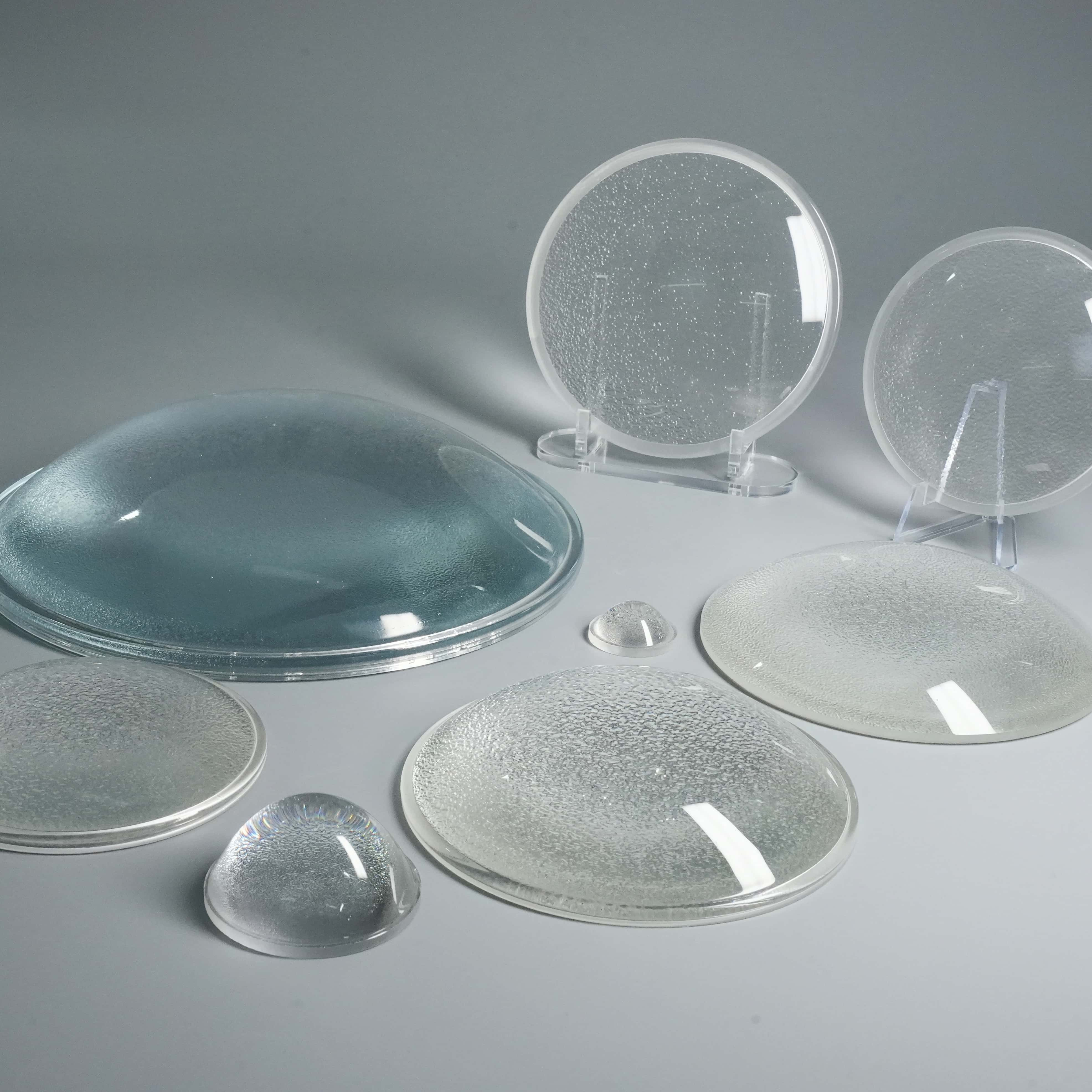
Bo Glass Asymmetric LED Lens Roadway Street Light Reduces Light Pollution Glare Borosilicate Glass UV Protection OEM
Asymmetric borosilicate optics for roadway fixtures where glare control, UV protection and stable outdoor performance are required.
View product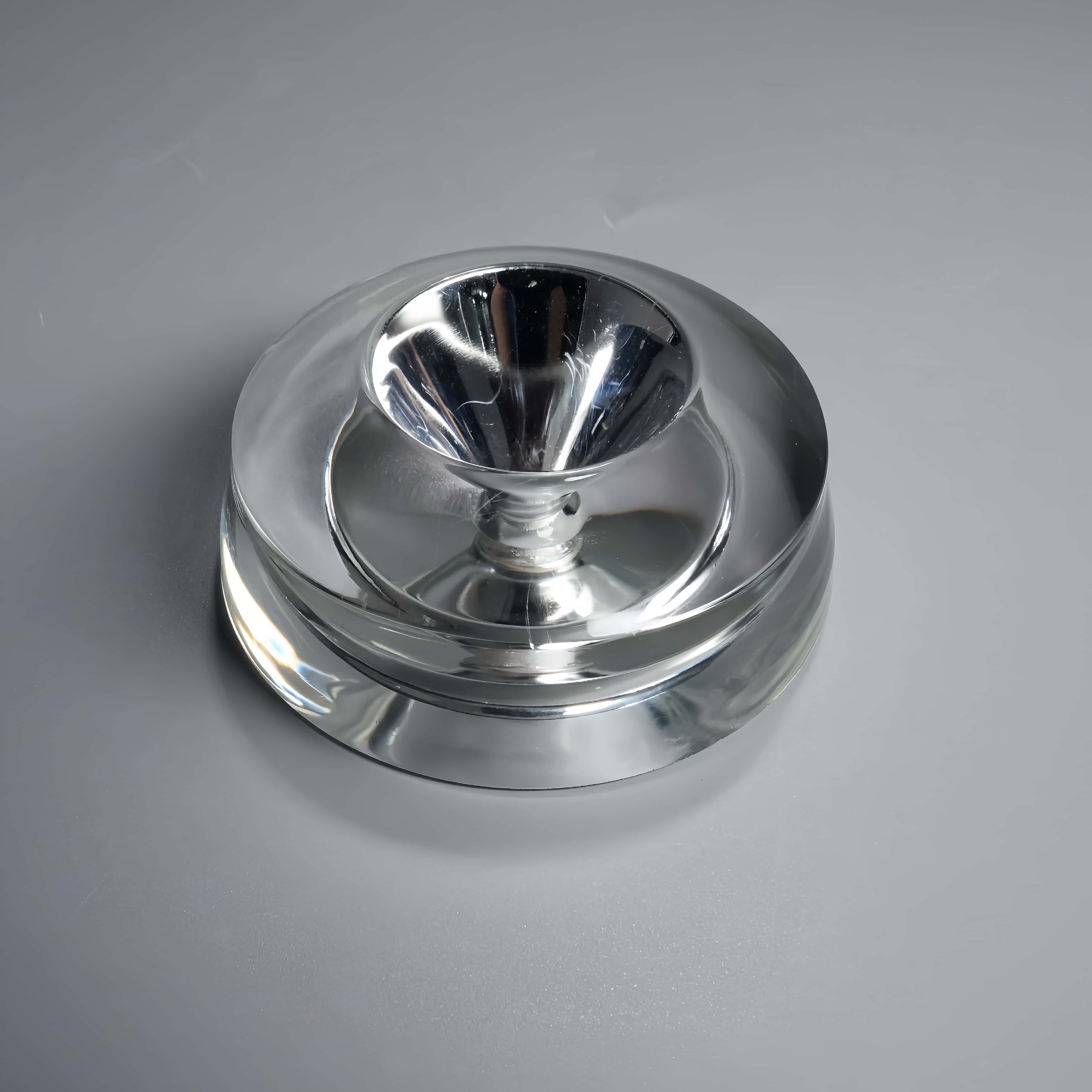
Factory China Custom Size Mold Pressed Borosilicate Bk7 K9 Eco-Friendly LED Optical Glass Lens for Taxiway Runway Airport Ground
Mold-pressed and ground optical glass lenses for airport ground lighting, taxiway fixtures and OEM replacement programs.
View product
High-Light Transmission Clear Borosilicate Glass Dome Lens LED Outdoor Lighting Fixtures Impact Resistant Anti-Scratch OEM
Clear borosilicate domes for outdoor fixtures that need high transmission, scratch resistance and resistance to thermal shock.
View product
Factory Customized Size Shape Color Heat Resistant High Quality Borosilicate Glass Car Light Accessories Traditional Industrial
Custom pressed glass components in specified size, shape and color for automotive, industrial and traditional lighting applications.
View product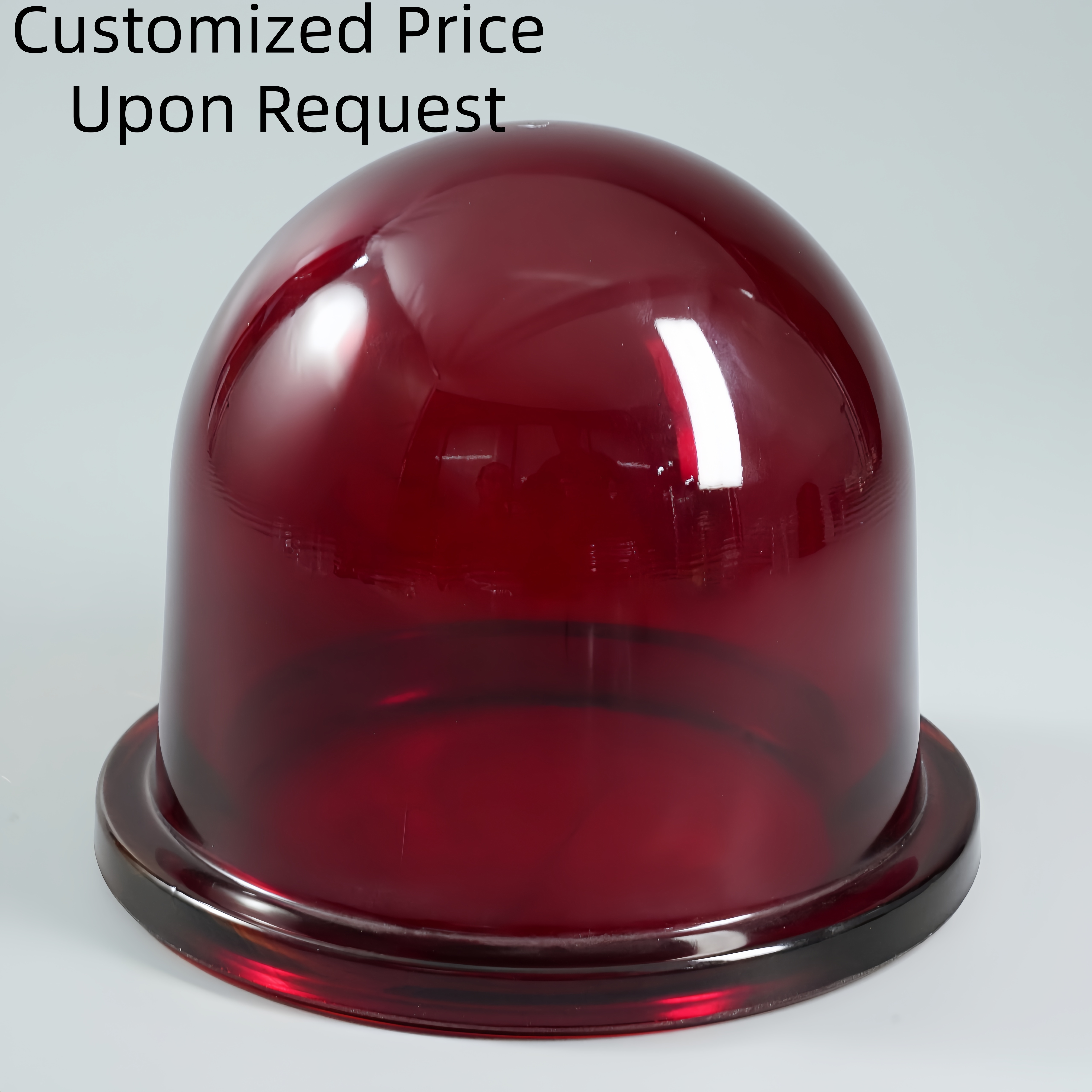
High-temperature Resistant Pressed Glass Shade, Explosion-proof & Crack-proof, Outdoor Street Light Specific
Pressed glass shades for outdoor street lighting where heat resistance, crack resistance and dimensional repeatability matter.
View product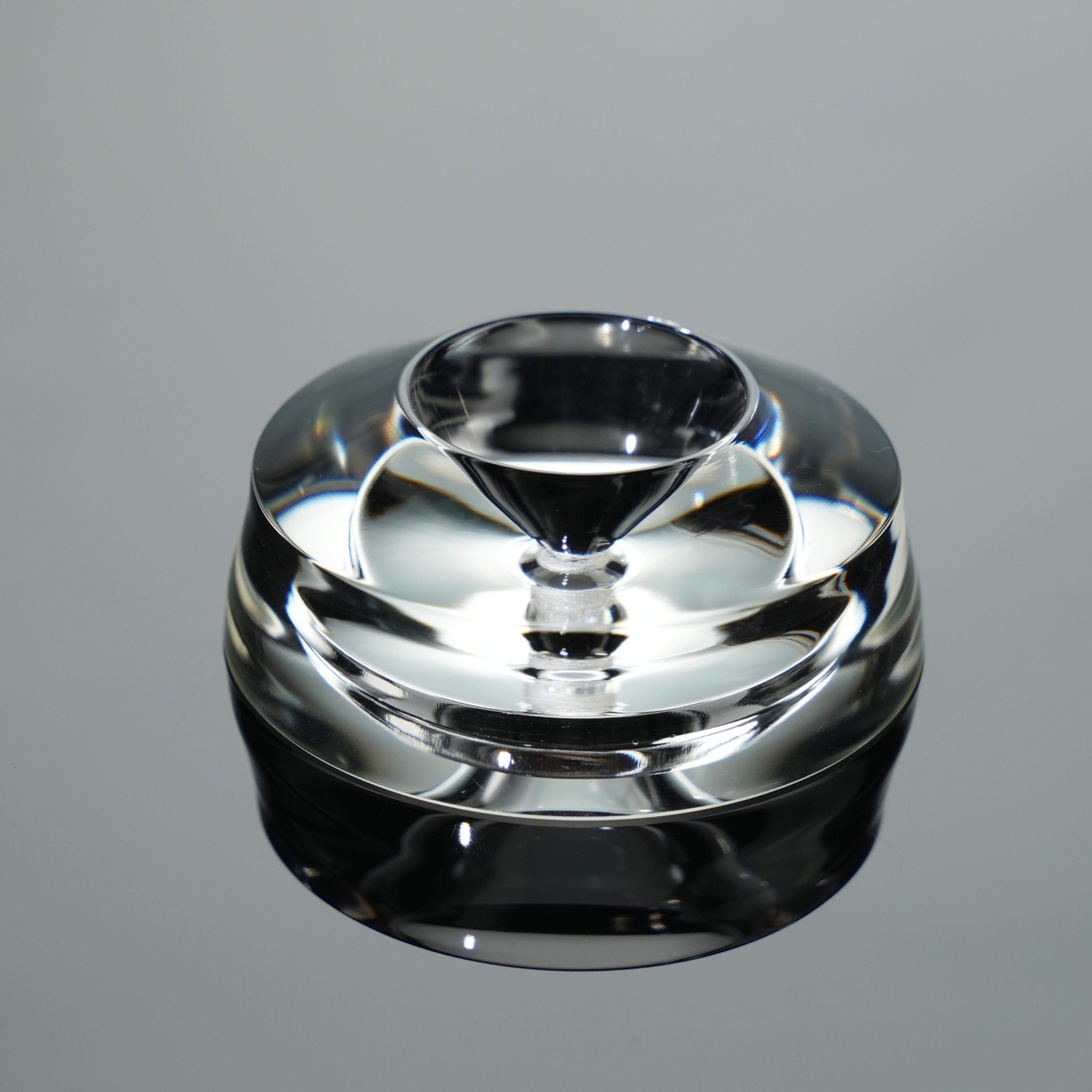
FAA Compliant Borosilicate Heat Resistant Glass Lens Runway In-Pavement Taxiway Lights IP68 Waterproof Optical Equipment Clear
Heat-resistant borosilicate lenses for runway and taxiway lighting assemblies that require stable optical performance and sealing support.
View productA Hemispherical Optical Window Is a System Component, Not a Commodity
For scientific instruments, the window must protect the optical path without becoming the source of stray light, thermal drift, sealing failure or measurement uncertainty.
A broadband AR-coated hemispherical optical glass window for scientific instruments is usually specified when a flat window cannot provide the required field of view, mechanical protection or hydrodynamic shape. In Guadalajara, this requirement appears in spectroscopy accessories, environmental sensing heads, laser diagnostic modules, machine vision enclosures, medical device imaging paths and university research benches. The dome is not simply a transparent cover; it is part of the optical train, the environmental seal and often the pressure boundary.
The most useful purchasing conversation starts with the operating wavelength, angle of incidence, environmental exposure and assembly method. A coating that performs well at normal incidence may not meet the same reflection target at 35° or 50°. A borosilicate dome may offer excellent thermal-shock resistance for a heated or outdoor instrument, while BK7 or fused quartz may be preferable when wavefront error, deep UV transmission or laser damage threshold dominates the decision. The right answer depends on the full instrument environment, not only the glass name.
Our engineering review therefore checks wall thickness, concentricity, sealing land geometry, coating run sheet, edge finish and packaging before quoting. For buyers in Guadalajara, that review can be handled remotely with 2D drawings, 3D models, photos of the existing housing and a clear statement of annual volume. If an existing mold can be adapted, tooling cost and lead time can often be reduced.
Why Coating Design, Dome Geometry and Metrology Decide Instrument Performance
A hemispherical window can improve field of view and protection, but its coating curve, surface form and mounting interface must be controlled together.
Broadband anti-reflective coatings are used to reduce Fresnel reflections across a specified wavelength band. For visible and NIR scientific instruments, a common request is a broadband AR range such as 400–700 nm, 700–1100 nm or 1000–1700 nm. For LiDAR, laser rangefinding and machine vision, the buyer must also state the laser wavelength, incidence angle, polarization and whether the coating will face abrasion, humidity, salt spray or cleaning chemicals. A coating recommendation that ignores these variables can look correct on paper but fail during assembly or field service.
Dome geometry is equally important. Hemispherical windows often sit close to a sensor, detector or scanning mechanism. The optical designer must consider ray path, dome thickness, refractive index, centration and aperture. If the window is also a pressure or ingress boundary, the mechanical engineer must define the O-ring groove, flat sealing land, edge chip tolerance and assembly torque. For Guadalajara instrument teams, sending a section view of the housing is often more useful than sending a glass diameter alone.
Our production route can combine pressing, blowing, grinding, polishing, annealing and coating according to the part. Inspection can include dimensional checks, visual inspection, transmission measurement and coating review. Requirements for material certificates, coating curves and inspection reports should be stated at the RFQ stage so that the correct documentation is built into the order.
Typical Broadband AR Transmission Targets
These are illustrative targets only. Final transmission, angle of incidence and environmental durability are confirmed against your optical design and coating specification.
Scientific instrument buyers in Guadalajara increasingly ask for a coating run sheet and a sample report before approving a production order. This is a healthy trend because it separates a reliable optical window supplier from a catalog reseller. Specification clarity at the sample stage reduces rework, customs delays and launch risk.
Localized Application Scenarios in Guadalajara and Jalisco
Guadalajara is a growing technology, electronics, medical-device and advanced-manufacturing center. Optical windows must serve very different environments within the same metropolitan area.
University and Photonics Laboratories
Research groups at universities and technology institutes in Jalisco use domes and windows in spectroscopy, laser diagnostics, interferometry, environmental chambers and custom optical benches. Small pilot batches, clear drawings and repeatable coating data are often more important than a large catalog.
Medical Devices and Diagnostic Instruments
Guadalajara has a substantial medical-device and healthcare manufacturing cluster. Optical windows may be used in imaging modules, diagnostic readers, UV disinfection enclosures and laboratory equipment. Material choice must match the cleaning agent, sterilization method and spectral range.
Automotive and Aerospace Metrology
Engineering centers and quality laboratories need protective optical windows for LiDAR test rigs, machine vision inspection, surface measurement, environmental test chambers and robotic guidance. Impact resistance, mounting repeatability and low stray light are common priorities.
Electronics, Semiconductor and Vision Systems
Electronics manufacturers and automation integrators use domes and windows to protect cameras, sensors and laser modules from dust, coolant, cleaning chemicals and accidental contact. Anti-reflective coated domes can improve image contrast and reduce ghosting.
Agri-Food, Beverage and Environmental Monitoring
Jalisco’s agri-food, beverage and environmental monitoring sectors use inline sensors and optical analyzers for process control, water quality and gas measurement. Sealed hemispherical windows can protect sensitive optics while allowing reliable transmission in visible, NIR or SWIR bands.
Industrial Safety, Energy and Harsh Environments
Oil, gas, chemical, energy and heavy manufacturing sites around Mexico require glass covers and windows that resist heat, chemical exposure and thermal shock. Borosilicate glass and properly annealed pressed domes are often considered for these conditions.
How Guadalajara Buyers Are Changing Their Optical Glass Sourcing
Nearshoring and local R&D growth are changing the way instrument teams evaluate overseas glass suppliers.
High-Mix, Lower-Volume Programs
Guadalajara instrument developers often launch multiple product variants for Mexico, the United States and Canada. They need suppliers who can support pilot runs, drawing revisions and mixed material requirements without treating every small order as a new project.
Documentation Before Price
Procurement teams increasingly ask for coating curves, material reports, dimensional inspection records and packing validation before approving a supplier. A lower unit price is less valuable if the window fails incoming inspection or creates a field return.
Logistics and Bilingual Support
Buyers in Guadalajara value suppliers who can quote clear Incoterms, pack fragile glass for air or sea freight, and provide English–Spanish commercial information. The ability to coordinate with a Mexican customs broker is a practical advantage.
Recommended Configurations for Guadalajara Scientific Instrument Builders
These recommendations are starting points for an RFQ. Final glass, coating and geometry should be confirmed against your optical design and housing interface.
Spectroscopy and Diagnostic Window
Broadband AR-coated hemispherical dome in BK7, fused quartz or borosilicate 3.3, with transmission specified across 400–1000 nm or a custom band. Best when image quality, stray-light control and cleanability are critical.
LiDAR and Laser Rangefinder Dome
Dome geometry optimized for 905 nm or 1550 nm, with AR coating, controlled wavefront error and a sealing land for IP-rated assemblies. Useful for robotics, mapping, automotive test systems and industrial sensing.
Machine Vision Protective Window
Impact-resistant dome or flat window with hydrophobic or anti-scratch coating options for factory automation, electronics inspection and outdoor camera enclosures. Specify cleaning agents and mounting torque early.
High-Temperature or Harsh-Environment Cover
Borosilicate 3.3 pressed or blown dome for instruments near heat sources, chemical processes or outdoor lighting and signal equipment. Annealing and edge quality are reviewed together with the gasket design.
Material and Coating Selection Guide for Optical Windows and Domes
The following comparison helps instrument teams compare common glass options before requesting a sample.
| Material | Thermal expansion (×10⁻⁶/K) | Typical max. working temperature | Key strength | Best considered for |
|---|---|---|---|---|
| Borosilicate 3.3 | ≈ 3.3 | ≈ 450 °C | Excellent thermal-shock resistance and chemical durability | Outdoor scientific instruments, high-power LED covers, harsh-environment domes and lens covers |
| Optical BK7 / K9 | ≈ 7.1 | ≈ 300 °C | Good optical homogeneity and stable polishing performance | Visible and NIR windows, precision lenses, prisms, imaging and metrology systems |
| Fused quartz | ≈ 0.55 | ≈ 1000 °C+ | UV transmission and very high temperature capability | UV optics, laser modules, high-temperature windows and demanding scientific instruments |
| Tempered soda-lime | ≈ 9.0 | ≈ 250 °C | High impact strength and economical production | Outdoor covers, floodlight glass, vandal-resistant windows and general industrial lighting |
Values are typical references, not a final specification. Confirm the material against your lamp surface temperature, impact rating, pressure load, cleaning method, spectral band and the standard your finished instrument must meet.
From Drawing Review to Export Carton: Six Controlled Steps
Clear checkpoints reduce surprises between sample approval, mass production and delivery to Guadalajara.
Drawing and Application Review
We check wall thickness, draft, tolerance, sealing interface, optical path, wavelength, temperature and expected volume before proposing a manufacturing route.
Mold and Tooling Decision
An existing mold may be adapted when dimensions allow. Otherwise, a new mold is evaluated for pressing, blowing or grinding, with tooling cost and lead time stated clearly.
Sample Making and Fit Check
Sample parts are measured and, where required, coated for optical evaluation. Buyers can test fit, transmission, sealing and appearance before approving volume production.
Forming, Annealing and Finishing
Forming parameters and annealing cycles are controlled to reduce internal stress. Edge finishing, drilling, grinding and surface treatment are completed according to the drawing.
Coating and Quality Control
AR coating, color coating or other optical finishing is applied when specified. Incoming material, dimensions, appearance and coating results are inspected against the approved sample.
Export Packing and Shipping
Fragile parts are separated with foam or pulp dividers, packed into reinforced export cartons and palletized for air or sea freight. Custom labels and distributor packing can be arranged.
Why Guadalajara Buyers Work With Shanghai Tambi Glass
Shanghai Tambi Glass Industrial Co., Ltd. combines drawing-based engineering, flexible production and export packing for lighting and optical OEM buyers.
Drawing-Based OEM and ODM
Send a 2D drawing, 3D model or physical sample. Our engineers review manufacturability, propose mold options and confirm samples before mass production.
Broad Material and Coating Range
Borosilicate, tempered glass, fused quartz and BK7/K9 options are supported with AR coating, color coating, grinding, polishing and edge finishing.
Export-Ready Packaging
Foam or pulp dividers, reinforced cartons and palletized packing are standard practice for fragile optical and lighting glass parts. Custom packaging and labels can be arranged.
Fast Technical Communication
Average response time is within 6 hours. With 10+ years in lighting glass, an 11–50 person team and annual export revenue of US$2.5M–5M, we support both prototype and repeat production orders.
The company is an onsite-verified supplier and has been active in custom lighting and optical glass components for more than a decade. For Guadalajara buyers, we can coordinate multiple glass parts in one shipment and provide the technical files needed for internal supplier qualification.
Shipping, Import Documentation and Local Support for Guadalajara
Good optical glass logistics is not only about freight rate; it is about protecting the coating, preventing edge chips and giving the importer complete documentation.
Air Freight for Samples and Urgent Parts
Small optical windows, domes and prototype quantities can be shipped by air to Guadalajara International Airport. Individual foam dividers and reinforced cartons are recommended for fragile coated parts.
Sea Freight via Manzanillo or Lázaro Cárdenas
For volume orders, sea freight to Manzanillo or Lázaro Cárdenas and onward transport to Guadalajara is often more economical. We can pack on pallets and coordinate with the freight forwarder nominated by the buyer.
Documents for Mexican Import
Typical documents include commercial invoice, packing list, bill of lading or air waybill, material reports and inspection records. The importer and customs broker remain responsible for classification, duty, VAT and any NOM or product-specific compliance.
We can provide English–Spanish data sheets and labels when required. For the smoothest clearance, confirm the Incoterm, HS classification, broker details and delivery address before shipment.
Questions Procurement Teams in Guadalajara Ask Before Ordering
These answers are written for engineering, purchasing and quality teams evaluating an overseas optical glass supplier.
Can you manufacture a broadband AR-coated hemispherical optical glass window to our drawing?
Yes. Most orders are drawing-based. Send a 2D or 3D drawing with diameter, radius, wall thickness, tolerance, glass type, coating band, angle of incidence, environmental exposure and annual volume. Our engineers review manufacturability and propose a mold or machining route before sampling.
Which glass should we choose for a scientific instrument in Guadalajara?
The choice depends on spectral range, thermal shock, pressure, impact and cleaning method. Borosilicate 3.3 is often considered for thermal-shock resistance; BK7/K9 for visible and NIR optical quality; fused quartz for UV or high-temperature requirements. We compare your operating conditions against material data before recommending a final specification.
What is the typical MOQ and sample lead time?
Typical MOQs begin around 50 pieces for optical lenses and 100–500 pieces for pressed or blown covers, depending on whether an existing mold can be used. Sample quantities are available for evaluation. Lead time is confirmed after drawing review and sample approval.
How do you protect AR-coated glass during export to Mexico?
Parts are separated with foam or pulp dividers, packed in reinforced export cartons and palletized for sea or air freight. Coated surfaces are protected, and custom packaging or labeling can be arranged for distributors and OEM production lines.
Can you provide Spanish documentation for our purchasing file?
Spanish-language data sheets, labels and commercial information can be arranged. Material certificates, dimensional reports, coating data and inspection records can also be prepared when specified in the quotation. Final regulatory classification and import compliance remain with the Mexican importer and customs broker.
Do you handle NOM certification or Mexican customs clearance?
We supply technical files and shipping documents to support your importer and customs broker. We do not act as the Mexican importer of record. Product-specific certification, duty, VAT and customs release are handled by the buyer’s local team or broker.
How fast can your team review a drawing and quote?
Our average response time is within 6 hours. Email your drawing, wavelength band, quantity, target delivery date and destination to info@tambiglass.com for a technical and commercial review.
Can you combine several glass parts in one shipment to Guadalajara?
Yes. If your project includes domes, lenses, covers or filters, we can review the combined packing plan and coordinate shipment preparation. This helps reduce freight cost and simplifies receiving for instrument builders and distributors in Jalisco.
Send Your Drawing for a Guadalajara-Ready Optical Window Quote
Share dimensions, wavelength, coating band, operating temperature, annual volume and delivery destination. Our engineering team will review the glass, dome geometry, AR coating and export packing route for your scientific instrument project.