8 Anti-Glare Glass Products for Hat Yai Procurement Teams
This is not a random catalog page. Each product below answers a specific glare-control or optical-transmission problem common in Southern Thailand: bright tropical daylight, monsoon rain, coastal salt spray, high-power LED heat, outdoor camera imaging and precision laboratory work.

Manufacturer OEM Precision Grade BK7 K9 Optical Glass Aspherical Lens Anti-Reflective Coating Diameter 0.5-25mm MOQ 100 Pcs
AR-coated aspherical lens for compact LED, laser and sensor modules where controlled transmission and reduced surface reflection are critical.
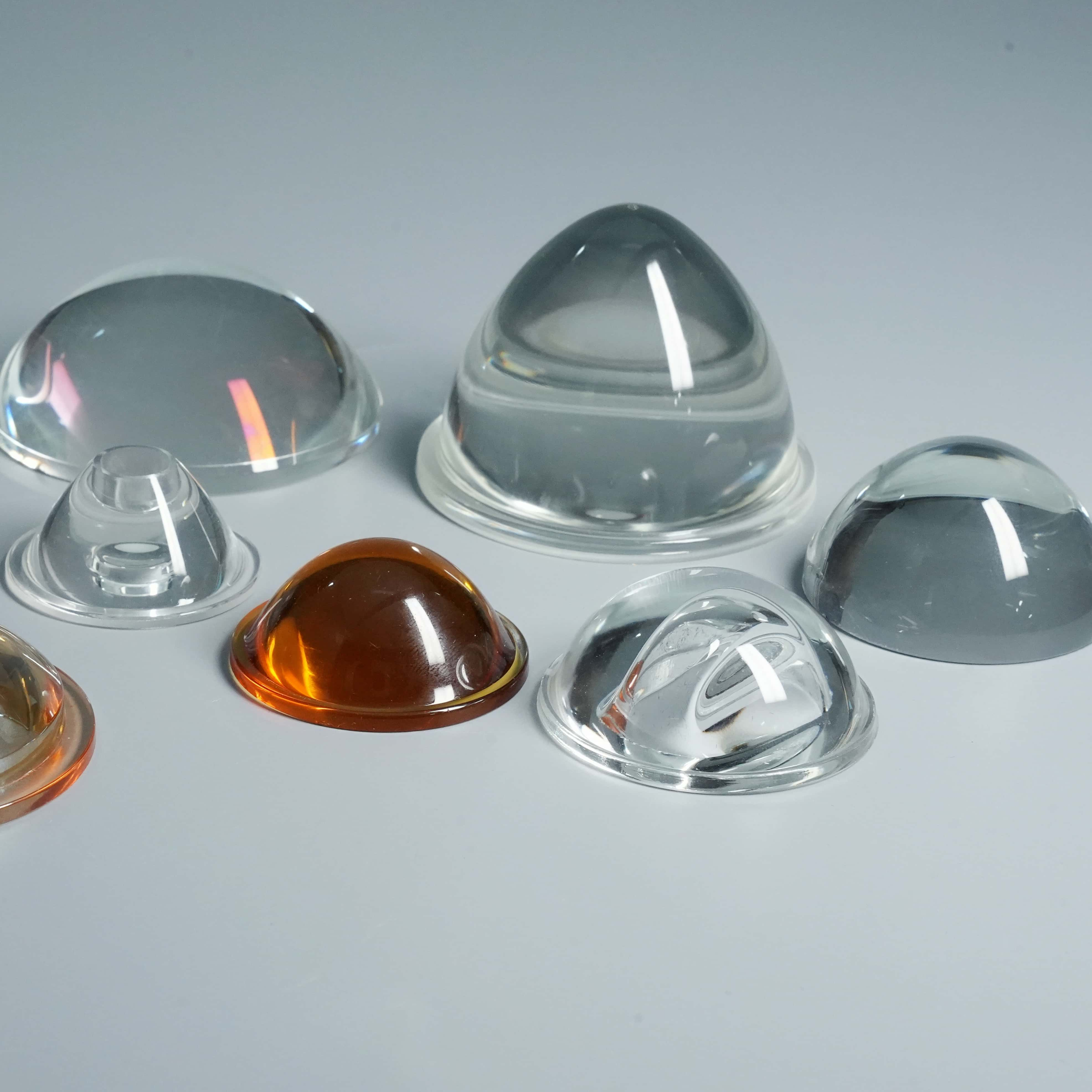
Custom Borosilicate Glass LED Grow Light Convex Lens with Anti-Reflective Coating for Indoor Farming Full Spectrum Lighting
Full-spectrum AR convex lens for indoor farming. Helps reduce reflection loss while supporting stable spectral output in high-humidity grow rooms.
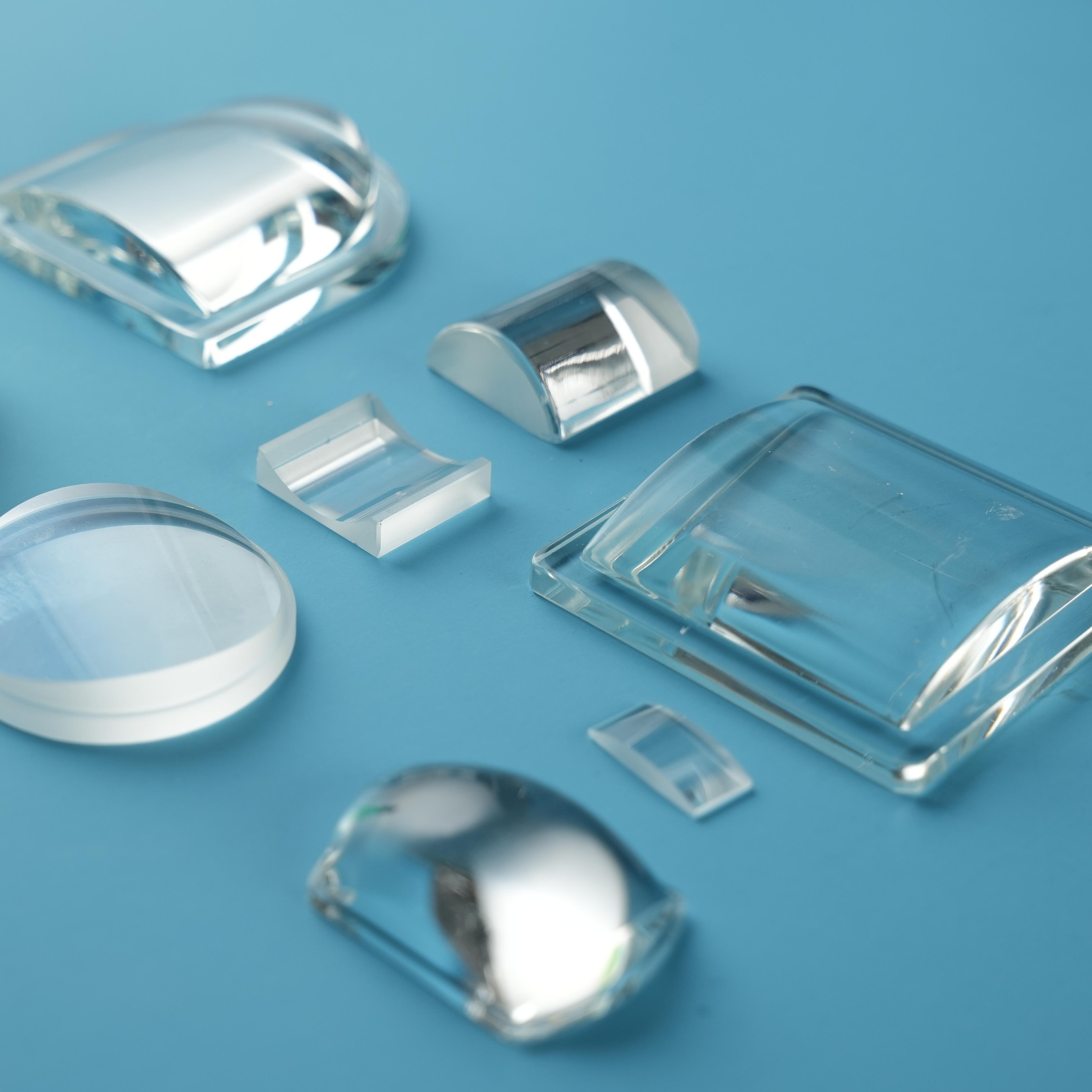
Manufacturer Custom OEM Anti-Reflective Laser Glass Optical Borosilicate UVC Plano Convex Cylindrical Biconvex Lens
Custom plano-convex, cylindrical and biconvex glass optics for laser, UVC and instrument assemblies with drawing-based dimensions.

Custom OEM Bo Glass Clear Borosilicate K9 Bk7 B270 Fused Silica Anti-Reflective Coated Square Optical Window 50mm Diameter
Square AR-coated window in borosilicate, K9, BK7, B270 or fused silica. Suitable for cameras, sensors and protective instrument enclosures.
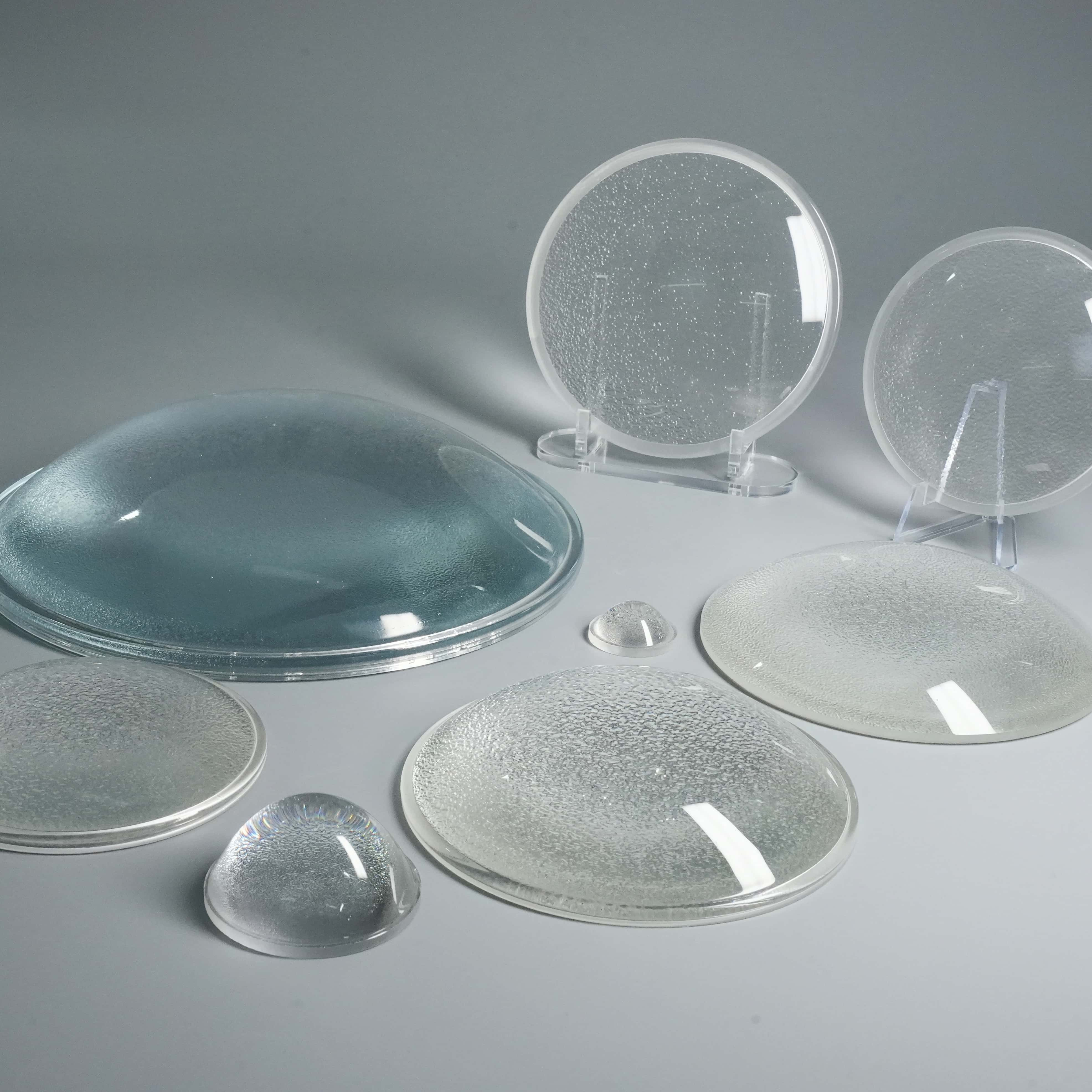
Bo Glass Asymmetric LED Lens Roadway Street Light Reduces Light Pollution Glare Borosilicate Glass UV Protection OEM
Asymmetric LED optic that pushes light toward the road, reduces glare and light pollution, and adds UV protection for outdoor street fixtures.
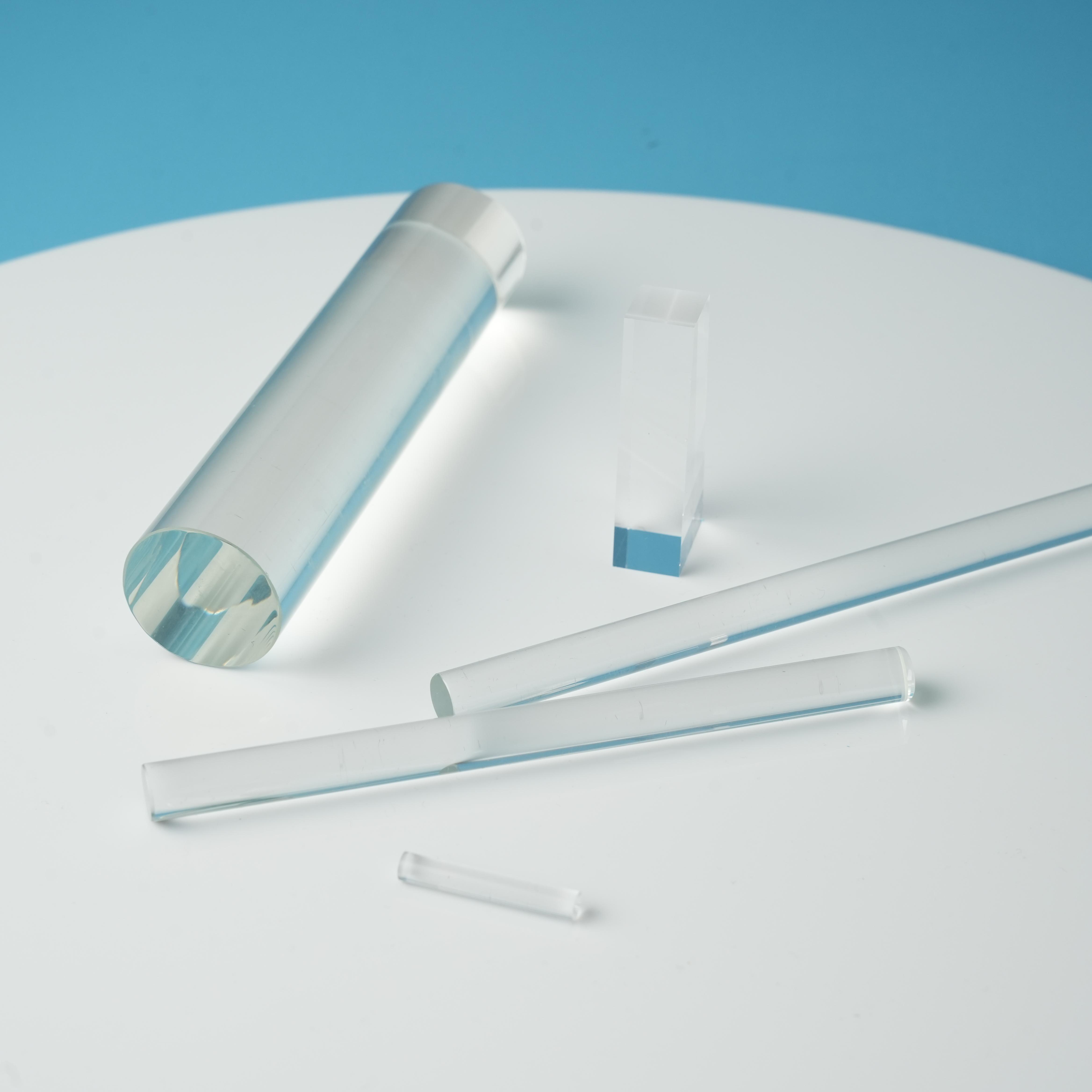
Factory Custom Shape Transparent High Borosilicate Temperature Resistant Optical Glass Light Guide Rod Rod Lens for Laboratory
High-borosilicate light guide rod and rod lens for laboratory, sensor and high-temperature equipment. Custom shape and thermal resistance.
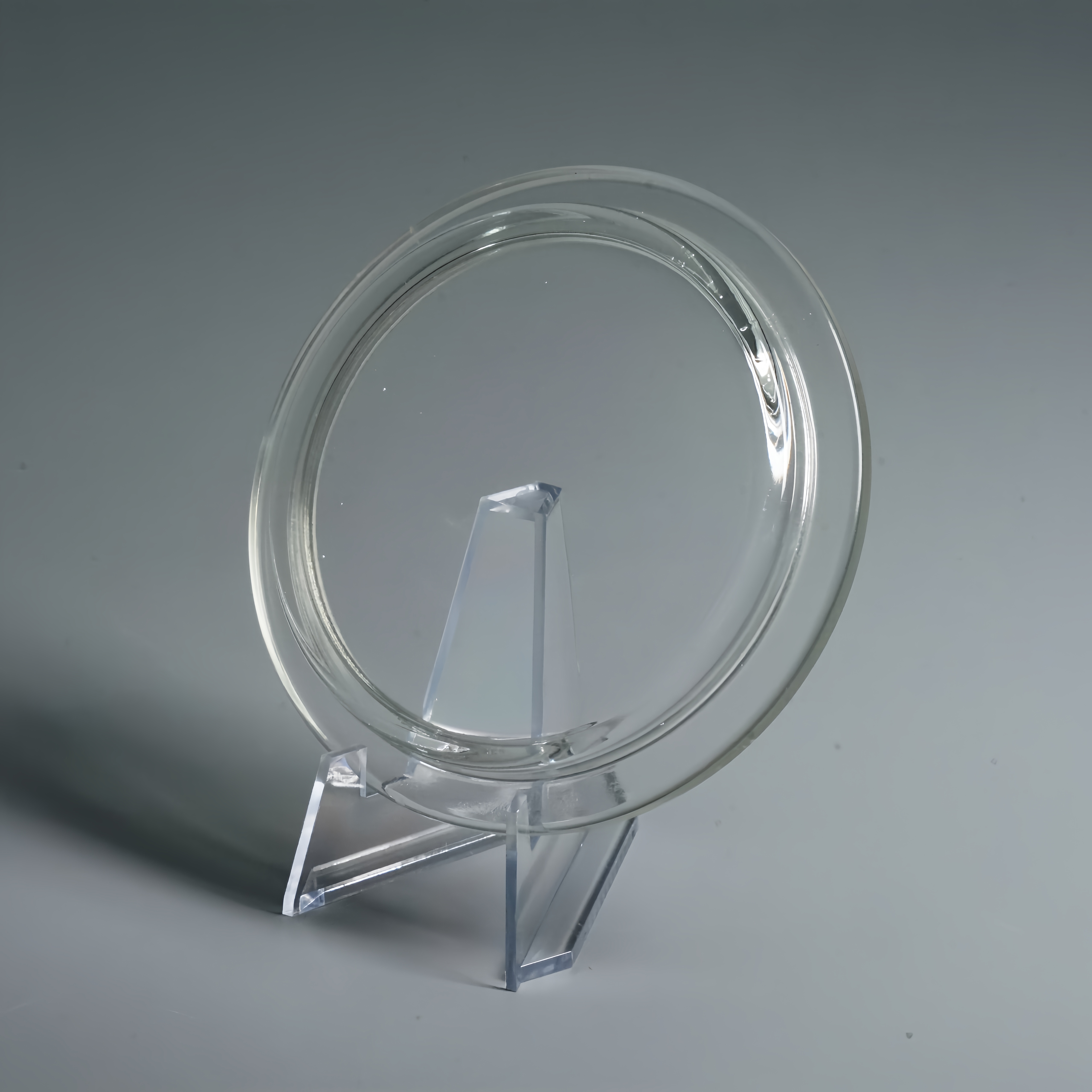
Custom Size Coastal Victorian Outdoor Stage Glass Lampshade Factory Waterproof High Temperature Impact Resistant Silk-Printable
Waterproof outdoor glass lampshade for coastal, stage and heritage-style fixtures. High-temperature and impact resistant, with silk-print options.
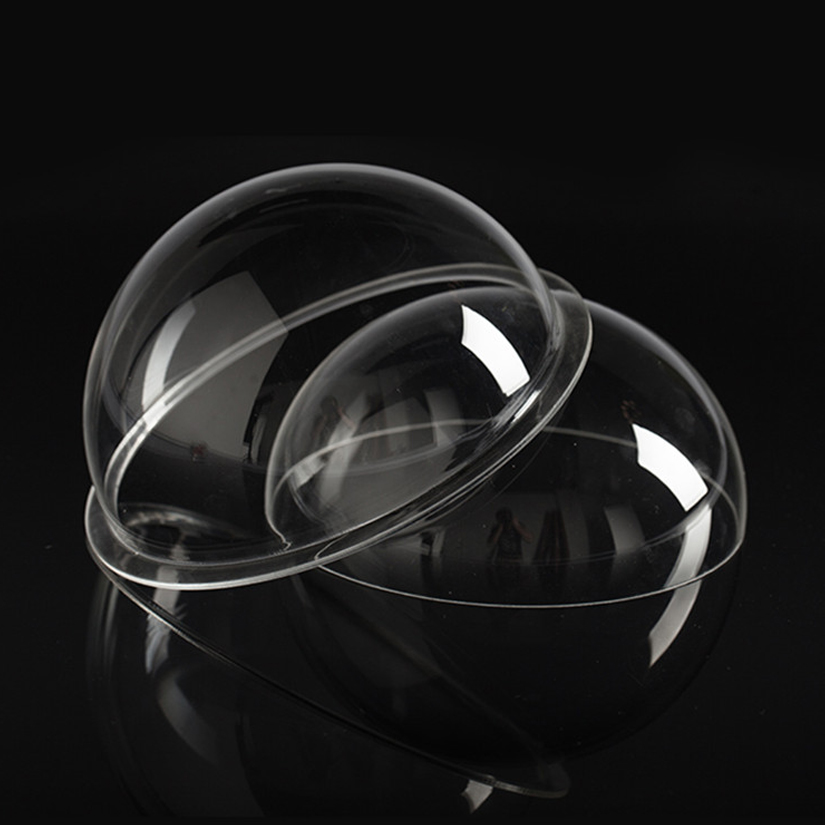
OEM Borosilicate Glass Optical Dome Cover for Outdoor IP Cameras UV Resistant Waterproof Housing Anti-Reflective Coating
AR-coated borosilicate dome for outdoor IP cameras. UV-resistant, waterproof housing design and reduced glare for clearer imaging.
What Anti-Glare Glass Really Means for Hat Yai’s Tropical, Coastal and High-Humidity Projects
In Hat Yai, “anti-glare glass” should be treated as a complete performance specification, not simply a matte surface finish. The city sits in a tropical monsoon climate with strong solar load, frequent rain, high humidity and easy access to the salt-laden air of the Songkhla coast. At the same time, lighting fixtures are shifting to high-efficiency LED modules that concentrate heat behind small optical surfaces. A glass part that looks correct in a catalog may still fail if the coating, glass type, annealing, gasket interface and optical beam are not engineered together.
There are two different glare problems. Anti-reflective coating uses thin-film interference to reduce surface reflection, raise useful transmission and suppress ghost images. This is important for camera domes, sensor windows, lenses and high-power LED optics. Anti-glare design controls the distribution of brightness that reaches the eye. It can be achieved through asymmetric optics, prismatic structures, diffusion, etched surfaces or beam shaping. For roadway lighting, both approaches may be needed: direct more light onto the road, reduce spill light and keep the visible source comfortable for drivers and pedestrians.
The information gain for buyers is a practical five-variable specification brief: application luminance, beam-control requirement, target transmission or reflection, environmental exposure, and the mechanical sealing method. Once these variables are clear, a factory can recommend the right material, coating, edge finish and packing method instead of quoting only by diameter.
Five Variables to Send Before Quotation
- 1. Optical goal: reduce reflection, diffuse glare, shape a beam or filter a wavelength.
- 2. Thermal goal: lamp surface temperature, LED wattage and thermal-shock conditions.
- 3. Environmental goal: salt spray, UV, rain, cleaning chemicals, dust and impact.
- 4. Mechanical goal: gasket compression, wall thickness, sealing face and mounting tolerance.
- 5. Commercial goal: annual volume, sample quantity, target shipments and required reports.
Optical KPI: Less Reflection, More Useful Light
Specify coating wavelength, single-sided or double-sided AR, allowable reflection and transmission targets. For visible-light fixtures, a broadband AR coating is often more useful than a decorative tint.
Thermal KPI: Heat Behind the Glass
High-power LEDs can create localized heat. Borosilicate 3.3 is often chosen for its low thermal expansion and good thermal-shock resistance; tempered soda-lime may suit lower-temperature, impact-focused fixtures.
Coastal KPI: Salt, UV and Monsoon Rain
Hat Yai projects near Songkhla and the Gulf of Thailand need stable sealing, UV resistance and coating durability. Material and coating choices should be reviewed against cleaning routines and gasket materials.
Why Tambi Glass Fits Hat Yai Buyers Seeking a Factory-Direct Anti-Glare Glass Manufacturer
Shanghai Tambi Glass Industrial Co., Ltd. is a manufacturer and trading company with more than a decade of focus on lighting and optical glass. The company serves overseas OEMs through drawing-based production, engineering review, sampling and export packing. It is not a local production facility physically located in Hat Yai; rather, it is a factory-direct supply partner for Hat Yai and Southern Thailand buyers who need custom glass components.
Our experience is built around one question: how should glass perform inside a real fixture? That means looking beyond the drawing at heat build-up behind high-power LEDs, thermal shock from rain on a hot cover, impact loads in industrial areas, color accuracy for signal lights and optical alignment for lenses and windows. The engineering review checks wall thickness, draft, sealing faces and optical path before tooling begins.
The company combines pressed, blown, ground and coated glass processes under one supply chain. Materials include borosilicate 3.3, tempered soda-lime glass, fused quartz and optical BK7 / H-K9L. Finishing options include anti-reflective coating, color filtering, edge grinding, silk printing and custom packing. Typical team size is 11–50 people, with annual export revenue in the US$2.5M–5M range. Buyer verification can be supported through supplier assessment, credit index, transaction level, trade capacity, trade history and buyer reviews.
For a Hat Yai importer, the practical value is not simply a lower price. It is a clear engineering path from drawing to sample to repeat order, with export packing designed for fragile glass and communication fast enough to keep a project moving.



Drawing-Based OEM / ODM
Most orders are produced from 2D or 3D drawings, samples and agreed tolerances. Engineers review manufacturability before mold or tooling investment.
Material & Coating Breadth
Borosilicate, tempered soda-lime, fused quartz and BK7 / K9 can be matched to thermal, optical and impact requirements.
Optical & Thermal Review
Surface temperature, coating target, beam angle, gasket compression and cleaning conditions are reviewed together with the optical drawing.
Controlled Quality Inspection
Dimensional, visual and coating checks are performed with sample approval checkpoints before mass production and final packing.
Export Packing for Fragile Glass
Foam or pulp dividers, reinforced export cartons and palletization can be arranged for sea or air freight to Thailand.
Verifiable Supplier Profile
Supplier assessment, trade capacity, transaction level and reviews help procurement teams complete a more transparent qualification process.
Sourcing transparency: Shanghai Tambi Glass Industrial Co., Ltd. is based in Shanghai, China. References to a “factory in Hat Yai” on this page describe a factory-direct supply relationship serving Hat Yai and Southern Thailand, not a manufacturing plant physically located inside Hat Yai. Local buyers can request company verification links, material reports and inspection documents before placing an order.
Anti-Glare and Optical Glass Applications in Hat Yai & Southern Thailand
Hat Yai functions as a commercial gateway for Songkhla Province and the wider Southern Thailand region. Procurement requirements often combine tropical weather resistance, marine exposure, aviation safety, tourism-related lighting, industrial reliability and cross-border trade practicality.
Airport & Aviation Lighting
Hat Yai International Airport and regional aviation facilities require reliable obstruction, runway-edge and taxiway lighting. Heat-resistant borosilicate lenses and red or clear domes help maintain color and transmission under high LED temperatures and heavy rain.
Marine, Port & Fishing Fleet Lights
Songkhla’s coastal activity exposes signal lights and outdoor fixtures to salt spray, UV and rapid temperature changes. Handblown or pressed glass covers in red, green or clear can be matched with sealing and gasket requirements.
LED Street & Roadway Lighting
Asymmetric LED lenses can reduce glare and light pollution while directing light onto the roadway. This matters in wet-season driving conditions, commercial streets and residential areas where spill light is unwelcome.
Industrial & Hazardous-Area Fixtures
Rubber processing, cold storage, food handling, chemical warehouses and maintenance workshops need glass that tolerates heat, cleaning and impact. Explosion-proof glass lampshades are specified where fixture safety depends on robust glass covers.
CCTV, Smart City & LiDAR Sensors
Outdoor IP cameras, access-control systems and sensing devices benefit from AR-coated borosilicate domes and windows. UV-resistant, waterproof housing glass helps maintain image clarity in humid and rainy conditions.
Horticulture & Research Lighting
Indoor farming and plant-research lighting use full-spectrum LED modules. AR-coated borosilicate convex lenses can improve transmission efficiency, while light guide rods support laboratory and sensor applications.
Local Development Trends Driving Demand for Anti-Glare Optical Glass
Buyers in Hat Yai are not only replacing glass parts. They are re-engineering fixtures for lower energy use, longer service life, better image clarity and more traceable supply.
LED Retrofit & Glare Control
Older lighting fixtures are being upgraded with high-efficiency LEDs. Because LED sources are small and bright, optics and anti-glare lenses become more important to avoid uncomfortable glare and wasted spill light.
Coastal Resilience & Longer Warranty
Salt spray and monsoon humidity push buyers toward better sealing, UV-stable materials and coating durability. Glass parts are increasingly reviewed against the full fixture warranty, not only the initial unit price.
Sensor-Ready Anti-Glare Glass
Outdoor cameras, LiDAR and smart-city devices need domes that reduce reflection and resist UV. Optical clarity and hydrophobic maintenance are becoming part of the purchase specification.
Traceable, Verifiable Supply
Procurement teams want supplier verification, inspection reports and packing validation before repeat orders. For fragile glass, a documented process reduces claim risk during sea or air freight to Thailand.
Material Selection Guide for Anti-Glare and Optical Glass
Selecting glass early avoids cracked covers, coating failure and costly field returns. The notes below are typical engineering references; final specification should be confirmed against your drawing, lamp surface temperature, impact rating, gasket design and the standard your fixture must meet.
Borosilicate 3.3
CTE ≈ 3.3 × 10⁻⁶ / KExcellent thermal-shock resistance and chemical durability. A strong fit for explosion-proof shades, high-power LED covers, Fresnel lenses and outdoor fixtures exposed to rapid rain cooling.
Tempered Soda-Lime
CTE ≈ 9.0 × 10⁻⁶ / KHigh impact strength at a lower cost for moderate-temperature applications. Often used for outdoor covers, floodlight glass and vandal-resistant lenses where impact performance is the main driver.
Fused Quartz
CTE ≈ 0.55 × 10⁻⁶ / KExtreme heat resistance and UV transmission. Suitable for UV optics, high-temperature windows and specialized industrial equipment where soda-lime or borosilicate would be marginal.
Optical BK7 / H-K9L
nd ≈ 1.517Homogeneous optical glass for precision lenses, prisms, mirrors and filters. Best specified when optical path accuracy and coating performance matter more than raw thermal shock.
From Drawing to Export Packing: A Controlled 6-Step Process for Hat Yai Orders
Clear checkpoints reduce surprises between sample approval and mass production. This is especially important when the buyer and factory are separated by an international shipment.
Drawing Review
DFM check of wall thickness, draft, tolerance, sealing face, optical axis and gasket compression. Missing data is clarified before quoting.
Mold & Tooling
New or existing molds are selected for pressing, blowing or grinding. Tooling decisions are matched to volume, shape and optical requirement.
Sampling
Pre-production samples are measured and sent for fit, light, color or imaging tests. Approval before mass production protects both sides.
Forming & Annealing
Controlled annealing or tempering relieves internal stress. This step matters for covers that will see heat, rain or impact in service.
Coating & QC
AR coating, color filtering, dimensional checks and visual inspection are completed before final packing. Reports can be discussed during quotation.
Export Packing
Divider-packed cartons and palletization for sea or air freight. Custom labeling and distributor packaging can be arranged.
Anti-Glare Glass Sourcing Questions Asked by Hat Yai Buyers
These answers reflect the practical questions that arise when importing custom lighting glass, optical windows and AR-coated parts into Southern Thailand.
Are you a factory physically located in Hat Yai?
No. Shanghai Tambi Glass Industrial Co., Ltd. is a Shanghai-based manufacturer and trading company. We supply Hat Yai buyers through factory-direct OEM production and export. The phrase “factory in Hat Yai” in this page refers to a supply relationship serving Hat Yai, not a local production plant.
What is the difference between anti-glare glass and anti-reflective glass?
Anti-reflective glass uses a coating to reduce surface reflection and increase useful transmission. Anti-glare glass controls perceived brightness through diffusion, prismatic optics, asymmetric lenses or surface treatment. For many projects, the best result combines both optical design and AR coating.
Can you supply samples before a mass-production order?
Sample quantities are normally available for evaluation. Typical MOQs range from about 50 pieces for optical lenses to 100–500 pieces for pressed or blown lighting covers, depending on whether an existing mold can be used.
What should a Hat Yai buyer send for an accurate quotation?
Send a 2D or 3D drawing, dimensions, tolerance, glass type, color, coating requirement, operating temperature, gasket or sealing method, annual volume and target shipment date. A physical sample is also helpful when available.
Borosilicate or tempered soda-lime for coastal humidity?
Borosilicate 3.3 is usually preferred for higher lamp temperatures and thermal shock because its expansion is about 3.3 × 10⁻⁶/K. Tempered soda-lime can be suitable for lower-temperature, impact-focused fixtures. The decision should consider surface temperature, cleaning, impact and fixture certification.
Do you supply glass for FAA L-810 or EN 50293 fixtures?
We produce lenses and domes for fixture makers whose obstruction and signal lights are designed around FAA L-810 or EN 50293 requirements. Fixture certification is normally held by the luminaire manufacturer; we match color, transmission and dimensional specifications and can discuss material or inspection reports.
How are fragile glass parts packed for Thailand?
Parts are separated by foam or pulp dividers, packed in reinforced export cartons and palletized for sea or air freight. Custom packaging and labeling for distributors can be arranged to reduce handling risk.
How fast can I receive a technical response?
The average response time for technical inquiries is within about 6 hours. Send your drawing and annual volume to info@tambiglass.com for a technical and commercial review.
Send Your Drawing for a Hat Yai Anti-Glare Glass Review
Share dimensions, glass type preference, operating temperature, coating target and annual volume. Our engineering team can recommend the right borosilicate, tempered, fused quartz or BK7 solution and confirm a practical sample plan.