Top Trusted Glass Cover Exporter & Wholesalers
Borosilicate, explosion-proof, signal-light and optical glass components engineered to your drawing, with drawing-based OEM production, export-grade quality control and engineering feedback within 6 hours.
8 Glass Cover & Optical Products Most Requested by Wholesalers
These eight product families reflect the typical buying mix of lighting OEMs, importers, MRO distributors and optical-system manufacturers. Every product can be adapted by size, thickness, color, coating, edge finish, sealing face and packaging specification. Product URLs are preserved for direct purchasing and technical review.

Supplier Custom Size Shape Pressed Mold Heat Resistant High Borosilicate Headlight Glass Lens Cover Headlight Glass Cover
Pressed-mold borosilicate lens cover for high-temperature headlight, projector and LED modules where optical clarity and thermal-shock resistance are critical.
- Drawing-based mold review
- High borosilicate material
- Heat-resistant optical surface
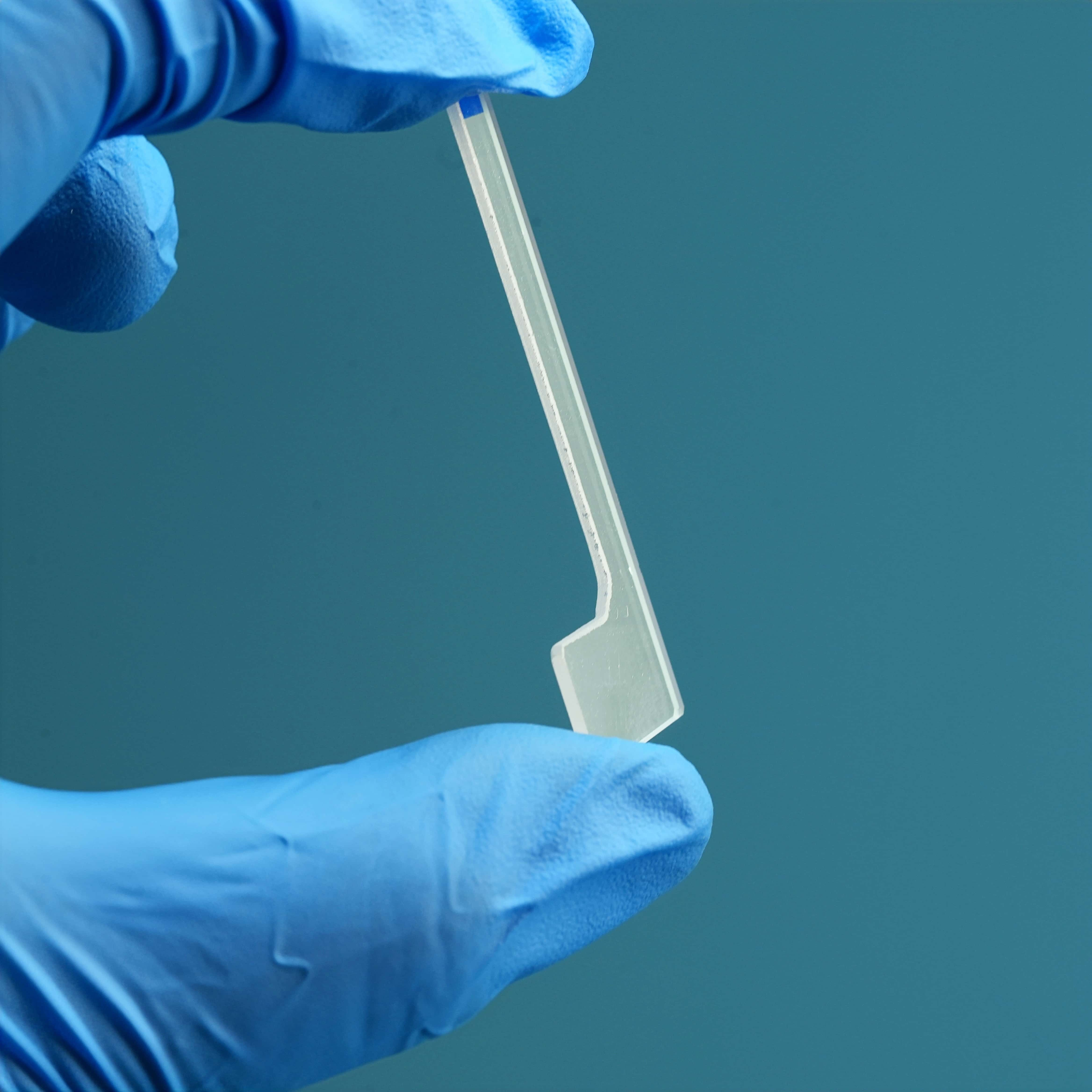
Anamorphic Prism Pair for Laser Beam Shaping Circularizing Elliptical Beams for Fiber Coupling Applications
Optical prism pair for beam circularization, fiber coupling and laser-system integration, specified by wavelength, angle tolerance and surface quality.
- Laser-grade optical finishing
- Custom angle and coating
- For fiber coupling systems
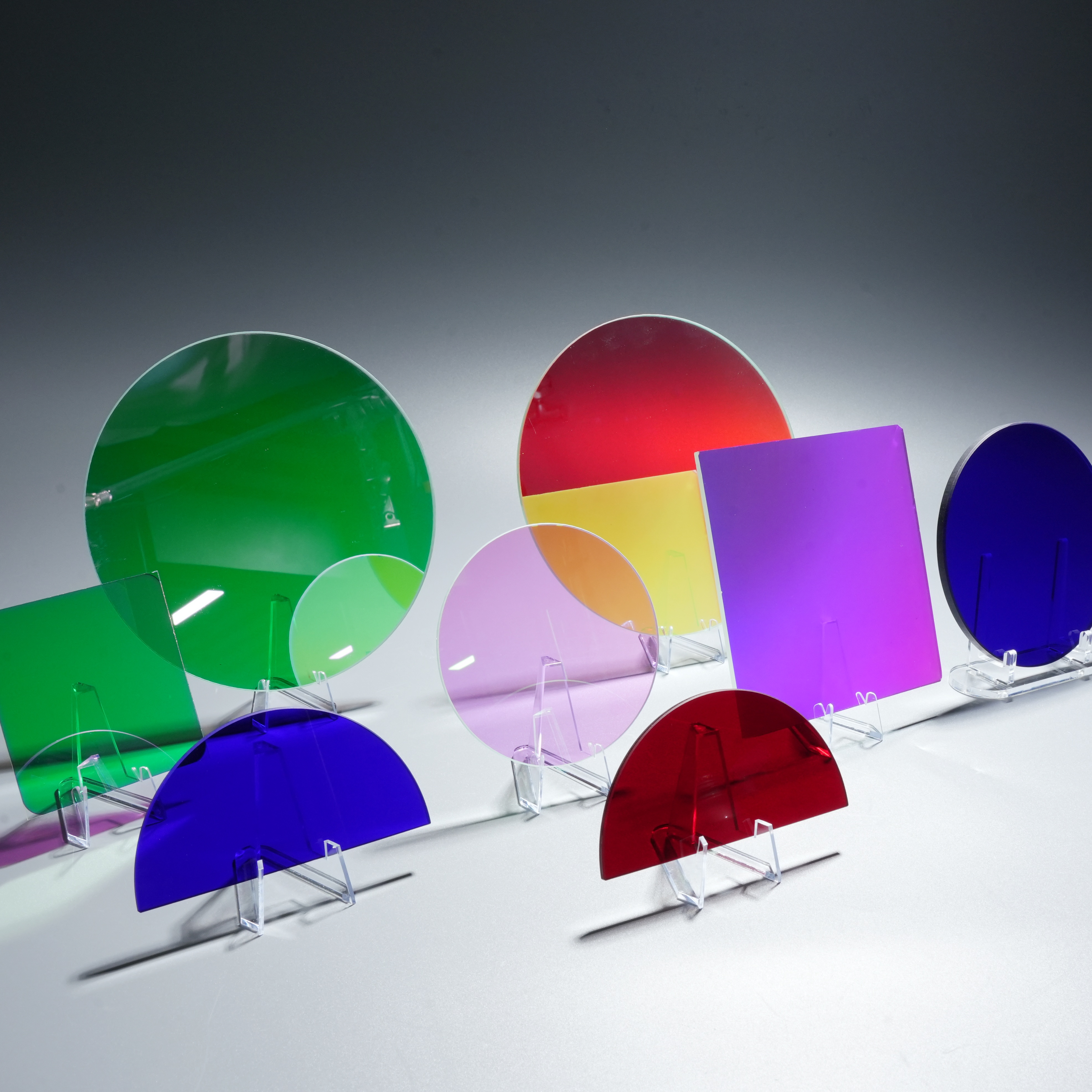
BO-GLASS BO-AH242 Manufacturer Customized High Precision 590Nm 49Mm Coated UV Borosilicate Bandpass Longpass Optical Filter
Coated borosilicate bandpass and longpass filter for sensing, instrumentation and precision optical assemblies requiring repeatable spectral performance.
- Custom wavelength and diameter
- Borosilicate substrate
- Bandpass / longpass options
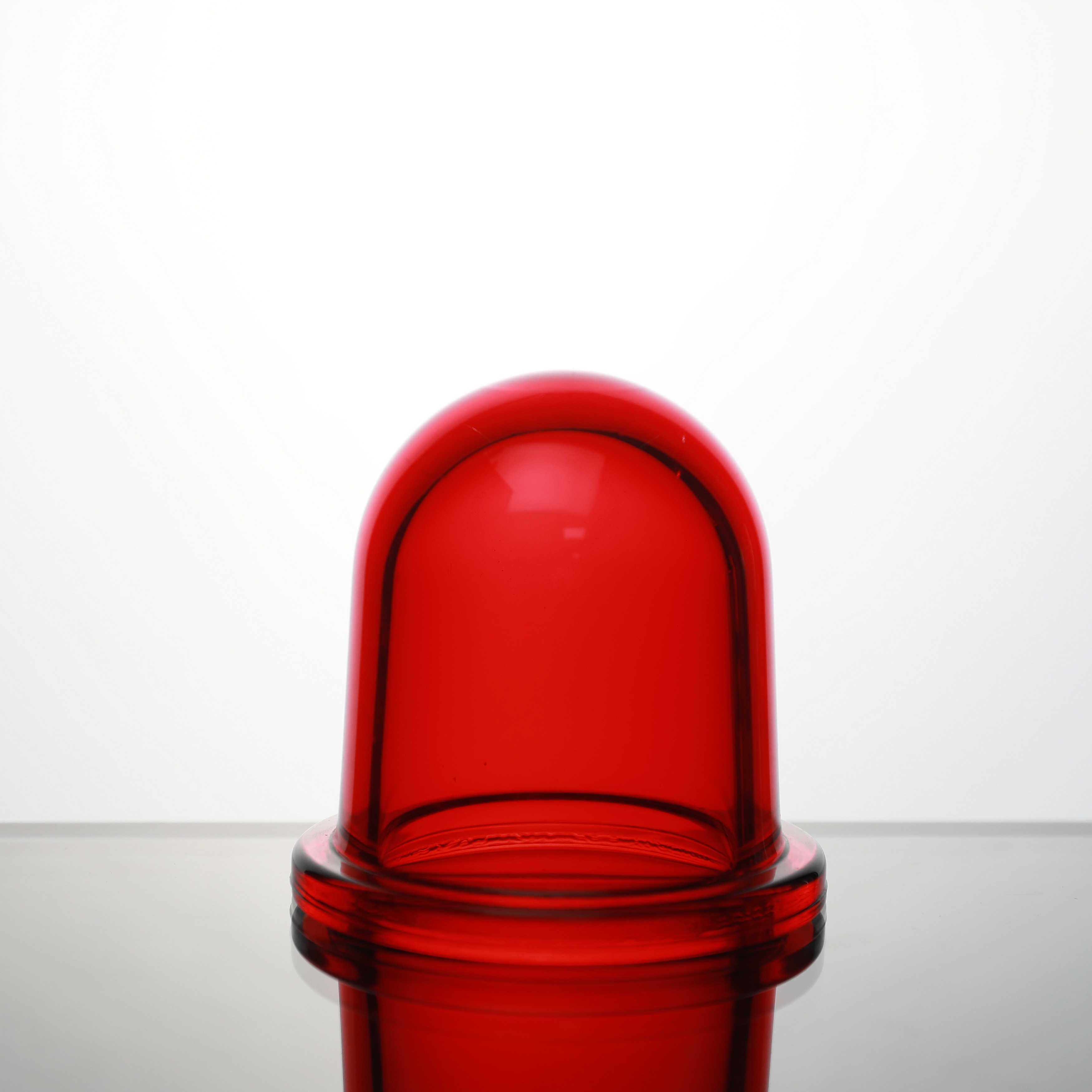
Custom Size Clear Borosilicate Explosion-Proof Antique Glass Light Covers Modern 2-Year Warranty Airport Outdoor Industrial
Clear borosilicate cover for industrial, airport and outdoor fixtures where thermal shock, impact and sealing reliability shape the design brief.
- Thick-wall pressed or blown option
- Annealed for stress relief
- Airport / industrial housings
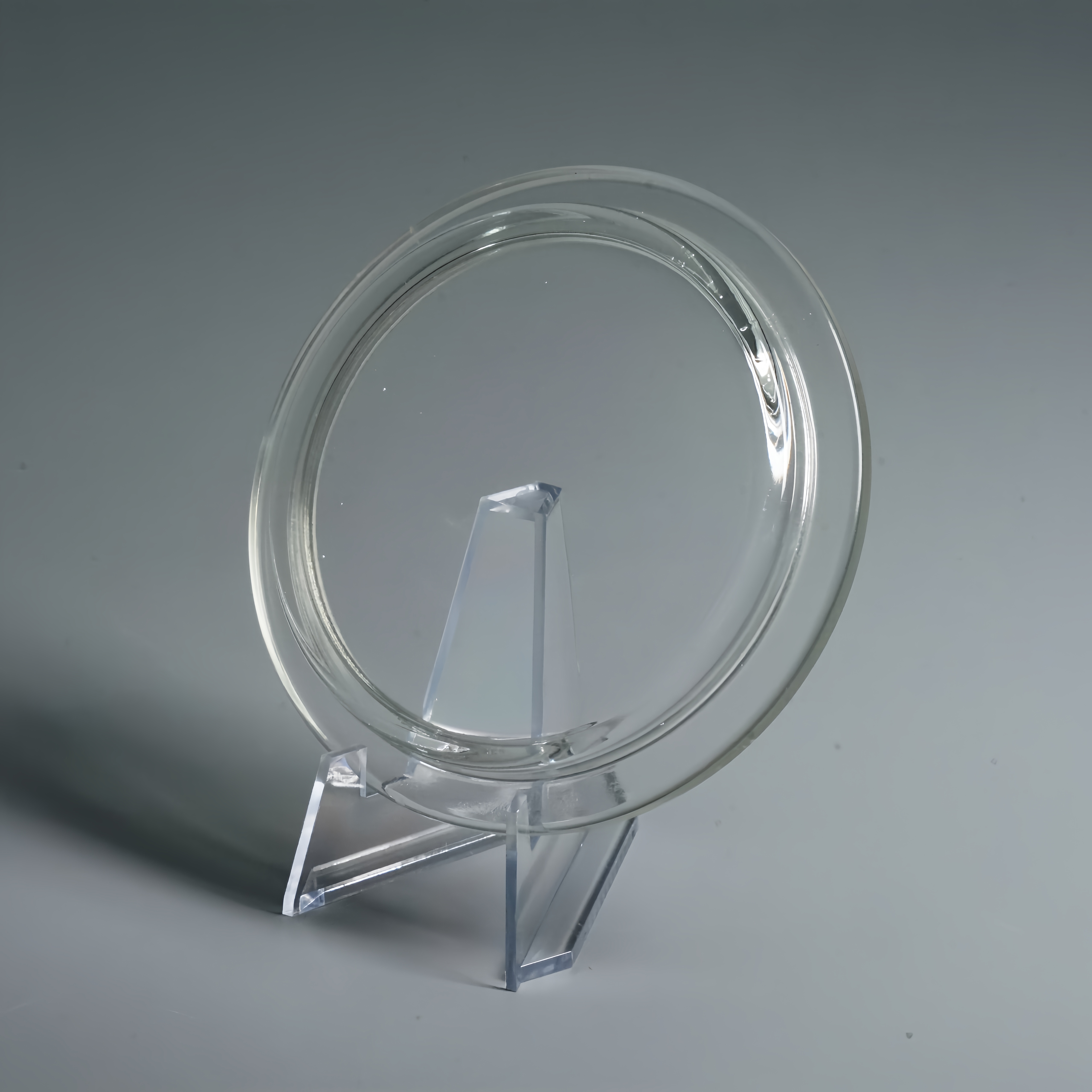
Custom Size Coastal Victorian Outdoor Stage Glass Lampshade Factory Waterproof High Temperature Impact Resistant Silk-Printable
Decorative and functional glass lampshade for coastal, outdoor and stage fixtures, with options for silk printing, impact resistance and high-temperature use.
- Coastal and outdoor durability
- Silk-printable surface
- Custom shape and finish
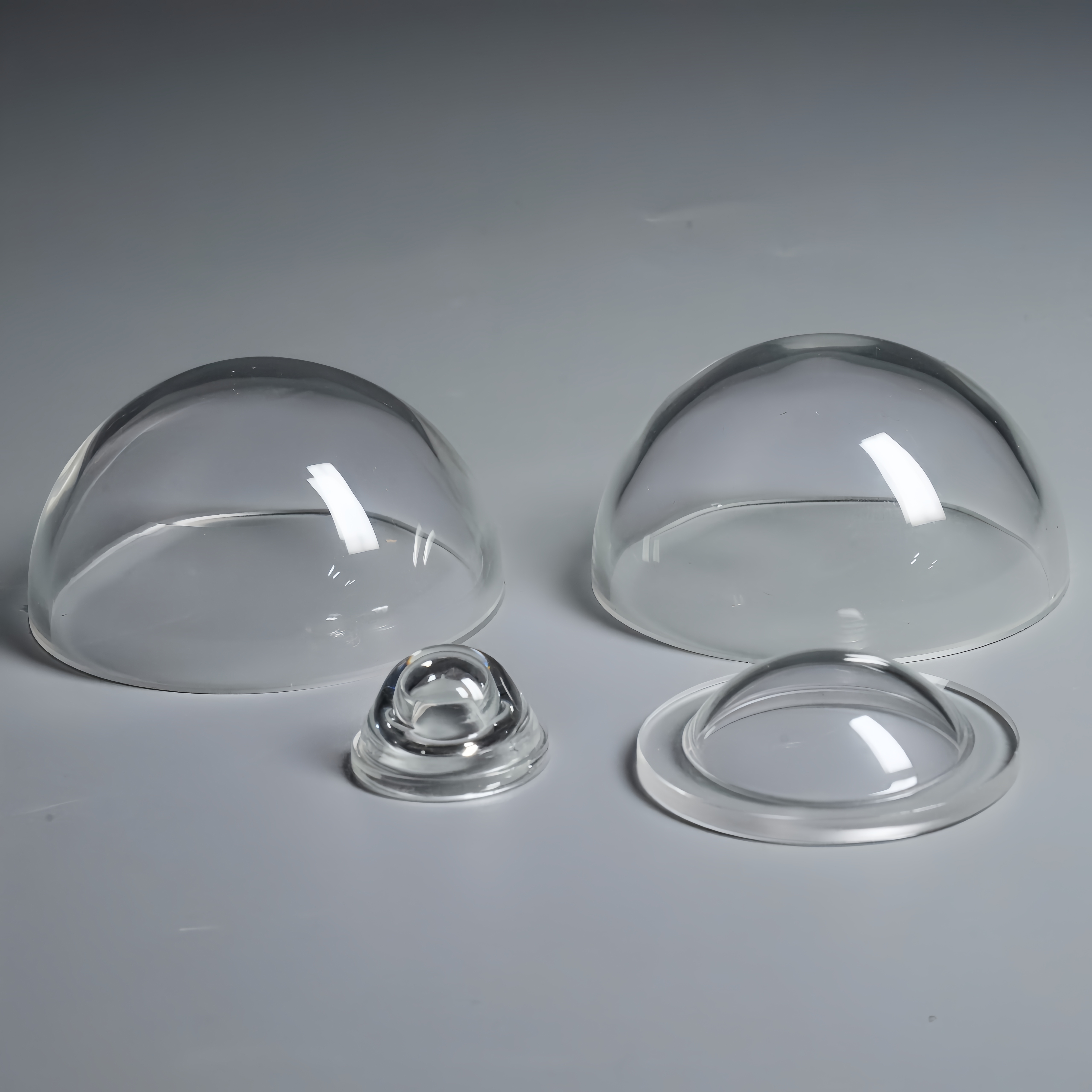
High-Pressure Borosilicate Optical Glass Dome for Underwater ROV AUV Camera Housings & Submersible Lights Deep Sea Rated
Pressure-rated optical dome for ROV, AUV, submersible lighting and camera housings, engineered around depth, optical transmission and sealing geometry.
- Deep-sea housing compatibility
- Optical-grade borosilicate
- Custom hemisphere or window

Borosilicate Transparent Explosion-proof Shade, Heat-resistant & Crack-proof, Transparent Protective Cover
Transparent protective shade for hazardous-area and high-temperature lighting, supporting safety, light output and long service life in demanding plants.
- Crack-resistant borosilicate
- High light transmission
- Industrial and chemical plants
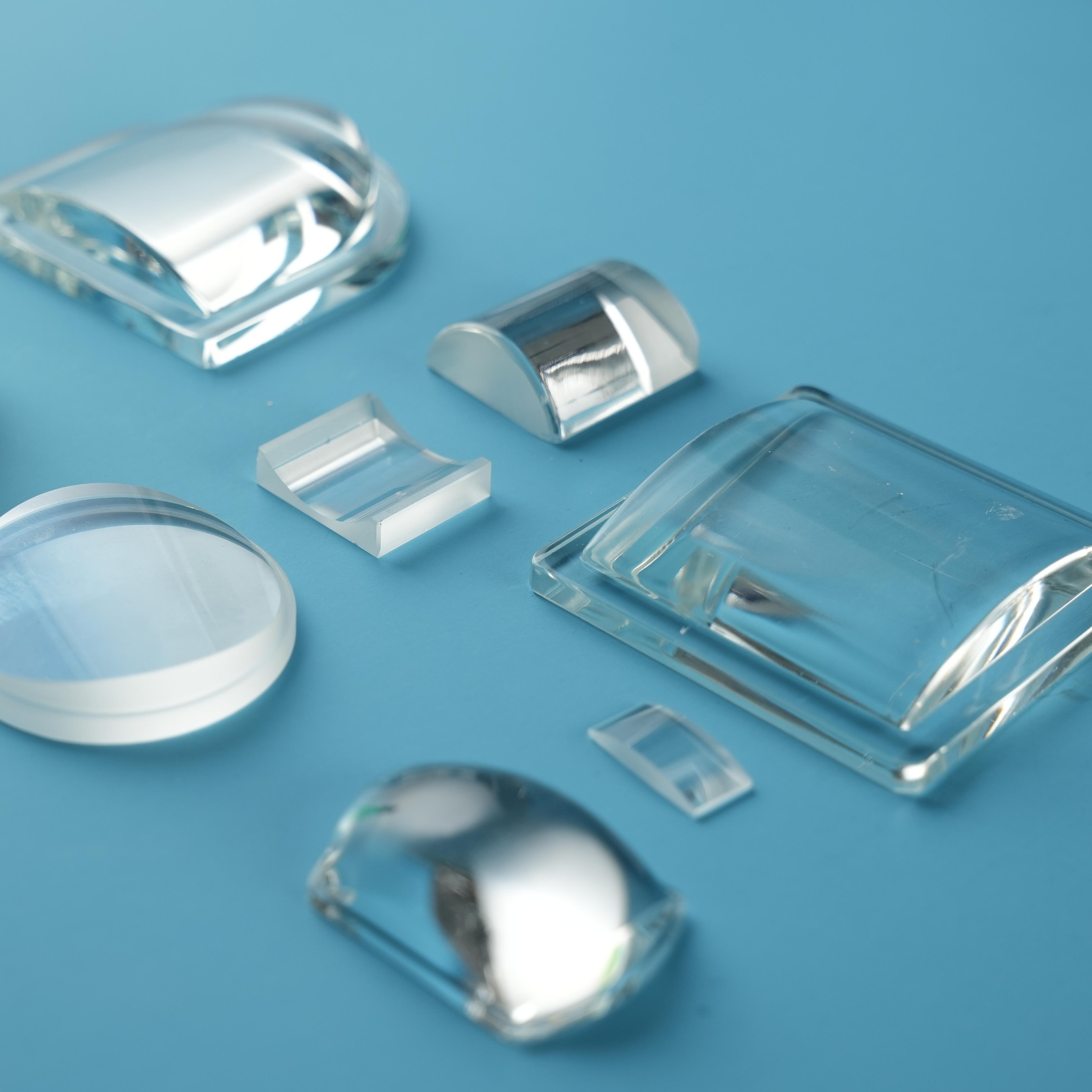
Manufacturer Custom OEM Anti-Reflective Laser Glass Optical Borosilicate UVC Plano Convex Cylindrical Biconvex Lens
OEM anti-reflective laser lens in borosilicate, including plano-convex, cylindrical and biconvex forms for UVC, laser and precision lighting applications.
- AR coating design support
- UVC and laser options
- Custom geometry and finish
Glass Covers Are No Longer a Commodity: What Wholesalers Must Specify in 2025–2030
For procurement teams, the difference between a low-cost glass cover and an engineered optical component is now visible in certification, warranty, field-return and assembly data. The next buying cycle will reward distributors and OEMs that treat glass as a performance interface rather than a replacement part.
Historically, many buyers searched for a “glass cover supplier” or “glass lampshade wholesaler” and compared quotations by diameter, height and unit price. That model still works for simple decorative shades, but it is increasingly inadequate for airport obstruction lights, marine signal lamps, explosion-proof fixtures, high-power LED floodlights, stage Fresnel systems, LiDAR windows, ROV/AUV domes and laser optics. In these products, the glass cover affects photometric distribution, ingress protection, thermal safety, color accuracy, assembly tolerance and the cost of a field failure.
A glass cover that fits mechanically but changes the color point of an aviation signal, reduces transmission in an optical system or cracks when a hot lens is exposed to cold rain can create a return cost far greater than the component itself. This is why experienced buyers are moving toward specification-first procurement: they send a drawing, material grade, thermal condition, optical target, sealing-face requirement and inspection plan instead of asking for a price against a generic photo. That shift separates a true Glass Cover Exporter & Wholesaler from a transactional trader.
At Tambi Glass, project reviews regularly show that the cheapest cover is not the lowest-risk choice. Tempered soda-lime glass may be appropriate for a moderate-temperature outdoor fixture where impact strength and cost are dominant. Borosilicate 3.3 is usually preferable when a hot lens can be hit by cold rain or washdown water, because its coefficient of thermal expansion is approximately 3.3 × 10⁻⁶/K. For signal lights, color stability and repeatable transmission matter more than the lowest quote. For optical domes and filters, coating design, surface quality and dimensional tolerance drive performance. Buyers who compare total cost of ownership—breakage, returns, assembly time, certification delay and after-sales support—tend to qualify fewer suppliers and involve them earlier in the design cycle.
Thermal shock is the hidden cost
Rain, washdown and cold-start conditions can stress a hot glass cover. Ask for material CTE, wall thickness, annealing records and thermal-shock test evidence rather than assuming all “heat-resistant” glass behaves the same.
Certification documents shorten approval
Fixture makers designing to FAA L-810 or EN 50293 requirements need repeatable color, transmission and dimensions. The luminaire manufacturer holds fixture certification; a capable glass supplier supports it with material and inspection reports.
Specifications create negotiating leverage
When drawings, coating curves, tolerances and packaging tests are clear, quotes become comparable. Procurement teams can evaluate total landed cost, breakage risk and lead time instead of treating every glass cover as an interchangeable commodity.
Six Purchasing Shifts Reshaping the Glass Cover Supply Chain
Wholesalers and OEM buyers are changing how they source glass components as lighting systems become more powerful, more regulated and more application-specific.
1. Drawing-based sourcing
Buyers increasingly issue RFQs with 2D/3D drawings, tolerance stacks and sealing-face requirements. This reduces sample cycles and avoids the common failure mode of a catalog part that almost fits a new luminaire housing.
2. Certification-ready supply
Airport, marine and hazardous-area projects need traceable material, color and dimensional data. Procurement teams prefer suppliers that understand certification logic and can provide inspection reports without delaying the fixture approval process.
3. Total cost of ownership
Breakage, field returns, assembly time and warranty exposure now sit beside unit price. A slightly higher glass component that eliminates cracks and rework can be the cheaper decision across a three-year product program.
4. Dual sourcing and regional risk
Importers are qualifying backup suppliers and requesting clear production capacity, mold ownership and lead-time assumptions. They want a glass partner that can support prototypes, pilot lots and repeat volume without changing the specification.
5. Smaller test lots, faster scale-up
Sample quantities for optical lenses and pressed covers allow engineering validation before mass production. Procurement teams then scale from pilot batches to repeat orders using the same tooling and inspection plan.
6. Packaging as a quality control
Fragile glass parts lose margin through transit damage. Foam or pulp dividers, reinforced export cartons and palletization are now part of supplier evaluation, not an afterthought once the first container is booked.
What the Next Generation of Lighting Glass Will Demand
Product development is moving toward higher power density, tighter optical control, deeper environmental protection and more application-specific certification.
Borosilicate 3.3 for heat and thermal shock
High-power LED modules, stage fixtures, explosion-proof lights and airport applications continue to move toward borosilicate 3.3 where hot surfaces may meet cold rain, washdown or sudden temperature change.
AR coatings for optical efficiency
Anti-reflective coatings are increasingly specified for LED lenses, grow-light convex lenses, Fresnel optics and laser windows. The goal is to raise transmission and reduce glare without compromising coating durability.
Pressure-rated optical domes
ROV, AUV, submersible camera and deep-sea lighting systems require domes that combine optical clarity with pressure resistance and reliable sealing geometry. Buyers should specify depth rating, wall thickness and optical acceptance criteria.
Color-stable signal glass
Aviation obstruction, marine navigation and traffic signal lights depend on repeatable color coordinates. Glass composition, wall thickness and forming method must be controlled together to keep each production lot consistent.
Fresnel and prismatic optics
Stage, architectural and high-power LED systems are asking for molded optical glass that shapes light efficiently while surviving heat. Fresnel lenses, prismatic covers and custom light-shaping elements are moving into more compact fixtures.
Custom filters and UV/laser optics
From 590 nm bandpass filters to UVC windows and laser lenses, products are being specified by wavelength, transmission curve and surface quality. Suppliers without coating and measurement capability will struggle to support these programs.
Material Selection Matrix for Glass Covers and Optical Components
Selecting the correct glass early avoids cracked covers, distorted optics and costly field returns. The values below are typical references; the final specification must be confirmed against your drawing, lamp surface temperature, impact rating and fixture standard.
| Material | Thermal expansion (×10⁻⁶/K) | Typical max. working temp. | Key strength | Best for |
|---|---|---|---|---|
| Borosilicate 3.3 | ≈ 3.3 | ≈ 450 °C | Excellent thermal-shock resistance | Explosion-proof shades, high-power LED covers, Fresnel lenses |
| Tempered soda-lime | ≈ 9.0 | ≈ 250 °C | High impact strength, economical | Outdoor covers, floodlight glass, vandal-resistant lenses |
| Fused quartz | ≈ 0.55 | ≈ 1000 °C+ | UV transmission, extreme heat | UV optics, high-temperature windows |
| Optical BK7 (H-K9L) | ≈ 7.1 | ≈ 300 °C | Homogeneous, nd ≈ 1.517 | Precision lenses, prisms, mirrors, filters |
Fixture certification remains with the luminaire manufacturer. Tambi Glass can match color, transmission and dimensional specifications and provide material and inspection reports on request.
Lower thermal expansion generally improves thermal-shock tolerance. Mechanical strength, impact resistance and optical performance also depend on thickness, annealing, tempering and coating, so material selection should always be validated against the complete fixture design.
Where Trusted Glass Covers and Optical Components Perform
Every application stresses glass differently. A reliable exporter specifies material and processing from operating conditions, not from a generic catalog headline.
Airport & Aviation Lighting
Obstruction, runway edge and in-pavement light lenses require stable red and clear transmission, repeatable dimensions and documentation that supports fixture certification.
Marine & Offshore
Navigation and ship signal light covers must resist salt spray, UV exposure and temperature cycling. Handblown and pressed borosilicate or tempered options can be specified.
Oil, Gas & Chemical Plants
Explosion-proof lampshades and emergency light enclosures need thermal-shock resistance, impact durability and reliable sealing in hazardous or corrosive zones.
Outdoor & Architectural
Coastal, industrial and outdoor fixtures use decorative or protective glass covers where weatherability, surface finish, silk printing and vandal resistance matter.
Stage & Entertainment
Fresnel, dichroic, prism and effect lenses must survive the heat of high-power COB modules while maintaining beam quality and optical clarity.
Optical Sensing, LiDAR & ROV/AUV
Pressure-rated domes, hemispherical windows, prisms and bandpass filters support sensing, scientific instruments and deep-sea camera or lighting systems.
Why Tambi Glass Is a Trusted Exporter & Wholesaler for OEM Buyers
Shanghai Tambi Glass Industrial Co., Ltd. is a manufacturer and trading company focused on custom lighting and optical glass. Our advantage is not a catalog of standard parts; it is the ability to review a drawing, choose the right process and deliver a repeatable component for a real fixture.
10+ years of lighting glass experience
Our team has worked with heat build-up behind high-power LEDs, thermal shock from rain on hot covers, impact loads in hazardous areas and color accuracy for signal lights. This experience is applied during drawing review, not after a failure.
Senior engineering and DFM review
A design team of senior lighting and molding engineers reviews every drawing for wall thickness, draft, sealing faces, tolerance stack and optical path alignment before tooling starts. This reduces sample iterations and protects your launch schedule.
Multiple processes under one supply chain
Pressed, blown, ground and coated processes can be combined for borosilicate, tempered, quartz and optical materials. Buyers gain one technical contact for covers, lenses, domes, prisms and filters instead of coordinating several small workshops.
Onsite-verified supplier transparency
Our premises have been checked during third-party verification. Supplier assessment, credit index, transaction level, trade capacity and trade history pages help procurement teams complete qualification with fewer blind spots.
Export packing and quality control
Parts are separated by foam or pulp dividers, packed in reinforced export cartons and palletized for sea or air freight. Custom packaging and labeling for distributors can be arranged to reduce transit breakage.
Responsive communication
Our average response time is within 6 hours. Send a drawing, annual volume, operating temperature and certification target; our engineers will review manufacturability and recommend the most reliable glass route.


A Controlled 6-Step OEM Process for Wholesale Glass Components
Clear checkpoints mean fewer surprises between sample approval and mass production. Each step creates information that can be used by your engineering, purchasing and quality teams.
Drawing Review
DFM check of thickness, draft, tolerance, sealing face, optical path and operating temperature. We flag risks before tooling investment.
Mold & Tooling
New or existing molds for pressing, blowing or grinding. Tooling decisions are matched to annual volume, surface quality and dimensional tolerance.
Sampling
Samples are measured and sent for fit, light and assembly tests. Buyers can validate gasket compression, color, transmission and installation before volume release.
Forming & Annealing
Controlled annealing or tempering relieves internal stress. Process parameters are selected according to glass type, wall thickness and expected thermal load.
Coating & QC
AR or color coating, dimensional and visual inspection, and material or inspection reports when required. Acceptance criteria are agreed before mass production.
Export Packing
Divider-packed cartons and palletized packing for sea or air freight. Labels, distributor packaging and breakage-reduction measures can be customized.
Common Questions from Glass Cover Wholesalers, Importers and OEM Procurement Teams
These answers cover the commercial and technical points buyers ask most often before requesting samples or placing a first order.
Can you manufacture glass covers and lenses to my own drawing?
What is the typical minimum order quantity for wholesale glass covers?
Should I choose borosilicate glass or tempered soda-lime glass?
Do you supply glass for FAA L-810 and EN 50293 lighting fixtures?
How fast do you reply to technical inquiries?
How are fragile glass parts packed for export?
Can you support custom color, coating and silk printing?
How do you reduce thermal cracking risk in high-power lighting?
Have a Drawing? Get an Engineering Review Within 6 Hours.
Share your dimensions, material, operating temperature, coating target, certification requirement and annual volume. Our engineers will recommend the most reliable glass solution for your fixture, then support sampling, inspection and export packing.
Get Catalog Email: info@tambiglass.com · Shanghai Tambi Glass Industrial Co., Ltd.