Top China Plano Concave Lens Suppliers & Wholesalers
A procurement-focused white paper for OEM buyers who need drawing-based plano concave optics, borosilicate glass components, LED lenses, prisms, domes and coated optical parts from China.
8 Product Matches for Plano Concave Lens and Optical Glass Wholesale Programs
These eight items reflect the adjacent optics that serious buyers usually evaluate together with a plano concave lens inquiry: precision BK7 optics, borosilicate glass, Fresnel lenses, domes, prisms, LED lenses and coated glass components.
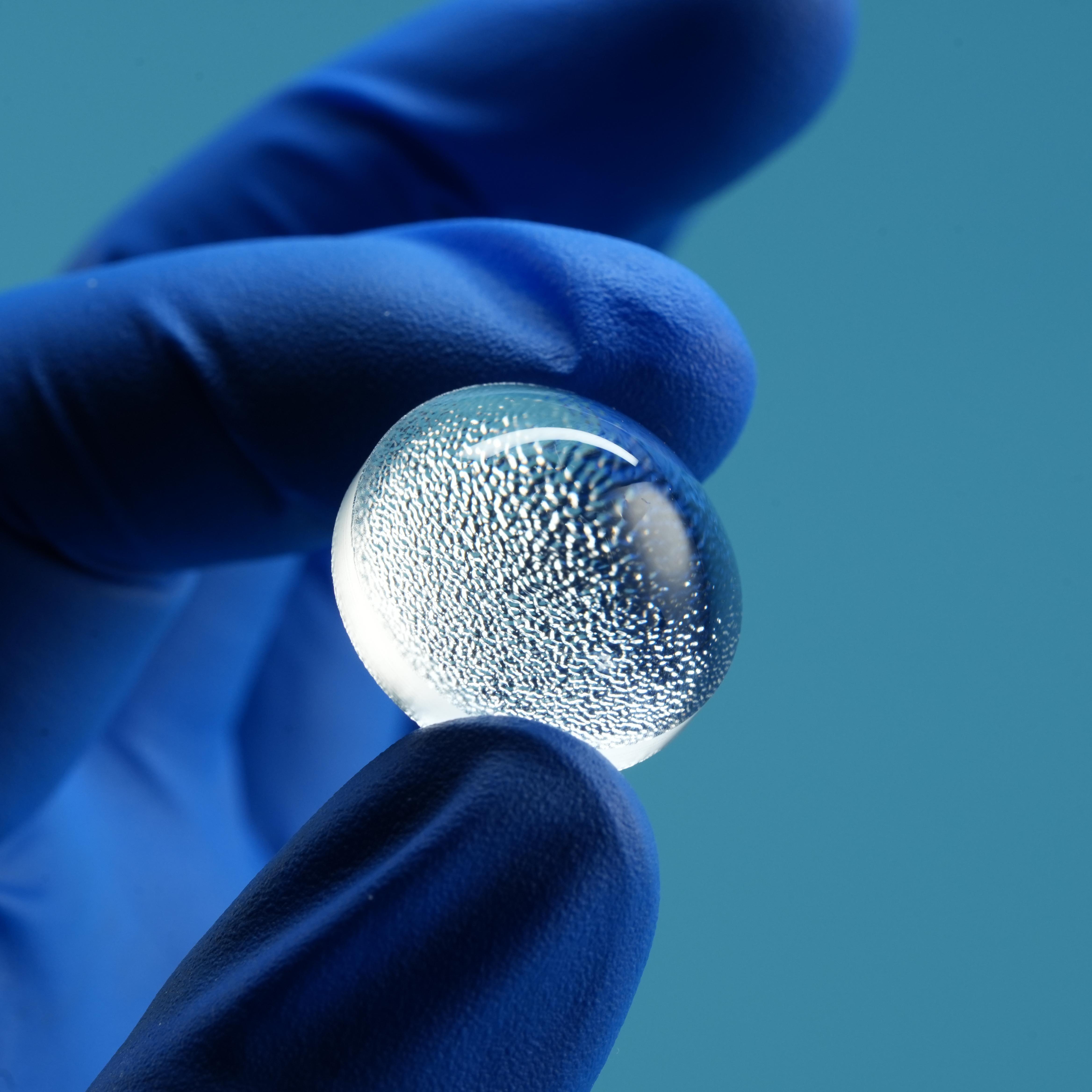
Factory Price Custom Precision Optical 1-200mm Clear BK7 Spherical Quartz Glass Half Ball Concave/Biconvex Lens Anti-Reflective
A flexible BK7 and quartz lens platform for plano concave, biconvex and half-ball optical assemblies, with AR coating and drawing-led customization.
View product
Factory Customized Size Shape Color Heat Resistant High Quality Borosilicate Glass Car Light Accessories Traditional Industrial
Custom borosilicate glass accessories for lighting and industrial fixtures where thermal shock, color consistency and repeatable molding matter.
View product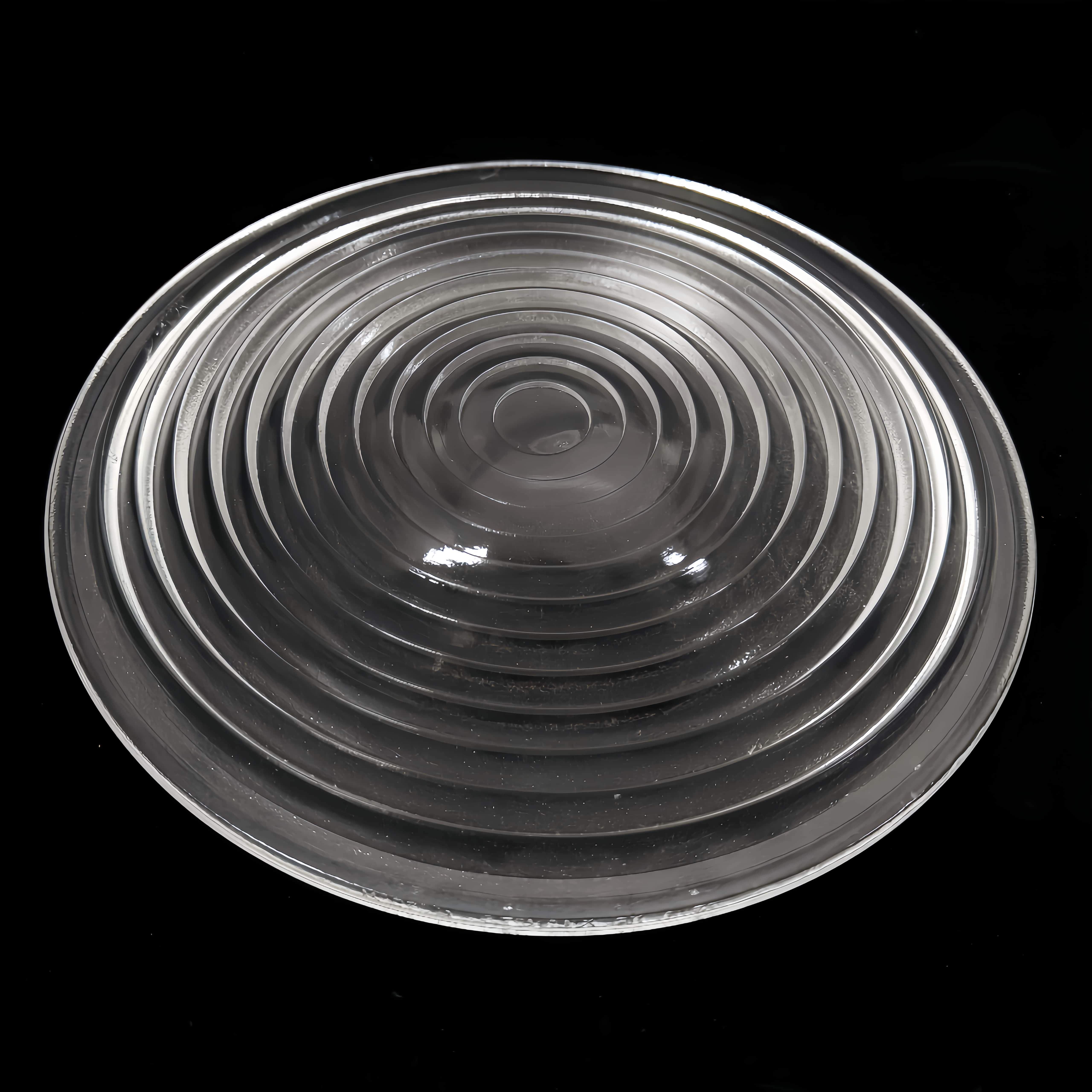
Precision Molded Borosilicate Glass Fresnel Lens Stage Lighting Anti-Reflective Coating FAA/ICAO Standards 175mm BO GLASS OEM
A high-temperature Fresnel lens option for stage lighting, signal optics and LED collimation where anti-reflective coating and dimensional stability are critical.
View product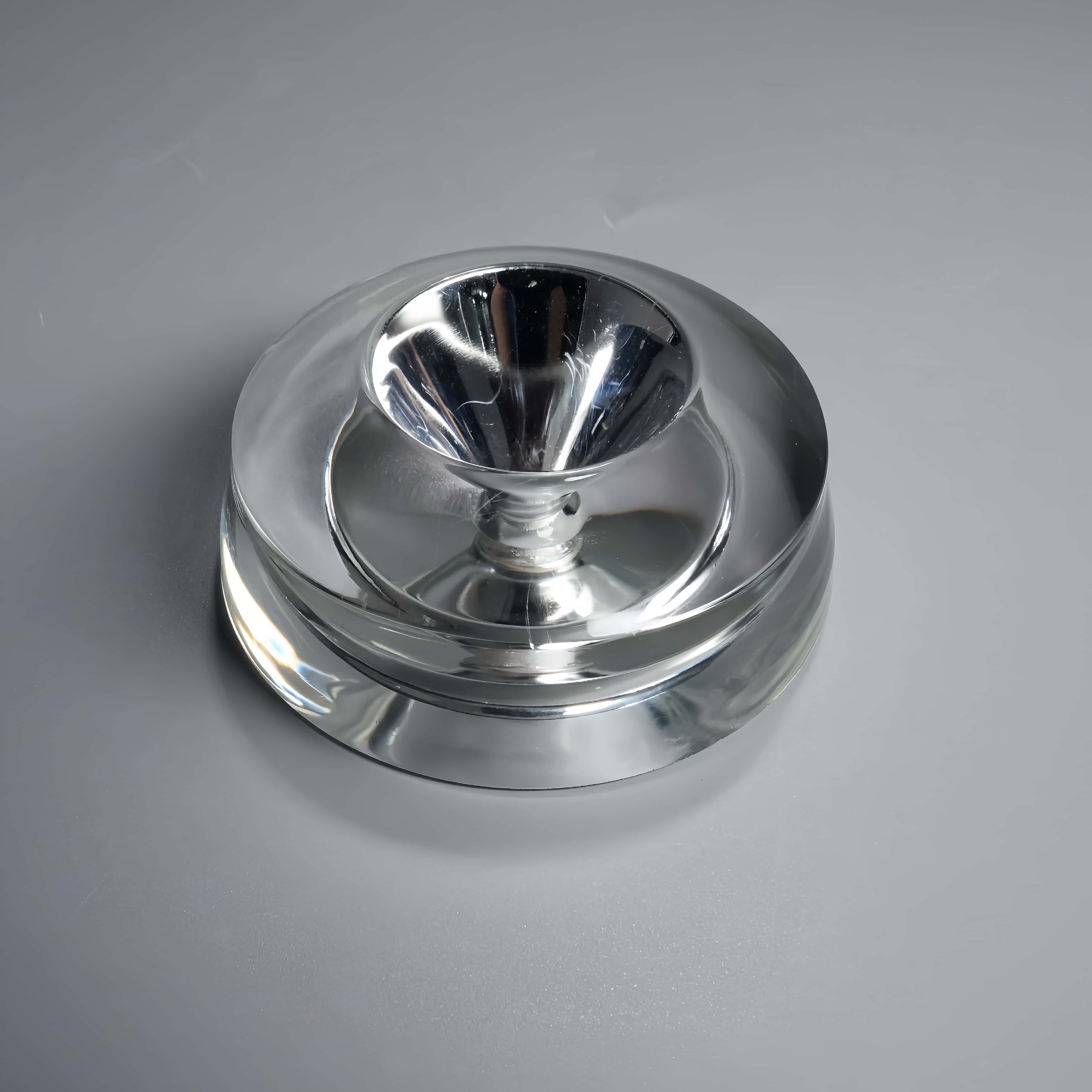
Factory China Custom Size Mold Pressed Borosilicate Bk7 K9 Eco-Friendly LED Optical Glass Lens for Taxiway Runway Airport Ground
A mold-pressed optical glass lens for taxiway, runway and airport ground lighting, with material options spanning borosilicate, BK7 and K9.
View product
Borosilicate Transparent Explosion-proof Shade, Heat-resistant & Crack-proof, Transparent Protective Cover
A thick-wall borosilicate protective shade for hazardous-area lighting, high-temperature lamp housings and industrial inspection windows.
View product
High-Light Transmission Clear Borosilicate Glass Dome Lens LED Outdoor Lighting Fixtures Impact Resistant Anti-Scratch OEM
Clear borosilicate domes for outdoor LED fixtures, signal lights and sensing enclosures, available with impact-resistant and anti-scratch finishing.
View product
Factory Custom BO-GLASS Quartz BK7 K9 Arcoated Fused Silica High Precision Right Angle Prism 90Degree Clear ODM/OEM 3-Year
Precision right-angle prisms in quartz, BK7, K9 and fused silica, with AR coating options for beam steering, imaging and instrument assemblies.
View product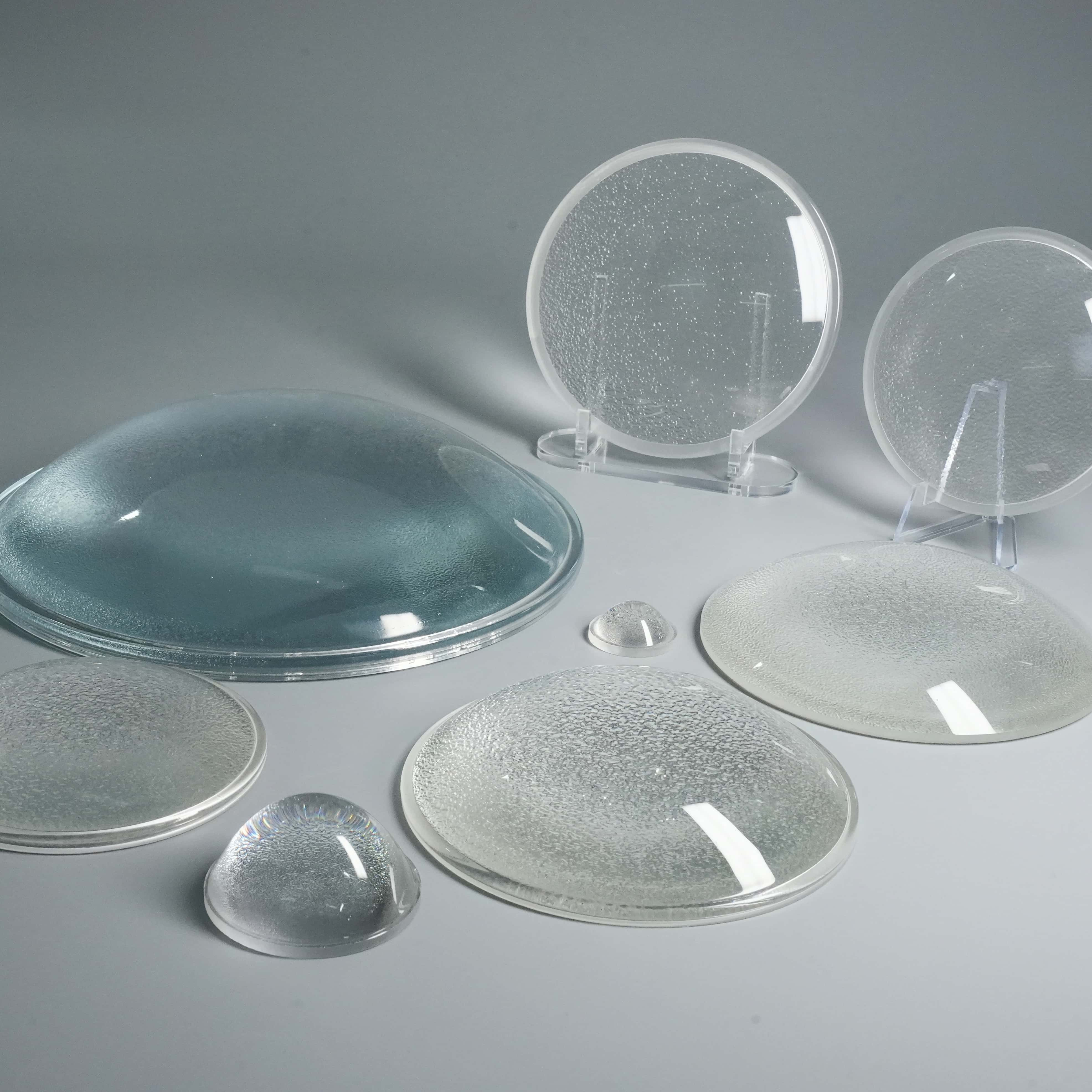
Bo Glass Asymmetric LED Lens Roadway Street Light Reduces Light Pollution Glare Borosilicate Glass UV Protection OEM
An asymmetric LED glass lens for roadway and street fixtures, designed around glare control, light-pollution reduction and UV protection.
View productChina Plano Concave Lens Supply: What Serious Buyers Need to Verify
The search phrase “Top China Plano Concave Lens Suppliers & Wholesalers” attracts several different buyer intents at once. A design engineer may be looking for a negative lens that expands a laser beam, a lighting OEM may need a heat-resistant glass cover beside the lens, and a procurement manager may simply need a verified Chinese factory that can quote from a drawing without hiding behind a trading-company wall. The best suppliers answer all three layers with technical evidence, not just a product photo.
China’s optical glass supply base is broad, but it is not uniform. A plano concave lens can be pressed, ground, polished, coated and edged across separate workshops before it reaches final inspection. The practical difference between a low-cost wholesaler and a reliable manufacturing partner is usually found in process control: substrate traceability, annealing records, coating runs, centering tolerance, surface quality and export packaging. Buyers who compare only unit price often discover these gaps after the first container arrives.
Information gain matters here. Instead of asking “Who is the cheapest supplier?”, ask for a process-capability matrix: which glass types can be molded in-house, which coatings are applied on-site, how plano concave radii and center thickness are verified, how samples are packed, and which reports accompany mass production. A supplier that can answer those questions in a structured way is usually better prepared for repeat OEM orders than one that sends a generic catalog without a drawing review.
Why the Lens and the Glass Housing Should Be Reviewed Together
A plano concave lens is often one element inside a larger optical or lighting system. It may sit near a biconvex lens, a right-angle prism, a Fresnel lens, a glass dome or a coated bandpass filter. In industrial lighting, the same fixture may use a borosilicate cover, a tempered glass window and an LED lens. Reviewing these parts together reduces interface risk: mismatched thermal expansion, seal-face flatness, coating adhesion or dimensional stack-up can create failures that no single-component datasheet predicts.
Search intent decoded
- Transactional intent: quote, MOQ, sample lead time and wholesale price breaks.
- Technical intent: substrate, radius, center thickness, coating, tolerance and optical test data.
- Risk intent: factory verification, audit evidence, packing method and response speed.
How to Choose the Right Glass Material for Plano Concave and Lighting Optics
A quick comparison used during drawing review. Selecting the correct glass early prevents cracked covers, coating failure and costly field returns.
| Material | Thermal expansion (×10⁻⁶/K) | Typical max. working temp. | Key strength | Best for |
|---|---|---|---|---|
| Borosilicate 3.3 | ≈ 3.3 | ≈ 450 °C | Excellent thermal-shock resistance | Explosion-proof shades, high-power LED covers, Fresnel lenses |
| Tempered soda-lime | ≈ 9.0 | ≈ 250 °C | High impact strength, economical | Outdoor covers, floodlight glass, vandal-resistant lenses |
| Fused quartz | ≈ 0.55 | ≈ 1000 °C+ | UV transmission, extreme heat | UV optics, high-temperature windows |
| Optical BK7 (H-K9L) | ≈ 7.1 | ≈ 300 °C | Homogeneous, nd ≈ 1.517 | Precision lenses, prisms, mirrors, filters |
Values are typical references. Final specification is confirmed against your drawing, lamp surface temperature, impact rating and the standard your fixture must meet.
What China Optical Glass Buyers Will Prioritize in the Next Sourcing Cycle
The buying conversation is moving from “price per piece” to “qualified, traceable and repeatable supply.” These six trends are already visible in serious OEM procurement reviews.
Supplier consolidation around drawing-based OEM
Buyers are reducing the number of intermediaries and favoring suppliers who can review a 2D/3D drawing, recommend mold options and control pressing, annealing, coating and inspection under one quality system.
Traceability and report packages
Material certificates, coating run records, dimensional inspection reports and packing photos are becoming normal RFQ requirements, especially for aviation, marine, hazardous-area and sensing optics.
Dual sourcing with single qualification
Procurement teams want a backup supply path without repeating expensive qualification. Suppliers that can offer comparable materials, coatings and metrology across two production routes have an advantage.
Low-MOQ sampling before scale-up
Optical projects often begin with 50–200 pieces for fit, light and environmental testing. Buyers prefer suppliers that quote samples quickly and then scale to 100–500-piece lighting glass runs without changing the process.
Coating performance as a purchasing gate
AR, HR, bandpass and UV-protection coatings are no longer cosmetic upgrades. They are specified as performance criteria tied to transmission, glare control, wavelength stability and environmental durability.
Export packaging as a procurement KPI
Fragile optical glass can pass inspection and still fail in transit. Divider-packed cartons, foam separation, palletized loading and labeled distributor packaging are now part of total-cost evaluation.
Where Plano Concave Lenses and Technical Glass Are Heading
Optical systems are becoming smaller, more precise and more demanding in harsh environments. These product trends influence both lens design and the glass supply chain behind it.
Miniaturization and freeform optical paths
Compact LiDAR, machine vision and wearable sensing systems push plano concave lenses toward tighter centering, smaller diameters and freeform-adjacent assemblies that demand better metrology and molding control.
AR, HR and wavelength-specific coatings
Broadband AR coatings reduce reflection loss in multi-element lens groups, while wavelength-specific filters support fluorescence, sensing and machine vision. Coating durability is becoming as important as initial transmission.
Borosilicate glass in harsher environments
Borosilicate 3.3 continues to replace ordinary glass in high-power LED, explosion-proof, marine and outdoor fixtures because its low thermal expansion helps resist rain shock, heat cycling and cold-water contact.
LiDAR and sensing domes
Hemispherical windows and domes for LiDAR must combine optical clarity, pressure resistance and environmental sealing. Buyers increasingly request substrate data and coating verification before approving a sensor enclosure.
Medical, industrial and imaging optics
Instrument windows, prisms and plano concave elements in medical and industrial imaging require repeatable surface quality, low stress birefringence and documented dimensional inspection.
Energy-efficient lighting and horticulture
High-power LED luminaires and horticulture fixtures need lenses that maintain spectral transmission, resist heat and reduce glare. Glass remains preferred where polymer lenses would yellow, scratch or deform.
Why Shanghai Tambi Glass Is a Practical China Partner for Optical Glass Procurement
Shanghai Tambi Glass Industrial Co., Ltd. is a manufacturer and trading company focused on custom borosilicate glass covers, explosion-proof lampshades, signal light glass domes, LED lenses, prisms and optical filters for lighting and optical OEMs. With more than a decade in lighting glass, the company is organized around a simple question: how should glass perform inside a real luminaire, sensor or instrument?
The team combines senior lighting and molding engineering with a supply chain that covers pressed, blown, ground and coated processes. Typical projects are drawing-based OEM/ODM programs for buyers in Europe, North America and Japan. The company works with borosilicate 3.3, tempered glass, fused quartz, BK7 and K9, and supports anti-reflective and optical coating requirements. Its location in Shanghai, team size of 11–50 people and annual export revenue profile of US$2.5M–5M fit the profile of a focused technical supplier rather than a mass-market catalog house.
For procurement teams, the practical advantages are speed and transparency: an average response time within 6 hours, sample quantities for evaluation, MOQs that commonly start around 50 pieces for optical lenses and 100–500 pieces for pressed or blown lighting covers, and export packing with foam or pulp dividers in reinforced cartons. Onsite verification, factory video review and third-party audit access help buying teams complete supplier qualification before mass production.
- Drawing-based OEM / ODM
- Borosilicate, tempered, quartz, BK7
- AR and optical coatings
- Onsite-verified supplier
- 6-hour technical response
- Export-ready fragile glass packing


Where Plano Concave and Custom Technical Glass Performs
Different applications stress glass differently. The right specification comes from operating conditions, fixture design and certification requirements, not from a generic catalog page.
Airport & Aviation
Obstruction, runway edge and in-pavement light lenses with stable red and clear transmission, dimensionally matched to FAA or ICAO-oriented fixture designs.
Marine & Offshore
Handblown and pressed covers for navigation and ship signal lights exposed to salt spray, wind load and wide temperature swings.
Hazardous Area Lighting
Explosion-proof lampshades and emergency light enclosures for oil, gas, chemical plants, mines and dusty industrial workshops.
LiDAR & Scientific
Pressure-rated domes, hemispherical windows, prisms and bandpass filters for sensing, measurement and scientific instrument assemblies.
A Controlled 6-Step OEM Process for Optical Glass Buyers
Clear checkpoints reduce surprises between sample approval and mass production, especially when a plano concave lens is bundled with a custom glass cover or dome.
Drawing Review
DFM check of thickness, radius, draft, tolerance, sealing face and optical path alignment.
Mold & Tooling
New or existing molds for pressing, blowing or grinding, with material and coating route confirmed.
Sampling
Samples measured and sent for your fit, light and environmental test before mass production.
Forming & Annealing
Controlled annealing or tempering to relieve stress and improve thermal-shock resistance.
Coating & QC
AR or color coating, dimensional inspection, visual checks and report preparation.
Export Packing
Divider-packed cartons, foam or pulp separation and palletized loading for sea or air freight.
Four Checks Before You Approve a China Plano Concave Lens Supplier
A disciplined RFQ shortens the distance between a promising sample and a repeatable wholesale supply program.
Define optical function first
State whether the lens expands, focuses or corrects a beam, then confirm wavelength, radius, center thickness and clear aperture.
Request data, not just price
Ask for substrate certificates, coating records, dimensional reports, sample photos and packing details before approving a wholesale price.
Validate the factory before scale-up
Use video calls, onsite verification, sample audits and third-party records to confirm the production route is real and repeatable.
Plan packaging and replenishment
Fragile glass must be separated, reinforced and palletized correctly. Confirm labeling, distributor packaging and replenishment lead time in advance.
Common Questions About China Plano Concave Lens Procurement
These are the questions procurement teams ask most often when evaluating optical glass, borosilicate parts and custom lighting lenses.
Can you manufacture plano concave lenses and glass covers to my own drawing?
What is the typical minimum order quantity for plano concave lenses and optical glass?
Should I choose borosilicate glass, tempered soda-lime glass or optical BK7?
Do you supply glass for FAA L-810 and EN 50293 lighting fixtures?
How fast do you reply to technical inquiries and drawing reviews?
How are fragile plano concave lenses and glass domes packed for export?
Have a Plano Concave Lens Drawing or a Mixed Glass BOM?
Share your dimensions, substrate, coating, operating temperature and annual volume. Our engineers will suggest the most reliable glass solution for your fixture or optical assembly, with a response target within 6 hours.
Get Catalog