8 Molded Glass Products Buyers Request Most
These eight product families map to the search intent behind “top molded glass manufacturers and exporters”: a buyer needs a manufacturable part, not a catalog photo. Each item can be adapted in size, thickness, color, coating and edge finish to fit the housing, gasket and optical path of your fixture.
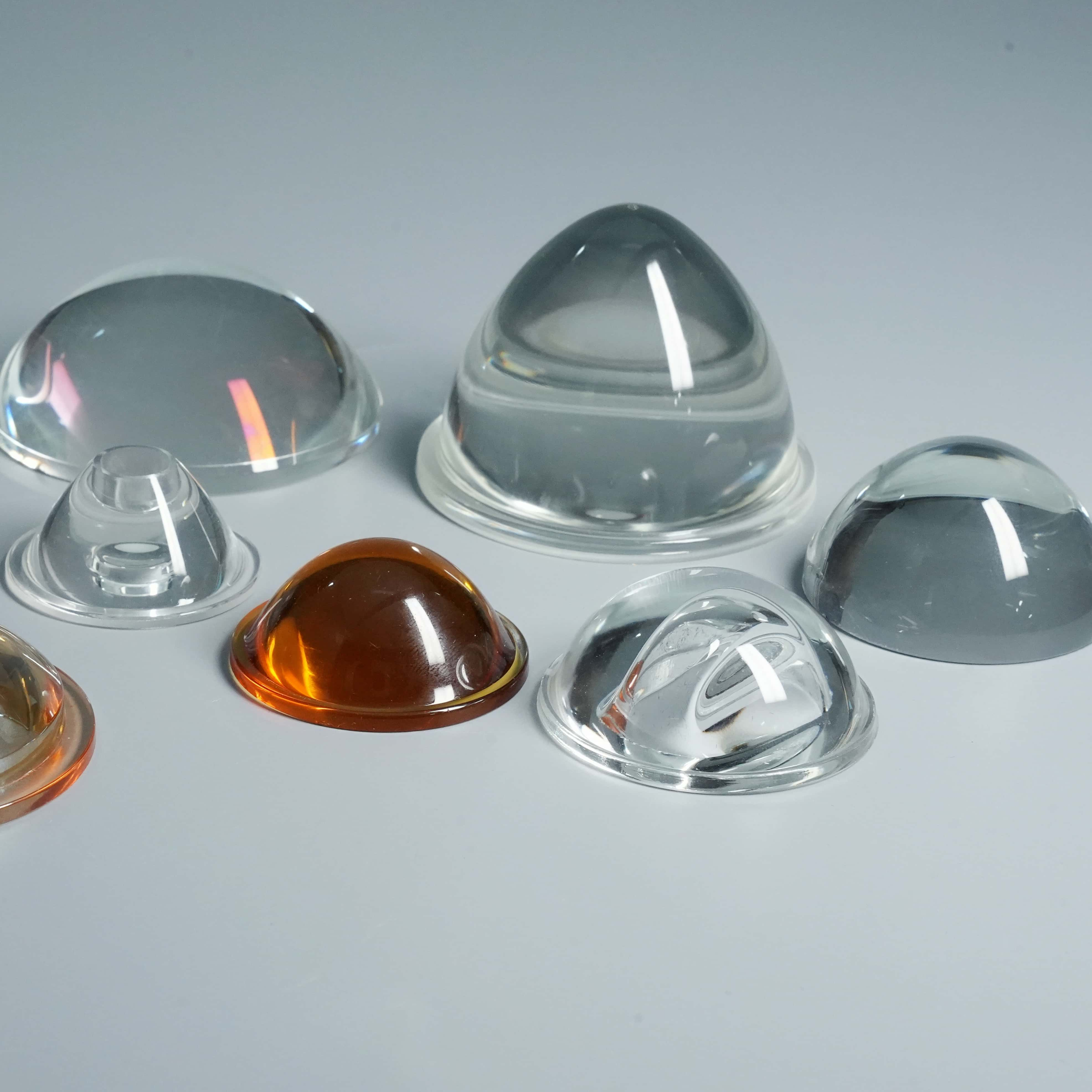
Custom Borosilicate Glass LED Grow Light Convex Lens with Anti-Reflective Coating for Indoor Farming Full Spectrum Lighting
- AR-coated convex glass lens
- Full-spectrum indoor farming
- Designed for fixture-level optical efficiency

High Temperature Resistant Borosilicate Glass Fresnel Lens Anti-Reflective Coating High Power LED Collimation Stage Lighting
- Heat-resistant borosilicate Fresnel lens
- High-power LED collimation
- AR coating for stage and studio optics
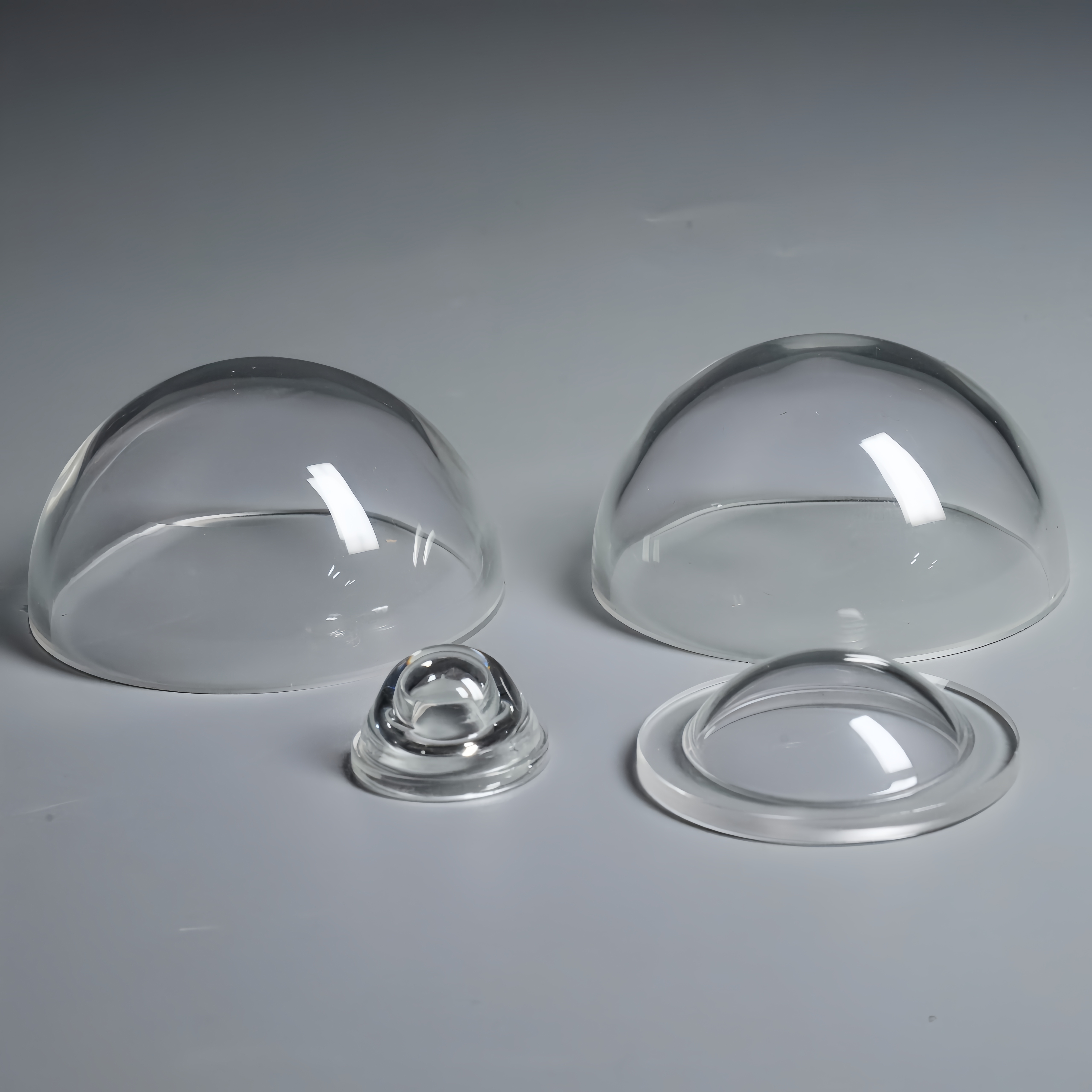
High-Pressure Borosilicate Optical Glass Dome for Underwater ROV AUV Camera Housings & Submersible Lights Deep Sea Rated
- Deep-sea-rated optical dome
- ROV/AUV camera housing and lights
- High-pressure optical window design
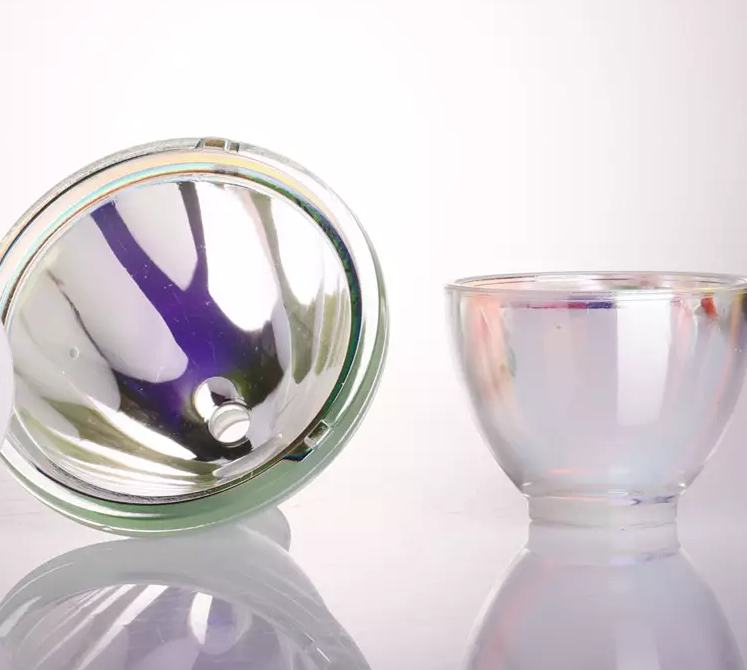
COB Glass LED Reflector Bowl Manufacturer Deep Design Perfect Beam Spotlights Projector Lights 20 60 90 Beam Angle
- Deep COB glass reflector bowl
- 20°, 60° and 90° beam angles
- Spotlights and projector lighting
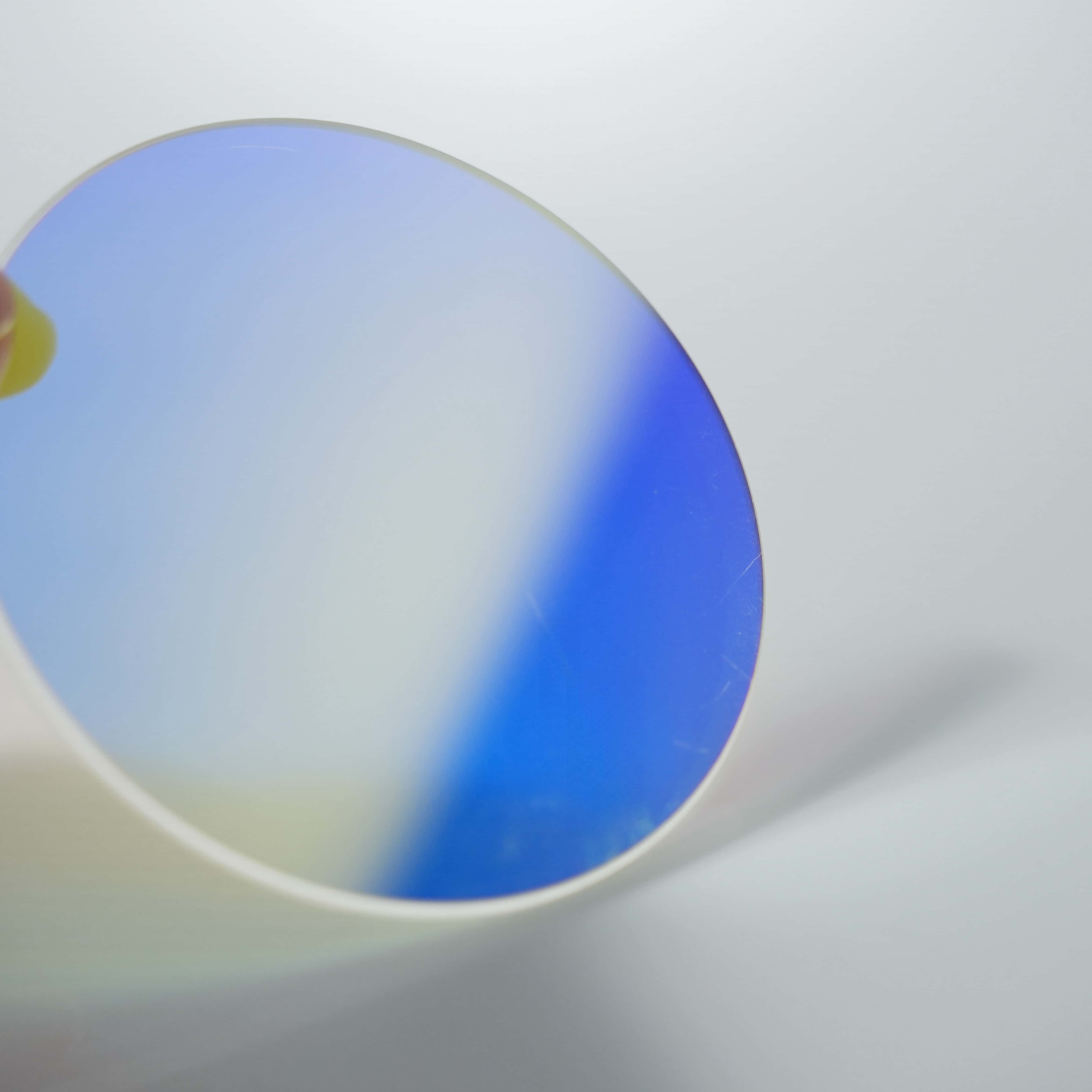
Optical Borosilicate Glass Longpass Shortpass Filter 500nm 600nm 700nm AR Coating Cut-Edge for Spectroscopy Industrial Sensor
- 500 nm, 600 nm and 700 nm options
- Longpass and shortpass filter types
- AR coating and cut-edge finishing

OEM Borosilicate Glass Optical Dome Cover for Outdoor IP Cameras UV Resistant Waterproof Housing Anti-Reflective Coating
- UV-resistant outdoor dome cover
- Waterproof camera housing design
- Anti-reflective optical coating
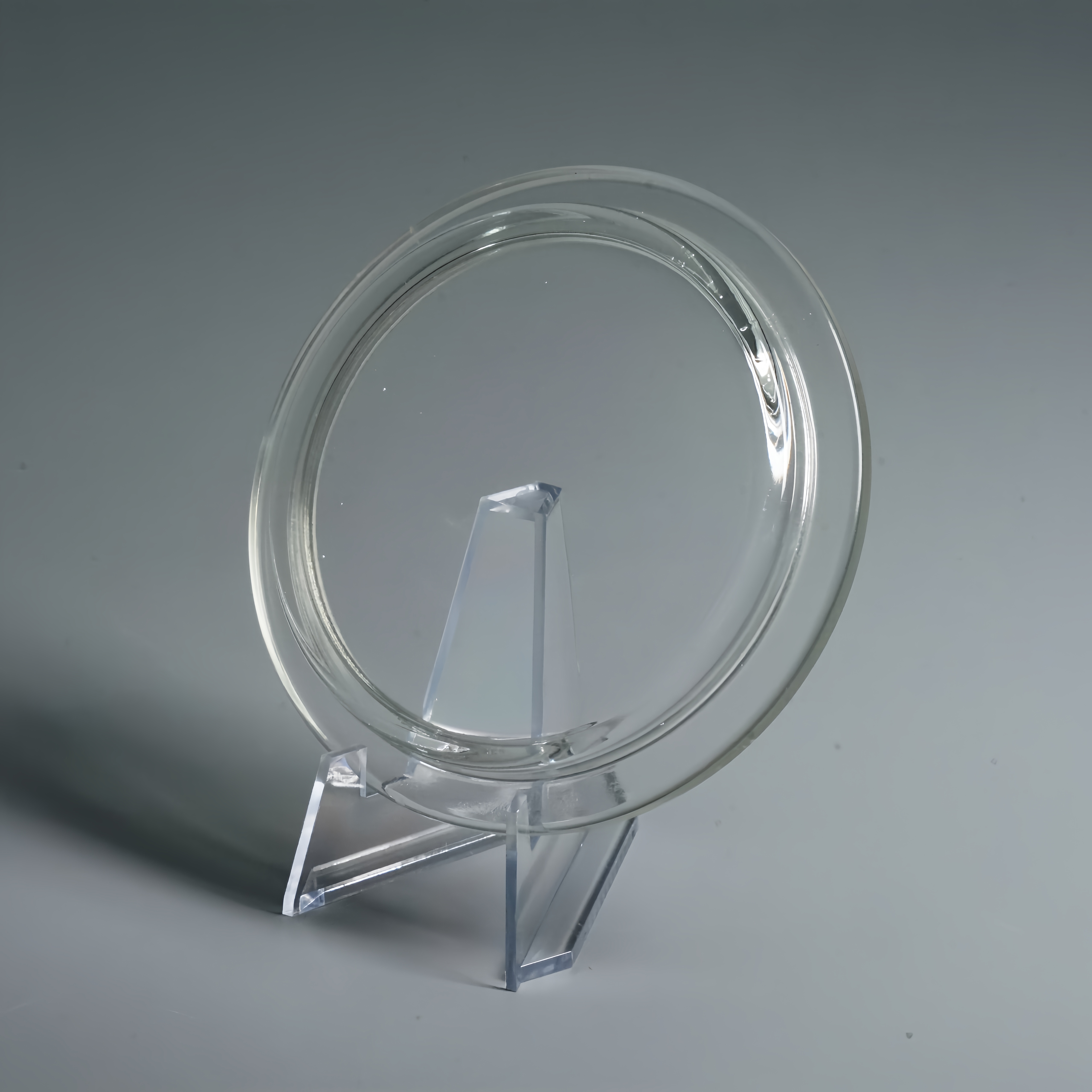
Custom Size Coastal Victorian Outdoor Stage Glass Lampshade Factory Waterproof High Temperature Impact Resistant Silk-Printable
- Custom-size outdoor glass lampshade
- Waterproof, high-temperature, impact-resistant
- Silk-printable decorative finishing
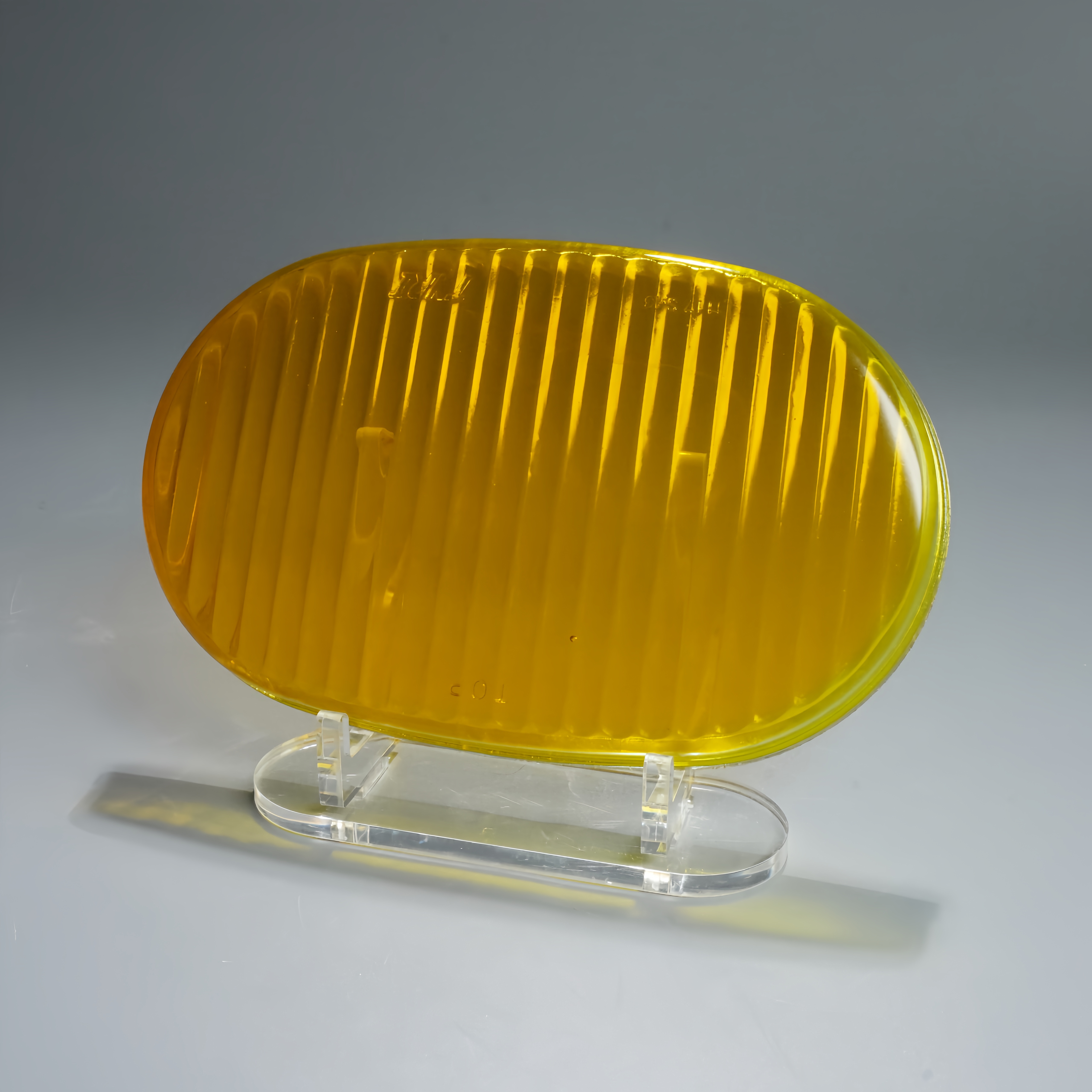
Factory Customized Size Shape Color Heat Resistant High Quality Borosilicate Glass Car Light Accessories Traditional Industrial
- Custom size, shape and color
- Heat-resistant borosilicate glass
- Automotive and industrial light parts
Need a molded glass part that is not shown here? Send a 2D/3D drawing, target transmission, gasket interface, operating temperature and annual volume. The engineering review will confirm manufacturability, mold options, coating route and inspection criteria before quotation.
Inquire NowManufacturer benchmarks buyers can verify
What “Top 10” Should Mean in a Molded Glass RFP
Search demand for “top 10 molded glass manufacturers and exporters” is usually a proxy for a more specific question: which supplier can turn a drawing into a repeatable, certification-ready glass component without creating thermal, sealing or optical failures in the field?
For B2B buyers, the phrase “top 10” is not a popularity contest. It is a supplier de-risking exercise. A lighting OEM may need a borosilicate cover that survives sudden rain on a hot LED fixture. A sensor company may need a coated optical dome with controlled transmission and pressure resistance. An architectural buyer may need a decorative lampshade that remains waterproof and impact-resistant after shipping. These are different engineering problems, yet they appear under the same search intent.
This guide therefore avoids paid directory logic. It uses a 10-signal evidence model that can be applied to any manufacturer or exporter. Shanghai Tambi Glass Industrial Co., Ltd. is included as a reference example because its drawing-based OEM process, onsite-verified supplier records and public trade-capacity pages can be independently reviewed. The same questions should be asked of every supplier on a shortlist.
Manufacturer, Exporter or Trading Company: Match the Model to Your Risk
Before comparing quotations, classify the supplier model. The lowest price may come from a trader with little process control; the best long-term value often comes from a manufacturer-exporter that can review the drawing and control the export packing.
In-House Molded Glass Manufacturer
Owns pressing, blowing, annealing, grinding or coating. Best for new molds, tight tolerances and thermal-shock requirements. Verify the factory video, inspection records and molding-equipment list.
Export-Focused Trading Company
Can offer a broad catalog and fast logistics, but process knowledge may be thin. Ask which factory forms the glass, who controls annealing, and whether dimensional and optical reports travel with the shipment.
Hybrid Manufacturer-Exporter
Combines engineering review with export documentation and customer follow-up. This model suits OEMs that need one accountable contact from drawing review to container loading, especially for fragile glass parts.
Verification-First Supplier
Provides onsite assessment, credit index, transaction level, trade capacity and trade history. These records reduce onboarding risk for procurement teams that must qualify a supplier before a sample order.
The 10 Signals We Use to Build a Top 10 Shortlist
A genuine top-tier molded glass manufacturer or exporter should be able to answer these ten questions with documents, samples or auditable records.
| Shortlist Signal | What Strong Manufacturers Show | What to Ask For |
|---|---|---|
| 1. Drawing-Based DFM Review | Comments on wall thickness, draft, tolerance stack-up, sealing face, gate position and optical path alignment before tooling. | DFM notes, 2D/3D drawing review, mold-flow or forming-risk comments. |
| 2. Process Breadth | Pressed, blown, ground, tempered and coated routes under one supply chain, so the part is matched to the process rather than forced into one method. | Process list, equipment photos, factory video and sample route. |
| 3. Material Portfolio | Borosilicate 3.3, tempered soda-lime, fused quartz and optical BK7 availability, with clear trade-offs for heat, impact and transmission. | Material certificates, thermal-expansion data and recommended operating limits. |
| 4. Optical Coating Control | AR, longpass, shortpass, bandpass and color coatings with defined wavelength, angle and durability requirements. | Coating curve, adhesion test, environmental test and batch traceability. |
| 5. Thermal-Shock and Impact Validation | Test criteria matched to lamp surface temperature, rain contact, washdown, pressure or impact ratings instead of generic claims. | Test method, sample size, acceptance criteria and photos of failures if any. |
| 6. Dimensional and Cosmetic QC | Inspection of diameter, height, flatness, concentricity, bubbles, seeds, scratches and coating defects under defined lighting. | Inspection report, AQL level, control plan and sample photos. |
| 7. Certification Support | Support for fixture makers designing to FAA L-810 or EN 50293 requirements, while being clear that fixture certification belongs to the luminaire manufacturer. | Color, transmission and dimensional reports; material declarations; change-control notice. |
| 8. Export Packing and Logistics | Foam or pulp dividers, reinforced cartons, palletization and labeling suitable for fragile glass shipped by sea or air. | Packing drawing, drop-test evidence, carton mark and pallet configuration. |
| 9. Engineering Communication | Fast, technical replies with questions about operating conditions, annual volume, gasket interface and installation torque. | Response-time benchmark, named engineer and revision history. |
| 10. Third-Party Transparency | Onsite verification, credit index, transaction level, trade capacity, trade history and buyer feedback that can be reviewed before sampling. | Supplier assessment link, credit report and trade-record summary. |
Material Choice Is the First Cost-Decision in Molded Glass
Borosilicate 3.3 is not always the right answer, and tempered soda-lime is not always the cheaper answer. The correct glass depends on surface temperature, thermal cycling, impact exposure, optical transmission and the standard your fixture must meet.
| Material | Thermal Expansion | Typical Max. Working Temp. | Key Strength | Best-Fit Molded Glass Products |
|---|---|---|---|---|
| Borosilicate 3.3 | ≈ 3.3 × 10⁻⁶/K | ≈ 450 °C | Excellent thermal-shock resistance | Explosion-proof shades, high-power LED covers, Fresnel lenses, grow-light lenses |
| Tempered soda-lime | ≈ 9.0 × 10⁻⁶/K | ≈ 250 °C | High impact strength and lower cost at moderate temperatures | Outdoor covers, floodlight glass, vandal-resistant lenses, signal light domes |
| Fused quartz | ≈ 0.55 × 10⁻⁶/K | ≈ 1000 °C+ | UV transmission and extreme heat tolerance | UV optics, high-temperature windows, specialty sensor components |
| Optical BK7 (H-K9L) | ≈ 7.1 × 10⁻⁶/K | ≈ 300 °C | Homogeneous optical properties, nd ≈ 1.517 | Precision lenses, prisms, mirrors and coated filters |
Values are typical references for early engineering discussion. Final specification should be confirmed against your drawing, lamp surface temperature, impact rating, sealing design and the standard your finished fixture must satisfy.
Procurement Trends Reshaping 2025–2030 Molded Glass Buying
Buyers are moving from “can you make this part?” to “can you prove this part will perform in my assembly, under my certification path, with my required documentation?” These eight trends are already changing RFQs.
Higher Temperature, Tighter Thermal Budgets
High-power LEDs and compact luminaires push glass closer to the heat source. Procurement teams will ask for thermal-shock data, recommended maximum temperature and annealing control rather than a generic “heat-resistant” label.
Drawing-Based Customization Over Catalog Parts
More OEMs need molded glass matched to an existing gasket, bezel and optical path. The winning supplier will be the one that can review drawings, propose mold options and confirm samples before mass production.
IP-Rated Outdoor and Underwater Assemblies
Outdoor IP cameras, marine lights, ROVs and AUVs require glass that integrates with sealing systems. Buyers will increasingly request pressure-rated domes, UV resistance and coating durability under salt spray.
Sensor Fusion and LiDAR Optical Domes
LiDAR, spectroscopy and industrial sensing are moving into harsher environments. Procurement will look for hemispherical windows, bandpass filters and AR-coated domes with documented transmission and environmental durability.
Supplier De-Risking and Dual Sourcing
Buyers are not simply switching regions; they are building parallel qualification. A supplier that can provide a factory video, supplier assessment, credit index and trade history will move faster through procurement approval.
Coating Durability and Optical Traceability
AR, bandpass and longpass coatings are being specified with adhesion, humidity and abrasion requirements. Batch-level traceability will become part of the purchase order, not an afterthought.
Lower MOQ and Faster Sampling
Product teams need faster iteration. Suppliers that can support sample quantities for optical lenses and pressed or blown covers, then scale to volume production, will win more design cycles.
Sustainability and Packaging Waste Reduction
Fragile glass generates high packaging volume. Pulp dividers, optimized carton sizes, reusable pallet patterns and reduced mixed-material packaging will be evaluated alongside unit price.
Product Development Trends: What the Next Generation of Molded Glass Will Require
The “top 10” list of 2025 will not look the same in 2030. Molded glass is becoming more optical, more integrated with the housing and more traceable from batch to fixture.
Freeform and Aspheric Optical Surfaces
More lighting and sensing designs need molded glass that shapes light beyond a simple spherical curve. Suppliers will be evaluated on mold accuracy, optical metrology and repeatability across production lots.
Hybrid Glass-Polymer Assemblies
Glass is increasingly combined with polymer carriers, gaskets and overmolded frames. The glass supplier must understand sealing surfaces and thermal expansion mismatch, not just the glass part alone.
Thinner Borosilicate for High-Power LED
Optical efficiency and weight reduction are pushing thinner walls without sacrificing thermal shock resistance. Annealing control and edge quality become even more important as wall sections decrease.
Integrated Sealing Ribs and Gasket Interfaces
Molded glass covers are being designed with sealing features that reduce assembly error. DFM review must include gasket compression, installation torque and flatness of the mating face.
Functional Coatings for Sensing and Color
AR coatings, bandpass filters, longpass and shortpass layers and colored transmission requirements will be specified as an optical system, with durability and angle-of-incidence performance included.
Digital QC and Laser Traceability
Buyers will expect batch IDs, inspection data and coating records that can be linked to a shipment. Laser marking or labeled packaging can help distributors and OEMs trace glass parts after assembly.
Where Tambi Glass Fits the Top-Tier Molded Glass Profile
Shanghai Tambi Glass Industrial Co., Ltd. is a manufacturer and trading company focused on custom borosilicate and optical glass for lighting and optical OEMs. Its advantage is not a single machine or a single catalog item; it is the ability to connect drawing review, material choice, forming, coating, inspection and export packing around one application.
Drawing-Based OEM / ODM
Most orders begin with a 2D or 3D drawing or a physical sample. Senior lighting and molding engineers review wall thickness, draft, sealing faces and optical alignment before tooling, reducing the risk of a beautiful sample that cannot be produced repeatably.
Material and Coating Breadth
Borosilicate 3.3, tempered glass, quartz and BK7 options are combined with AR and optical coatings. That breadth allows the supplier to recommend a material based on lamp temperature, impact exposure and transmission instead of forcing every project into one glass type.
10+ Years in Lighting Glass
More than a decade of experience in lighting glass means familiarity with heat build-up behind high-power LEDs, thermal shock from rain on hot covers, impact loads in hazardous areas and color consistency for signal lights.
Onsite-Verified Transparency
Public supplier assessment, credit index, transaction level, trade capacity and trade history help procurement teams complete qualification faster. Video calls and third-party audits are welcome, which turns trust into a process rather than a promise.
Controlled 6-Step Process
Drawing review, mold and tooling, sampling, forming and annealing, coating and QC, then export packing. Clear checkpoints mean fewer surprises between sample approval and mass production, especially for fragile glass that cannot be reworked like metal.
Fast Technical Response and Export Packing
Average response time is within 6 hours. Parts are separated by foam or pulp dividers, packed in reinforced export cartons and palletized for sea or air freight, with custom packaging and labeling possible for distributors.
From Drawing to Delivery: Six Controlled Checkpoints
The difference between a top-tier molded glass manufacturer and a low-cost exporter often appears after the sample is approved. These checkpoints keep the production part aligned with the drawing, the housing and the export route.
Drawing Review
DFM check of thickness, draft, tolerance, sealing face, optical path and installation conditions.
Mold and Tooling
New or existing molds for pressing, blowing or grinding, selected around the part geometry and volume.
Sampling
Samples measured and sent for fit, light, pressure or sealing tests before mass production approval.
Forming and Annealing
Controlled forming and annealing or tempering to relieve stress and support thermal-shock performance.
Coating and QC
AR or color coating, dimensional inspection, visual inspection and agreed optical checks.
Export Packing
Divider-packed cartons, palletization, labels and documentation prepared for sea or air freight.
Auditable Evidence Buyers Can Review Before Ordering
For procurement teams, a supplier’s public records are part of the product. These verification pages help shorten supplier qualification and make the “top 10” shortlist more defensible.
Supplier Assessment
Third-party verification of legal status and premises, useful for new-supplier onboarding.
View assessment →Credit Index
Business credit and compliance overview to support payment and risk review.
Check credit →Transaction Level
Recorded online transaction performance, helpful for first-order confidence.
See level →Trade Capacity
Export markets, terms and logistics capability for planning repeat shipments.
View capacity →Trade History
Historical shipment and order records that support a more informed sourcing decision.
See history →Factory Video and Profile
See forming, finishing, inspection and packing before placing a sample order.
Watch factory video →Molded Glass Procurement FAQ
These are the questions procurement and engineering teams ask most often when comparing molded glass manufacturers and exporters.
Can you manufacture molded glass covers and lenses to my own drawing?
Yes. Most orders are drawing-based. Send a 2D/3D drawing or a physical sample with dimensions, tolerance, material, color, coating and operating-temperature requirements. The engineering team reviews manufacturability, proposes mold options and confirms samples before mass production.
What is the typical minimum order quantity for molded glass?
Typical MOQs range from about 50 pieces for optical lenses to 100–500 pieces for pressed or blown lighting covers, depending on whether an existing mold can be used. Sample quantities are available for evaluation before committing to a production mold.
Should I choose borosilicate glass or tempered soda-lime glass?
Borosilicate 3.3 has a low thermal expansion of about 3.3 × 10⁻⁶/K, so it tolerates high lamp temperatures and sudden rain or cold-water contact better. Tempered soda-lime glass offers high impact strength at a lower cost for moderate temperatures. The right choice depends on surface temperature, impact rating, seal design and fixture certification.
Do you supply glass for FAA L-810 or EN 50293 lighting fixtures?
Tambi Glass produces glass lenses and domes for fixture makers whose obstruction and signal lights are designed to FAA L-810 or EN 50293 requirements. Fixture certification is held by the luminaire manufacturer; the glass supplier should match color, transmission and dimensional specifications and provide material and inspection reports on request.
How do you control color, transmission and optical coating quality?
Color and transmission requirements should be stated in the RFQ with measurement conditions. For coated parts, the drawing should define wavelength range, angle of incidence, adhesion and environmental durability. Production inspection can include visual checks, dimensional measurement and agreed optical verification.
What coatings are available for molded glass?
Depending on the application, suppliers may offer anti-reflective coatings, longpass and shortpass filters, bandpass coatings, colored transmission and decorative finishing such as silk printing for lampshades. Coating choice must be matched to the light source, sensor and cleaning environment.
How fast do you reply to technical inquiries?
Average response time is within 6 hours. For a faster review, include the drawing, material preference, operating temperature, gasket interface, target transmission, annual volume and any certification requirement in the first message.
What is the sampling process before mass production?
The process usually starts with drawing review, mold or tooling selection, sample forming and annealing, then dimensional and visual inspection. The sample is sent for your fit and light test. Production begins only after sample approval and agreement on inspection criteria.
How are fragile molded glass parts packed for export?
Parts are separated by foam or pulp dividers, packed in reinforced export cartons and palletized for sea or air freight. Custom packaging and labeling for distributors can be arranged. Packing method should be agreed before quotation because it directly affects damage rate and freight cost.
What documents can support supplier qualification?
Depending on the order, suppliers can provide material declarations, dimensional inspection reports, visual inspection records, coating data and packing lists. Public supplier assessment, credit index, transaction level, trade capacity and trade history pages can also be reviewed before sampling.
Have a Drawing or a Target Application?
Send dimensions, material, operating temperature, coating requirement, gasket interface and annual volume. The engineering review will help you compare glass materials, confirm mold options and define the inspection criteria before you commit to production.