Eight Optical Glass Components Buyers Source From One Factory
Every part below is quoted from your drawing rather than pulled from a fixed catalogue. Diameter, wall thickness, sealing face, colour, coating and edge finish can be adjusted to match your housing, gasket and photometric target.
 Spotlight & Projector Optics
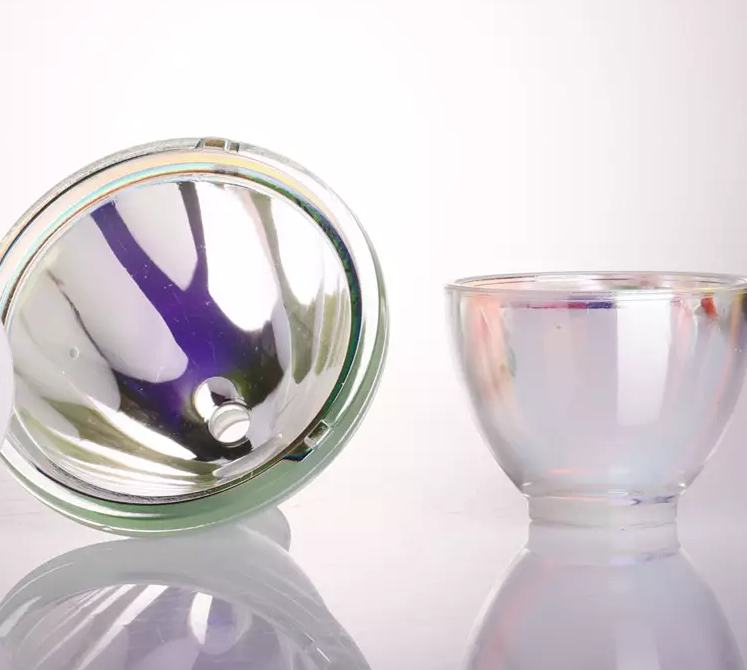
COB Glass LED Reflector Bowl — Deep Design, 20°/60°/90°
Deep-drawn borosilicate reflector bowl that shapes a clean COB beam without the yellow halo common to shallow plastic reflectors.
Beam angles: 20° · 60° · 90° View product →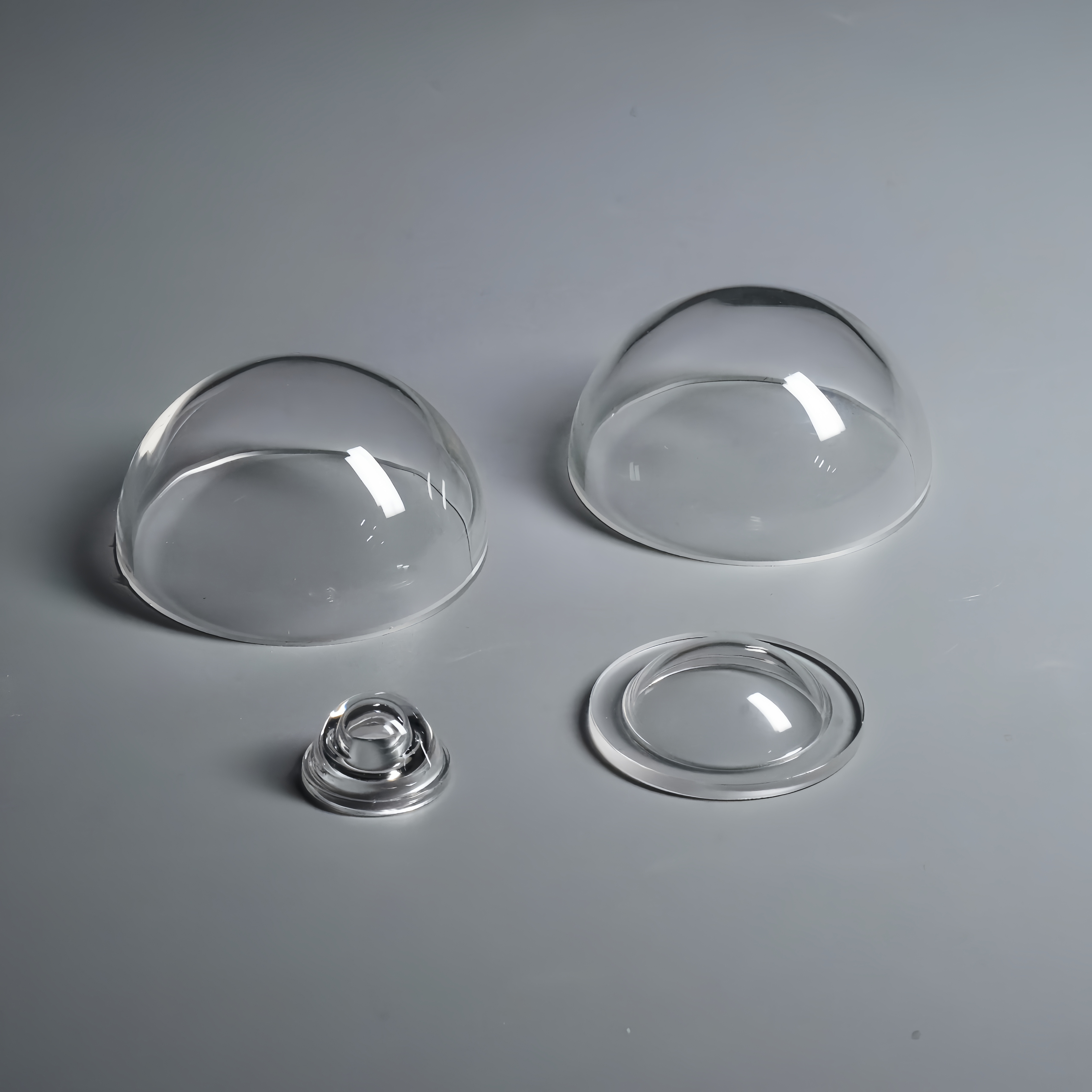 Automotive Lighting
Mold-Pressed K9 Optical Dome Lens with AR Coating
Pressed K9 dome for headlight and signal modules, finished with an anti-reflective coating to lift transmission and cut stray glare.
Coating: AR · OEM drawing accepted View product →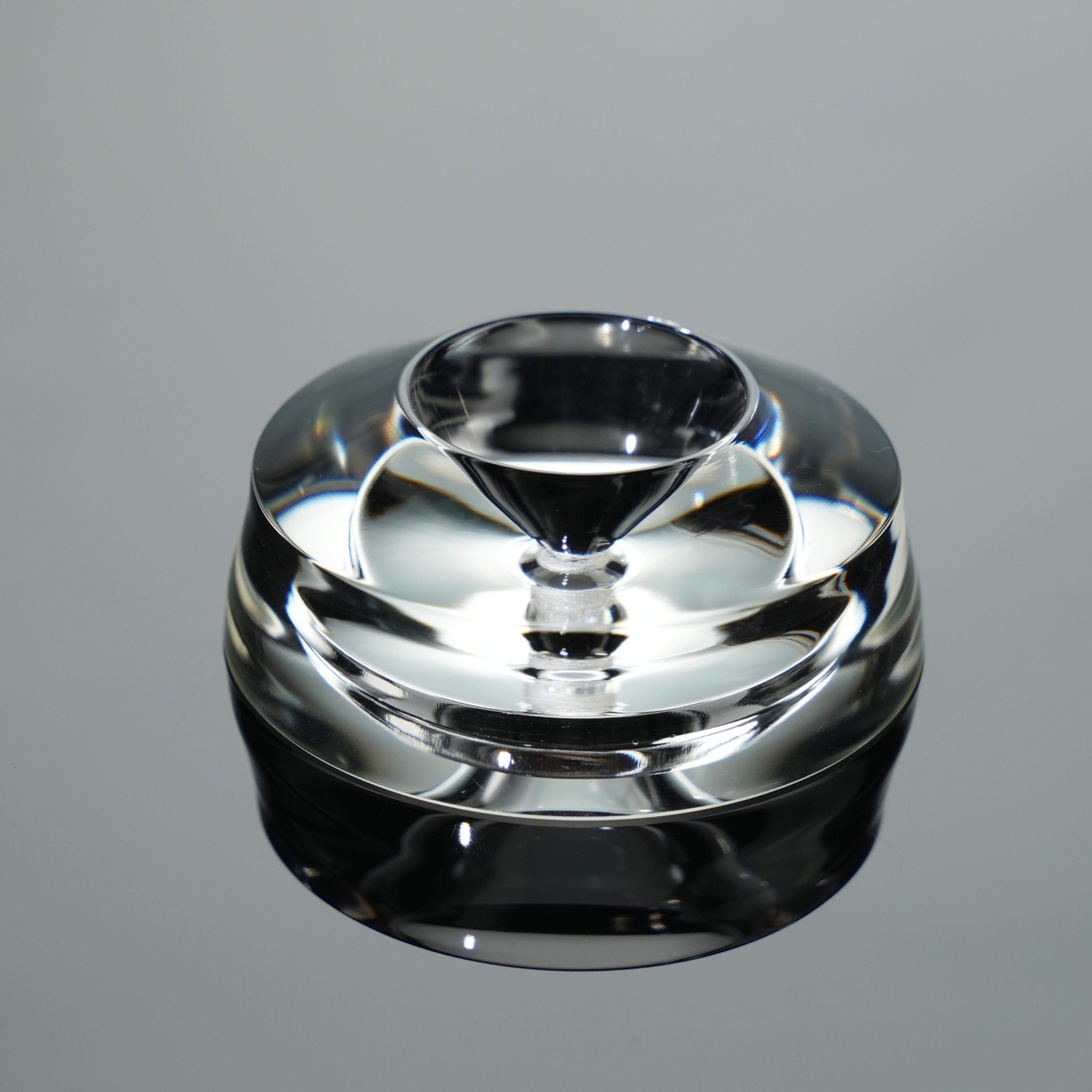 Aviation
FAA-Compliant Borosilicate Lens for Runway Lights
Heat-resistant lens for in-pavement runway and taxiway fixtures, engineered for IP68 assemblies and thermal shock from standing water.
Standard: FAA L-810 fixture designs View product → Custom Forming
Custom Borosilicate Glass for Car Lights & Industrial Fixtures
Size, shape and colour set entirely by your drawing — the workhorse part for buyers who need one glass family across several fixtures.
Forming: pressed / blown / ground View product →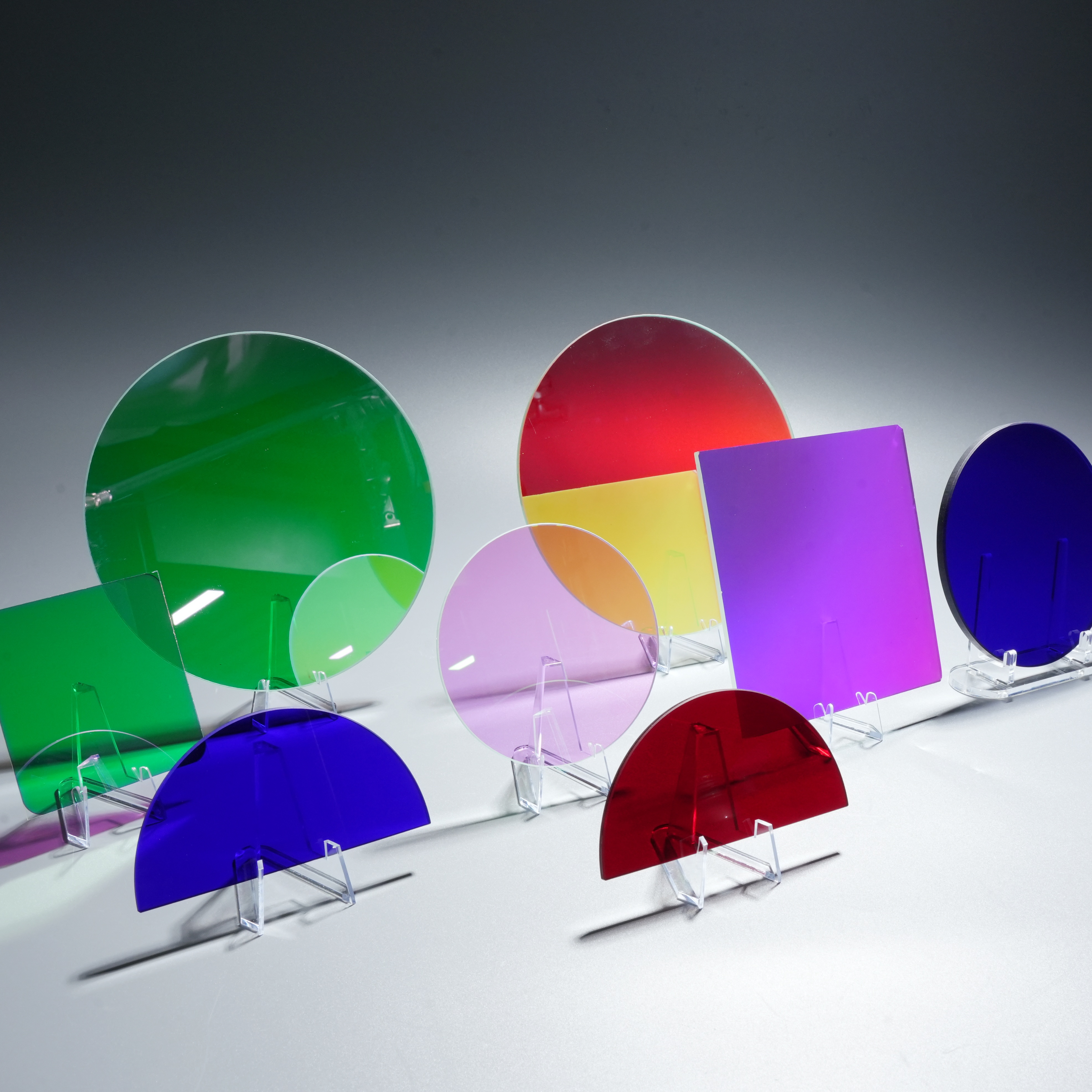 Optical Filters
590 nm 49 mm Coated Borosilicate Bandpass Filter
Hard-coated bandpass and longpass filters for sensing, signalling and instrument windows, with custom wavelength and diameter.
Coating: bandpass / longpass View product → Precision Optics
BK7 / K9 Aspherical Lens, Ø0.5–25 mm
Ground and polished aspheres that replace multi-element plastic stacks in compact projection, sensing and instrument paths.
MOQ: 100 pcs · AR coated View product →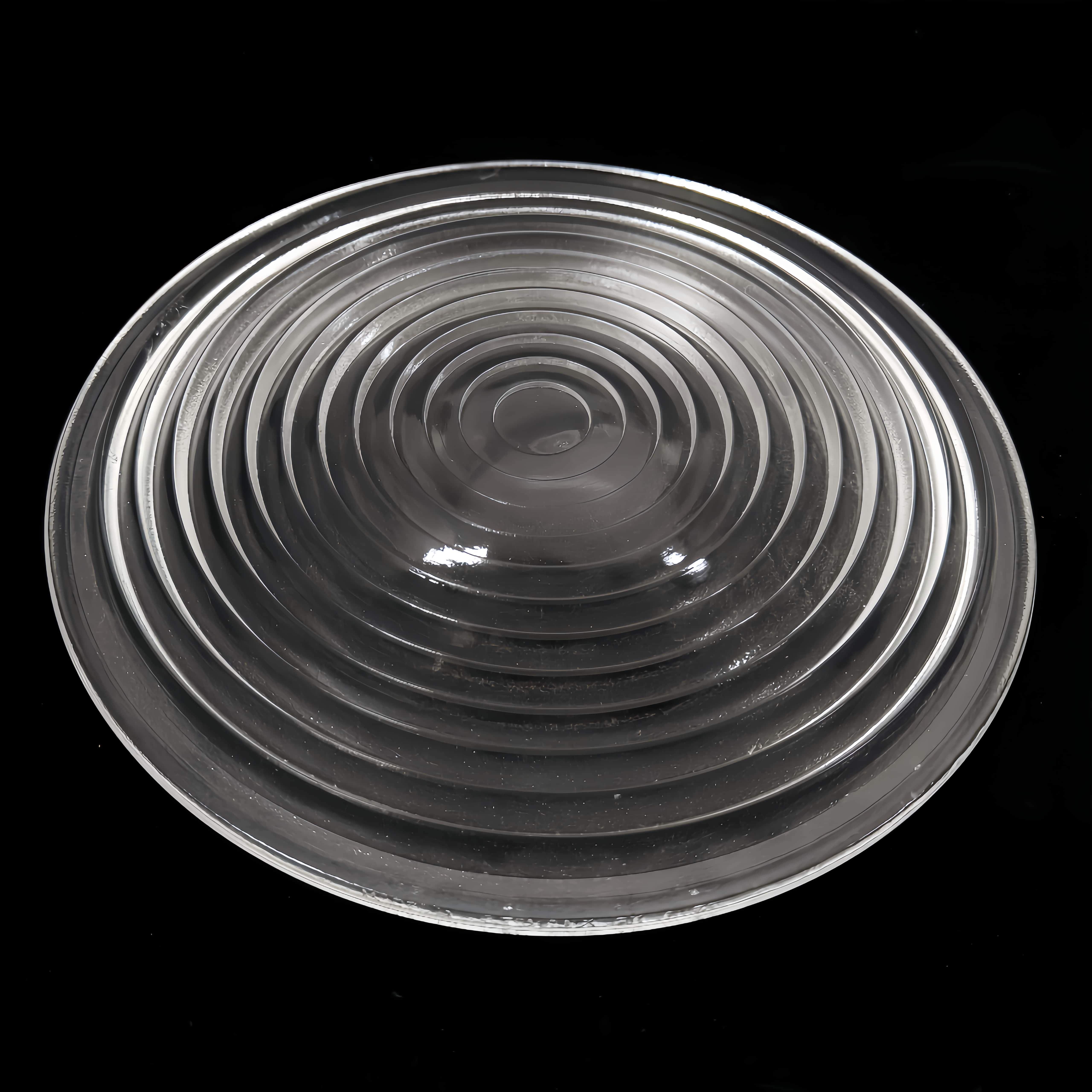 Stage & Studio
Molded Borosilicate Fresnel Lens, 175 mm
High-temperature Fresnel for LED stage fixtures, with AR coating and a moulded micro-groove profile for even beam distribution.
Reference: FAA / ICAO profiles View product → Outdoor LED
Clear Borosilicate Dome Lens for Outdoor Fixtures
Impact- and scratch-resistant dome for high-bay, flood and street fixtures where UV exposure destroys plastic covers.
Feature: UV-stable · IP68-ready View product →How Optical Glass Is Being Bought Now — and What Changes Next
Buyers who purchased lenses and covers on unit price alone in 2020 are now purchasing on risk. Four forces have reshaped this category faster than most catalogues have been updated.
Dual sourcing without paying twice for tooling
Procurement teams increasingly qualify a second glass factory but refuse to fund a second set of moulds. The practical answer is a mould ownership and mould-transfer clause written into the RFQ, supported by a supplier who documents draft angles, shrinkage and cavity data. Ask for the mould register, not just a first-article sample — it is the difference between a real second source and a promise.
Smaller batches, more variants
SKU counts in architectural, stage and specialty vehicle lighting keep climbing while individual batch sizes fall. Factories respond with shared mould families and parametric tooling, which pushes MOQ down toward 100–500 pieces for pressed covers and roughly 50 pieces for precision lenses. Always confirm how the MOQ moves when a new colour, coating or thickness is introduced — the answer usually reveals how flexible the line really is.
Certification has moved to the RFQ stage
FAA L-810, ICAO Annex 14, EN 50293 and hazardous-area enclosure approvals are now checked before a supplier is shortlisted. The luminaire maker owns the certificate, but the glass must deliver the specified colour coordinates, transmission and dimensional tolerance. Request material reports and inspection data with the quotation, not after the purchase order.
Total landed cost replaces unit price
Breakage in transit, field returns from thermal shock and coating delamination cost far more than a few cents per part. Buyers now model packaging, inspection documentation, replacement rate and lead-time variance into the award decision. A slightly higher piece price with divider packing and 100% visual inspection is frequently the cheaper programme once warranty exposure is counted.
There is also a material shift behind the commercial one. Glass is being re-selected where injection-moulded polycarbonate or PMMA was used as a cost shortcut. The reason is not nostalgia: UV exposure, high-lumen heat load and scratch resistance all shorten the service life of plastic optics in outdoor and automotive applications. Glass costs more at the line item and less across a ten-year field life — and that arithmetic is now visible to procurement teams, not just to design engineers.
Where Optical Glass Manufacturing Is Heading
Six developments are already visible in production drawings arriving at our Shanghai works. Each one changes what a buyer should specify today to avoid a re-tool in two years.
Precision glass moulding (PGM)
Near-net aspheres and freeform surfaces come off the mould closer to final figure, cutting polishing time and improving radius repeatability between cavities. The buyer benefit is a stable optical prescription across high-volume batches, not just a cheaper first sample.
Aspheres replacing plastic stacks
A single moulded glass asphere can replace two or three plastic elements in a projection or sensing path. That reduces alignment stack-up, removes thermal drift in high-lumen modules and simplifies the fixture assembly the OEM has to qualify.
Hard coatings that survive the field
Broadband anti-reflective coatings are now judged on abrasion, humidity and salt-spray durability, not only on transmission curves. Specify the durability test, not just the reflectance figure — a coating that fails at year two is a warranty claim, not an optical gain.
Hermetic sealing for sensing
Glass-to-metal sealing and laser welding are moving from laboratory parts into automotive LiDAR and machine-vision housings. Ingress protection depends as much on the glass edge finish and flatness as on the gasket, so these tolerances belong on the drawing from the start.
Micro-structured Fresnel optics
Thinner Fresnel and TIR profiles deliver even beam distribution while reducing fixture depth and weight. In stage lighting they also survive the heat that ruins acrylic equivalents, which is why borosilicate Fresnel demand keeps rising in high-power COB fixtures.
Lower-carbon melting and lead-free batches
Energy-intensive melting is under scrutiny, and lead-free, RoHS-compatible batches are now the default expectation rather than a premium option. Ask for the material declaration and the recyclability statement early; it is easier to collect at quotation than to reconstruct after shipment.
What will not change is the discipline behind the part: the glass grade has to match the thermal load, the wall thickness has to be drawable, the sealing face has to be flat, and the annealing schedule has to remove stress before the coating goes on. Technology shortens the path — it does not remove the path. Buyers who treat these four points as non-negotiable in the RFQ receive fewer surprises at first article and far fewer at the third reorder.
Choosing the Glass Grade: Four Materials, Four Failure Modes
Most field failures in lighting glass trace back to a material decision, not a manufacturing defect. This is the comparison our engineers run before quoting a drawing.
| Material | Thermal expansion (×10⁻⁶/K) | Typical max. working temperature | Optical & mechanical character | Typical parts | Watch-outs |
|---|---|---|---|---|---|
| Borosilicate 3.3 | ≈ 3.3 | ≈ 450 °C | Excellent thermal-shock resistance, high clarity, good chemical durability | Explosion-proof shades, high-power LED covers, Fresnel lenses | Higher raw-material cost; requires controlled annealing |
| Tempered soda-lime | ≈ 9.0 | ≈ 250 °C | High impact strength, economical, readily formed | Outdoor covers, floodlight glass, vandal-resistant lenses | Thermal shock risk; tempering quality must be verified |
| Fused quartz | ≈ 0.55 | ≈ 1000 °C+ | Deep UV transmission, extreme heat tolerance, low expansion | UV optics, high-temperature windows, laser components | Cost and lead time; limited complex forming options |
| Optical BK7 / K9 (H-K9L) | ≈ 7.1 | ≈ 300 °C | High homogeneity, nd ≈ 1.517, excellent polishability | Precision lenses, prisms, mirrors, bandpass filters | Poor thermal-shock resistance compared with borosilicate |
Values are typical references for engineering discussion. The final specification is confirmed against your drawing, measured lamp surface temperature, impact rating and the standard your fixture must satisfy.
Thermal expansion at a glance — lower is better for shock resistance
Bar length is proportional to the coefficient of linear thermal expansion. A low coefficient reduces the stress generated when a hot lens meets rain, wash-down water or cold night air.
The second decision is thickness and geometry. A thick wall improves impact resistance but concentrates thermal gradient, so a heavy soda-lime cover can crack where a thinner borosilicate cover survives. A deep draw improves beam control but makes the annealing schedule less forgiving. This is why we review wall thickness, draft and sealing face flatness before tooling — a two-hour drawing review is cheaper than a scrapped cavity.
A Controlled Six-Step OEM / ODM Process
Clear checkpoints between sample approval and mass production are what separate a reliable glass supply from a sequence of surprises.
Drawing & DFM review
We check wall thickness, draft, tolerance stack-up, sealing face flatness and optical path alignment against your housing before any tooling commitment is made.
Mould & tooling
New or existing moulds for pressing, blowing or grinding. You receive the tooling plan, cavity layout and expected shrinkage before the first strike.
First-article sampling
Samples are measured, photographed and shipped for your fit, gasket and photometric test. Nothing moves to volume until you sign off in writing.
Forming & annealing
Controlled annealing or tempering relieves internal stress. This step decides whether a part survives thermal shock two winters after installation.
Coating & inspection
AR, bandpass or colour coating, followed by dimensional, visual and optical checks. Inspection records travel with the shipment.
Export packing
Foam or pulp dividers, reinforced cartons and palletisation for sea or air freight, with distributor labelling arranged on request.
How to Verify a Glass Factory Before You Place the Order
Supplier qualification should be evidence-based. These are the four layers of proof a procurement team can request from us — and should request from any factory shortlisted alongside us.
Process evidence
In-process dimensional checks, annealing records and visual inspection data for the actual production lot — not a generic certificate.
Optical evidence
Transmission curves, colour coordinate readings and coating durability results from an accredited laboratory where the programme requires them.
Documentation
Material declaration, RoHS/REACH statements, dimensional reports and packing lists issued with each shipment and archived for traceability.
Independent verification
Third-party supplier assessment, credit index, transaction level and trade history are published in our profile for review before you register us as a vendor.
We also recommend a live video walk-through of the forming, annealing and inspection areas. It takes twenty minutes and answers questions that no brochure can: is the annealing furnace loaded properly, are the inspection benches lit for visual defects, and is the packing station actually using dividers. Our premises have been checked onsite during third-party verification, and we welcome customer audits and video calls arranged in advance.
Shanghai Tambi Glass: One Supply Chain for Pressed, Blown, Ground and Coated Optics


Shanghai Tambi Glass Industrial Co., Ltd. is a manufacturer and trading company supplying custom glass components to lighting and optical OEMs worldwide. For more than a decade we have focused on a single question: how should glass perform inside a real luminaire? That work covers heat build-up behind high-power COB modules, thermal shock from rain on a hot cover, impact loads in hazardous areas, salt spray on marine signal lights and colour accuracy for aviation and obstruction lighting.
Our design team of senior lighting and moulding engineers reviews every drawing for wall thickness, draft, sealing faces and optical path alignment before tooling starts. Because pressed, blown, ground and coated processes sit inside one supply chain, a programme can move between forming methods without the buyer having to re-qualify a second factory. We work with long-term partners in Europe, North America and Japan, and our annual export revenue runs between US$2.5M and US$5M.
- Drawing-based OEM / ODM, no catalogue limits
- Borosilicate 3.3, tempered, quartz and BK7/K9
- In-house AR, bandpass and colour coating
- Onsite-verified supplier, auditable records
- Location
- Shanghai, China
- Team
- 11–50 people
- Business type
- Manufacturer & trading
Company records, factory video, credit index, trade capacity and buyer feedback are all published for review before you send an enquiry — verification links are included below so your vendor-qualification team can work in parallel with our engineering review.
Company profile · Factory video · Supplier assessment · Credit index · Transaction level · Trade capacity · Trade history · Ratings & reviews
Questions Procurement and Engineering Teams Ask Us
Short, practical answers to the questions that decide whether a glass programme moves forward.
Can you manufacture optical lenses and glass covers to my own drawing?
What is the typical minimum order quantity?
Should I choose borosilicate glass or tempered soda-lime glass?
Do you supply glass for FAA L-810 and EN 50293 lighting fixtures?
When should we specify glass instead of optical plastic?
How fast do you reply to technical enquiries?
How are fragile glass parts packed for export?
What documents arrive with the shipment?
What lead times should we plan for?
How can we verify the factory before ordering?
Send a Drawing. Get a Manufacturability Review and Quotation.
Share the dimensions, material, operating temperature, coating requirement and estimated annual volume. Our engineers will confirm the most reliable glass solution for your fixture — and tell you honestly if a different material or process would serve you better.
Get a Quote