Recommended Products
Eight Precision Molded Glass Components for Demanding OEM Programs
The eight platforms below reflect repeat demand from lighting, camera, LiDAR, scientific and hazardous-area equipment programs. Each item can be adapted in dimensions, wall thickness, glass type, color, coating and edge finish. Product URLs are preserved below; where a custom item falls outside a catalogue page, the inquiry button is the correct route for a drawing-based quote.
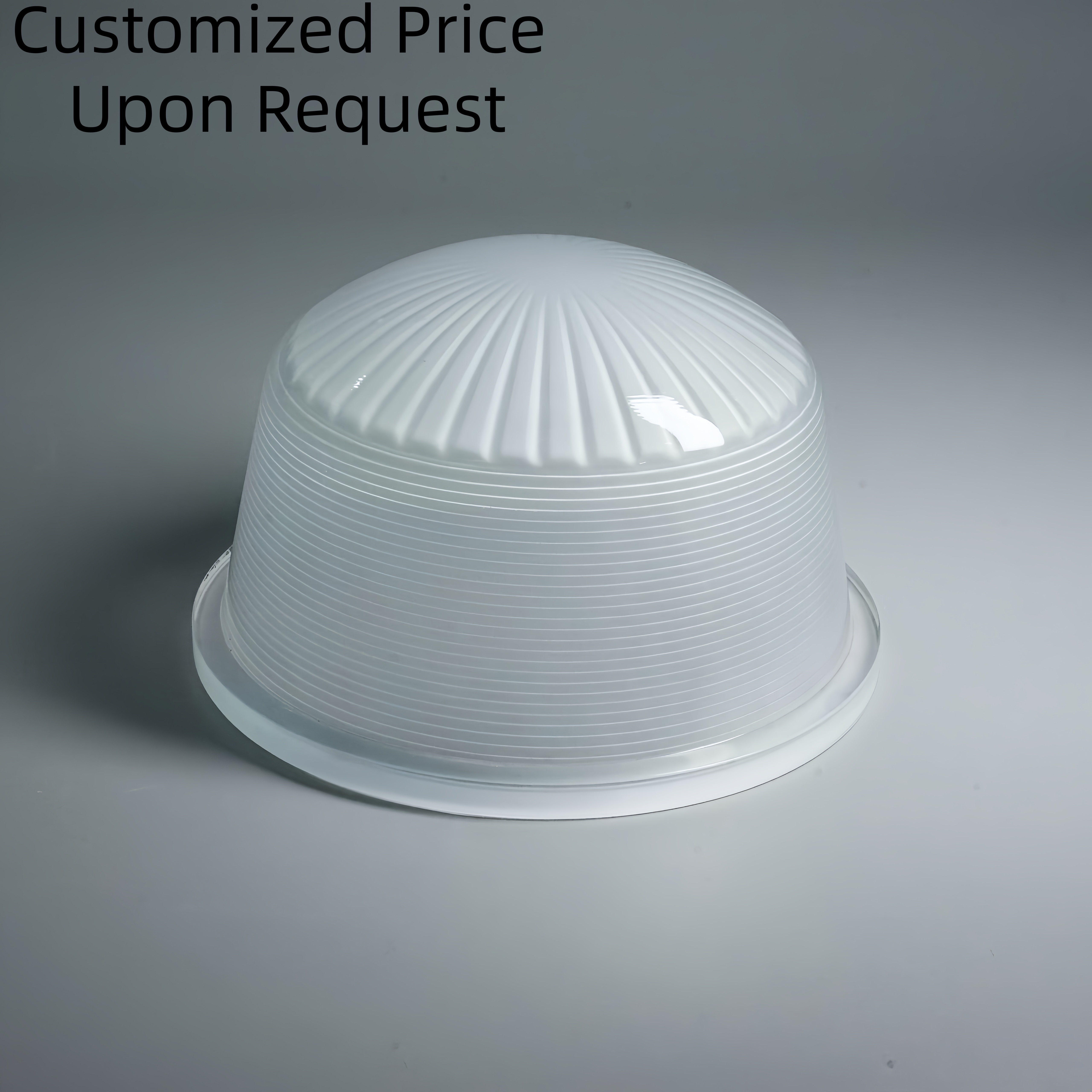
Transparent Explosion-proof Glass Shade, High Light Transmittance, Industrial Workshop Lighting
High-transmittance protective shade for industrial workshop fixtures where visible light output, thermal stability and clean replacement matter. Available with custom sealing faces and edge finishing.
View product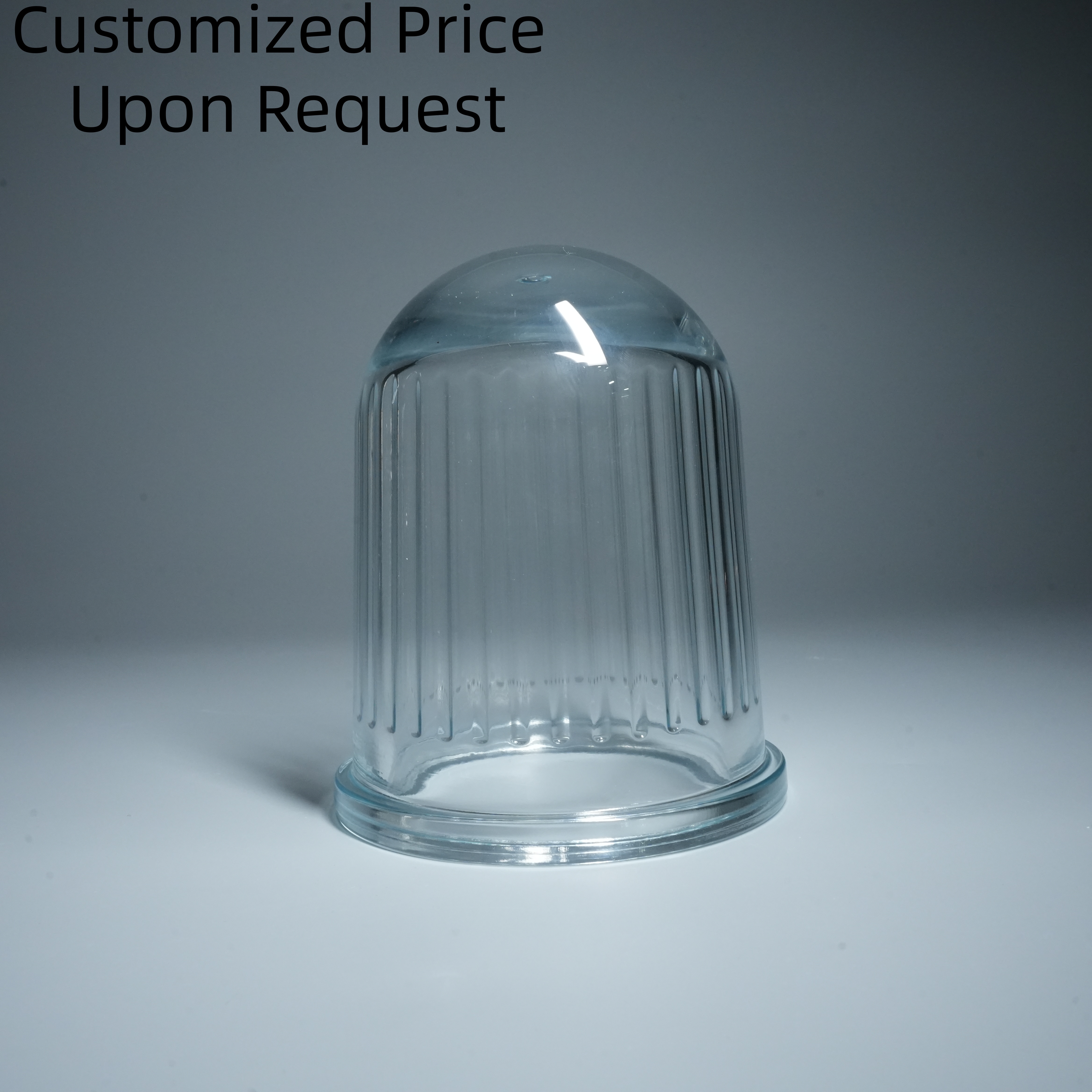
Borosilicate Transparent Explosion-proof Shade, Heat-resistant & Crack-proof, Transparent Protective Cover
Borosilicate 3.3 construction resists thermal shock and cracking in high-temperature luminaires, making it suitable for protective covers that see rapid temperature change.
View product
OEM Borosilicate Glass Optical Dome Cover for Outdoor IP Cameras UV Resistant Waterproof Housing Anti-Reflective Coating
OEM dome for outdoor IP cameras requiring UV resistance, waterproof housing integration and anti-reflective treatment. Produced to drawing with controlled optical clarity.
View product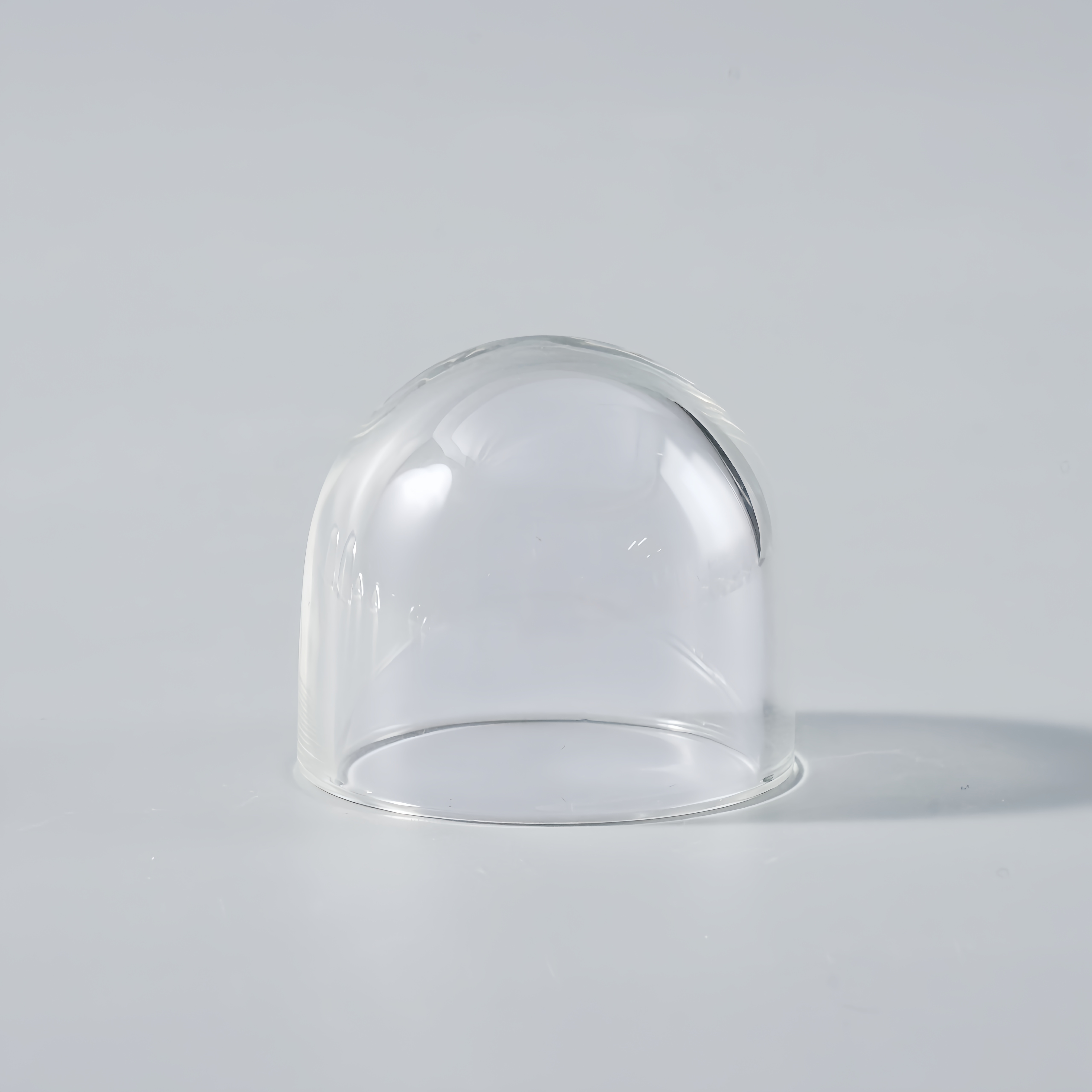
Customizable OEM Optical Glass Domes Broadband AR Coating Precision Hemispherical Windows for LiDAR Sensors Scientific
Broadband AR-coated hemispherical window for LiDAR sensors and scientific instruments. Precision geometry supports stable optical alignment and low reflection loss.
View product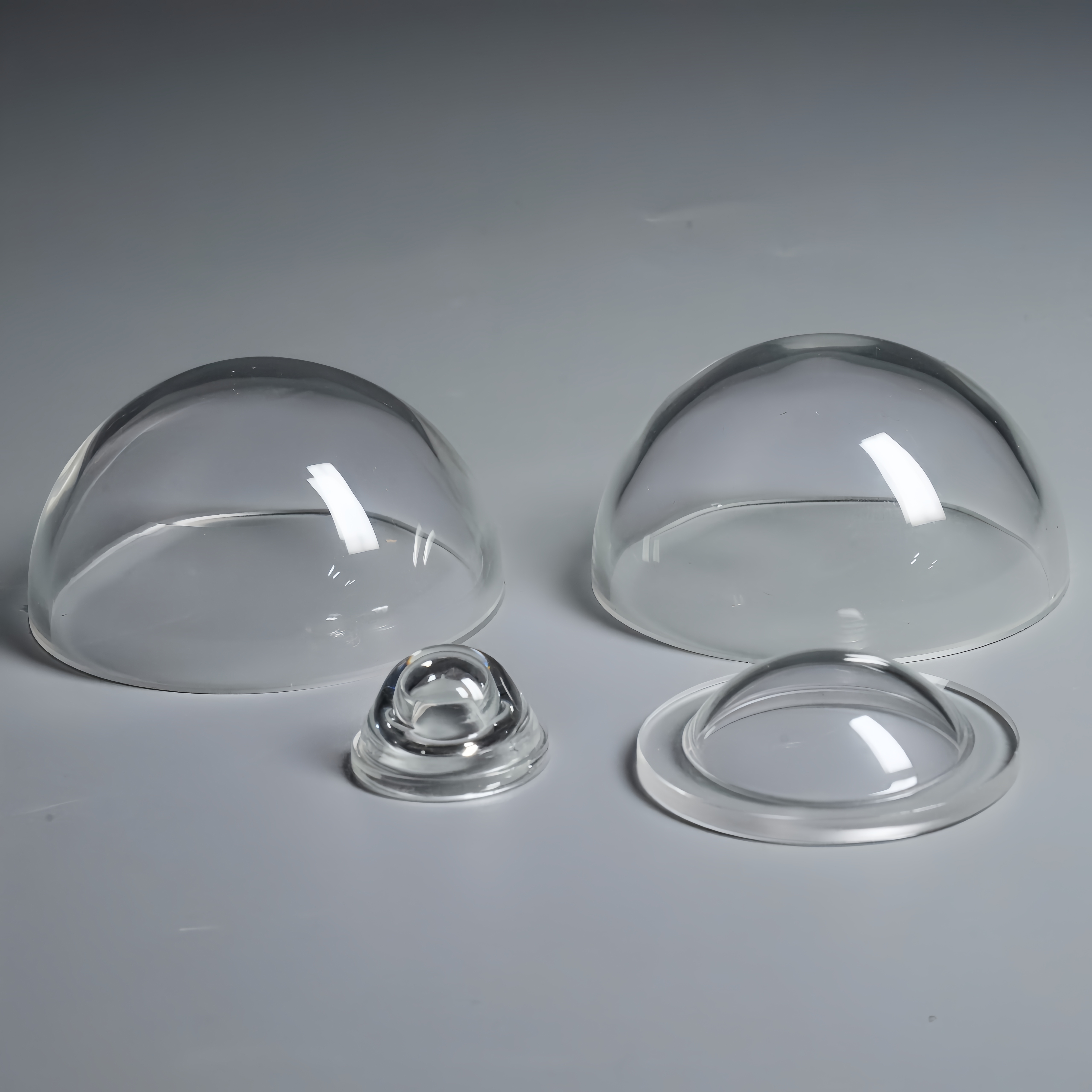
High-Pressure Borosilicate Optical Glass Dome for Underwater ROV AUV Camera Housings & Submersible Lights Deep Sea Rated
High-pressure borosilicate dome for underwater camera housings and submersible lights, engineered for pressure service, optical transmission and sealing reliability.
View product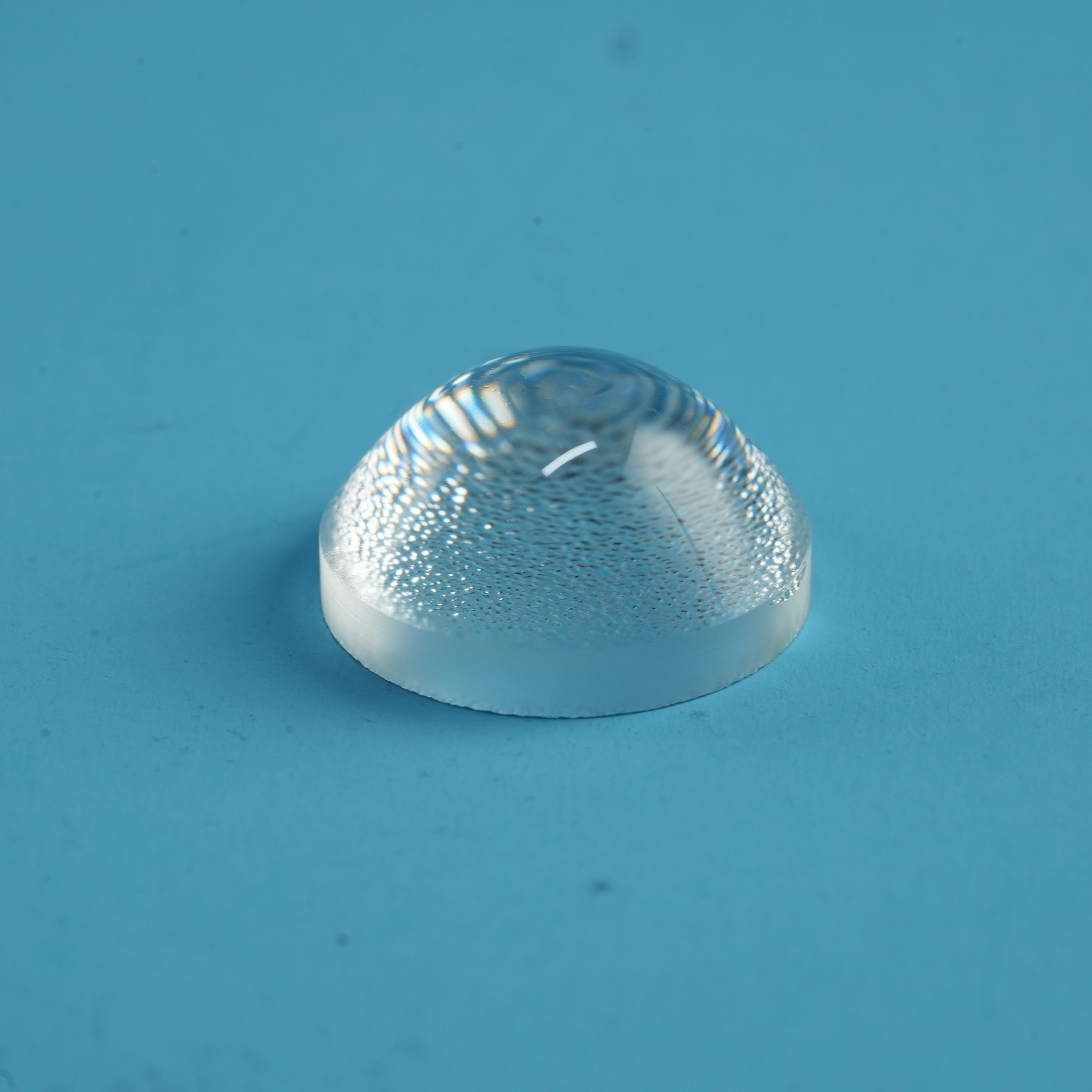
Manufacturer OEM Precision Grade BK7 K9 Optical Glass Aspherical Lens Anti-Reflective Coating Diameter 0.5-25mm MOQ 100 Pcs
BK7/K9 aspherical lens with anti-reflective coating, diameter range 0.5–25 mm and MOQ from 100 pcs. Suitable for compact imaging, projection and sensing modules.
View product
High Temperature Resistant Borosilicate Glass Fresnel Lens Anti-Reflective Coating High Power LED Collimation Stage Lighting
High-temperature borosilicate Fresnel lens with AR coating for high-power LED collimation in stage lighting, architectural luminaires and demanding optical systems.
View product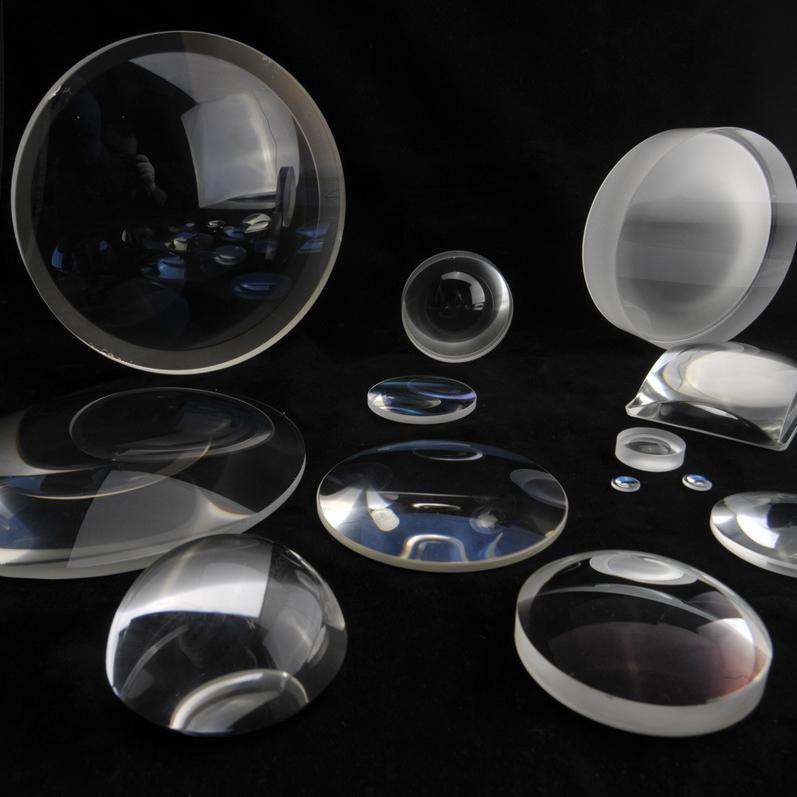
Custom High Quality Diameter 80Mm 127Mm 250Mm Spherical K9 Optical Coating Glass Plano Convex Lens for Big Magnifying
Custom K9 optical coating glass plano-convex lens in 80 mm, 127 mm and 250 mm diameters for magnification, imaging and OEM optical assemblies.
View product


Company Advantages
Why OEM Buyers Work With Tambi Glass
Shanghai Tambi Glass Industrial Co., Ltd. is a manufacturer and trading company focused on custom glass components for lighting and optical OEMs. The work is drawing-based rather than catalogue-led: buyers share 2D/3D files or physical samples, and engineering reviews wall thickness, draft, sealing faces, optical path alignment and installation loads before tooling starts.
For more than a decade, the team has focused on a practical question: how should glass perform inside a real luminaire? That experience covers heat build-up behind high-power LEDs, thermal shock from rain on a hot cover, impact loads in hazardous areas and color accuracy for signal lights.
The supplier profile is intentionally transparent. The company operates with 11–50 people, reports annual export revenue in the US$2.5M–5M range, and targets average technical inquiry response within six hours. Long-term partners in Europe, North America and Japan are supported through pressed, blown, ground and coated glass processes under one supply chain.
- Drawing-based OEM / ODM and DFM review
- Borosilicate 3.3, tempered soda-lime, fused quartz, BK7 / K9
- AR, bandpass, longpass and custom optical coatings
- Onsite-verified supplier records and factory video
- Export packing engineered for fragile glass
- Engineering response within 6 hours
Engineering White Paper
A White-Paper View: What a Precision Molded Glass Specification Must Control
A molded glass part is not a commodity blank. In service, the component must pass light, survive heat, seal against dust or water, resist impact and remain dimensionally stable over repeated production lots. The most reliable specifications link material, geometry, coating and inspection method to the fixture’s operating conditions.
Thermal shock and CTE
Borosilicate 3.3 has a low coefficient of thermal expansion, roughly 3.3 × 10⁻⁶/K, which helps it tolerate high lamp temperatures and sudden rain or cold-water contact. Tempered soda-lime glass can offer strong impact resistance at a lower cost for moderate temperatures, but the correct choice depends on surface temperature, impact rating and fixture certification.
Optical path and transmission
For domes, Fresnel lenses and plano-convex optics, optical path alignment, refractive index, transmission target and coating wavelength should be stated explicitly. Anti-reflective coatings reduce reflection loss, but coating adhesion, durability and angle of incidence also belong on the purchase drawing.
Sealing face and compression
A glass cover may look correct in a sample photo yet fail at the gasket line. Sealing face flatness, edge quality, wall thickness and tolerance stack-up affect IP ratings and assembly yield. Early DFM review helps avoid over-compression, chipping and inconsistent torque during luminaire assembly.
Impact, pressure and hazardous areas
Explosion-proof lampshades, marine signal covers and deep-sea ROV/AUV domes are not specified by thickness alone. Impact resistance, pressure rating, chemical exposure and installation orientation should be matched to the glass grade, forming method and annealing control.
Dimensional repeatability
OEM buyers need lot-to-lot repeatability, not only a good first sample. Review mold strategy, shrinkage, draft angle, annealing and inspection method together. For optical parts, diameter, center thickness, surface quality and coating target should be measurable and documented.
Coating durability and cleaning
Coatings must survive handling, installation, cleaning and the operating environment. Buyers should define coating type, wavelength range, adhesion expectation and appearance criteria. This is especially important for UV-resistant camera domes, bandpass filters and high-power LED Fresnel lenses.
| Material | Thermal expansion (×10⁻⁶/K) | Typical max. working temp. | Key strength | Best fit |
|---|---|---|---|---|
| Borosilicate 3.3 | ≈ 3.3 | ≈ 450 °C | Excellent thermal-shock resistance | Explosion-proof shades, high-power LED covers, Fresnel lenses |
| Tempered soda-lime | ≈ 9.0 | ≈ 250 °C | High impact strength, economical | Outdoor covers, floodlight glass, vandal-resistant lenses |
| Fused quartz | ≈ 0.55 | ≈ 1000 °C+ | UV transmission, extreme heat | UV optics, high-temperature windows |
| Optical BK7 / K9 | ≈ 7.1 | ≈ 300 °C | Homogeneous optical properties | Precision lenses, prisms, mirrors, filters |
Values are typical references for early specification discussions. Final specification should be confirmed against your drawing, lamp surface temperature, impact rating and the standard your fixture must meet.
Product Trends
Product Development Trends Reshaping Precision Molded Glass
Looking across lighting, sensing and instrument programs, product-level changes are already influencing drawings and purchase specifications.
Higher power density in smaller fixtures
High-power LEDs and COB modules raise surface temperatures and make thermal-shock resistance non-negotiable. Borosilicate 3.3 remains a default where temperature differentials are severe, while tempered soda-lime continues where impact and cost dominate.
Sensing becomes a volume market
LiDAR, robotics, outdoor cameras and scientific instruments require domes, windows and lenses with broadband AR coatings and tighter optical alignment. Precision molded glass competes where polymer durability and optical stability are insufficient.
Harsh-environment electrification
Hazardous areas, offshore platforms, deep-sea ROV/AUV housings and marine signal lights push demand for pressure-rated domes and crack-resistant covers. Buyers increasingly require material reports and inspection records, not only a visual sample.
Coatings as a performance feature
Anti-reflective, bandpass, longpass and protective coatings are moving from optional add-ons to defined performance requirements. Coating adhesion, wavelength target and durability expectation should be stated on the drawing before sampling begins.
Procurement Outlook
Future Procurement Trends for OEM Glass Buyers
The purchasing process is also changing. Buyers are consolidating suppliers while asking for more evidence, faster engineering feedback and lower launch risk.
Fewer suppliers, deeper qualification
Dual sourcing continues, but qualified suppliers must demonstrate process control. A second source without drawing review capability can add risk rather than remove it. Buyers are qualifying fewer partners and giving them more complete specifications.
Total landed cost replaces unit price
Field returns and line stops often exceed piece-price savings. Procurement teams now compare breakage rate, packing, lead time, inspection cost and engineering response alongside the quoted unit price.
Early supplier involvement
Drawings are shared earlier so manufacturability, tooling and tolerance stack-ups can be fixed before design freeze. For molded glass, small changes to draft, wall thickness or sealing faces can prevent expensive tooling revisions.
Audit-ready traceability
Material batch, inspection records, coating parameters and packing lists support quality teams and customer audits. For FAA L-810 and EN 50293-related fixture programs, the luminaire manufacturer holds certification, so component documentation must align with their quality system.
Launch-friendly MOQs
New products often start at 50–500 pcs, depending on optical versus pressed or blown lighting parts. Sample quantities and existing mold options help buyers validate fit, light output and packaging before committing to volume.
Packaging and sustainability
Pulp dividers, recyclable cartons and optimized palletization are part of procurement scorecards, especially for fragile glass with high return risk. Custom labeling and distributor-ready packaging can reduce handling at destination.
Manufacturing Advantages
Company Advantages in Precision Molded Glass Manufacturing
The strongest supplier is not the one with the longest catalogue. It is the one that can turn a drawing into a repeatable part, document the process and keep engineering communication clear from sample to shipment.
Drawing-led engineering
Senior lighting and molding engineers review drawings for wall thickness, draft, sealing faces and optical path alignment before tooling. This DFM step is where many field failures are prevented.
Multi-material capability
Borosilicate 3.3, tempered soda-lime, fused quartz and BK7/K9 can be matched to thermal, optical and impact requirements. Pressed, blown, ground and coated processes are coordinated under one supply chain.
Coating and optical integration
AR, bandpass, longpass and color coatings can be specified with the base glass instead of sourced separately. This reduces alignment risk, shortens qualification cycles and keeps optical performance tied to one inspection plan.
Verification and transparency
Supplier assessment, credit index, transaction level, trade capacity, trade history and buyer reviews are available for procurement review. Factory video and third-party audit discussion help buyers complete supplier qualification faster.
Fast technical response
Average response time is within six hours. Sending a drawing, annual volume, operating temperature and coating target allows the team to return a more useful technical and commercial review rather than a generic price list.
Export-ready packing
Foam or pulp dividers, reinforced export cartons and palletization for sea or air freight protect fragile glass parts. Custom packaging and labeling can be arranged for distributors and OEM assembly lines.
OEM Workflow
From Drawing to Repeat Production: A Controlled Six-Step Workflow
Clear checkpoints reduce surprises between sample approval and mass production.
Drawing review and DFM
Review thickness, draft, tolerance, sealing face, optical path and installation load before tooling.
Mold and tooling strategy
Select new or existing molds for pressing, blowing or grinding, with a clear sampling plan.
Sampling and fit test
Measure samples and send them for housing fit, gasket compression and light-output evaluation.
Forming and annealing
Control forming and annealing or tempering to relieve stress and stabilize production lots.
Coating and quality control
Apply AR or color coating, then inspect dimensions, appearance, coating and optical criteria.
Export packing
Divider-packed cartons and palletized freight protect fragile glass from factory to assembly line.
Buyer FAQ
Procurement FAQ for Custom OEM Precision Molded Glass
These are the questions technical and purchasing teams most often ask before requesting a sample or quotation.
Can you manufacture glass covers and lenses to my own drawing?
Yes. Most orders are drawing-based. Send a 2D/3D drawing or a physical sample with dimensions, tolerance, material, color and coating requirements. Engineers review manufacturability, propose mold options and confirm samples before mass production.
What is the typical minimum order quantity?
Typical MOQs range from 50 pieces for optical lenses to 100–500 pieces for pressed or blown lighting covers, depending on whether an existing mold can be used. Sample quantities are available for evaluation.
Should I choose borosilicate glass or tempered soda-lime glass?
Borosilicate 3.3 has low thermal expansion of about 3.3 × 10⁻⁶/K, so it tolerates high lamp temperatures and sudden cold-water contact better. Tempered soda-lime glass offers high impact strength at lower cost for moderate temperatures. The right choice depends on surface temperature, impact rating and fixture certification.
Do you supply glass for FAA L-810 and EN 50293 lighting fixtures?
Glass lenses and domes are produced for fixture makers whose obstruction and signal lights are designed to FAA L-810 or EN 50293 requirements. Fixture certification is held by the luminaire manufacturer; component color, transmission and dimensional specifications are matched to the drawing, and material or inspection reports can be provided on request.
How fast do you reply to technical inquiries?
The average response time is within six hours. Include your drawing and annual volume for a technical and commercial review. For early-stage projects, a sketch with critical dimensions and operating temperature is enough to begin the discussion.
How are fragile glass parts packed for export?
Parts are separated by foam or pulp dividers, packed in reinforced export cartons and palletized for sea or air freight. Custom packaging and labeling for distributors or assembly lines can be arranged to reduce handling risk.
What drawing files and data should I send?
Send 2D/3D drawings, material preference, dimensions and tolerances, color or transmission target, coating requirement, annual volume, maximum operating temperature, impact or IP requirement and any fixture certification the component must support.
How is optical performance protected in production?
Performance should be defined before quoting: transmission range, coating wavelength, surface quality, dimensional tolerance and appearance criteria. Production inspection then checks these criteria and can include material and inspection reports when required by the buyer’s quality system.
Have a Drawing? Get an Engineering Review Within 6 Hours.
Send dimensions, material, operating temperature, coating target and annual volume. The team will review manufacturability, suggest the right glass grade and outline a practical path from sample to repeat production.