Custom OEM Hand Blown Glass Manufacturer & Suppliers
Drawing-based borosilicate, tempered and optical glass components for lighting, aviation, marine, LiDAR and industrial OEM programmes—engineered for thermal shock, optical precision and repeatable production.
Eight Glass Components Buyers Ask Us to Engineer First
The list below reflects the custom enquiries our team handles most often: hand-blown and pressed lighting covers, optical windows, lenses, prisms and filters. Each item can be adapted in size, thickness, colour, coating and sealing-face finish to match your housing, gasket and optical stack.

Factory Customized Size Shape Color Heat Resistant High Quality Borosilicate Glass Car Light Accessories Traditional Industrial
Heat-resistant borosilicate cover for automotive and industrial light chambers. Size, shape and colour are tooled from your drawing, with secondary grinding to protect the sealing face.
View product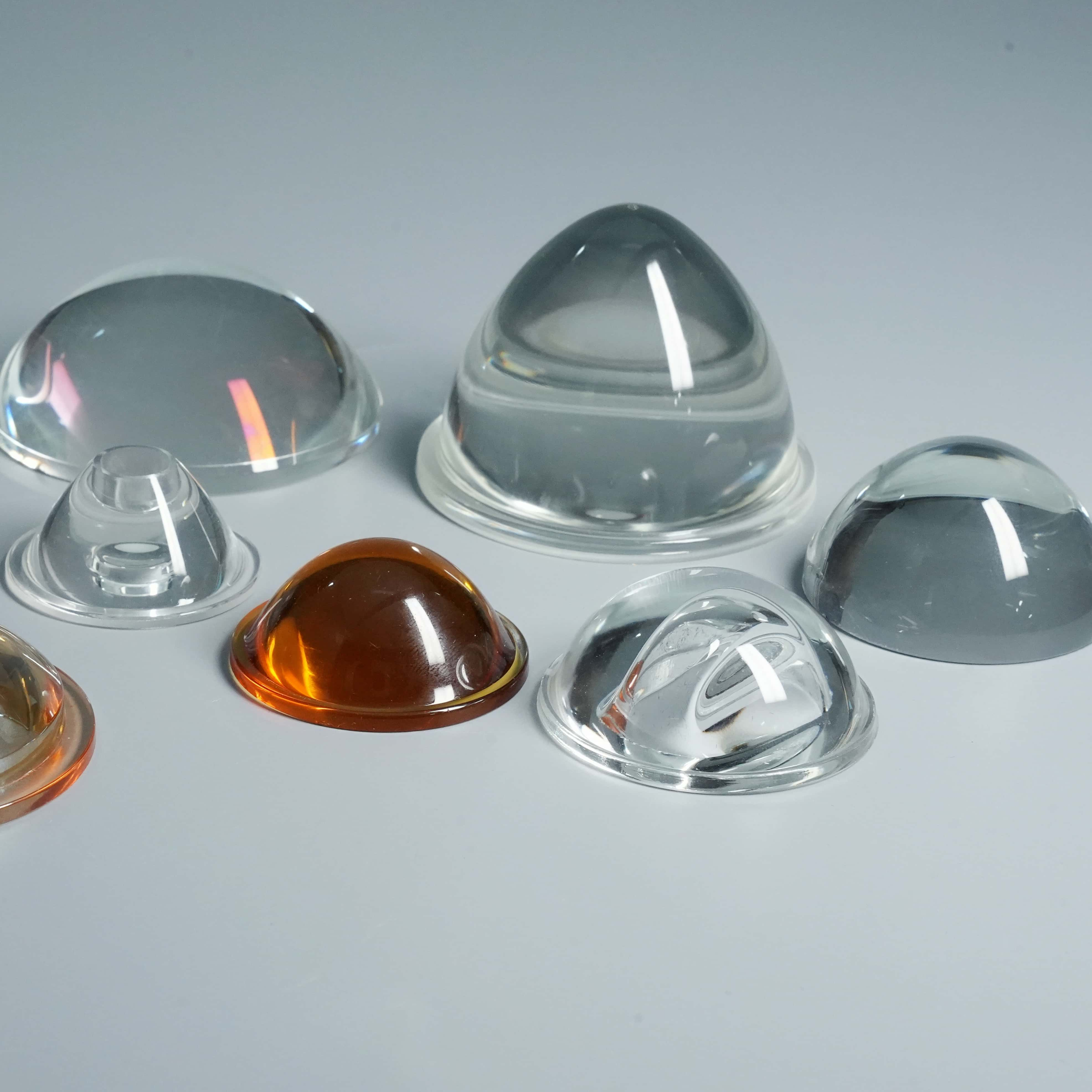
Custom Borosilicate Glass LED Grow Light Convex Lens with Anti-Reflective Coating for Indoor Farming Full Spectrum Lighting
Convex LED grow-light lens with AR coating for full-spectrum horticultural fixtures. The glass body resists UV and thermal load while maintaining stable spectral transmission.
View product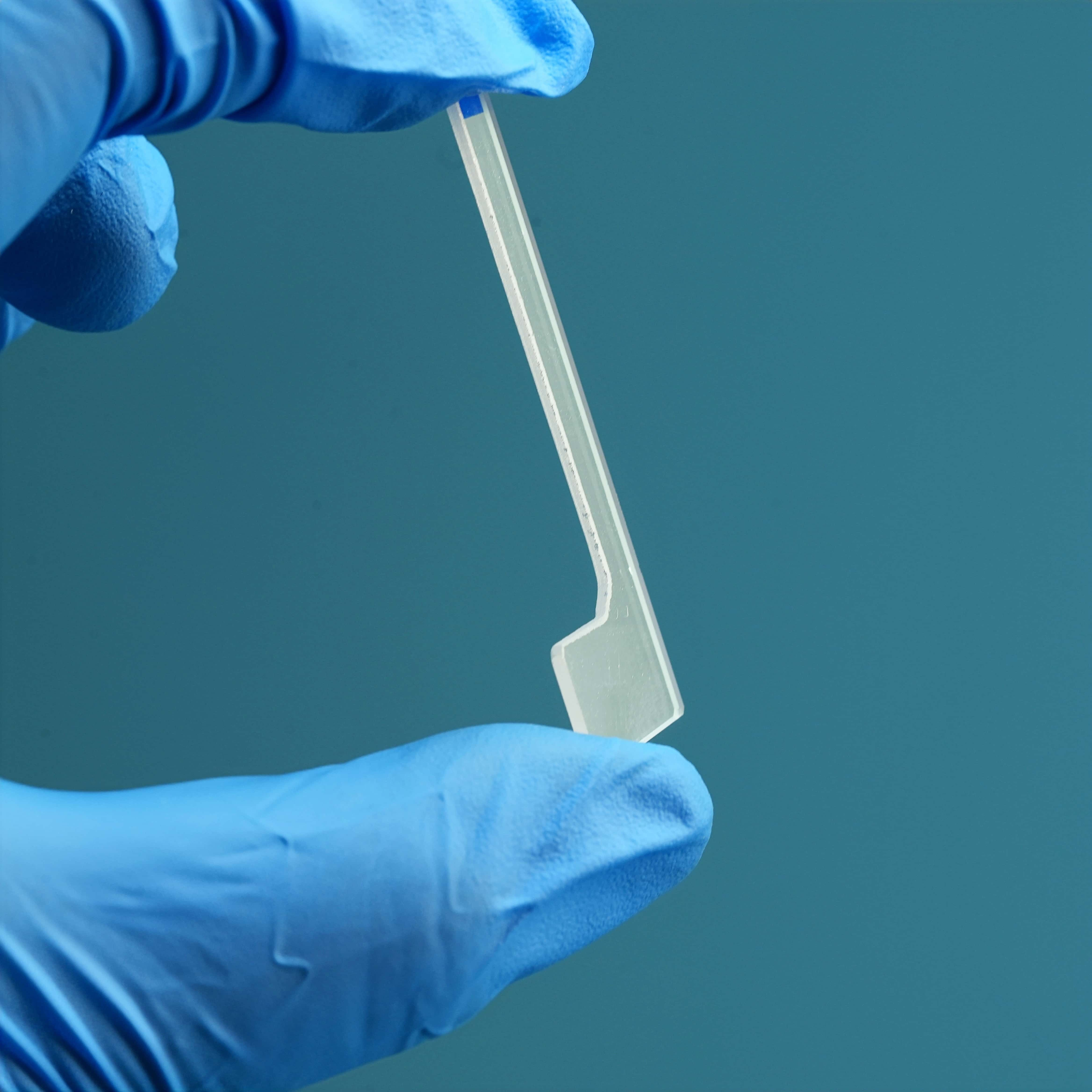
Anamorphic Prism Pair for Laser Beam Shaping Circularizing Elliptical Beams for Fiber Coupling Applications
Anamorphic prism pair for circularizing elliptical laser beams in fibre coupling. Angle, coating and pair matching are reviewed before polishing and assembly.
View product
Custom OEM Bo Glass Clear Borosilicate K9 Bk7 B270 Fused Silica Anti-Reflective Coated Square Optical Window 50mm Diameter
50 mm square optical window in borosilicate, K9/BK7, B270 or fused silica. AR coatings and edge finishes are specified against transmission and housing requirements.
View product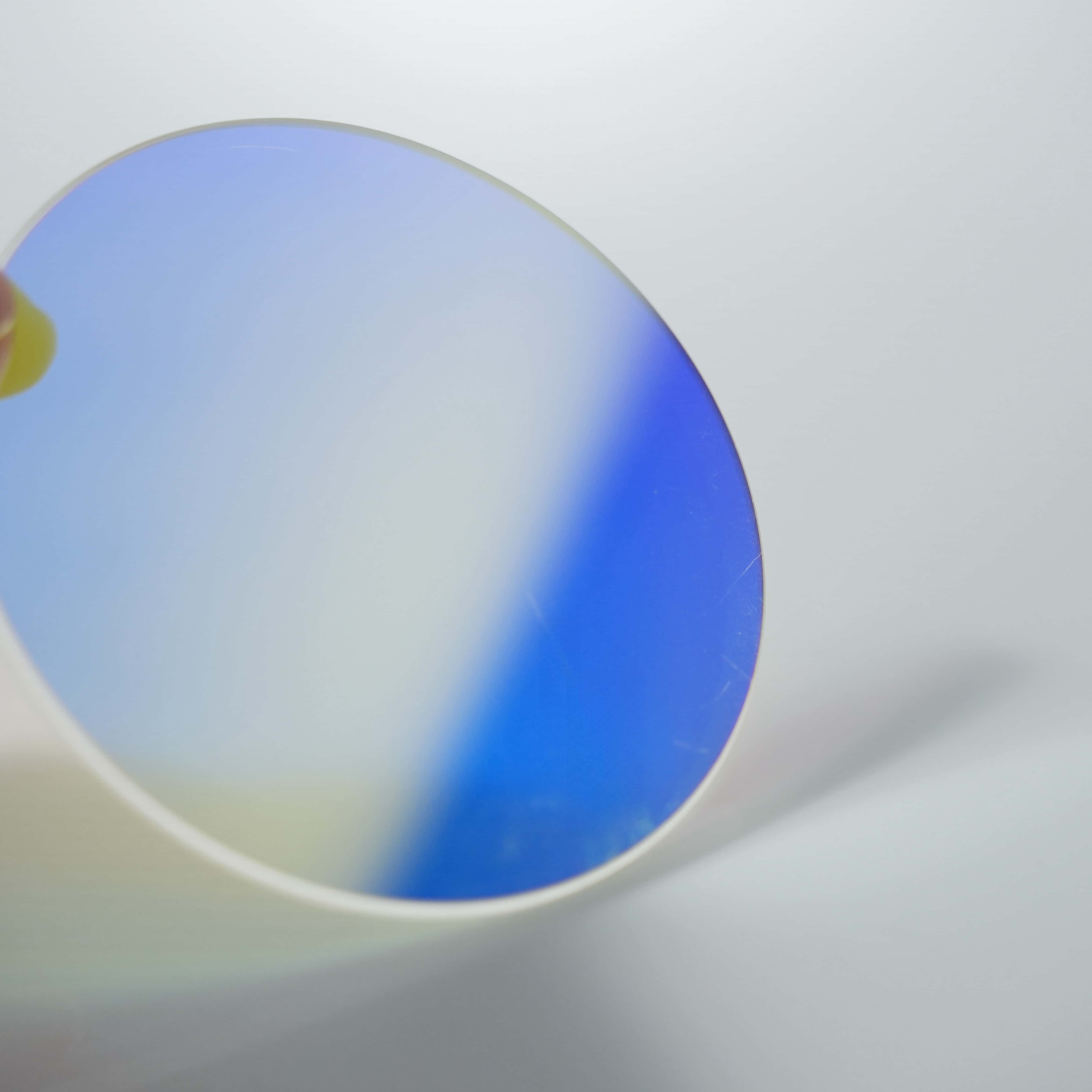
Optical Borosilicate Glass Longpass Shortpass Filter 500nm 600nm 700nm AR Coating Cut-Edge for Spectroscopy Industrial Sensor
Longpass and shortpass filters for spectroscopy and industrial sensors. 500, 600 and 700 nm cut-edge options; AR coating supports signal-to-noise in compact optical stacks.
View product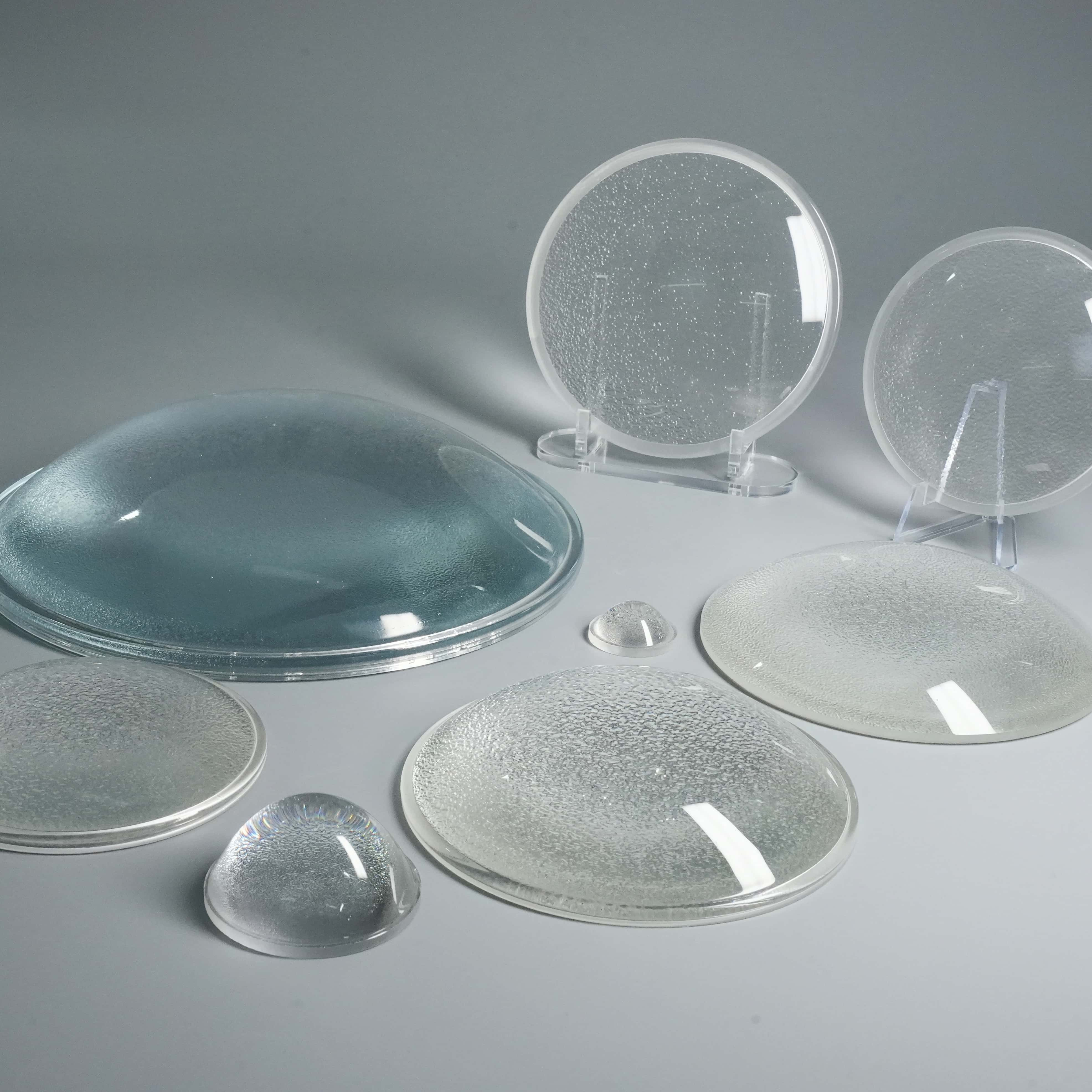
Bo Glass Asymmetric LED Lens Roadway Street Light Reduces Light Pollution Glare Borosilicate Glass UV Protection OEM
Asymmetric borosilicate street-light lens for roadway optics. Designed to reduce glare and light pollution through controlled distribution and UV protection for outdoor LED modules.
View product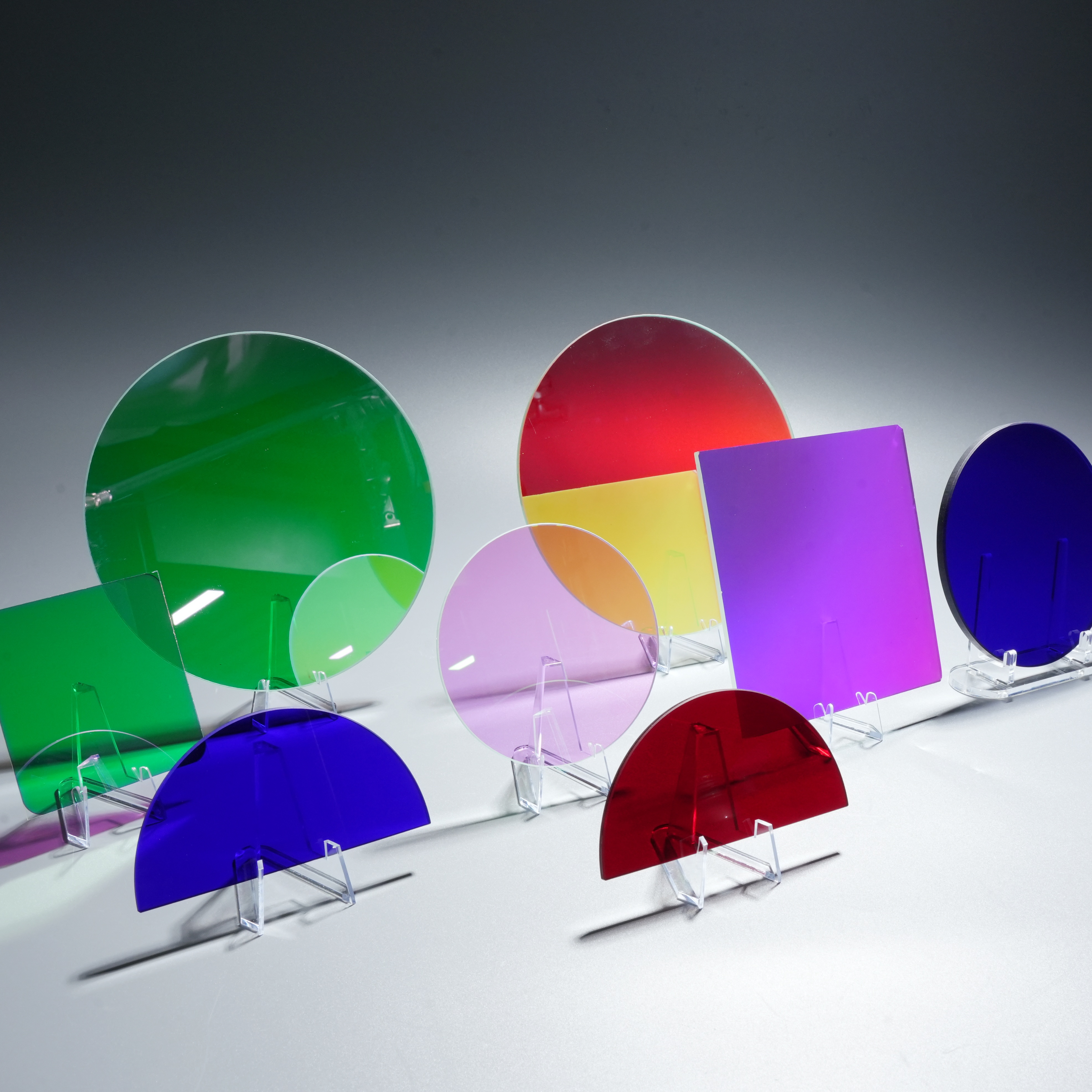
BO-GLASS BO-AH242 Manufacturer Customized High Precision 590Nm 49Mm Coated UV Borosilicate Bandpass Longpass Optical Filter
High-precision 590 nm bandpass and longpass filter with a 49 mm format. Coated UV borosilicate construction for sensing, instrumentation and wavelength-selective assemblies.
View product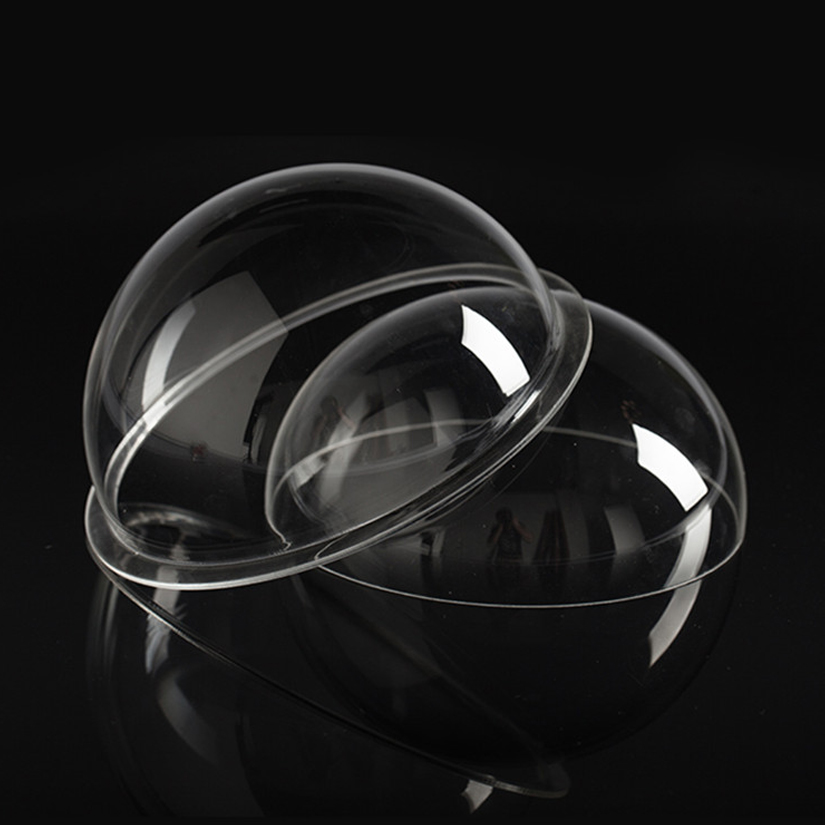
OEM Borosilicate Glass Optical Dome Cover for Outdoor IP Cameras UV Resistant Waterproof Housing Anti-Reflective Coating
Outdoor IP-camera optical dome with UV-resistant housing, waterproof sealing interface and AR coating. Custom diameters, flange details and transmission targets are supported.
View productTambi Glass OEM glass manufacturing capabilities
Hand Blowing Is Not Nostalgia. It Is a Controlled Route to Custom Geometry.
In custom OEM glass, hand blowing is often misunderstood as a low-volume craft process. In practice it is a flexible forming route for shapes that cannot be economically pressed at low volume, for thick-wall covers that need a seamless optical surface, and for programmes where hard tooling would delay a launch. The value lies in design freedom before investment, not in craft for its own sake.
A lighting or optical part is only one element in a system. Thermal expansion, gasket compression, lamp surface temperature, rain shock, UV exposure and coating durability decide whether the component survives field service. That is why a useful supplier reviews the drawing in the context of the luminaire: wall thickness, draft, sealing faces, optical-axis alignment, annealing and export packing. A good sample can still become a bad production lot if those variables are not controlled.
The most reliable approach is usually hybrid: hand blowing or pressing for the blank, CNC grinding for critical interfaces, controlled annealing or tempering for stress, and AR or spectral coating for optical performance. This creates information gain for buyers—documented material, measured geometry, transmission data and an inspectable path from prototype to repeat order.
- Drawing-based OEM / ODM and DFM review
- Borosilicate 3.3, tempered, fused quartz and BK7
- Blown, pressed, ground and AR-coated routes
- Onsite-verified supplier with export records



Material Selection Matrix: Match Glass to Thermal and Optical Duty
Use this as a starting point, not a final specification. The right material depends on lamp surface temperature, impact rating, colour and transmission targets, sealing method and the standard your fixture must meet.
| Material | Thermal expansion (×10⁻⁶/K) | Typical max. working temp. | Key strength | Best for |
|---|---|---|---|---|
| Borosilicate 3.3 | ≈ 3.3 | ≈ 450 °C | Excellent thermal-shock resistance | Explosion-proof shades, high-power LED covers, Fresnel lenses |
| Tempered soda-lime | ≈ 9.0 | ≈ 250 °C | High impact strength, economical | Outdoor covers, floodlight glass, vandal-resistant lenses |
| Fused quartz | ≈ 0.55 | ≈ 1000 °C+ | UV transmission, extreme heat | UV optics, high-temperature windows, laser components |
| Optical BK7 (H-K9L) | ≈ 7.1 | ≈ 300 °C | Homogeneous, nd ≈ 1.517 | Precision lenses, prisms, mirrors, filters |
Values are typical references. Final specification is confirmed against your drawing, lamp surface temperature, impact rating and the certification requirements of the finished fixture. For borosilicate versus tempered glass, the decisive question is often thermal shock plus gasket load, not glass thickness alone.
A Supplier You Can Qualify, Not Just a Price List
Shanghai Tambi Glass Industrial Co., Ltd. combines manufacturing and trading in one export-facing team. That structure helps buyers move from drawing review to tooling, sampling, inspection and shipment without losing technical context between departments.
10+ Years in Lighting and Optical Glass
Our experience is concentrated in covers, domes, lenses, prisms and filters for lighting and optical OEMs—not in generic glass trading. That focus helps us identify thermal, sealing and coating risks earlier.
Drawing-Based OEM / ODM and DFM Review
Send a 2D/3D drawing or a physical sample. Our engineers check wall thickness, draft, tolerance, sealing faces and optical alignment before a mold or production route is confirmed.
Process Breadth Under One Supply Chain
Hand blowing, pressing, grinding, polishing, annealing, tempering and AR coating can be coordinated around one part. The route is chosen from geometry, volume and optical duty rather than habit.
Coating, Colour and Optical Inspection
AR coating, bandpass and longpass filters, coloured signal glass and transmission targets are checked against the agreed drawing. Inspection reports and material information can be supplied on request.
Verified Trading and Manufacturing Records
Supplier assessment, credit index, transaction level and trade capacity are available for procurement review. Third-party verification and factory video support faster supplier onboarding.
Export-Ready Packing and ≤6h Response
Fragile glass parts are separated with foam or pulp dividers, packed in reinforced cartons and palletized for sea or air freight. Technical enquiries are typically answered within six hours.
How OEM Buyers Will Source Hand-Blown and Optical Glass Through 2030
Custom glass procurement is shifting from catalogue purchasing toward drawing-led co-development. The strongest suppliers will not simply quote a part; they will provide evidence that the part can remain stable across tooling, sampling, volume production and field service.
Drawing-Led Co-Development Replaces Catalogue Buying
More lighting and sensing projects begin with a housing, a thermal model and a target transmission curve—not an existing part number. Buyers will favour suppliers who can comment on manufacturability before tooling commitment.
Total Cost of Ownership Beats Piece Price
Procurement teams are calculating yield, field returns, packing loss and assembly time into the landed cost. A slightly higher piece price can be cheaper if the glass fit, coating and sealing face reduce rework.
Data Packages Become Part of the Quote
Material certificates, dimensional reports, transmission data and coating verification are increasingly requested before a purchase order. Buyers want quote assumptions to be visible, not hidden in email threads.
Dual Sourcing and Continuity Planning
Mold ownership, duplicate tooling and documented process windows are becoming part of risk planning. For custom glass, continuity depends on drawings, tooling records and repeatable annealing—not only on finished stock.
Process Capability Replaces Final Inspection Alone
Final inspection cannot correct an unstable forming or annealing process. Buyers will ask more about process control, sample approval criteria and change management than about a single visual check at shipment.
Packaging Engineering Protects Margin
Fragile glass can absorb the value of a good production run through poor packing. Divider systems, palletization, moisture protection and distributor labelling are becoming standard parts of the supply brief.
Supplier Qualification Priorities
Directional buyer-priority index based on custom OEM glass project briefs reviewed by Tambi Glass in 2024–2025. It is a planning signal, not a market statistic.
What the Next Generation of Glass Components Must Deliver
Higher brightness, tighter sensing and more compact housings are pushing glass parts beyond simple transparency. The winning designs will balance optical performance with thermal reliability, sealing and assembly tolerance.
Higher Thermal Loads From LED and Laser Systems
High-brightness LED, stage lighting and laser modules create local heat that challenges soda-lime glass. Borosilicate 3.3 and fused quartz routes will continue to grow where thermal shock and UV load are critical.
AR-Coated Domes for LiDAR, Robotics and Vision
Sensing systems need windows and domes that transmit more light and reject stray reflections. Broadband AR coating, precise curvature and robust sealing interfaces are becoming baseline requirements.
Spectral Stability for Sensing and Horticulture
Grow lights, industrial sensors and spectroscopy modules depend on repeatable transmission. Buyers will ask for coating curves and lot-to-lot consistency, not only a nominal wavelength.
Thin-Wall Blown Covers With Gasket-Ready Faces
Designers want lighter covers without losing strength at the sealing face. Hand blowing can create the shell, while secondary grinding creates the flat, controlled contact surface that assembly teams need.
Hybrid Assemblies and System-Level Optics
Glass is increasingly quoted with coatings, metalized zones, mounting features or matched prism pairs. Suppliers who understand the optical stack can reduce tolerance stack-up between separate vendors.
Sustainability and Design for Disassembly
Buyers are reviewing recyclable packaging, energy use and material documentation. Glass itself is durable and recyclable, but the real gain comes from designing covers and filters that can be separated, reworked or replaced efficiently.
A Controlled Six-Step OEM Process
Clear checkpoints reduce surprises between sample approval and mass production. The exact route changes for hand-blown covers, pressed lenses and coated optical windows, but the control logic remains the same.
Drawing Review
DFM check of thickness, draft, tolerance, sealing face, optical axis and gasket interface before quoting.
Mold and Tooling
New or existing molds are selected for pressing, blowing or grinding, with tooling ownership and change points agreed.
Sampling
Samples are measured, packed and sent for your fit, light and coating test. Approval criteria are documented.
Forming and Annealing
Controlled forming, annealing or tempering relieves stress and stabilises the part for downstream processing.
Coating and QC
AR or spectral coating, dimensional inspection, visual inspection and agreed reports are completed before packing.
Export Packing
Divider-packed cartons, reinforced outer packaging and palletization for sea or air freight reduce breakage risk.
Questions Buyers Ask Before Releasing a Purchase Order
Can you manufacture glass covers and lenses to my own drawing?+
Yes. Most orders are drawing-based. Send a 2D/3D drawing or a physical sample with dimensions, tolerance, material, colour and coating requirements. Our engineers review manufacturability, propose mold options and confirm samples before mass production. For hand-blown covers, the review usually focuses on wall thickness, opening diameter, sealing face and annealing requirements.
What is the typical minimum order quantity?+
Typical MOQs range from 50 pieces for optical lenses to 100–500 pieces for pressed or blown lighting covers, depending on whether an existing mold can be used. Sample quantities are available for evaluation. If your programme is still at prototype stage, tell us the expected annual volume so the tooling and process route can be planned properly.
Should I choose borosilicate glass or tempered soda-lime glass?+
Borosilicate 3.3 has a low thermal expansion of about 3.3 × 10⁻⁶/K, so it tolerates high lamp temperatures and sudden rain or cold-water contact better. Tempered soda-lime glass offers high impact strength at a lower cost for moderate temperatures. The right choice depends on surface temperature, impact rating, sealing method and the certification of your fixture.
Do you supply glass for FAA L-810 and EN 50293 lighting fixtures?+
We produce glass lenses and domes for fixture makers whose obstruction and signal lights are designed to FAA L-810 or EN 50293 requirements. Fixture certification is held by the luminaire manufacturer; we match colour, transmission and dimensional specifications and can provide material and inspection reports on request.
How do you control thermal shock and optical coating quality?+
The control plan depends on the part. For lighting covers, we review glass type, wall thickness, annealing or tempering, gasket load and expected temperature cycling. For optical parts, we confirm substrate, coating design, transmission target and inspection method. We do not replace your fixture-level validation; instead, we provide agreed material and inspection data so your qualification team can make an informed decision.
How fragile glass parts are packed for export, and how fast do you reply?+
Parts are separated by foam or pulp dividers, packed in reinforced export cartons and palletized for sea or air freight. Custom packaging and labelling for distributors can be arranged. Our average response time is within six hours—email info@tambiglass.com with your drawing, annual volume and any standard requirement for a technical and commercial review.
Have a Drawing? Get an Engineering Review Before You Commit to Tooling.
Share your dimensions, material, operating temperature, annual volume and any coating or certification requirement. Our team will review the part in the context of your fixture, then recommend a practical glass route for sampling and production.
info@tambiglass.com