8 Safety Glass Products Wholesale Buyers Source Directly From a Top China Factory
These are the parts our buyers reorder most often. Every item can be adjusted in size, wall thickness, colour, coating and edge finish so it fits your housing, your gasket and your optical path — not the other way around.
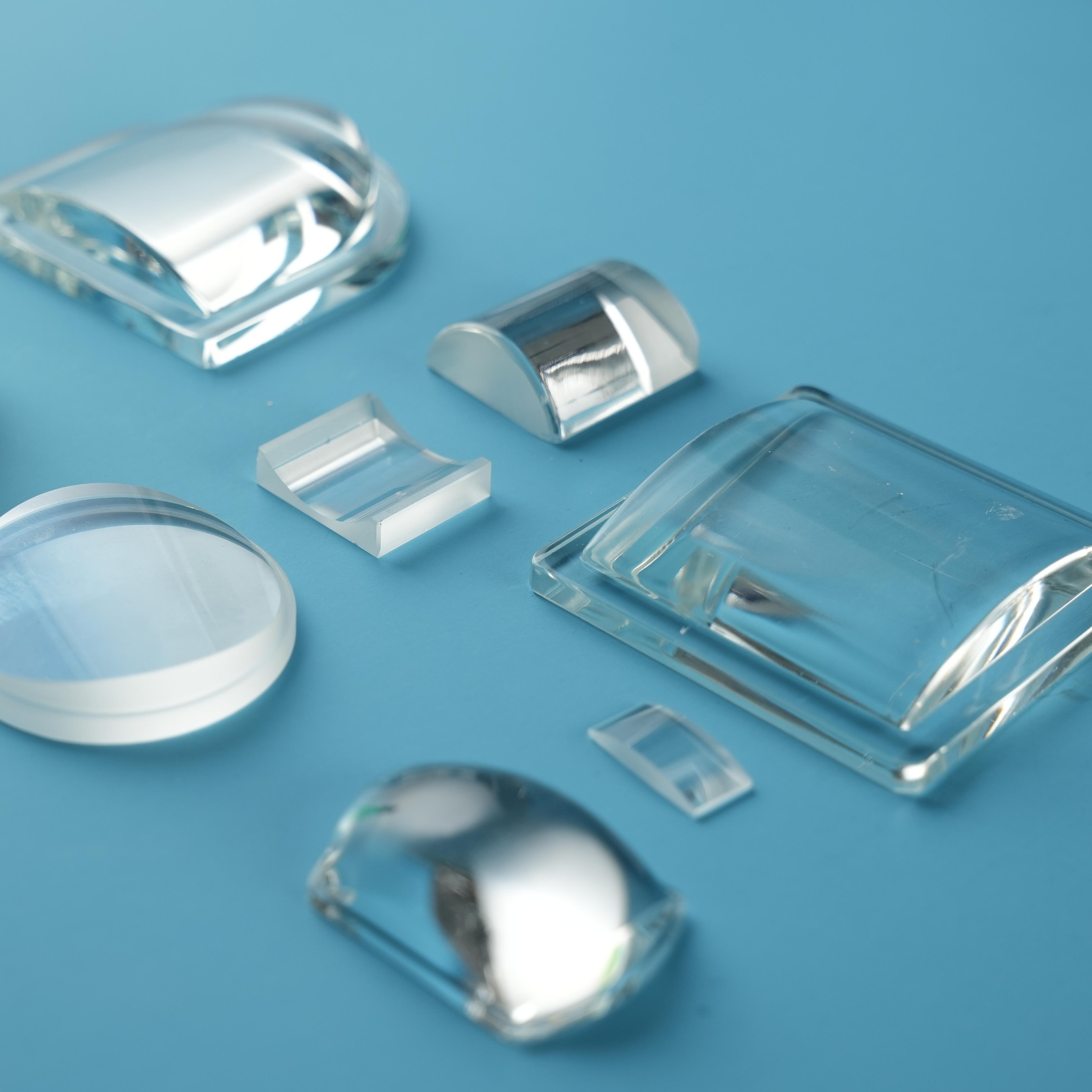
Anti-Reflective Laser Borosilicate Optical Glass
UVC plano convex, cylindrical and biconvex lenses with broadband AR coating for laser and sensing systems.
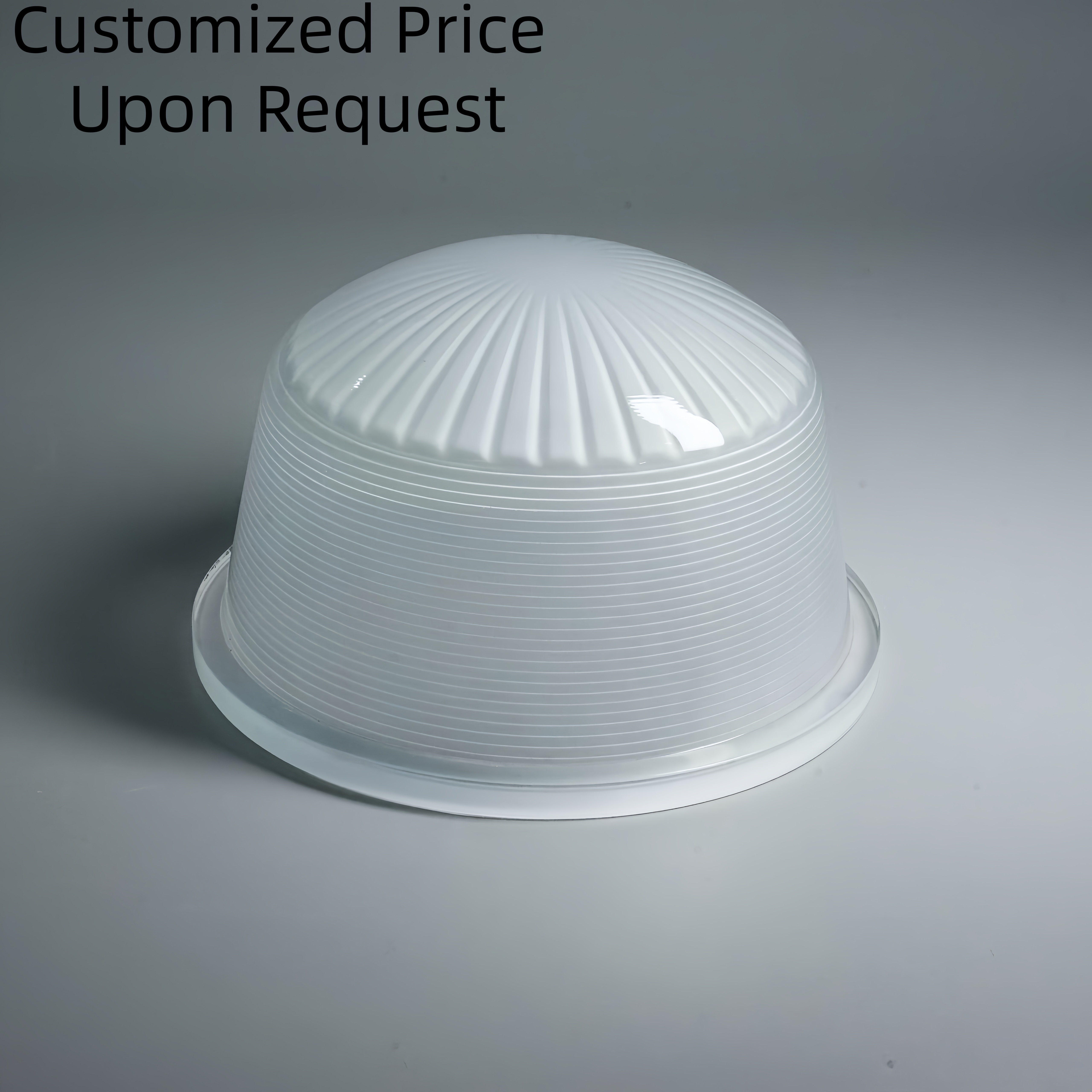
Transparent Explosion-Proof Glass Shade
High light transmittance safety glass shade for industrial workshop fixtures exposed to heat and impact.
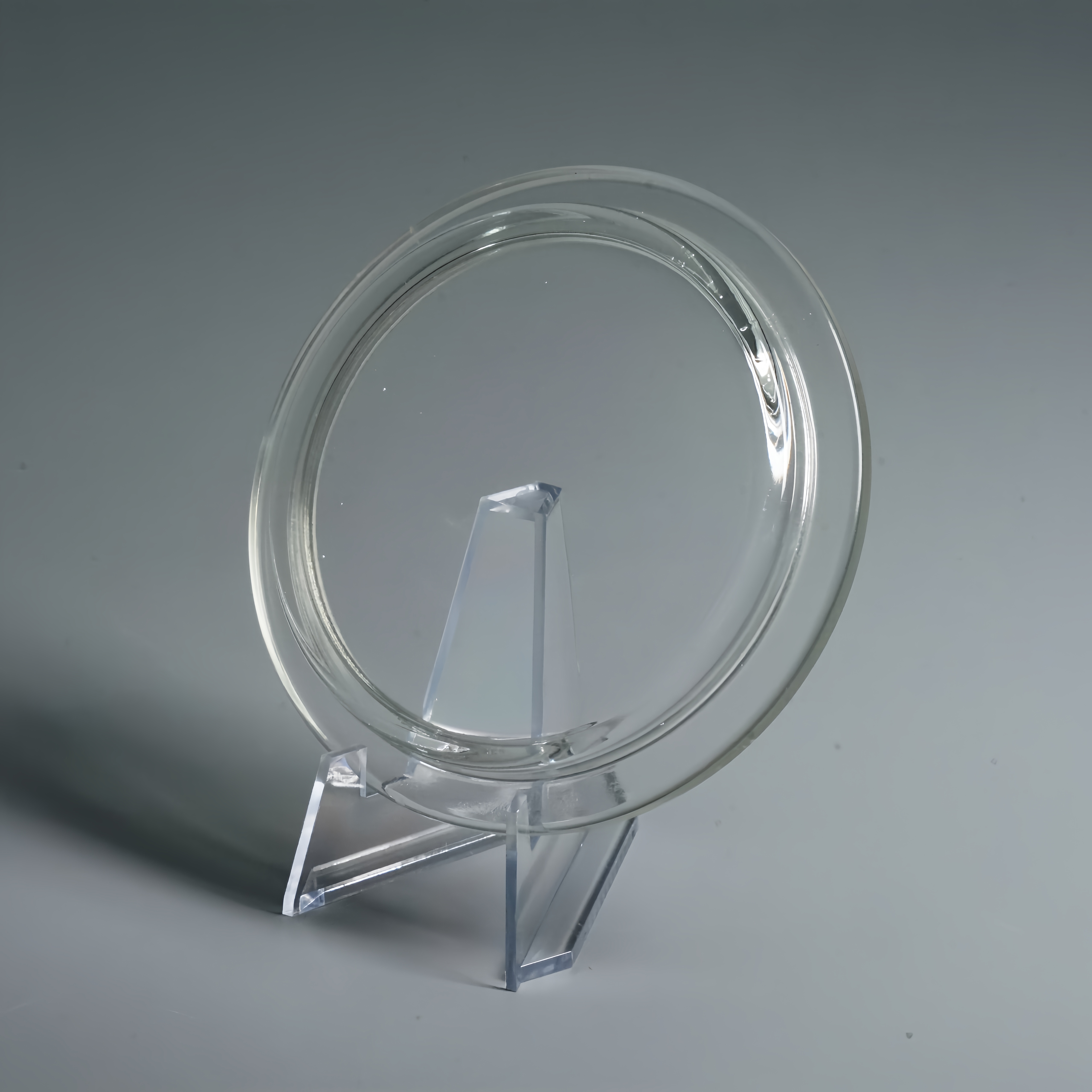
Custom Size Coastal Victorian Outdoor Stage Glass Lampshade
Waterproof, high-temperature and impact-resistant outdoor shade with optional silk-printed branding.

Precision Optical BK7 Spherical & Half Ball Lens
1–200 mm clear BK7 and quartz lenses, concave or biconvex, polished and AR coated to your tolerance.
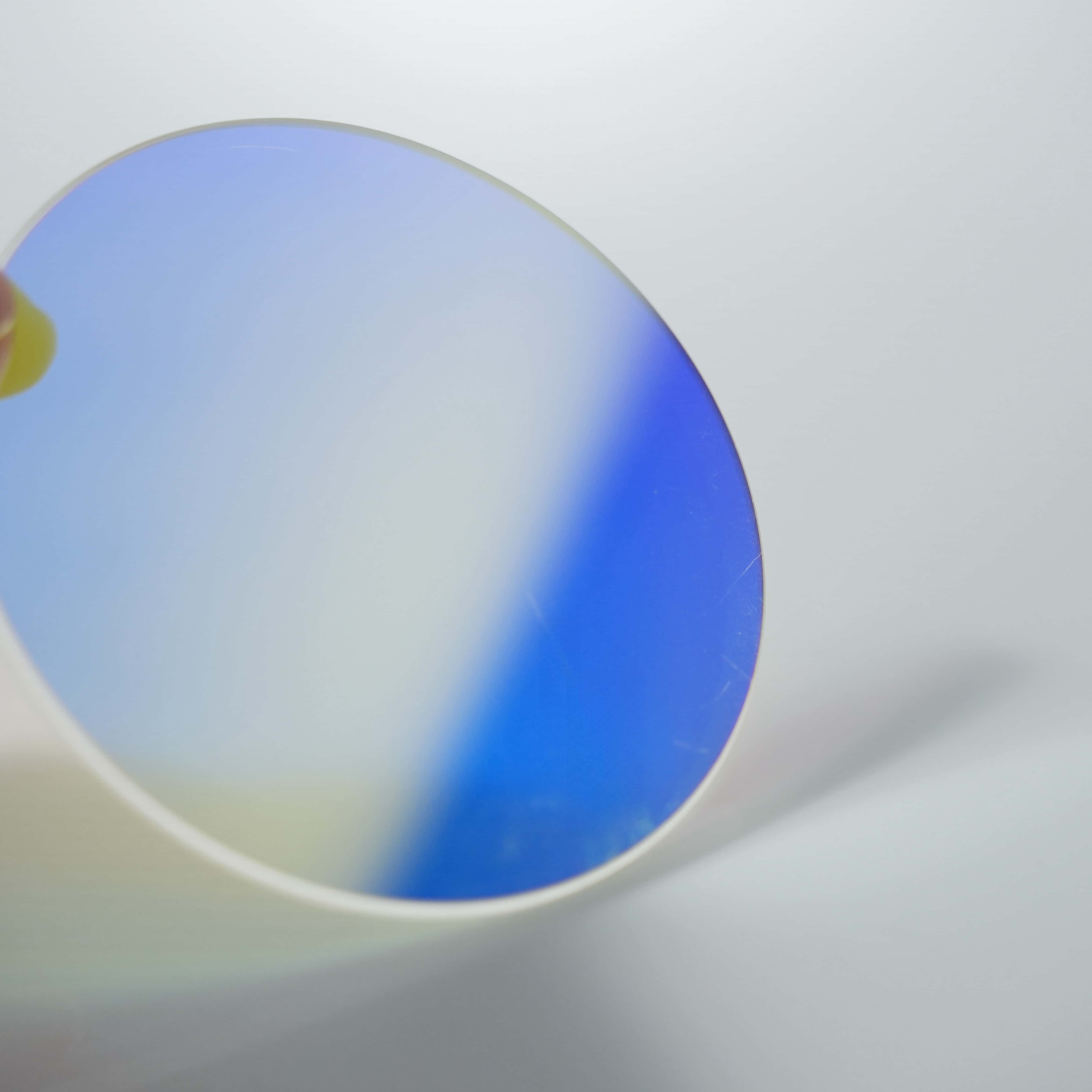
Optical Borosilicate Longpass / Shortpass Filter
500 nm, 600 nm and 700 nm cut-edge filters with AR coating for spectroscopy and industrial sensors.
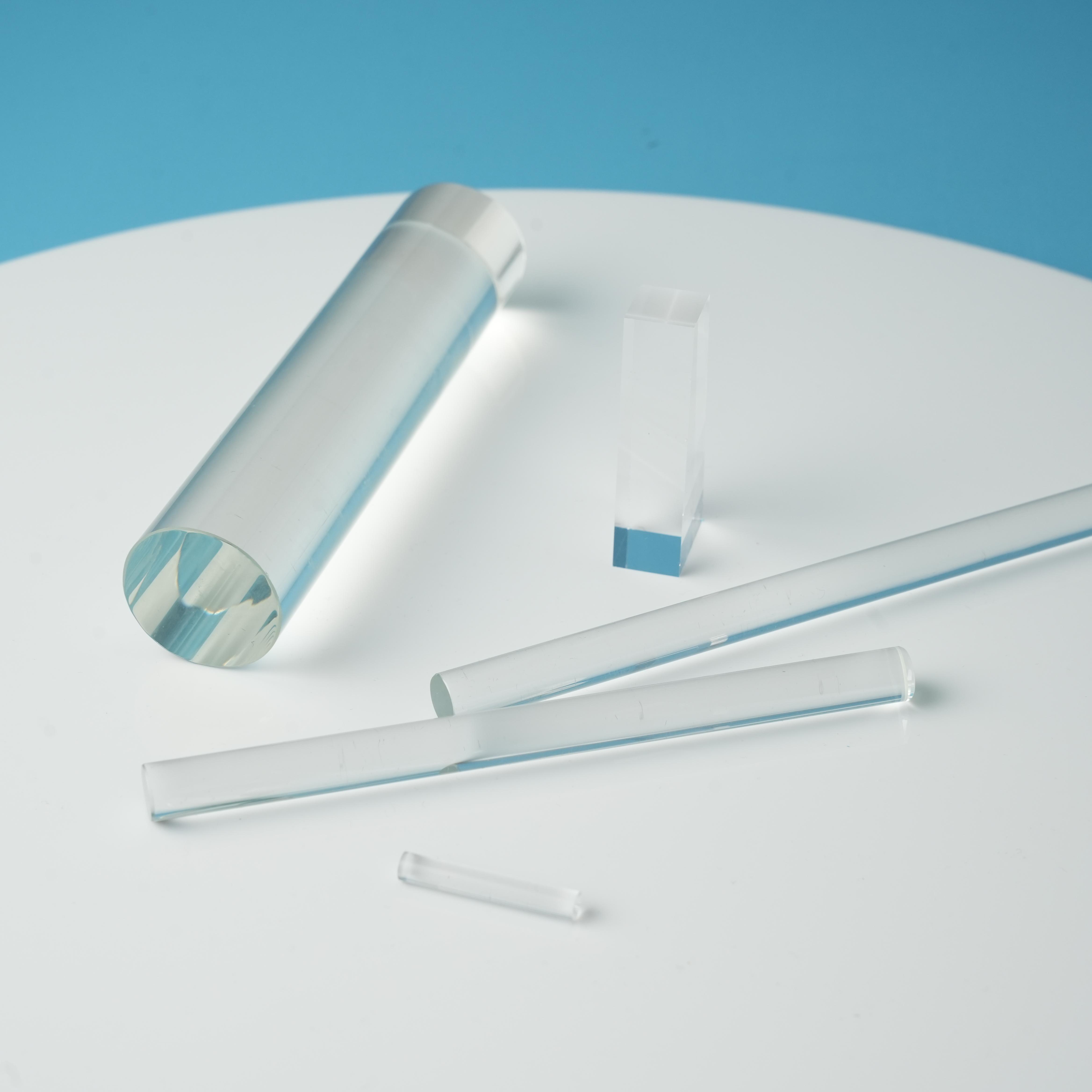
High Borosilicate Optical Light Guide Rod
Temperature-resistant rod lenses formed to custom profiles for laboratory and instrument light paths.
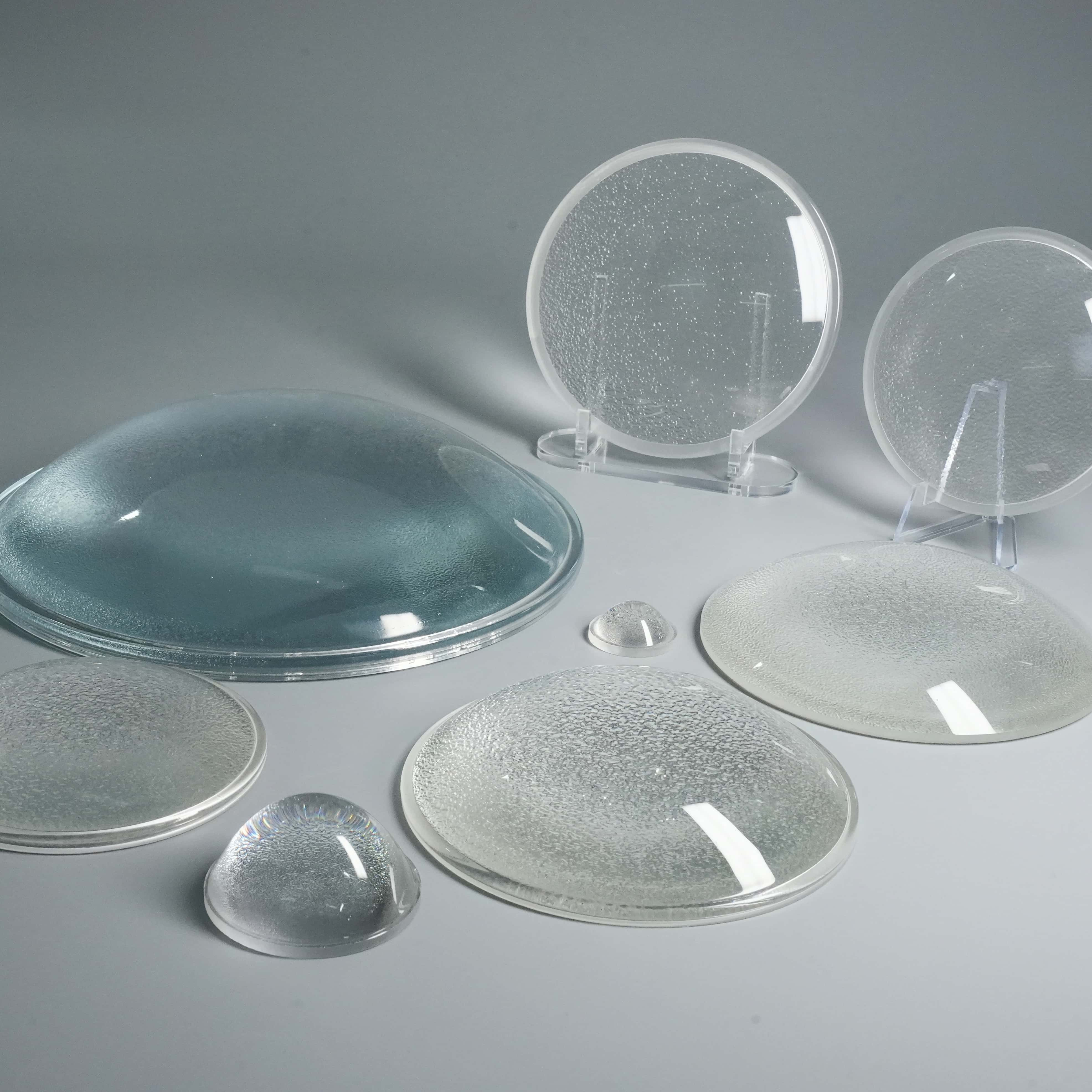
Asymmetric LED Street Light Borosilicate Lens
UV-protected asymmetric optics that cut glare and light pollution while lifting roadway uniformity.
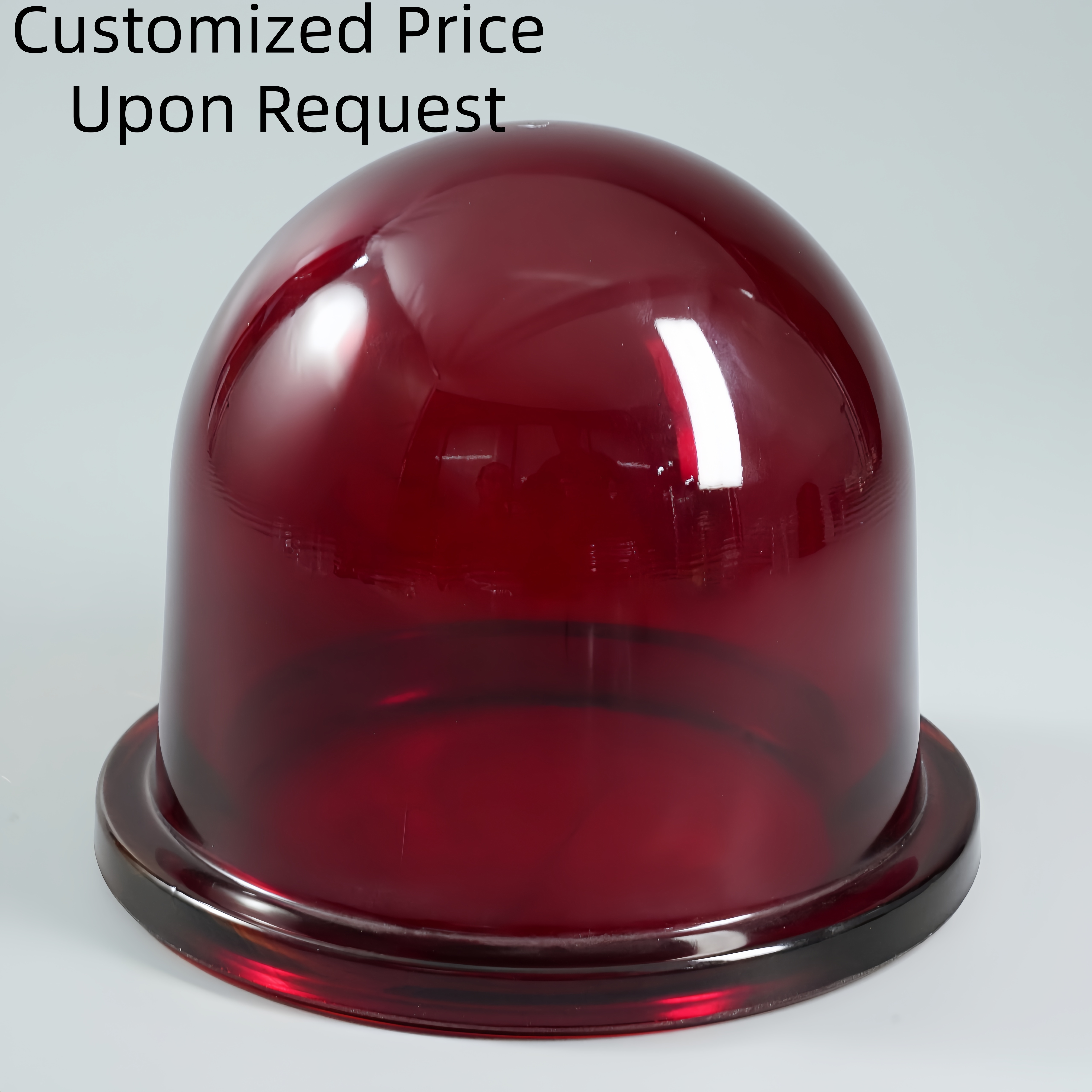
Heat-Resistant Pressed Glass Street Light Shade
Explosion-proof and crack-proof pressed shade designed specifically for outdoor street lighting fixtures.
What “Safety Glass” Really Means When You Buy Lighting and Optical Components
Before you compare quotations from Chinese factories, align on the definition. The word “safety glass” describes three very different product families.
Thermal-Shock Safety Glass
In industrial and hazardous-area luminaires, safety glass usually means borosilicate 3.3 with a coefficient of expansion of about 3.3 × 10⁻⁶/K. It survives a hot lamp meeting cold rain, which is the failure mode that actually cracks covers in the field.
Impact Safety Glass
For street lighting, floodlights and vandal-prone public fixtures, thermally tempered soda-lime glass delivers high impact strength at a lower unit cost — but its practical working ceiling is closer to 250 °C, not 450 °C.
Optical Safety Glass
For LiDAR, spectroscopy and signal optics, safety means stable transmission and repeatable geometry: BK7 or quartz windows, AR-coated domes and bandpass filters specified by wavelength rather than by colour name.
Practical takeaway for buyers: ask every Chinese safety glass factory to quote against your lamp surface temperature, your impact rating and the standard your finished fixture must meet. A supplier who only quotes price and diameter has not yet understood your project.
Six Purchasing Trends Reshaping Safety Glass Procurement
Search behaviour has already shifted from “cheap glass lampshade supplier” to “drawing-based borosilicate glass factory with inspection reports”. Here is what is driving the change.
1. Drawing-Driven Buying Replaces Catalogue Buying
Procurement teams increasingly send a 2D or 3D drawing instead of picking from a list. Expect DFM feedback on wall thickness, draft angle, sealing-face flatness and tolerance stack-up before tooling is quoted.
2. Auditability Beats Anonymity
Buyers now verify the supplier before the sample: onsite-checked premises, supplier assessment records, trade capacity and trade history are requested at the RFQ stage, not after the first order.
3. Lower MOQs, Phased Volume
Project buying is replacing full-container buying. MOQs of 50 pieces for optical lenses and 100–500 pieces for pressed covers let buyers validate a fixture before committing to annual volume.
4. Documentation as a Deliverable
Material reports, dimensional inspection sheets and colour/transmission records are now part of the purchase order. Glass is bought as a specification, not as a commodity.
5. Total Cost of Ownership Over Unit Price
One field replacement costs more than the difference between two quotations. Buyers now price in annealing quality, packing loss rate and re-order consistency rather than cents per piece.
6. Instant Technical Dialogue
Responses measured in hours, not days, decide who wins the project. Live-chat quotation, engineering review and sample planning are merging into one continuous conversation.
Where Safety Glass Technology Is Heading Next
Six engineering directions we are already producing for OEMs — and that specifiers should plan for in their next fixture platform.
Borosilicate 3.3 as the Default
As LED modules push higher wattage into smaller envelopes, borosilicate 3.3 is becoming the baseline rather than the premium option — especially for covers mounted directly above the light source.
Broadband AR Coating as Standard
Uncoated glass loses several percent of light at every surface. Broadband anti-reflective coatings are moving from high-end optics into mainstream LED and grow-light lenses.
Asymmetric Optics for Dark-Sky Rules
Municipal lighting codes are tightening on glare and uplight. Asymmetric borosilicate lenses that shape the beam without extra shields are replacing symmetric designs in roadway fixtures.
Precision Domes for LiDAR and Sensing
Hemispherical windows with controlled wall thickness and pressure ratings are becoming a volume category as autonomous systems, robotics and industrial sensing scale.
Wavelength-Specific Filter Windows
Instead of a generic coloured filter, buyers now specify the exact passband — 500 nm, 590 nm, 600 nm, 700 nm — with a defined cut-edge slope and blocking range.
Shade Geometry with Integrated Sealing Faces
Pressed shades now carry machined gasket grooves and controlled flatness so the luminaire can hit IP66/IP68 without secondary machining — a design win for both cost and reliability.
Choosing the Right Safety Glass Material Before You Place the Order
A quick comparison our engineers use during drawing review. Getting the material right at the RFQ stage prevents cracked covers and expensive field returns later.
| Material | Thermal expansion (×10⁻⁶/K) | Typical max. working temp. | Key strength | Best for |
|---|---|---|---|---|
| Borosilicate 3.3 | ≈ 3.3 | ≈ 450 °C | Excellent thermal-shock resistance | Explosion-proof shades, high-power LED covers, Fresnel lenses |
| Tempered soda-lime | ≈ 9.0 | ≈ 250 °C | High impact strength, economical | Outdoor covers, floodlight glass, vandal-resistant lenses |
| Fused quartz | ≈ 0.55 | ≈ 1000 °C+ | UV transmission at extreme heat | UV optics, high-temperature inspection windows |
| Optical BK7 (H-K9L) | ≈ 7.1 | ≈ 300 °C | Homogeneous, nd ≈ 1.517 | Precision lenses, prisms, mirrors, bandpass filters |
Values are typical references for preliminary selection only. Final specification is confirmed against your drawing, lamp surface temperature, impact rating and the standard your finished fixture must meet.
Why Procurement Teams Rank Tambi Glass Among China’s Top Safety Glass Factories
Shanghai Tambi Glass Industrial Co., Ltd. is a manufacturer and trading company of custom borosilicate glass covers, explosion-proof lampshades, signal light domes, LED lenses, prisms and optical filters for lighting and optical OEMs worldwide.
Manufacturer, Not a Middleman
Pressed, blown, ground and coated processes are coordinated through one supply chain in Shanghai, backed by an onsite-verified premises record and a team of 11–50 specialists.
Broad Material Coverage
Borosilicate 3.3, tempered soda-lime, fused quartz and optical BK7 — so the recommendation follows your operating conditions instead of a fixed catalogue.
In-House Optical Coating
AR, bandpass and colour coatings applied under the same roof as forming, which shortens iteration between a failed transmission test and a corrected sample.
≤ 6-Hour Engineering Response
Send a drawing and annual volume; a senior lighting and mould engineer replies with manufacturability notes, mould options and a commercial direction in under half a working day.
Verifiable Supplier Records
Supplier assessment, credit index, transaction level, trade capacity, trade history and buyer feedback are published openly, so procurement can complete qualification before the sample order.
Export-Grade Packing
Foam or pulp dividers, reinforced export cartons and palletisation for sea or air freight, with custom labelling available for distributors and private-label programmes.
- Drawing-based OEM / ODM from prototype to volume
- Borosilicate, tempered, quartz and optical BK7 capability
- AR and optical coatings applied in-house
- Onsite-verified supplier with public trade records
- Sample quantities available before mass production
- Long-term partners across Europe, North America and Japan
A Controlled Six-Step OEM Process for Safety Glass Components
Clear checkpoints mean fewer surprises between sample approval and mass production — and a documented reason for every change.
Drawing Review
DFM check of wall thickness, draft angle, tolerance and sealing-face flatness against your housing.
Mould & Tooling
New tooling or an existing mould, chosen for pressing, blowing or grinding depending on geometry.
Sampling
Measured samples shipped for your fit test, gasket trial and photometric verification.
Forming & Annealing
Controlled annealing or tempering to relieve internal stress — the step that decides field life.
Coating & QC
AR or colour coating, dimensional inspection, visual inspection and transmission checks.
Export Packing
Divider-packed cartons, palletised and documented for sea or air freight.
Frequently Asked Questions About Sourcing Safety Glass in China
The questions procurement and engineering teams raise most often during the first technical exchange.
Can you manufacture glass covers and lenses to my own drawing?
Yes. Most orders are drawing-based. Send a 2D or 3D drawing, or a physical sample, with dimensions, tolerance, material, colour and coating requirements. Our engineers review manufacturability, propose mould options and confirm samples before mass production begins.
What is the typical minimum order quantity for safety glass?
Typical MOQs range from 50 pieces for optical lenses to 100–500 pieces for pressed or blown lighting covers, depending on whether an existing mould can be used. Sample quantities are available for evaluation, and phased volume against an annual forecast is possible.
Should I choose borosilicate glass or tempered soda-lime glass?
Borosilicate 3.3 has a low thermal expansion of about 3.3 × 10⁻⁶/K, so it tolerates high lamp temperatures and sudden rain or cold-water contact far better. Tempered soda-lime glass offers high impact strength at a lower cost for moderate temperatures. The right choice depends on surface temperature, impact rating and the certification of your fixture.
Do you supply glass for FAA L-810 and EN 50293 lighting fixtures?
We produce glass lenses and domes for fixture makers whose obstruction and signal lights are designed to FAA L-810 or EN 50293 requirements. Fixture certification is held by the luminaire manufacturer; we match colour, transmission and dimensional specifications and can provide material and inspection reports on request.
How consistent are colour and light transmission between batches?
Colour and transmission are controlled by the incoming glass batch, the forming process and, where applicable, the coating recipe. For signal and aviation parts we record transmission against the approved golden sample and issue the record with the shipment so your incoming inspection has a reference point.
Can I get samples before committing to production volume?
Yes. Prototype and evaluation samples are standard for both new and existing tooling. Sampling time depends on whether a mould must be built; the schedule and sample cost are confirmed during the drawing review so there is no later surprise.
How fast do you reply to technical inquiries?
Our average response time is within 6 hours. Use the quotation button on this page or write to info@tambiglass.com with your drawing and annual volume for a technical and commercial review.
How are fragile glass parts packed for export?
Parts are separated by foam or pulp dividers, packed in reinforced export cartons and palletised for sea or air freight. Custom packaging and labelling for distributors can be arranged, and packing can be photographed before dispatch for remote inspection.
Have a Drawing? Get an Engineering Review Within 6 Hours
Share your dimensions, material preference, operating temperature and annual volume. Our engineers will recommend the most reliable safety glass solution for your fixture — and quote it as a manufacturable part, not a catalogue item.
Get a Quote