China Top Half Ball Lens Factory & Exporters
Engineering-led sourcing for borosilicate, K9/BK7 and hemispherical dome lenses, AR-coated optical windows, and industrial lighting glass — from drawing review to export packing.
8 Half Ball Lens, Dome Lens & Optical Glass Solutions for OEM Buyers
The product set below reflects real sourcing briefs from lighting fixture makers, camera OEMs, LiDAR integrators, food-equipment engineers and industrial buyers. Each part can be customized by drawing, but these eight families are practical starting points for sample evaluation. Use them to compare material, coating, thermal load and sealing method before you request a quote.
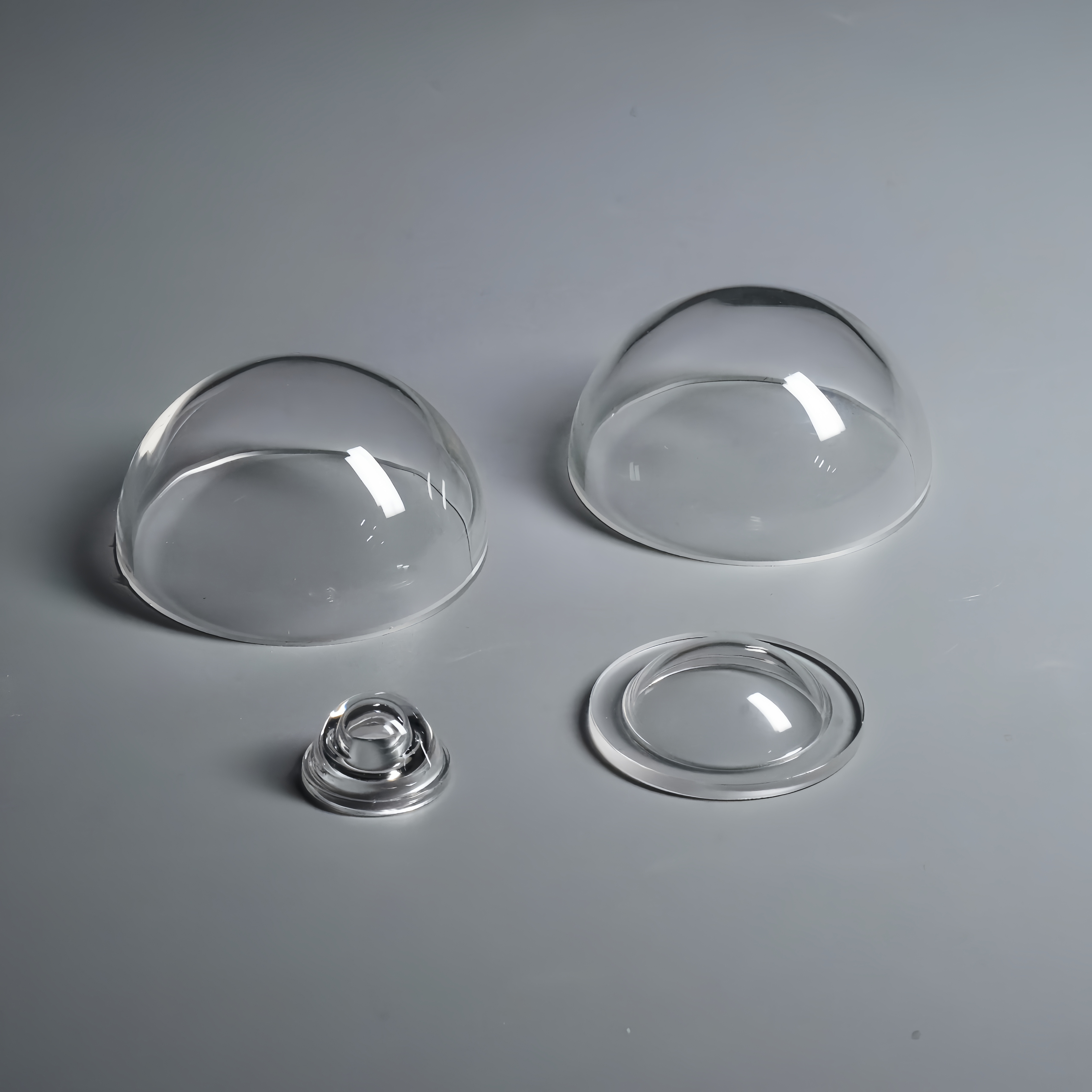
Mold Pressed Clear High Quality K9 Optical Dome Lens with Anti-Reflective Coating for Lighting OEM Customized Headlight Glass
A mold-pressed K9 optical dome for headlight and lighting OEMs. The AR coating improves transmission and reduces ghosting in compact chambers. This is a practical half-ball lens starting point when an existing optical profile must be adapted to a new bezel, gasket or LED array.

OEM Borosilicate Glass Optical Dome Cover for Outdoor IP Cameras UV Resistant Waterproof Housing Anti-Reflective Coating
A borosilicate dome cover for outdoor IP cameras with UV resistance, waterproof housing compatibility and AR coating options. The material resists thermal shock from sun and rain while preserving image clarity. Specify flange, sealing face, wall thickness and transmission target for a drawing-based quote.
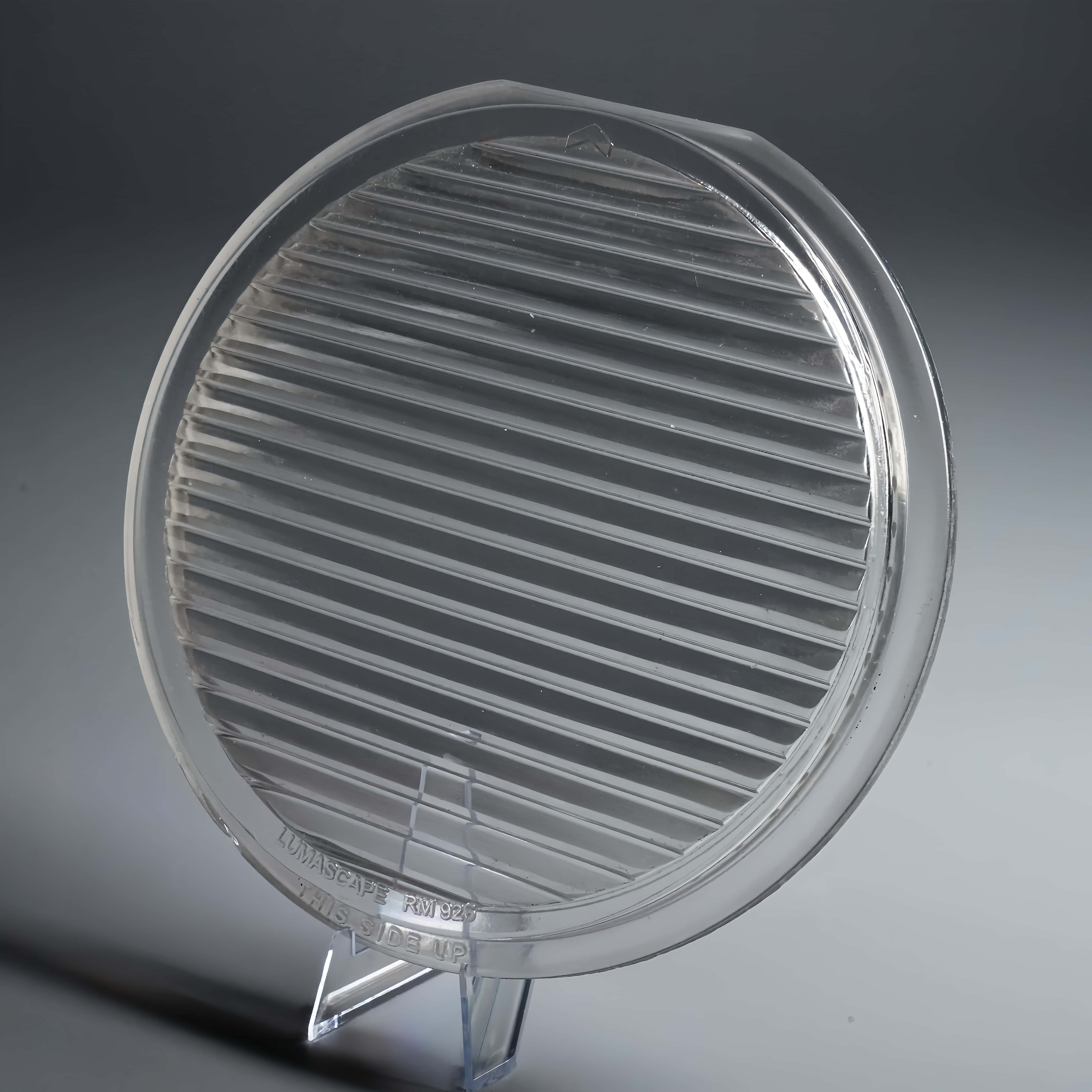
Supplier Custom Size Shape Pressed Mold Heat Resistant High Borosilicate Headlight Glass Lens Cover Headlight Glass Cover
A custom pressed high-borosilicate headlight glass cover for buyers who need heat resistance and mechanical fit in one part. It suits pressed-mold programs where size, shape, edge finish and gasket contact must follow the housing. Sampling before tooling sign-off is recommended.
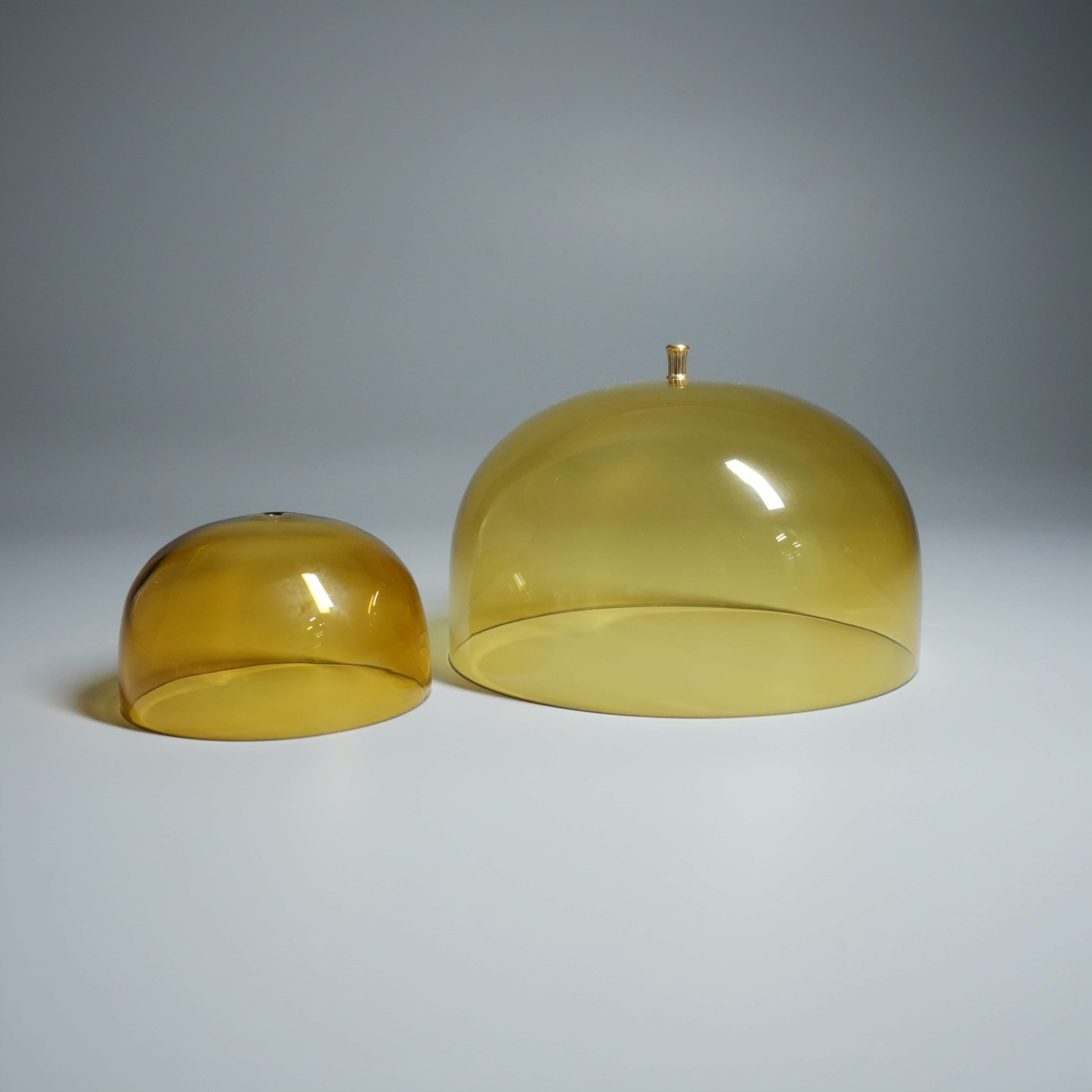
Certified Glass Cover for Food Machinery and Medical Equipment, Chemical Resistant
A chemical-resistant glass cover for food machinery, medical equipment and washdown environments. When specified correctly, the glass helps maintain visibility while resisting cleaners and thermal cycling. Discuss food-contact, cleaning chemistry and impact requirements with the engineering team.
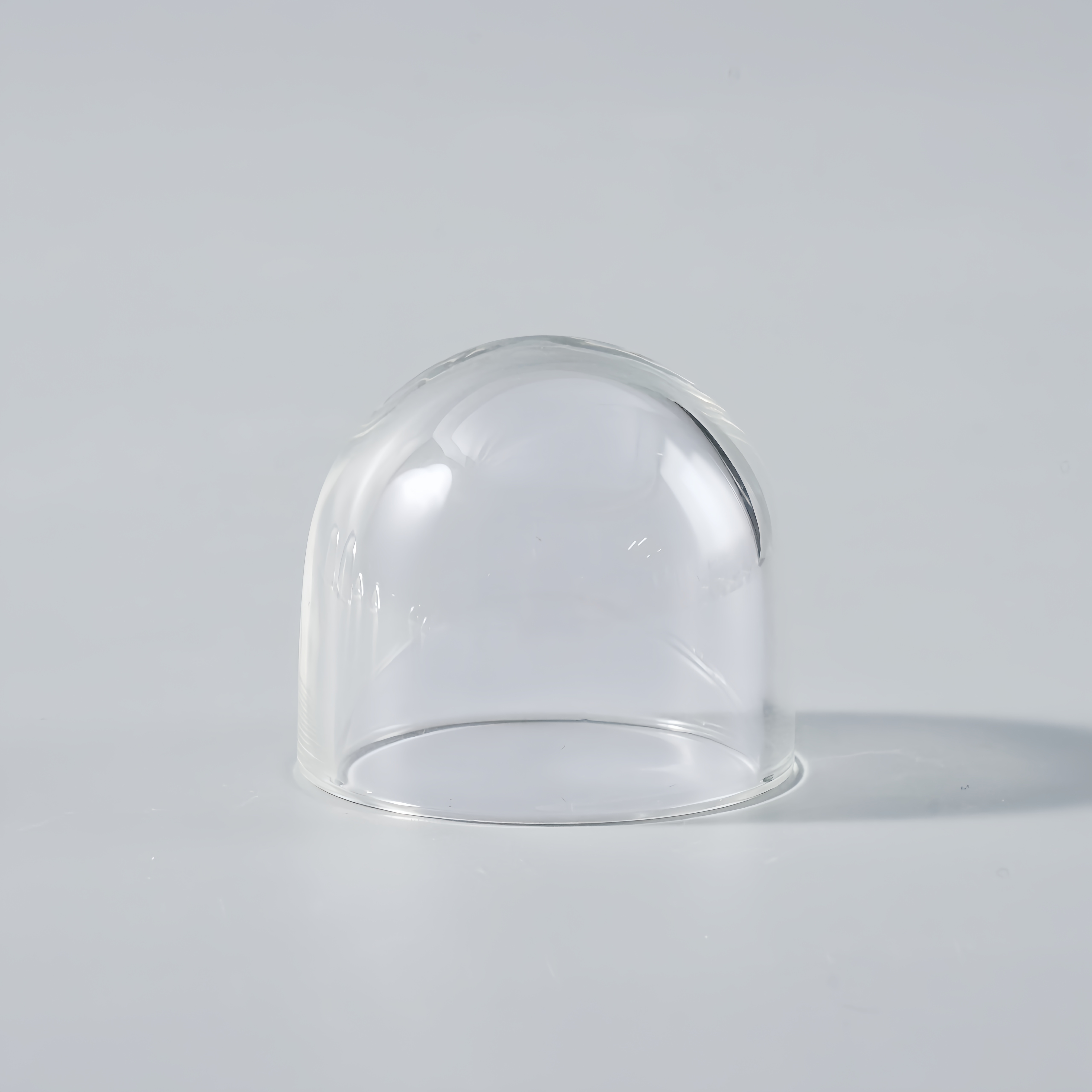
Customizable OEM Optical Glass Domes Broadband AR Coating Precision Hemispherical Windows for LiDAR Sensors Scientific
Precision hemispherical optical windows with broadband AR coating for LiDAR sensors and scientific instruments. These domes are chosen when angular transmission and dimensional repeatability matter more than simple cover-glass cost. Custom diameter, thickness, coating band and edge treatment are available.
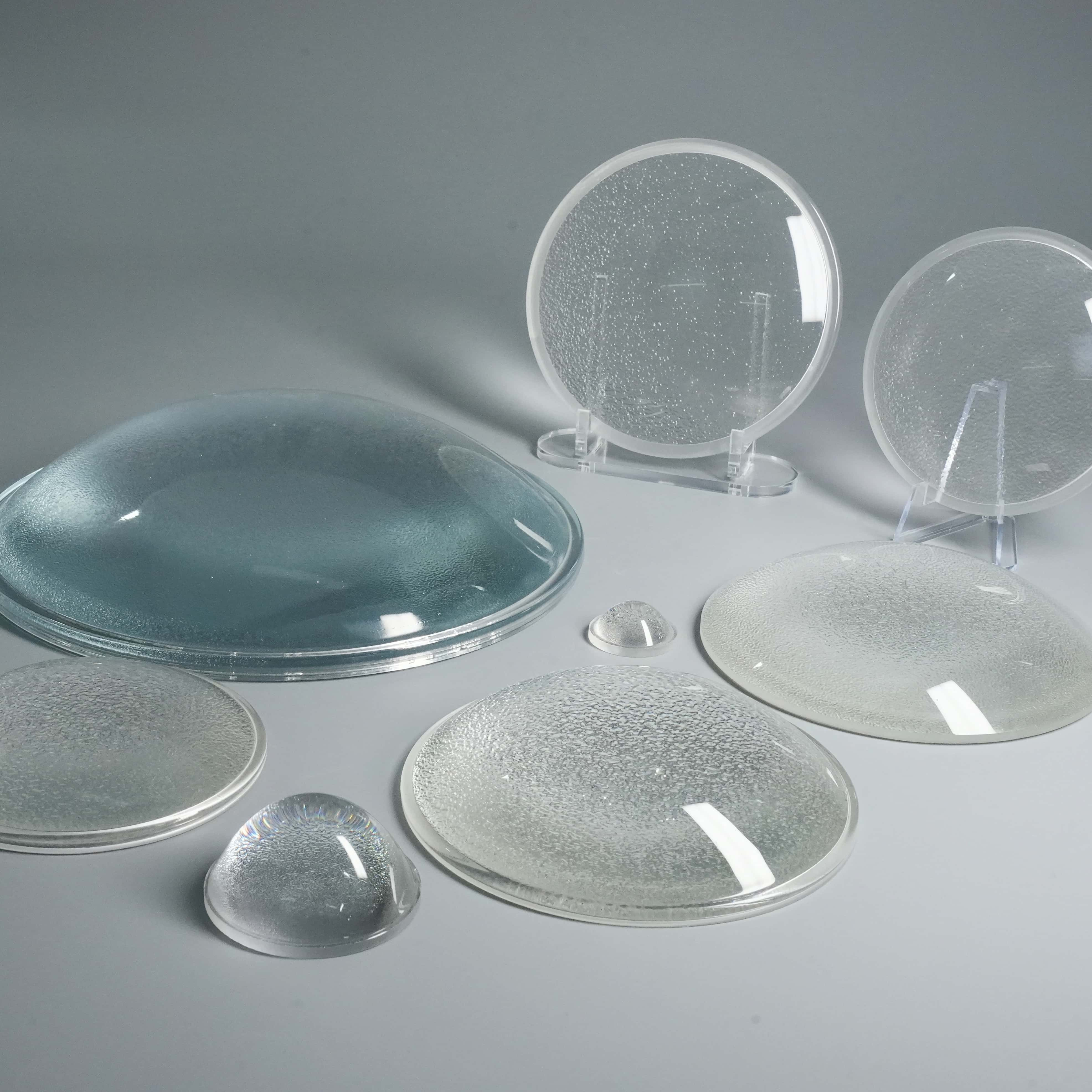
Bo Glass Asymmetric LED Lens Roadway Street Light Reduces Light Pollution Glare Borosilicate Glass UV Protection OEM
An asymmetric borosilicate LED lens for roadway and street lighting that helps reduce glare and light pollution. The optical design distributes light toward the road while limiting upward spill. Buyers should confirm LED module, beam target and IK/IP requirements before sampling.
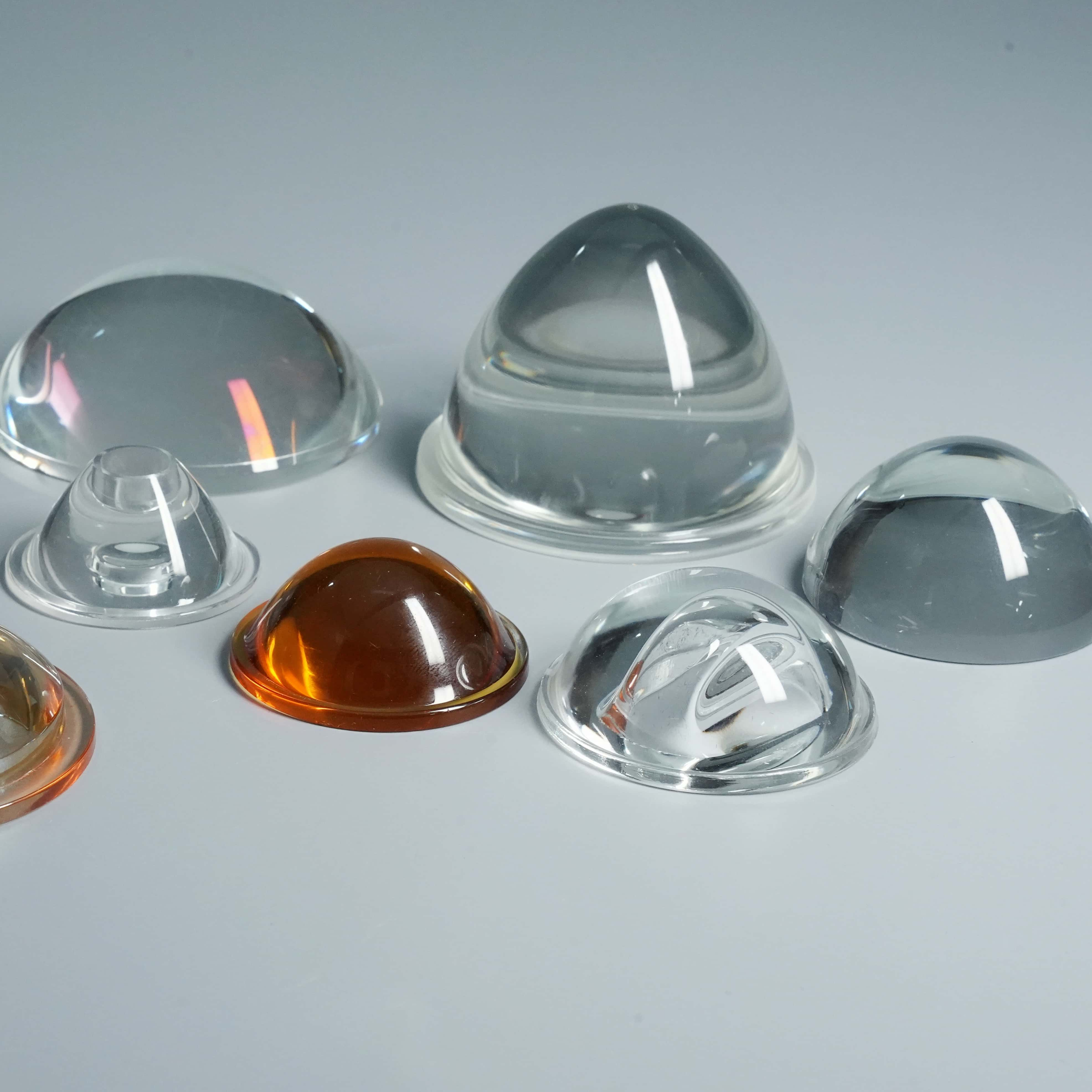
Custom Borosilicate Glass LED Grow Light Convex Lens with Anti-Reflective Coating for Indoor Farming Full Spectrum Lighting
A borosilicate convex lens for indoor farming and full-spectrum LED grow lights, with AR coating to support efficient light delivery. The glass must survive heat close to high-output modules without yellowing or distortion. Custom focal length, diameter and coating can be reviewed against your fixture.
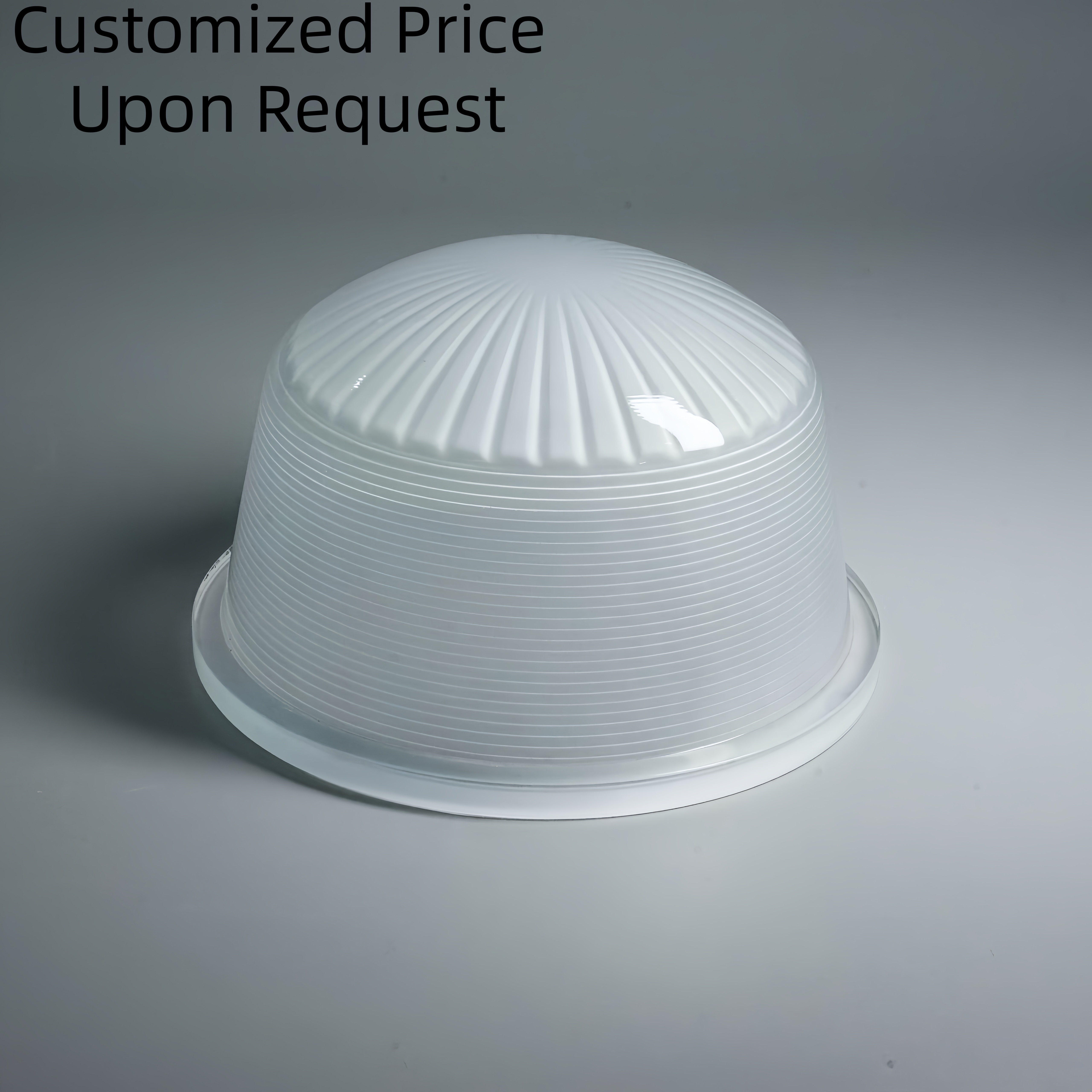
Transparent Explosion-proof Glass Shade, High Light Transmittance, Industrial Workshop Lighting
A transparent explosion-proof glass shade for industrial workshop lighting, designed around high light transmittance and impact resistance. This part is relevant for hazardous, dusty or high-vibration locations where a plastic cover would degrade. Confirm lamp wattage, ambient temperature and certification path with your luminaire designer.
What a Top Half Ball Lens Factory Must Prove
China’s advantage in half ball lenses is not simply unit cost. It is the density of mold-making, precision pressing, annealing, grinding, polishing, AR coating and inspection within a short supply chain. For buyers, that density shortens sampling and makes it easier to move a design through several process steps without splitting responsibility across countries. The trade-off is supplier variance: two exporters can quote the same dome and deliver very different optical yield. A top factory is therefore one that documents material, controls annealing, measures coating performance and can explain how the glass will behave inside your housing.
The commercial question is also more specific than “who is cheapest?” A serious half ball lens exporter should be able to support drawing review, recommend borosilicate versus K9/BK7, define coating bands, control edge chips, pack fragile parts for export and provide inspection records before mass production. That is the level of information gain procurement teams need when comparing China top half ball lens factory and exporter options.
The Search Intent Behind “Half Ball Lens” Is More Technical Than It Looks
Buyers use the phrase in different ways. Mapping the intent behind the query helps a technical website answer specification questions instead of publishing generic factory copy.
Factory vs. Exporter
Some buyers want a true manufacturer with tooling and annealing control. Others need an export partner who can coordinate multiple glass processes, documents and packing. The best supplier profile depends on whether your risk sits in optics, tooling, logistics or qualification.
Half Ball vs. Dome vs. Hemisphere
The same search term may refer to a hemispherical window, a ball lens segment, a convex LED optic or a deep-drawn glass cover. Dimensional definitions matter: diameter, sphere radius, thickness, flange and optical axis alignment should be specified before sampling.
Quote-Ready Technical Intent
Commercial intent often appears as “custom,” “OEM,” “AR coated,” “heat resistant” or “MOQ.” These modifiers signal a buyer near sampling. A useful supplier page should show materials, coating options, tolerances, process steps and the information required for a fast quote.
Half Ball Lens Procurement Trends Buyers Should Plan For
Procurement is moving away from catalog purchasing toward risk-managed, specification-led sourcing. The trends below are especially relevant for lighting, sensing and industrial equipment teams buying custom optical glass from China.
Dual-Source Qualification
More OEMs qualify a primary and backup glass supplier before launch. The backup may share tooling drawings, material reports and coating targets so production can shift without re-engineering the optical path.
Coating as a Specification
AR coating is moving from an optional upgrade to a defined performance requirement. Buyers increasingly request reflectance targets, wavelength bands, durability tests and coating inspection data rather than accepting “AR coated” as a generic label.
Traceability and Documentation
Procurement teams want material certificates, dimensional reports, visual inspection criteria and packing records attached to the PO. Traceability reduces disputes and supports audits for medical, food, aviation and hazardous-area fixtures.
Lower-Volume Customization
Product teams now launch more variants with smaller annual volumes. Suppliers that can sample efficiently, use modular tooling and accept practical MOQs for optical lenses and pressed covers become more valuable than low-price suppliers with rigid minimums.
How Half Ball Lens and Optical Glass Technology Is Evolving
The next procurement cycle will reward buyers who understand how optical design, coating durability and application-specific glass grades interact. These trends matter beyond the factory floor.
Press-to-Shape Optical Profiles
Mold pressing is improving for hemispherical and convex glass optics. Buyers can increasingly combine near-net shape forming with controlled polishing and coating, reducing material waste and tooling cycle time for custom half ball optics.
Multilayer AR and Easy-Clean Coatings
Coating stacks now target both optical performance and field durability. Hydrophobic and oleophobic layers help camera domes, LiDAR windows and outdoor lighting lenses maintain transmission when exposed to rain, dust and cleaning agents.
Glass for LiDAR and Automotive Sensing
Automotive sensing is pushing demand for pressure-resistant domes, precise hemispherical windows and stable broadband coating. Glass remains attractive where plastic cannot meet scratch, thermal or long-term environmental stability requirements.
Energy-Efficient Lighting Optics
Street lighting, horticulture and high-power stage fixtures continue to use glass optics where heat and UV exposure are severe. Asymmetric lenses, AR-coated convex lenses and explosion-proof shades must balance efficiency, glare control and service life.
Material Selection and Optical Data for Half Ball Lenses
The right glass grade depends on thermal load, impact, optical band, sealing method and the certification path of your fixture. Use this engineering guide to prepare a more precise RFQ, then confirm the final specification against your drawing and operating conditions.
| Material | Thermal expansion | Typical max. working temperature | Optical / mechanical note | Best for |
|---|---|---|---|---|
| Borosilicate 3.3 | ≈ 3.3 × 10⁻⁶/K | ≈ 450 °C | Excellent thermal-shock resistance; good visible transmission; can be pressed or blown | Explosion-proof shades, high-power LED covers, outdoor lamp covers, Fresnel and convex lenses |
| Tempered soda-lime | ≈ 9.0 × 10⁻⁶/K | ≈ 250 °C | High impact strength and lower cost; limited resistance to severe thermal shock | Outdoor covers, floodlight glass, vandal-resistant lenses and general lighting glass |
| K9 / BK7 optical glass | ≈ 7.1 × 10⁻⁶/K | ≈ 300 °C | Homogeneous optical grade; nd ≈ 1.517; suitable for precision grinding and AR coating | Headlight dome lenses, prisms, precision windows, optical filters and imaging components |
| Fused quartz | ≈ 0.55 × 10⁻⁶/K | ≈ 1000 °C+ | Very high temperature capability and strong UV transmission; higher cost and processing complexity | UV optics, high-temperature windows and specialized scientific instrument glass |
Values are typical references for early-stage selection, not a formal specification. Final choice should be confirmed against lamp surface temperature, impact rating, gasket load, coating band and the standard your luminaire or equipment must meet.
Thermal Shock Resistance
Relative suitability when a hot glass cover is exposed to rain or washdown.
Optical Transmission Control
Ability to specify coating bands, reflectance targets and inspection criteria.
Impact and Vandal Resistance
Relative strength for outdoor covers, street lighting and public-area fixtures.
Dimensional Repeatability
Repeatability across batch production when tooling and annealing are controlled.



Shanghai Tambi Glass Industrial Co., Ltd.
Tambi Glass is a Shanghai-based manufacturer and trading company serving lighting and optical OEMs worldwide. With more than 10 years in lighting glass, our team focuses on how glass performs inside a real fixture: heat behind high-power LEDs, rain hitting a hot cover, impact in hazardous areas, color consistency in signal lights and sealing faces that must compress without cracking.
Our senior lighting and molding engineers review every drawing for wall thickness, draft, sealing faces and optical path alignment before tooling begins. Because pressed, blown, ground and coated processes sit in one supply chain, we can recommend the right method instead of forcing a part into a single process. Long-term partners in Europe, North America and Japan use us for custom borosilicate covers, explosion-proof lampshades, signal-light domes, LED lenses, prisms and optical filters.
- Drawing-based OEM / ODM and prototype-to-volume support
- Borosilicate, tempered glass, quartz and K9/BK7 options
- AR coating, optical coating and custom color integration
- Export packing designed for fragile glass components
The company has been checked onsite during third-party verification and publishes supplier assessment, credit index, transaction level, trade capacity, trade history and buyer ratings for procurement teams to review. That transparency helps buyers compare a China half ball lens factory on more than price alone.
From Drawing to Export: A Controlled 6-Step OEM Process
Clear checkpoints reduce surprises between sample approval and mass production, especially when the glass part must fit an existing gasket, LED module or camera housing.
Drawing Review
DFM review of thickness, draft, tolerance, sealing face, optical axis and operating temperature before tooling is quoted.
Mold & Tooling
New or existing molds are selected for pressing, blowing or grinding, with sample timing confirmed before payment.
Sampling
Samples are measured and sent for your fit, light and environmental tests. Coating targets can be adjusted before mass production.
Forming & Annealing
Controlled forming and annealing or tempering relieve internal stress to reduce cracking during service and packing.
Coating & QC
AR or color coating, dimensional checks and visual inspection are completed against the approved sample and drawing.
Export Packing
Foam or pulp dividers, reinforced cartons and palletized packing protect fragile half ball lenses for sea or air freight.
Questions Procurement Teams Ask About Half Ball Lens Sourcing
These answers reflect the technical and commercial questions that appear most often during sample evaluation and supplier qualification.
Can you manufacture half ball lenses and glass domes to my own drawing?
Yes. Most projects are drawing-based. Send a 2D or 3D drawing, a physical sample or a clear specification with dimensions, tolerance, material, color, coating band and annual volume. Our engineers review manufacturability, propose mold options, confirm the optical and sealing requirements, and provide samples before mass production.
Should I choose borosilicate glass or K9/BK7 optical glass?
Borosilicate 3.3 is usually preferred when thermal shock is the main risk, because its thermal expansion is about 3.3 × 10⁻⁶/K and it tolerates high lamp temperatures and sudden cold-water contact better. K9/BK7 is more suitable for precision optical paths where homogeneity, refractive index consistency and fine grinding matter. The right choice depends on surface temperature, impact rating, transmission target and the certification of your fixture.
What is the typical minimum order quantity for custom half ball lenses?
Typical MOQs range from about 50 pieces for optical lenses to 100–500 pieces for pressed or blown lighting covers, depending on whether an existing mold can be used and how much custom tooling is required. Sample quantities are normally available for evaluation before production tooling is approved.
Do you supply glass for FAA L-810 or EN 50293 lighting fixtures?
We produce glass lenses and domes for fixture makers whose obstruction and signal lights are designed to FAA L-810 or EN 50293 requirements. The fixture certification is held by the luminaire manufacturer; our role is to match color, transmission, dimensions and material specifications, and to provide inspection or material reports on request.
How do I verify a China half ball lens factory before ordering?
Check whether the supplier has been onsite-verified, review its business license and trade records, request similar product samples, ask for dimensional and visual inspection reports, and confirm how it controls annealing and coating. A video factory review and a small paid sample order are useful steps before releasing a production PO.
How are fragile half ball lenses and optical domes packed for export?
Parts are separated by foam or molded pulp dividers, packed in reinforced export cartons and palletized for sea or air freight. Custom labels, barcode packing, moisture protection and distributor packaging can be arranged for repeat orders.
What information should I include in an RFQ for a faster quote?
Include the material you are considering, diameter, sphere radius or dome height, wall thickness, tolerance, surface finish, coating requirement, operating temperature, sealing method, annual volume and target sample date. If you have a photo of the current part or a failed sample, include it as well; that often shortens the engineering review.
Send a Drawing for a 6-Hour Engineering Review
Share your dimensions, material, operating temperature, coating target and annual volume. Our engineers will suggest the most reliable glass solution for your fixture and help you compare half ball lens, hemispherical dome and pressed cover options before tooling.
Contact UsNo obligation. NDA available. You can also email info@tambiglass.com with your drawing and application details.