China Top Glass Lens Factories & Exporter
A 2026 sourcing whitepaper for procurement teams comparing borosilicate lens factories, optical glass exporters, custom coatings, export packaging and total landed cost.
8 Glass Lens & Optical Glass Products Recommended for Custom Sourcing
These eight product platforms reflect the most common buyer requests received by Shanghai Tambi Glass Industrial Co., Ltd. Each product URL is retained exactly. Specifications can be adapted by drawing for size, thickness, colour, coating, edge finish and sealing-face geometry.

Supplier Custom Size Shape Pressed Mold Heat Resistant High Borosilicate Headlight Glass Lens Cover Headlight Glass Cover
A drawing-based pressed borosilicate cover for headlight and high-temperature lighting housings. The critical qualification points are gasket compression, edge profile, surface clarity and thermal-shock resistance. Recommended when an off-the-shelf dome cannot match the housing.
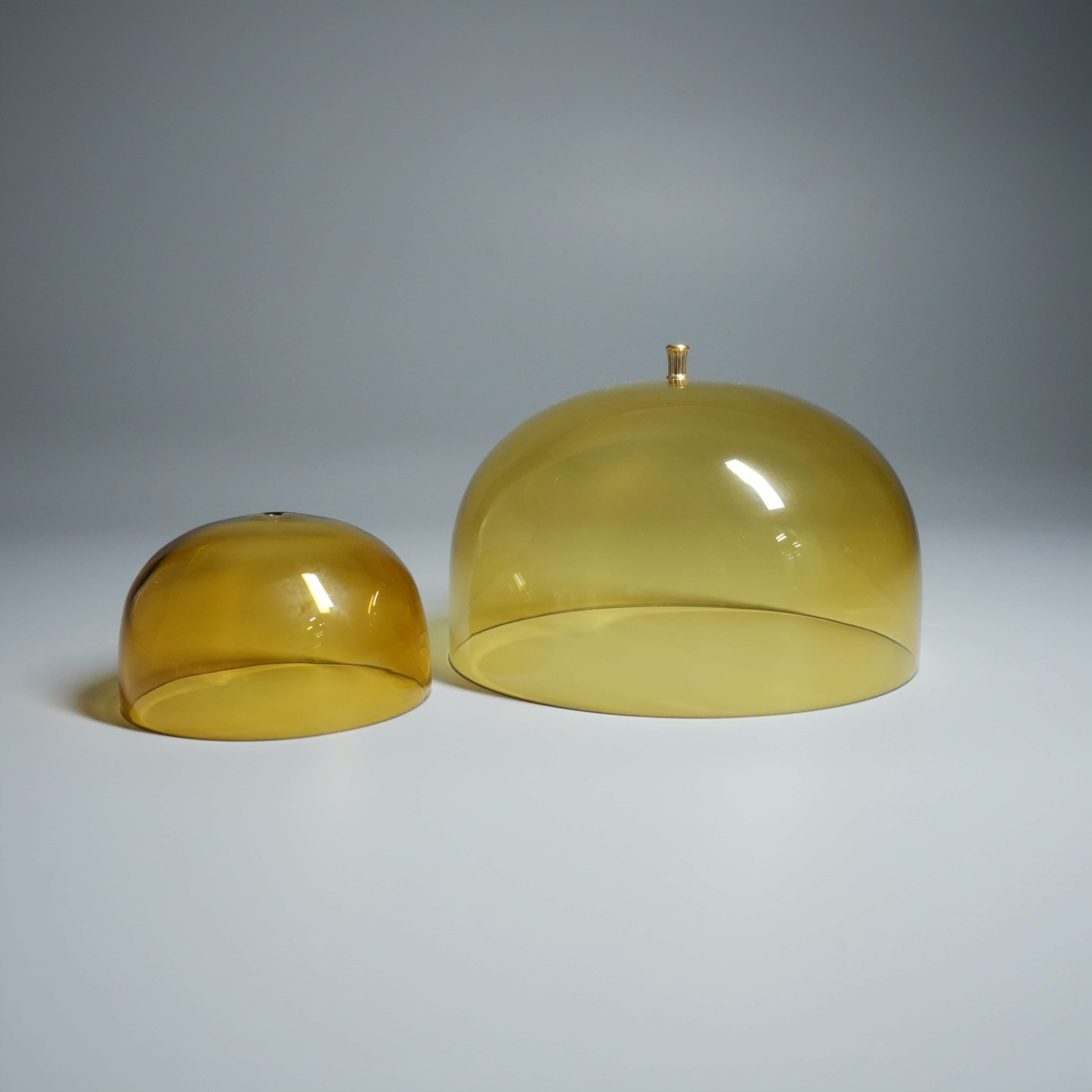
Certified Glass Cover for Food Machinery and Medical Equipment, Chemical Resistant
A chemically resistant glass cover for food machinery, medical equipment and washdown environments. Buyers should confirm the cleaning-agent list, flange flatness and inspection record requirements. A strong fit for OEMs that need a reliable glass enclosure with documented material control.
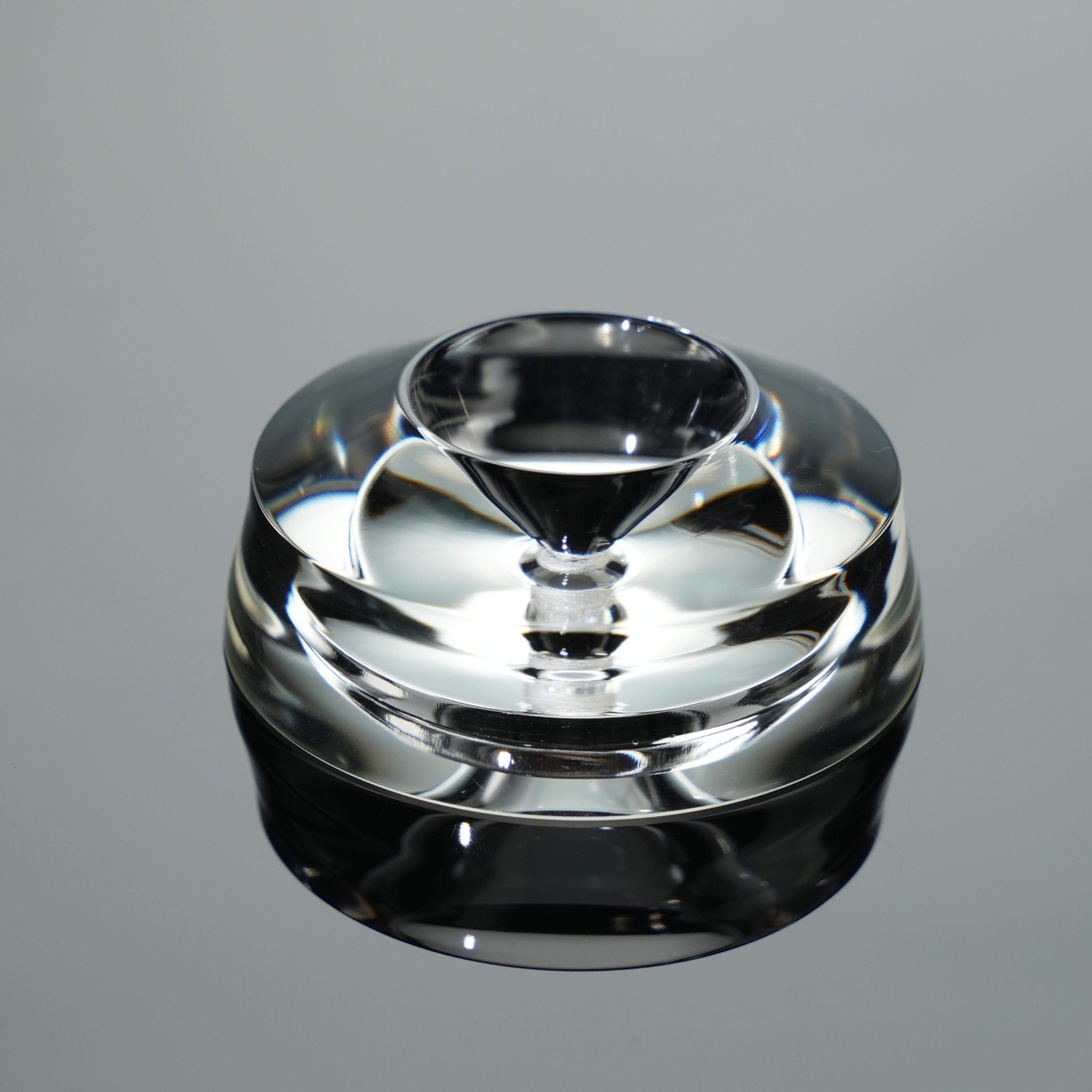
FAA Compliant Borosilicate Heat Resistant Glass Lens Runway In-Pavement Taxiway Lights IP68 Waterproof Optical Equipment Clear
Borosilicate glass lens for runway and taxiway in-pavement fixtures. For FAA L-810 or airport projects, the luminaire manufacturer normally holds fixture certification; the glass supplier must match colour, transmission, dimensions and IP68 sealing. Request first-article inspection and batch traceability.
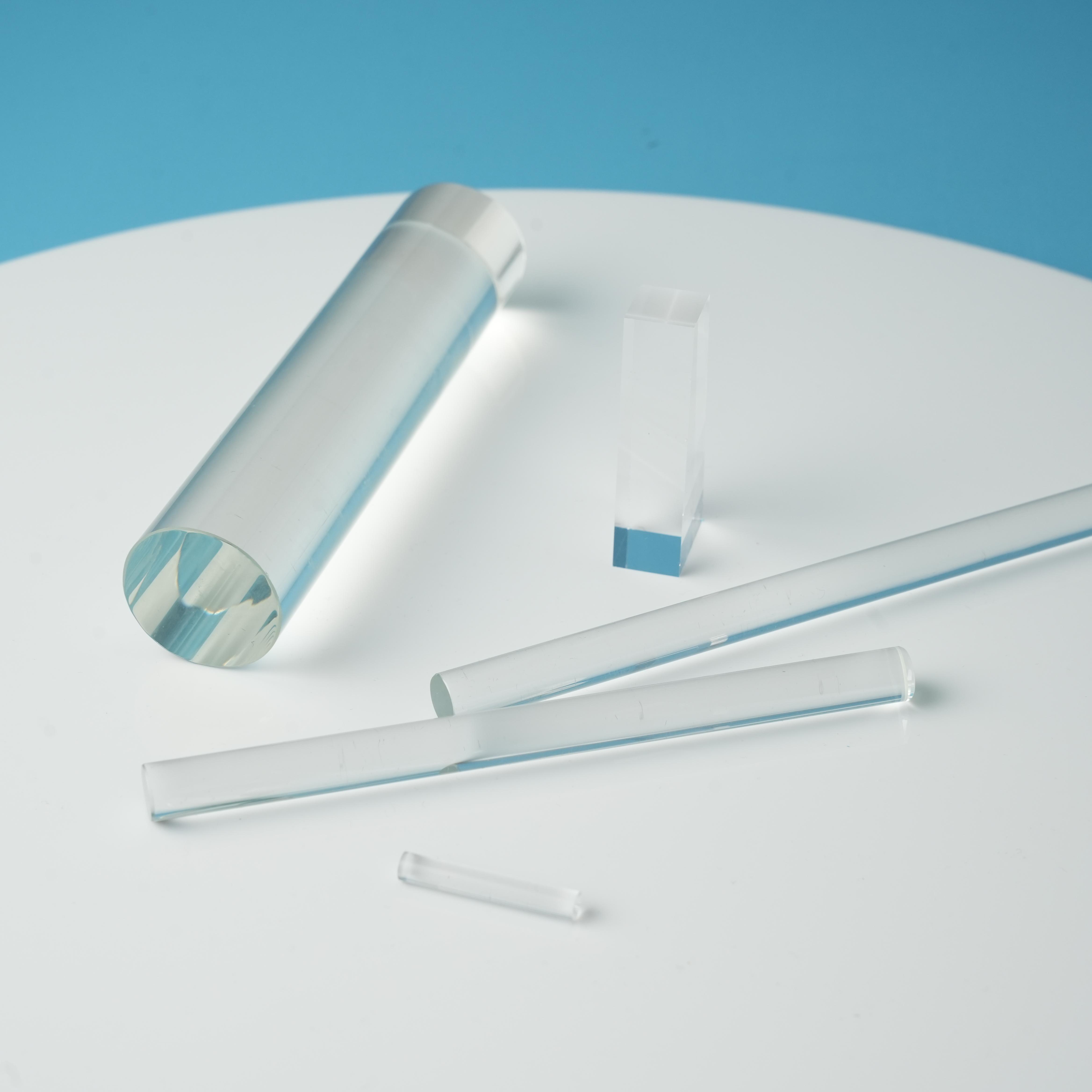
Factory Custom Shape Transparent High Borosilicate Temperature Resistant Optical Glass Light Guide Rod Rod Lens for Laboratory
A custom transparent light guide rod in high-borosilicate glass for laboratory and instrument systems. Key controls are rod diameter, end-face polish, concentricity and scratch acceptance. Recommended where a glass light path must withstand heat, cleaning agents and repeated handling.

Manufacturer OEM Precision Grade BK7 K9 Optical Glass Aspherical Lens Anti-Reflective Coating Diameter 0.5-25mm MOQ 100 Pcs
A precision BK7 or K9 aspherical lens with anti-reflective coating, 0.5–25 mm diameter and 100-piece MOQ. Specify radius tolerance, centration, coating wavelength band and cosmetic defect limits. Well suited to compact imaging, sensing and laser systems that need repeatable optical alignment.
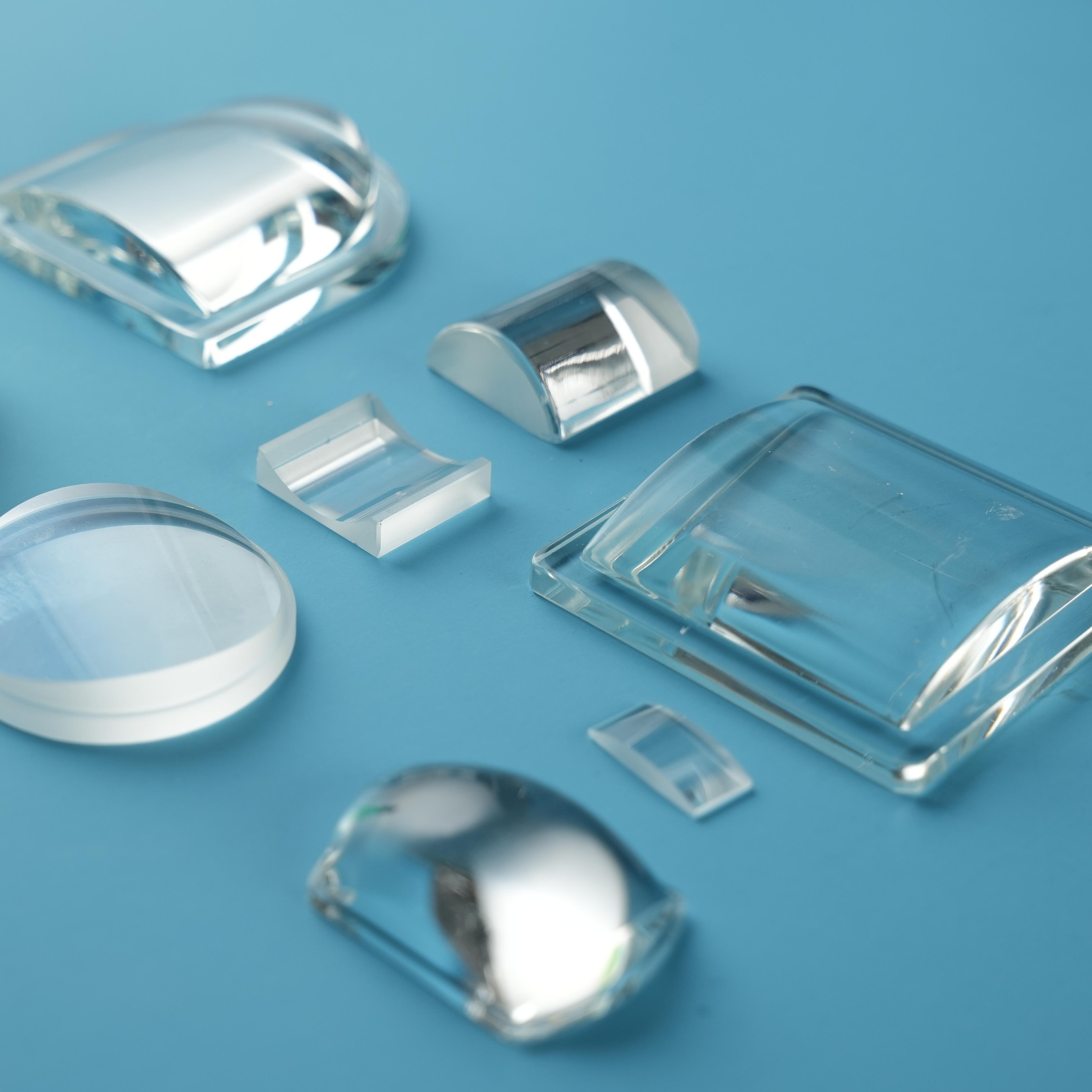
Manufacturer Custom OEM Anti-Reflective Laser Glass Optical Borosilicate UVC Plano Convex Cylindrical Biconvex Lens
A custom borosilicate lens family for AR laser, UVC, plano-convex, cylindrical and biconvex requirements. Coating durability and wavelength range are the risks to qualify first. Ask for transmission data plus adhesion or abrasion test reports before approving volume production.
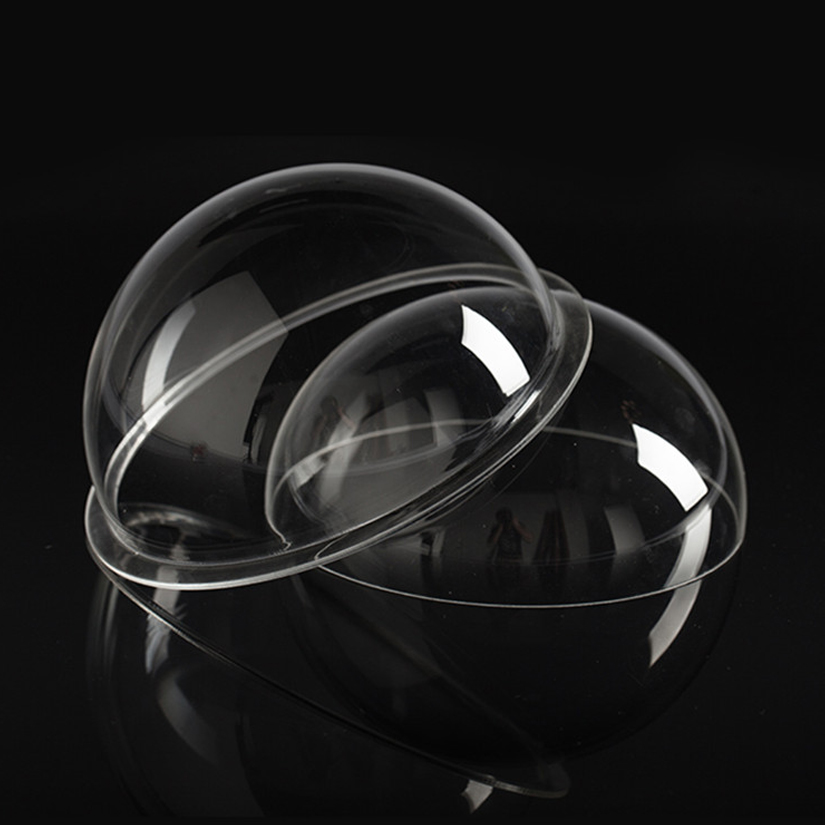
OEM Borosilicate Glass Optical Dome Cover for Outdoor IP Cameras UV Resistant Waterproof Housing Anti-Reflective Coating
An outdoor optical dome cover for IP cameras with UV resistance and anti-reflective coating. Success depends on sealing-face flatness, coating durability and haze control. Recommended for OEMs designing weather-resistant camera housings that must maintain image clarity over time.
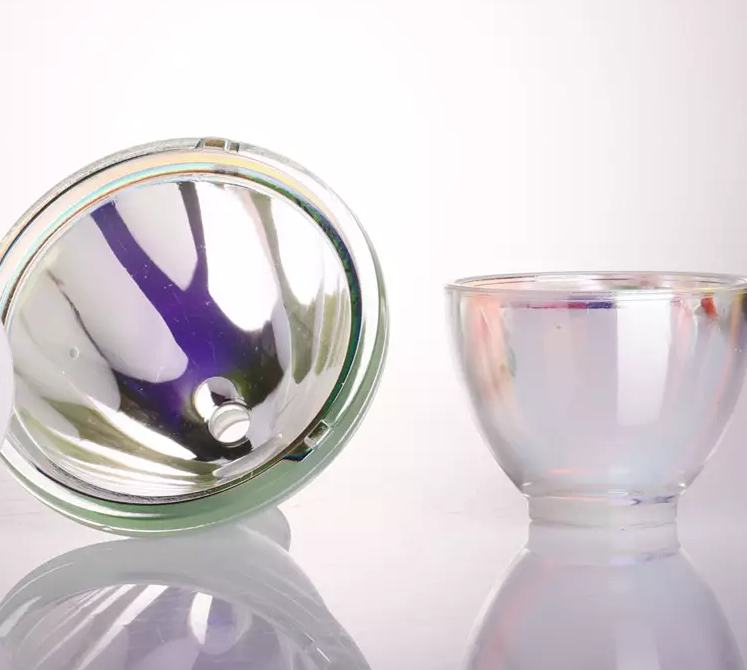
COB Glass LED Reflector Bowl Manufacturer Deep Design Perfect Beam Spotlights Projector Lights 20 60 90 Beam Angle
A deep glass reflector bowl for COB spotlights and projector lights with 20°, 60° and 90° beam options. Specify beam angle, neck diameter, coating and thermal load. Recommended for optical engines that need a high-temperature reflector rather than a plastic part.
Need a drawing reviewed? Send your 2D/3D drawing, annual volume, operating temperature, coating target and sealing requirement. Tambi Glass typically replies to technical inquiries within six hours.
Inquire NowWhat “China Top Glass Lens Factories” Really Means for 2026 Buyers
The search phrase is broad, but the buying intent is usually specific: find a glass lens exporter in China that can interpret a drawing, control optical and thermal performance, document the process and protect fragile parts through export logistics.
A procurement team searching for China top glass lens factories is rarely looking for a catalogue photograph alone. It is usually comparing suppliers on five dimensions: material capability, drawing-based engineering, coating and finishing, quality evidence, and total landed cost. That is especially true for custom borosilicate headlight covers, runway-light lenses, IP camera domes, BK7/K9 aspherical lenses, light guide rods and COB glass reflectors. These parts sit at the intersection of lighting, optics and mechanical sealing. A small dimensional error at the sealing face can create leakage. A coating that passes incoming inspection but fails after humidity exposure can create field returns. A low piece price can disappear once breakage, replacement freight and production-line downtime are added.
Shanghai Tambi Glass Industrial Co., Ltd.—Tambi Glass—is a Shanghai-based manufacturer and trading company focused on custom lighting and optical glass. Its stated strengths are directly relevant to semantic-search buyers: more than a decade of experience in lighting glass, drawing-based OEM/ODM production, senior lighting and molding engineers reviewing wall thickness, draft, sealing faces and optical path alignment before tooling, and a supply chain that combines pressed, blown, ground and coated processes. The company works with long-term partners in Europe, North America and Japan and reports an annual export revenue range of US$2.5 million to US$5 million, with 11–50 employees and an average technical response time within six hours.
For search-intent analysis, this page separates the questions that buyers actually ask into four commercial areas. First, fit-for-use engineering: what glass, what thickness, what coating and what sealing face are appropriate for the fixture? Second, qualification evidence: what material report, dimensional first article, transmission data, coating test and packing record will be supplied? Third, supply reliability: how are moulds controlled, how are samples approved, how are fragile parts packed, and how are repeat orders kept consistent? Fourth, risk-adjusted cost: what is the total landed cost after breakage allowance, inspection, compliance and replacement lead time?
A useful information-gain exercise is to send the same RFQ to several suppliers and compare what they ask for. A weaker supplier may quote a price and a lead time immediately. A stronger glass lens factory will ask about lamp wattage, surface temperature, thermal cycling, gasket compression, IP rating, optical transmission band, colour coordinates, annual quantity, packaging method and the standard the final fixture must meet. That exchange is not friction. It is the beginning of process control. For FAA L-810 or EN 50293 lighting fixtures, for example, the luminaire manufacturer normally holds fixture certification; the glass supplier should match the colour, transmission, dimensional and sealing specifications and provide material and inspection reports on request. This distinction is a credibility marker for E-E-A-T and a practical risk-control point for procurement.
- Operating temperature and thermal-shock profile of the luminaire
- Material choice: borosilicate 3.3, tempered soda-lime, fused quartz, BK7/K9
- Sealing-face flatness, gasket compression and IP protection target
- Optical requirements: transmission, haze, colour, AR or bandpass coating
- Dimensional tolerances, edge finish and cosmetic acceptance limits
- MOQ, sample lead time, annual volume and export packing requirement
Procurement Trends Reshaping Glass Lens Buying in 2026
The next buying cycle will reward suppliers who can prove consistency, not only quote a unit price. Four trends are especially relevant to importers, lighting OEMs and optical-system integrators.
Total Landed Cost Replaces Piece Price
Glass parts are fragile, and a cracked lens can cost far more than the price difference between two suppliers. Buyers increasingly compare breakage allowance, packaging design, inspection cost, replacement lead time and field-failure risk alongside the per-unit quote.
China Plus One, Not China Only
Dual sourcing is now common for critical components. Even so, China remains a strong centre for custom borosilicate lenses, optical domes, glass reflectors and coated optics because tooling, forming and coating expertise are concentrated there. The winning model is a capable China partner plus a documented contingency plan.
Smaller MOQ and Faster Iteration
Product life cycles in LED lighting, LiDAR and outdoor cameras are shorter. Procurement teams want existing-mould options, sample quantities for evaluation and clear MOQ bands. A supplier that can move from drawing review to sample approval quickly creates more value than a catalogue supplier with a lower but inflexible MOQ.
Evidence-Based Compliance
IP68, UV resistance, colour stability, RoHS/REACH documentation and coating durability are increasingly requested before a pilot order. Buyers should define which certification belongs to the fixture maker and which evidence belongs to the glass supplier. Clear responsibility prevents disputes later.
Procurement recommendation: ask every custom glass supplier to state what is measured, what is recorded and what is shipped with the parts. “Passed inspection” is not enough. The report should show the characteristic, the method and the acceptance limit.
Material Selection Guide: Borosilicate, Tempered Soda-Lime, Quartz and BK7/K9
Material choice should follow the operating condition, not a catalogue preference. The table below summarises typical references used during drawing review. Final selection must be confirmed against lamp surface temperature, impact rating, cleaning chemistry and fixture certification.
| Material | Thermal expansion | Typical working temperature reference | Key strength | Good fit for |
|---|---|---|---|---|
| Borosilicate 3.3 | ≈ 3.3 × 10⁻⁶/K | ≈ 450 °C | Excellent thermal-shock resistance and high light transmission | Explosion-proof lampshades, high-power LED covers, Fresnel lenses, headlight covers |
| Tempered soda-lime | ≈ 9.0 × 10⁻⁶/K | ≈ 250 °C | High impact strength and lower cost for moderate temperatures | Outdoor covers, floodlight glass, vandal-resistant lenses, signal domes |
| Fused quartz | ≈ 0.55 × 10⁻⁶/K | ≈ 1000 °C+ | Extreme heat capability and UV transmission | UV optics, high-temperature windows, specialised instrument parts |
| Optical BK7 / K9 | ≈ 7.1 × 10⁻⁶/K | ≈ 300 °C | Homogeneous optical properties and predictable polishing | Precision lenses, prisms, mirrors, filters, aspherical imaging optics |
Values are typical references for early engineering discussion, not a substitute for final drawing approval. The specification must be confirmed against your luminaire, gasket design, operating temperature, impact requirement and certification scope.
Product Development Trends in Glass Lenses, Domes and COB Reflectors
Glass remains essential where engineering plastics cannot tolerate heat, UV exposure, chemical cleaning or long-term optical stability. The most important development trends are practical rather than decorative.
Borosilicate 3.3 as the Thermal Benchmark
High-power LEDs, stage lighting and hazardous-area fixtures continue to push surface temperatures upward. Borosilicate 3.3 remains the practical benchmark for thermal-shock resistance, especially where hot glass may meet rain, washdown water or cold ambient air.
AR and Spectral Coatings Become Part of the Design
Anti-reflective, bandpass, longpass and colour coatings are now specified as optical design features, not optional extras. Procurement should define wavelength range, incidence angle, transmission target and coating durability test. For UVC or laser systems, coating adhesion and environmental stability matter as much as initial brightness.
Aspherical, Freeform and Light-Guide Optics
Compact sensing, machine vision, LiDAR and medical instruments need smaller optical paths with tighter alignment. BK7/K9 aspherical lenses, light guide rods and custom-ground lenses reduce the number of air-glass interfaces and improve repeatability when the drawing is properly controlled.
Deep COB Reflectors and Outdoor IP Domes
Spotlights and projector lights require tighter beam control in compact housings. Deep glass COB reflectors help manage beam angle and thermal load. At the same time, outdoor IP camera domes demand UV resistance, hydrophobic behaviour, anti-reflective coating and sealing-face flatness in one part.
Development trend to watch: buyers are moving from single-part purchasing to assembly-ready glass specifications. The drawing increasingly includes gasket grooves, sealing flats, coating boundaries and packaging requirements that match the customer’s automated line.
Applications and Specification Priorities
Each application stresses glass differently. The specification should start from the operating environment and the failure mode that the buyer cannot accept.
Airport & Aviation Lighting
Obstruction, runway edge and in-pavement lights need stable red or clear transmission, heat resistance and IP sealing. FAA L-810 projects should define which evidence belongs to the fixture maker and which belongs to the glass supplier.
Marine & Offshore
Salt spray, vibration and UV exposure make cover thickness and surface durability important. Handblown and pressed covers for navigation lights should be checked for colour consistency and gasket contact.
Oil, Gas & Chemical
Explosion-proof lampshades and emergency-light enclosures must tolerate heat, chemical attack and impact. Wall thickness, thermal shock and gasket geometry are usually more important than cosmetic perfection.
Stage & Entertainment
Fresnel, prism and effect lenses must survive high-power COB modules. Coating quality, thermal shock and dimensional fit determine whether a fixture stays bright and stable through long operating cycles.
Automotive & Outdoor LED
Headlight covers, projection lenses, IP68 lenses and reflectors require a balance of heat resistance, optical clarity and impact strength. Designers should confirm surface temperature before choosing borosilicate or tempered soda-lime glass.
LiDAR & Scientific Instruments
Pressure-rated domes, hemispherical windows, prisms and bandpass filters need optical homogeneity, coating control and repeatable mounting. These parts should be quoted with transmission data and dimensional measurement plans.
Food & Medical Equipment
Chemically resistant sight glasses and covers must tolerate frequent cleaning. Buyers should document the cleaning agents, temperature cycles and flange flatness requirement before selecting material and edge finish.
Horticulture Lighting
AR-coated convex lenses for grow lights need high transmission across the usable spectrum and resistance to heat and humidity. Optical efficiency should be evaluated together with coating durability and fixture sealing.
The Tambi Glass Advantage: Drawing-Led Manufacturing from Shanghai
For custom glass lenses and optical components, the supplier’s value is created before the first production batch: in the drawing review, material recommendation, mould decision, sample approval and inspection plan.
Shanghai Tambi Glass Industrial Co., Ltd. is a manufacturer and trading company located in Shanghai, China, with 11–50 employees and more than a decade of lighting-glass experience. The company’s stated capability covers borosilicate glass 3.3, tempered soda-lime glass, fused quartz, optical BK7/K9, pressed and blown covers, ground lenses, prisms, domes, bandpass filters and AR-coated optics. This breadth matters because buyers do not always need one process. A single fixture programme may involve a pressed cover, a ground lens and a coated window, each with a different risk profile.
A second advantage is engineering review before tooling. Senior lighting and moulding engineers review wall thickness, draft, sealing faces and optical-path alignment, then propose a mould or sampling route. For buyers, that reduces the chance of approving a sample that cannot be produced consistently at volume. The company also combines pressed, blown, ground and coated processes under one supply chain, supports long-term partners in Europe, North America and Japan, and reports average technical response within six hours. Its onsite-verified supplier status and published verification pages give procurement teams a starting point for due diligence.
Drawing-Based OEM / ODM
Most programmes begin with a 2D/3D drawing or physical sample. The team reviews manufacturability, proposes mould options and confirms samples before mass production.
Multi-Process Supply Chain
Pressed, blown, ground and coated processes can be coordinated for one programme, reducing the friction of managing several specialist vendors.
Fast Technical Response
The stated average response time is within six hours. Buyers can send a drawing and annual volume for an initial technical and commercial review.
Material and Coating Range
Borosilicate, tempered glass, quartz and BK7/K9 options, together with AR and optical coatings, allow material selection to follow the application instead of forcing one glass type.
Inspection and Traceability Focus
Dimensional check, visual inspection and material or inspection reports can be discussed during sampling. This helps procurement teams build evidence into the first article rather than after a field issue.
Export Packing for Fragile Glass
Foam or pulp dividers, reinforced export cartons and palletisation are standard considerations. Custom packaging and labelling for distributors can be arranged for repeat programmes.
From Drawing to Delivery: A Controlled 6-Step OEM Process
A clear process reduces surprises between sample approval and mass production. The exact workflow depends on the product, but the checkpoints below reflect the sequence described by Tambi Glass.
Drawing Review
Design-for-manufacture check of thickness, draft, tolerance, sealing face and optical path. This is the best stage to challenge an expensive or fragile design.
Mould & Tooling
The team confirms whether an existing mould can be used or whether pressing, blowing or grinding tooling is required. Tooling decisions affect MOQ and lead time.
Sampling
Samples are measured and sent for fit, light and sealing tests. Approval should include dimensional data, visual limits and coating requirements where relevant.
Forming & Annealing
Controlled forming and annealing or tempering help relieve stress. This step is central to thermal-shock performance in borosilicate and tempered products.
Coating & QC
AR or colour coating, dimensional inspection and visual inspection are aligned with the approved sample. Reports can be defined before the order is released.
Export Packing
Divider-packed cartons and palletisation protect fragile glass during sea or air freight. Distributor-specific labelling and packaging can be discussed.
Verify Before You Buy: Risk-Control Checks for Procurement
Supplier verification should answer a simple question: can this glass lens factory provide the evidence our project needs, and can it repeat the result after the sample is approved?
Supplier Assessment
Check the published supplier assessment, company profile and onsite verification record. A video call or third-party audit can supplement the desk review.
View assessment →Credit & Trade Records
Review credit index, transaction level, trade capacity and trade history where available. These signals help procurement teams complete vendor qualification earlier.
Check credit index →Sample and Report Plan
Agree in writing which dimensions, optical properties, coating checks and visual limits will be recorded on the first article and on repeat batches.
Factory Video & Audit
Review the factory video for forming, finishing, inspection and packing. Remote or onsite audits are useful for projects that require ongoing supply continuity.
Watch factory video →Frequently Asked Questions from Glass Lens Buyers
These are the questions procurement teams most often ask when evaluating a China-based glass lens factory or exporter.
Can you manufacture glass covers and lenses to my own drawing?
What is the typical minimum order quantity for custom glass lenses?
Should I choose borosilicate glass or tempered soda-lime glass?
Do you supply glass for FAA L-810 and EN 50293 lighting fixtures?
How fast do you reply to technical inquiries?
How are fragile glass parts packed for export?
What information should I include in an RFQ?
Get an Engineering Review Within Six Hours
Share your drawing, dimensions, material, operating temperature, coating target and annual volume. Tambi Glass will review manufacturability, suggest a glass solution and confirm the sampling route for your fixture or optical system.