China Best Glass Sheet Factories & Factory
A technical buyer’s guide to product selection, future procurement trends, material strategy and the factory controls that separate a reliable OEM glass partner from a catalogue reseller.
Send an InquiryEight Factory-Ready Glass Products to Benchmark Before You Buy
These eight product families are a practical cross-section of the components global lighting and optical OEMs source from China. Compare them by application, material, coating, tolerance, sealing interface and certification requirement — not by unit price alone.
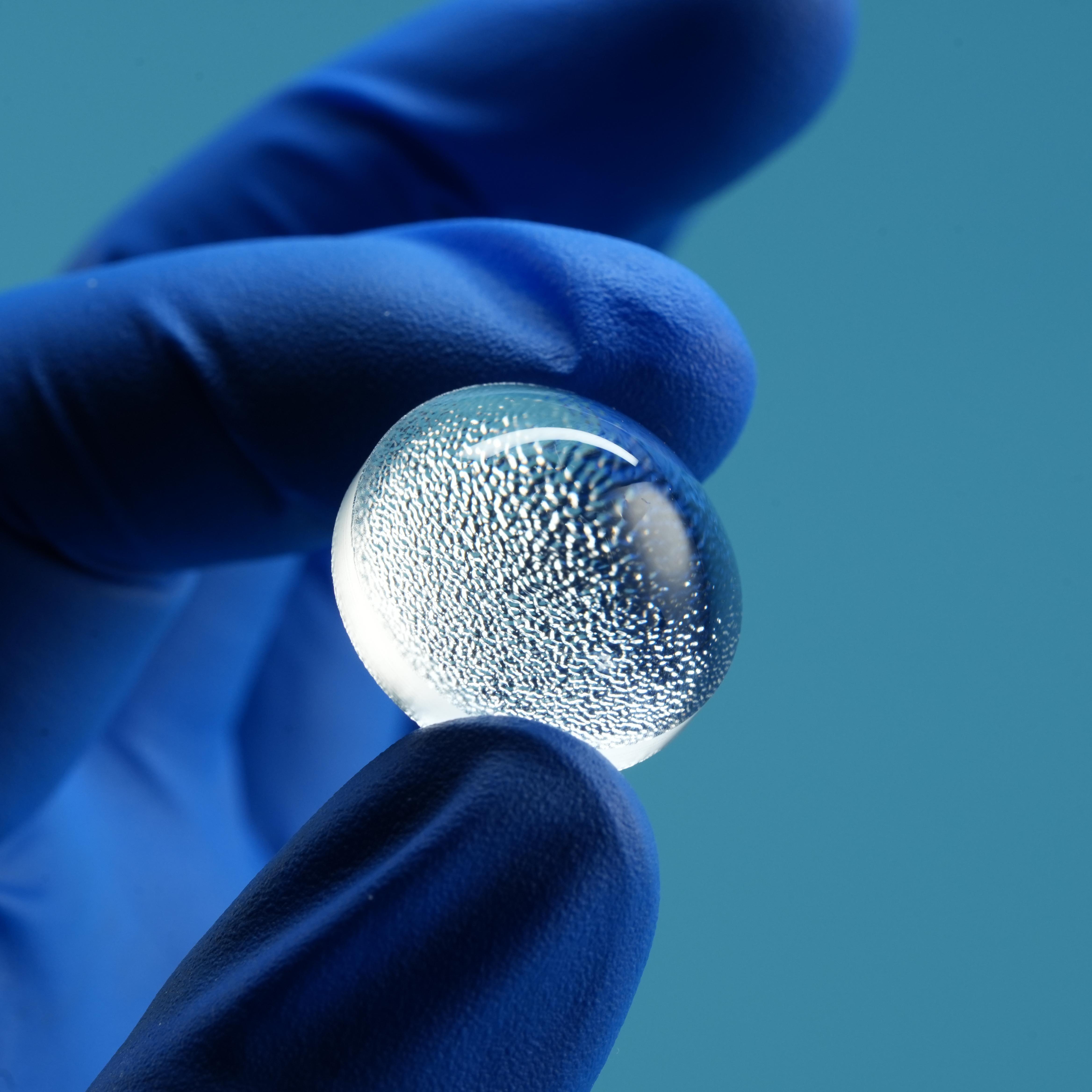
Factory Price Custom Precision Optical 1–200 mm Clear BK7 Spherical Quartz Glass Half Ball Concave/Biconvex Lens Anti-Reflective
For instrument builders who need BK7 and quartz lens geometry, AR coating and dimensional verification from one drawing-based supplier.
View product →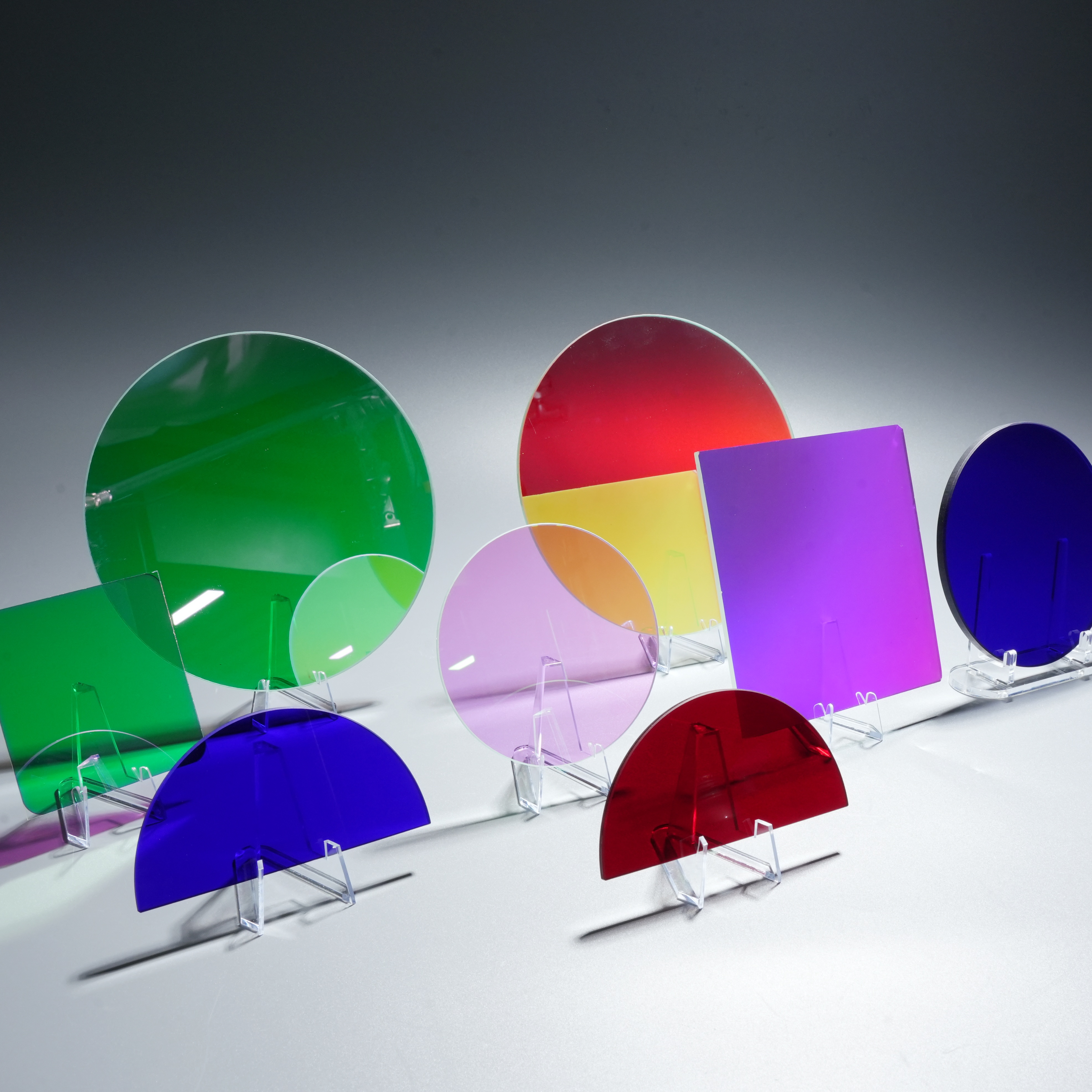
BO-GLASS BO-AH242 High-Precision 590 nm 49 mm Coated UV Borosilicate Bandpass / Longpass Optical Filter
A coated filter reference for wavelength selection, UV control and transmission stability, with custom diameter and coating stack review.
View product →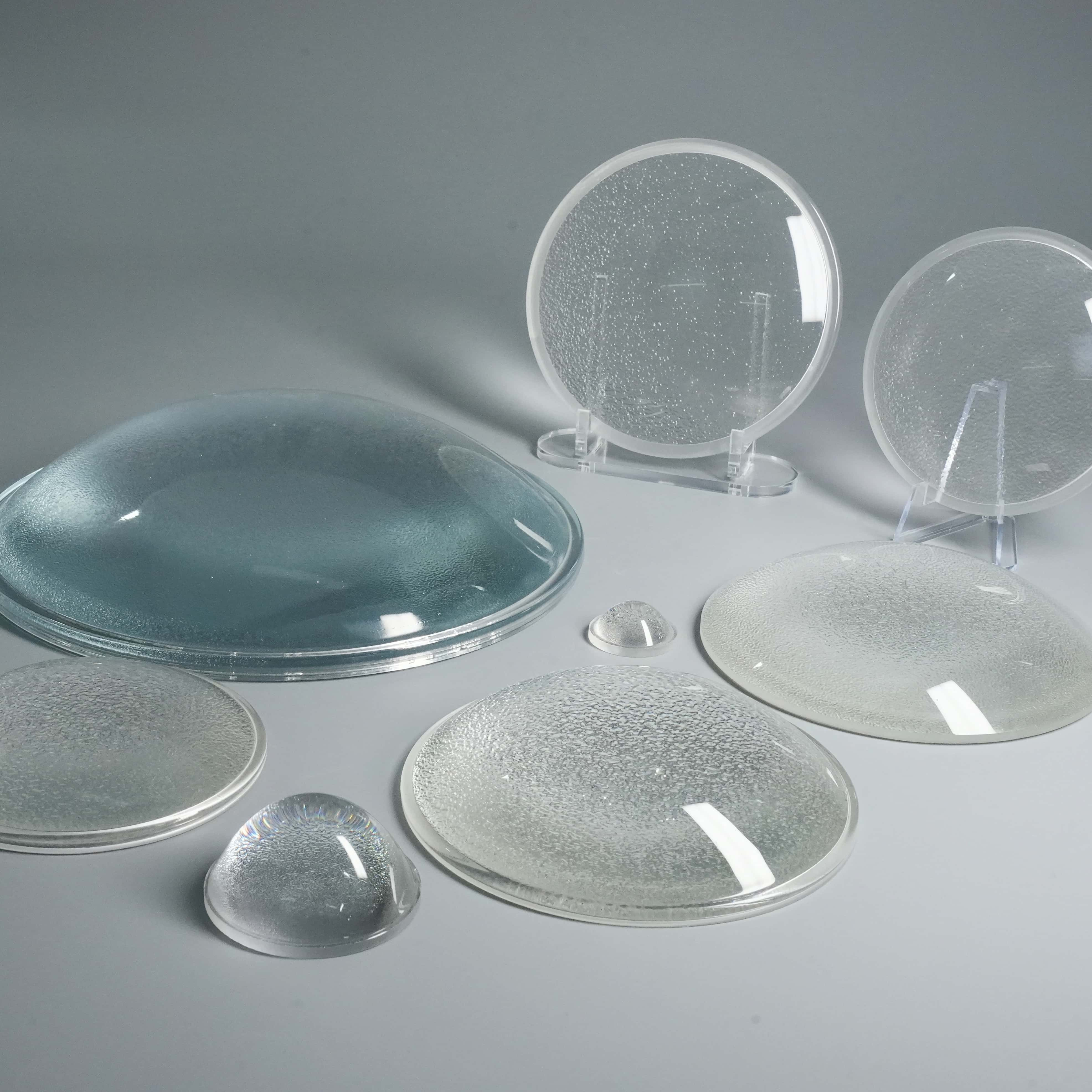
BO Glass Asymmetric LED Lens Roadway Street Light Reduces Light Pollution Glare Borosilicate Glass UV Protection OEM
For roadway fixtures that must control glare and light pollution while protecting the LED chamber; review beam shape, glass grade and gasket fit.
View product →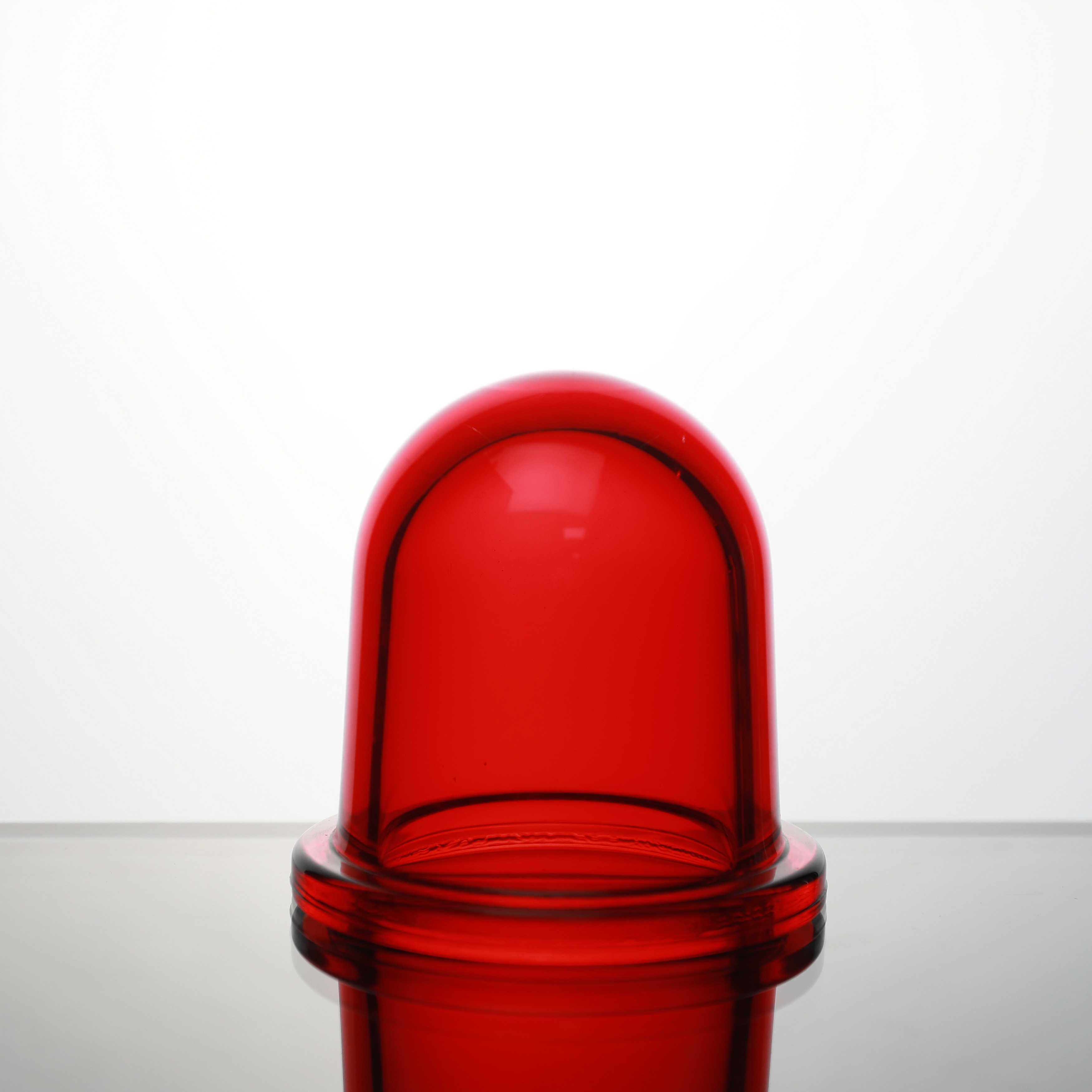
Custom Size Clear Borosilicate Explosion-Proof Antique Glass Light Covers Modern 2-Year Warranty Airport Outdoor Industrial
A heavy-duty cover for industrial, airport and outdoor fixtures. Wall thickness, thermal-shock resistance and sealing-face flatness are critical.
View product →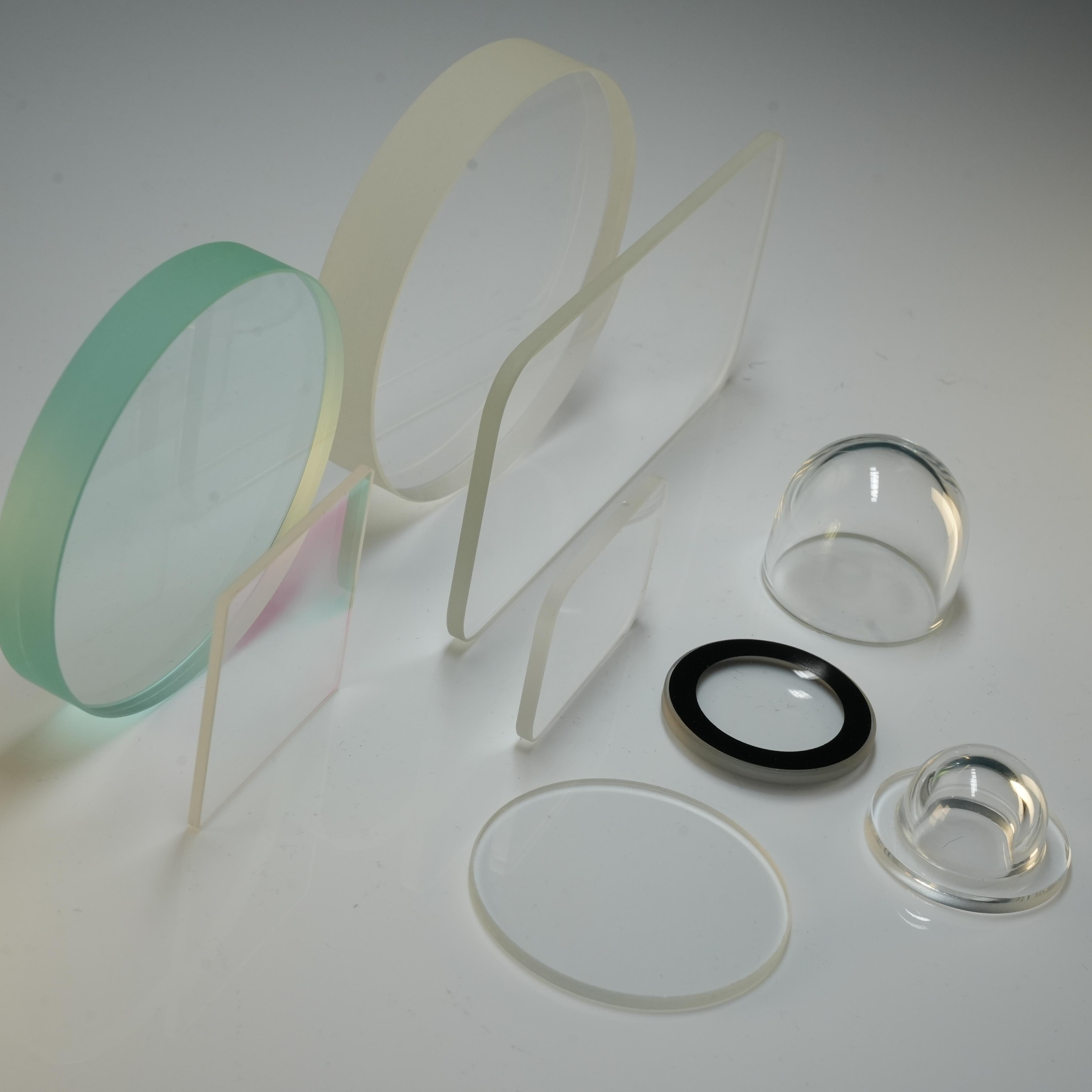
Manufacturer OEM Transparent High Quality Precision Borosilicate UV Fused Silica Coated Glass Optical Window High Transmittance
A window platform for instruments and sensing modules. Specify transmission band, coating, surface quality, pressure and sealing requirements.
View product →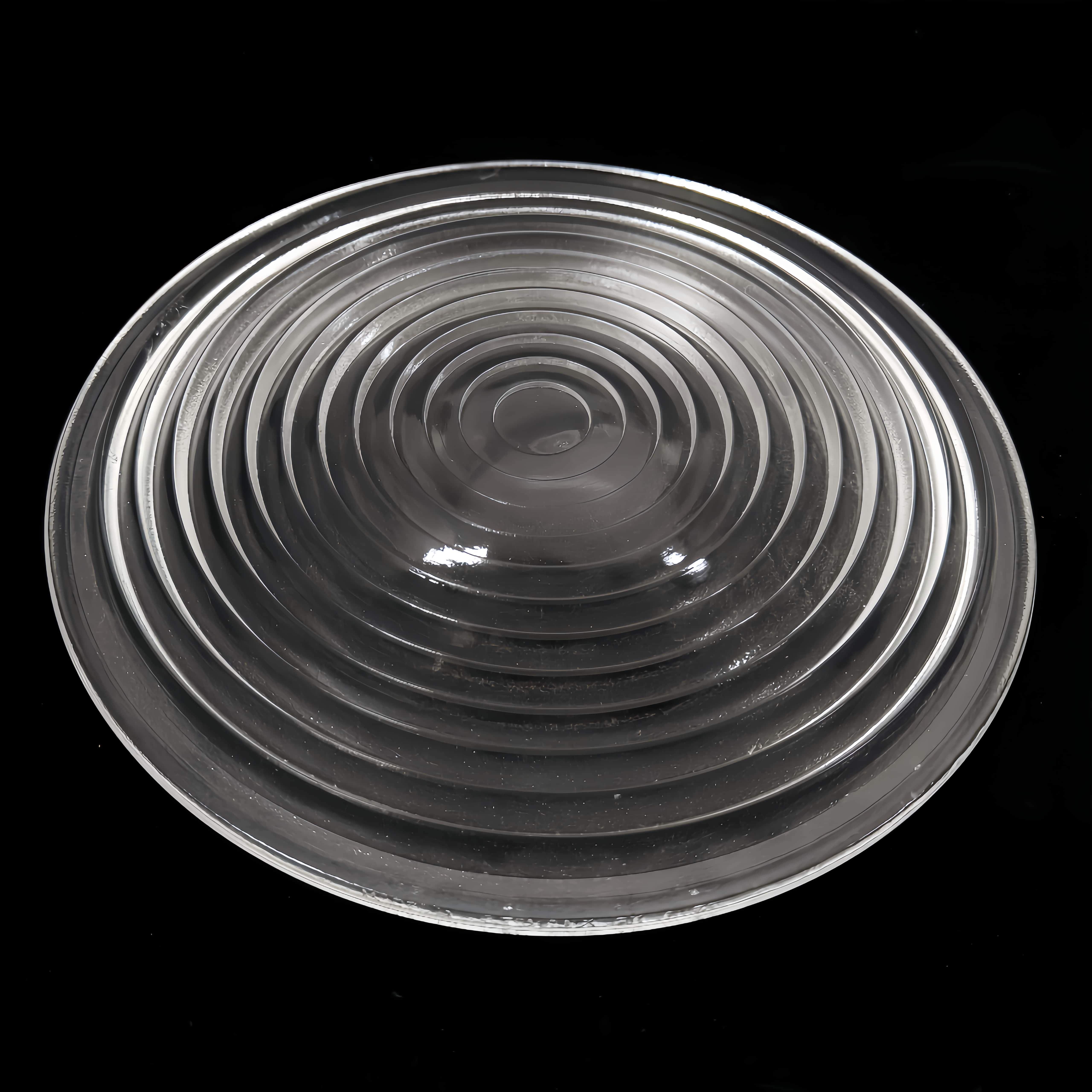
Precision Molded Borosilicate Glass Fresnel Lens Stage Lighting Anti-Reflective Coating FAA/ICAO Standards 175 mm BO GLASS OEM
A molded Fresnel reference for stage and signal optics. Mold quality, concentricity and coating adhesion matter more than nominal diameter alone.
View product →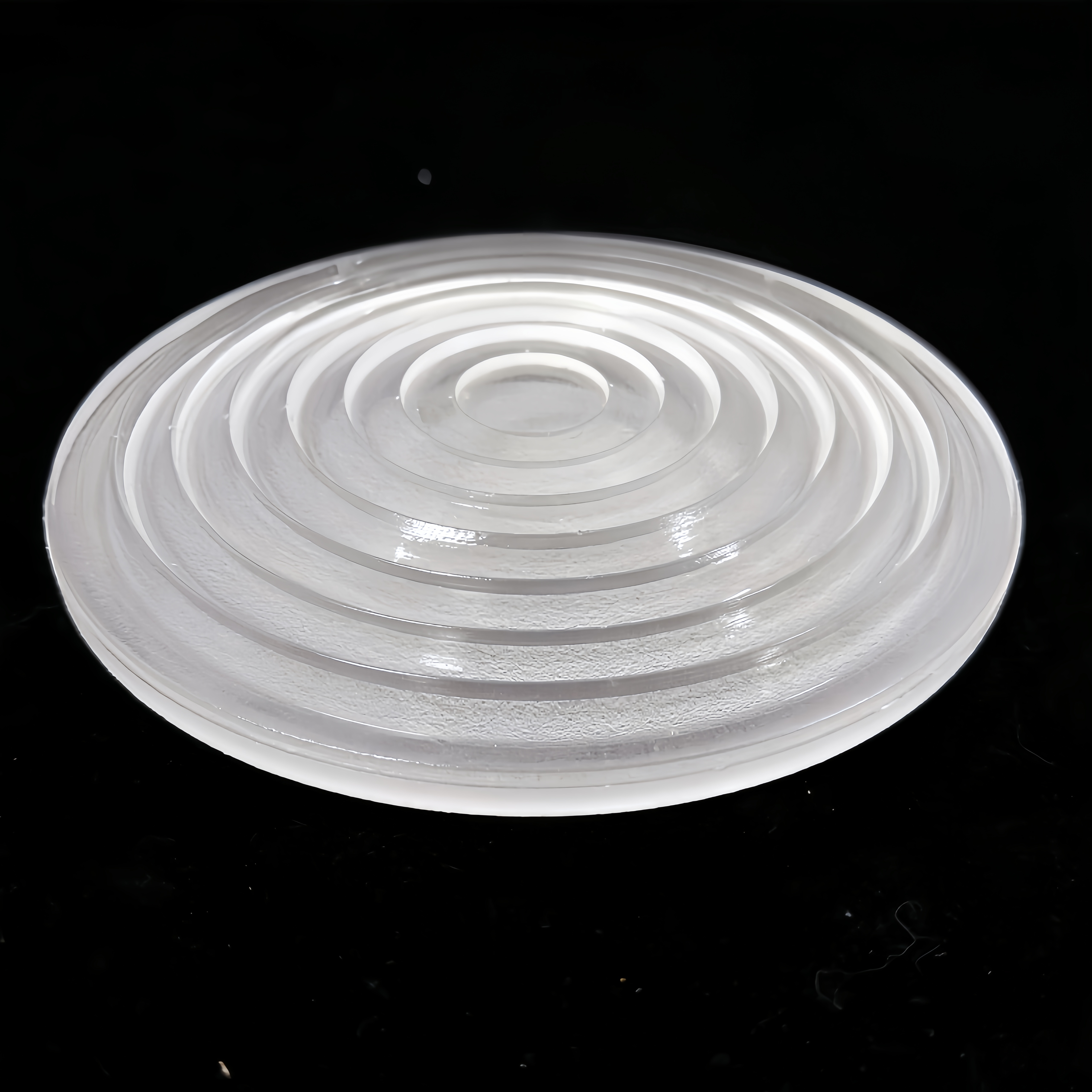
High Temperature Resistant Borosilicate Glass Fresnel Lens Anti-Reflective Coating High Power LED Collimation Stage Lighting
Built around thermal headroom and beam control. Use it to benchmark annealing, edge finish and AR coating durability under high-power LED loads.
View product →
High-Light Transmission Clear Borosilicate Glass Dome Lens LED Outdoor Lighting Fixtures Impact Resistant Anti-Scratch OEM
A dome lens for outdoor fixtures that need impact resistance, light transmission and UV stability. Confirm gasket compression and dome wall uniformity before tooling.
View product →What “China Best Glass Sheet Factories & Factory” Really Means for a Technical Buyer
The phrase is semantically broad. The useful sourcing question is not who sells glass sheets, but who can engineer a finished glass component that survives heat, impact, sealing pressure, UV exposure and certification review.
The phrase “China best glass sheet factories & factory” can refer to flat-glass distributors, sheet-glass processors, lighting-glass cover makers, optical-component manufacturers or trading companies that outsource every operation. For a procurement team, that ambiguity is dangerous. A low quotation for a “glass sheet” may exclude forming, annealing, coating, sealing-face control, inspection or export packaging — the exact steps that determine whether a component performs in a luminaire, sensor or signaling fixture.
In industrial lighting and optical assemblies, glass becomes a finished performance component only after material selection, forming, annealing or tempering, grinding, coating, inspection and packing are aligned. A borosilicate explosion-proof cover, for example, is not valued for raw sheet thickness alone; it is valued for thermal-shock resistance, dimensional repeatability, sealing-face flatness and the ability to match a housing and gasket across years of production. A Fresnel lens is not a decorative sheet; it is an optical surface whose concentricity and coating adhesion affect beam control.
Shanghai Tambi Glass Industrial Co., Ltd. is a useful benchmark because its experience sits in this gap between glass supply and fixture performance. The company describes itself as a manufacturer and trading company with more than a decade in lighting glass, a team of 11–50 people, annual export revenue in the US$2.5M–5M range, and drawing-based OEM/ODM support covering borosilicate, tempered glass, quartz, BK7, AR coating and optical finishing. Its design review focuses on wall thickness, draft, sealing faces and optical-path alignment before tooling starts — practical details that decide whether a sample becomes a repeatable order.
From an E-E-A-T perspective, the strongest supplier evidence is not a slogan such as “best factory.” It is a chain of verifiable decisions: why a material was chosen, how a sealing face will be measured, what annealing or tempering route is used, how coating durability is checked, how samples are approved and how fragile parts are packed for export. That is the information gain serious buyers need when comparing China glass sheet factories and factory-backed OEM glass suppliers.
Information gain for procurement teams
Use these checks to separate a true engineering-led glass factory from a sheet-glass reseller:
- Drawing-based DFM before mold or tooling commitment.
- Material and process matched to lamp surface temperature, impact rating and transmission band.
- Coating and optical path reviewed together with the fixture, gasket and housing.
- Third-party supplier assessment, factory video and audit access.
- Material and inspection reports available before mass production.
- Sample approval and change-control process for color, coating and dimensions.
- Export packaging designed for fragile, high-value glass components.
Procurement Trends for 2025–2030: From Lowest Piece Price to Lifecycle Assurance
Buyers are not abandoning cost pressure, but they are re-weighting it. Energy prices, freight volatility, certification risk and the cost of field failures are pushing sourcing teams toward suppliers that can document engineering decisions.
Drawing-led RFQs
Procurement teams increasingly send CAD files, tolerance stacks and sealing requirements instead of asking for a generic catalogue item. Suppliers that cannot review a drawing before quoting lose credibility.
Dual sourcing with evidence
Single-source convenience is being balanced against risk. Buyers want third-party verification, transaction history, factory video and a clear escalation path before adding a second supplier.
Thermal and optical documentation
CTE, maximum working temperature, transmission band and coating durability are moving from engineering notes into purchasing scorecards, especially for high-power LED and sensing products.
MOQ and sample flexibility
Buyers want sample quantities that fit qualification budgets, then a stable path to volume. Existing-mold reviews and staged tooling reduce risk between prototype approval and mass production.
What procurement teams now weight more heavily
Indicative priority model for specification-led glass component sourcing. Use it as a discussion framework, not a statistically representative survey.
Product Development Trends: More Heat, More Light, More Sensing
Glass components are moving from passive covers toward engineered optical and sealing surfaces. The strongest factories will be those that can connect material science, forming and coating to the final fixture environment.
High-power LED thermal headroom
Borosilicate 3.3 and correctly tempered glass remain central as luminaires become more compact and run hotter. Annealing quality and edge finishing are becoming purchasing criteria.
Coated optics and transmission budgets
AR coatings, bandpass filters and high-transmission windows are now specified by wavelength and angle, not just by a generic “clear glass” label.
LiDAR, sensor domes and windows
Pressure-rated domes, hemispherical windows and optical filters are growing in sensing modules. Buyers now ask for surface quality, coating and sealing performance together.
Signal-safe color and UV durability
Aviation, marine and obstruction lighting require stable red, green and clear transmission. UV protection and color consistency are increasingly verified across production lots.
| Material | Thermal expansion (×10⁻⁶/K) | Typical max. working temp. | Key strength | Best fit |
|---|---|---|---|---|
| Borosilicate 3.3 | ≈ 3.3 | ≈ 450 °C | Excellent thermal-shock resistance | Explosion-proof shades, high-power LED covers, Fresnel lenses |
| Tempered soda-lime | ≈ 9.0 | ≈ 250 °C | High impact strength, economical | Outdoor covers, floodlight glass, vandal-resistant lenses |
| Fused quartz | ≈ 0.55 | ≈ 1000 °C+ | UV transmission, extreme heat | UV optics, high-temperature windows |
| Optical BK7 (H-K9L) | ≈ 7.1 | ≈ 300 °C | Homogeneous, nd ≈ 1.517 | Precision lenses, prisms, mirrors, filters |
Values are typical references. Final specification is confirmed against your drawing, lamp surface temperature, impact rating and the standard your fixture must meet.
Application-Led Glass Specification: Eight Environments That Punish Poor Choices
Every application stresses glass differently. The best factory specifies material and processing from operating conditions, not from a catalogue photo.
Airport & Aviation
Obstruction, runway edge and in-pavement light lenses with stable red and clear transmission, thermal headroom and dimensional repeatability.
Marine & Offshore
Handblown and pressed covers for navigation and ship signal lights exposed to salt spray, vibration and rapid temperature change.
Oil, Gas & Chemical
Explosion-proof lampshades and emergency light enclosures for hazardous and corrosive zones where thermal shock and impact are daily risks.
Stage & Entertainment
Fresnel, prism and effect lenses that survive the heat of high-power COB modules while maintaining beam quality and coating performance.
Automotive & Outdoor LED
Projection lenses, IP68 lenses and reflectors for headlights, floodlights and street lighting, where optical control and gasket compatibility matter.
LiDAR & Scientific
Pressure-rated domes, hemispherical windows, prisms and bandpass filters for sensing systems that cannot tolerate optical misalignment.
Food & Medical Equipment
Chemically resistant sight glasses and covers for machinery that is washed down frequently and inspected for cracks or surface degradation.
Horticulture Lighting
AR-coated convex lenses that keep full-spectrum LED output efficient in indoor farms and controlled-environment agriculture.
What Shanghai Tambi Glass Industrial Co., Ltd. Adds to Your Program
A manufacturer and trading company focused on custom lighting and optical glass — not a generic sheet-glass trader.
Shanghai Tambi Glass Industrial Co., Ltd. is positioned around the failure modes described above. Its product scope — borosilicate covers, explosion-proof lampshades, signal light domes, LED lenses, Fresnel lenses, optical windows, prisms and bandpass filters — maps directly to real lighting and sensing applications. The commercial value of that focus is a shorter engineering loop: a drawing can be reviewed for thickness, draft, tolerance, sealing face and optical path before a mold is cut; existing molds can be assessed; and samples can be checked against the fixture rather than a catalogue image.
Buyers can also verify the business through supplier assessment, credit index, transaction level, trade capacity, trade history and ratings/reviews pages. The factory video and third-party onsite verification are useful evidence for procurement teams that cannot visit immediately. The company states an average response time within six hours, which matters during sample iterations, coating changes and change-control discussions. For distributors and OEMs, that combination of drawing-based production, transparent verification and export-ready packing is often more valuable than a lower piece price from a supplier that cannot explain its process.



Drawing-based OEM / ODM
Most orders start with a 2D/3D drawing or physical sample. Engineers review manufacturability, propose mold options and confirm samples before mass production.
Material and process matching
Borosilicate 3.3, tempered soda-lime, fused quartz and BK7 are selected against temperature, impact, transmission and certification requirements.
Coating and optical finishing
AR coating, bandpass filters, optical windows and lens finishing are reviewed together with the optical path and the final fixture environment.
Verify-before-you-buy transparency
Third-party supplier assessment, credit information, trade capacity and factory video support procurement qualification before a purchase order.
Controlled six-step workflow
Drawing review, mold and tooling, sampling, forming and annealing, coating and QC, then export packing — clear checkpoints from drawing to delivery.
Export-ready packing and fast response
Foam or pulp dividers, reinforced cartons and palletized freight protect fragile glass. Technical inquiries receive an average response within six hours.
Drawing Review
DFM check of thickness, draft, tolerance, sealing face and optical path.
Mold & Tooling
New or existing molds for pressing, blowing or grinding, confirmed against the drawing.
Sampling
Samples measured and sent for fit, light and gasket tests before mass production.
Forming & Annealing
Controlled forming, annealing or tempering to relieve stress and stabilize dimensions.
Coating & QC
AR or color coating, dimensional inspection and visual checks against the approved sample.
Export Packing
Divider-packed cartons and palletized export packing for sea or air freight.
Procurement FAQ: China Best Glass Sheet Factories & Factory
Practical answers for sourcing teams comparing custom lighting glass, optical glass and industrial glass component factories in China.
Is a glass sheet factory the same as a custom lighting-glass manufacturer?
Not necessarily. A sheet-glass processor may cut, drill, edge and temper flat blanks, but a lighting-glass or optical component maker must also control forming, annealing, coating, sealing interfaces and optical alignment. For covers, domes, lenses, prisms and filters, request drawing-based DFM, material data and sample inspection reports.
Can you manufacture glass covers, domes and lenses to my drawing?
Yes. Most orders are drawing-based. Send a 2D/3D drawing or a physical sample with dimensions, tolerance, material, color and coating requirements. The engineering team reviews manufacturability, proposes mold options and confirms samples before mass production.
What is the typical minimum order quantity?
Typical MOQs range from about 50 pieces for optical lenses to 100–500 pieces for pressed or blown lighting covers, depending on whether an existing mold can be used. Sample quantities are available for evaluation.
Should I choose borosilicate 3.3, tempered soda-lime, fused quartz or BK7?
Borosilicate 3.3 is usually preferred for high lamp temperatures and thermal shock; tempered soda-lime can be economic for high impact strength at moderate temperatures; fused quartz suits UV and extreme heat; BK7 is a common choice for precision lenses, prisms and windows. Confirm the final choice against surface temperature, impact rating, transmission band and fixture certification.
Do you supply glass for FAA L-810 and EN 50293 fixture programs?
We produce glass lenses and domes for fixture makers whose obstruction and signal lights are designed around FAA L-810 or EN 50293 requirements. Fixture certification remains with the luminaire manufacturer; we match color, transmission and dimensional specifications and can provide material and inspection reports on request.
How can I verify a China glass factory before ordering?
Ask for third-party supplier assessment, company credit information, transaction records, trade capacity, factory video and a sample report. Check whether the supplier reviews drawings before quoting and whether it can explain material, annealing, coating and inspection choices in technical terms. Tambi Glass provides verification pages and welcomes video calls or third-party audits.
How fast will an engineering quote be returned?
The stated average response time is within six hours. Include your drawing, annual volume, target material, operating temperature and any certification requirement so the reply can be technical and commercial rather than a generic price list.
How are fragile glass parts packed for export?
Parts are separated by foam or pulp dividers, packed in reinforced export cartons and palletized for sea or air freight. Custom packaging and labeling for distributors can be arranged.
Send the Drawing. Get a Manufacturing Review, Not a Generic Quotation.
Share dimensions, material, operating temperature, coating, annual volume and the standard your fixture must meet. The review will identify the right glass grade, forming route, tooling option and inspection plan before you commit to production.
Send an InquiryEmail: info@tambiglass.com