Eight Custom Cover Glass Products Recommended for OEM and Wholesale Buyers
These eight products represent repeatable custom glass briefs we handle for industrial lighting, imaging, laboratory, horticulture and optical equipment buyers. Each image links to its original product page, where specifications can be compared before requesting samples or drawing-based modifications.

OEM Borosilicate Glass Optical Dome Cover for Outdoor IP Cameras UV Resistant Waterproof Housing Anti-Reflective Coating
Recommended for outdoor IP cameras, surveillance domes and imaging windows exposed to rain, salt spray, UV and thermal cycling. Borosilicate construction with AR coating options supports optical clarity and weather resistance.
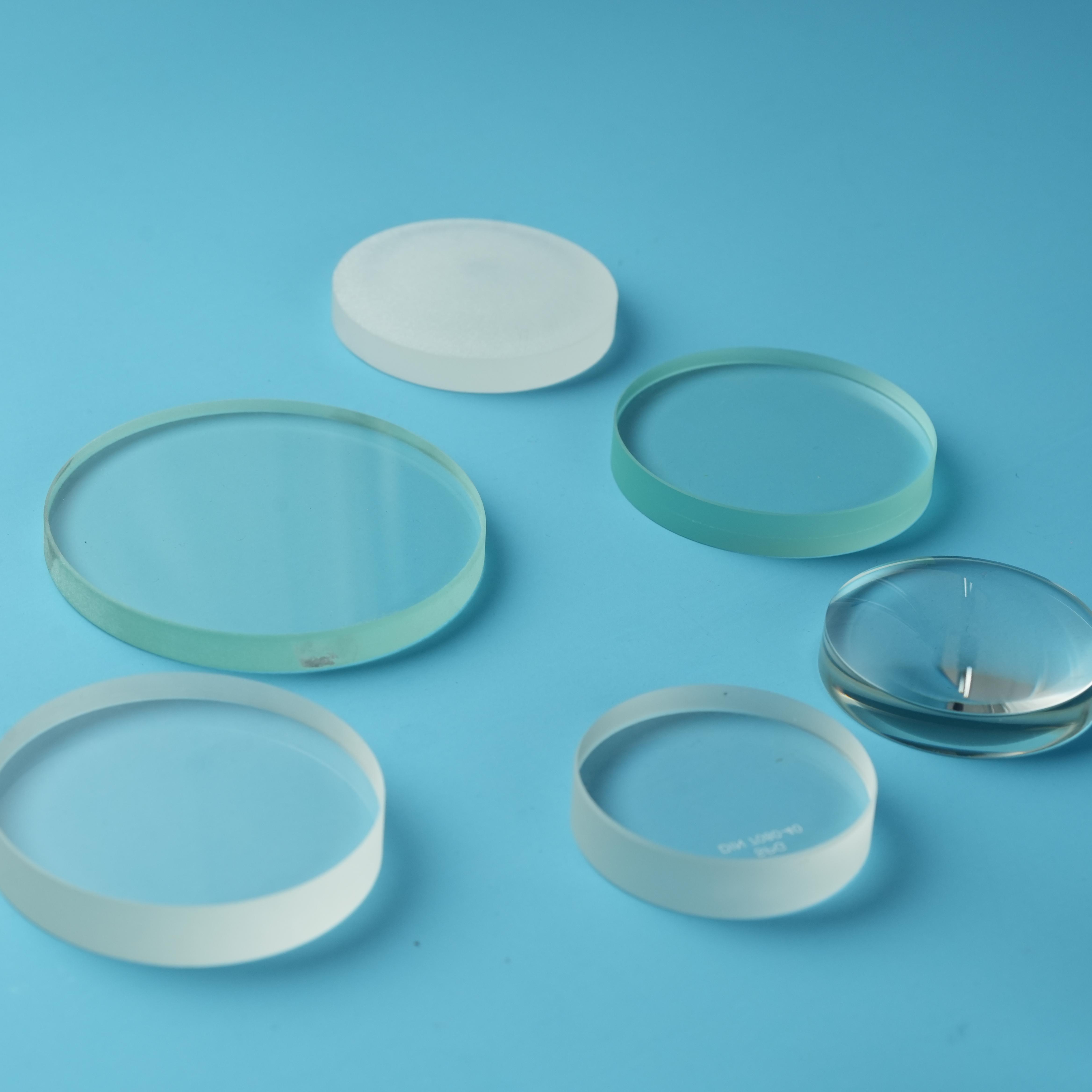
Custom OEM Bo Glass Clear Borosilicate K9 Bk7 B270 Fused Silica Anti-Reflective Coated Square Optical Window 50mm Diameter
Best for machine vision, optical sensors, analytical instruments and inspection equipment requiring a flat, coated window with controlled transmission. Multiple material options allow alignment with temperature, UV and cost targets.

Manufacturer OEM Transparent High Quality Precision Borosilicate UV Fused Silica Coated Glass Optical Window High Transmittance
Recommended for UV inspection, high-temperature viewing ports and precision instruments where transmission loss and surface flatness matter. Fused silica and borosilicate options can be matched to the optical path and sealing design.
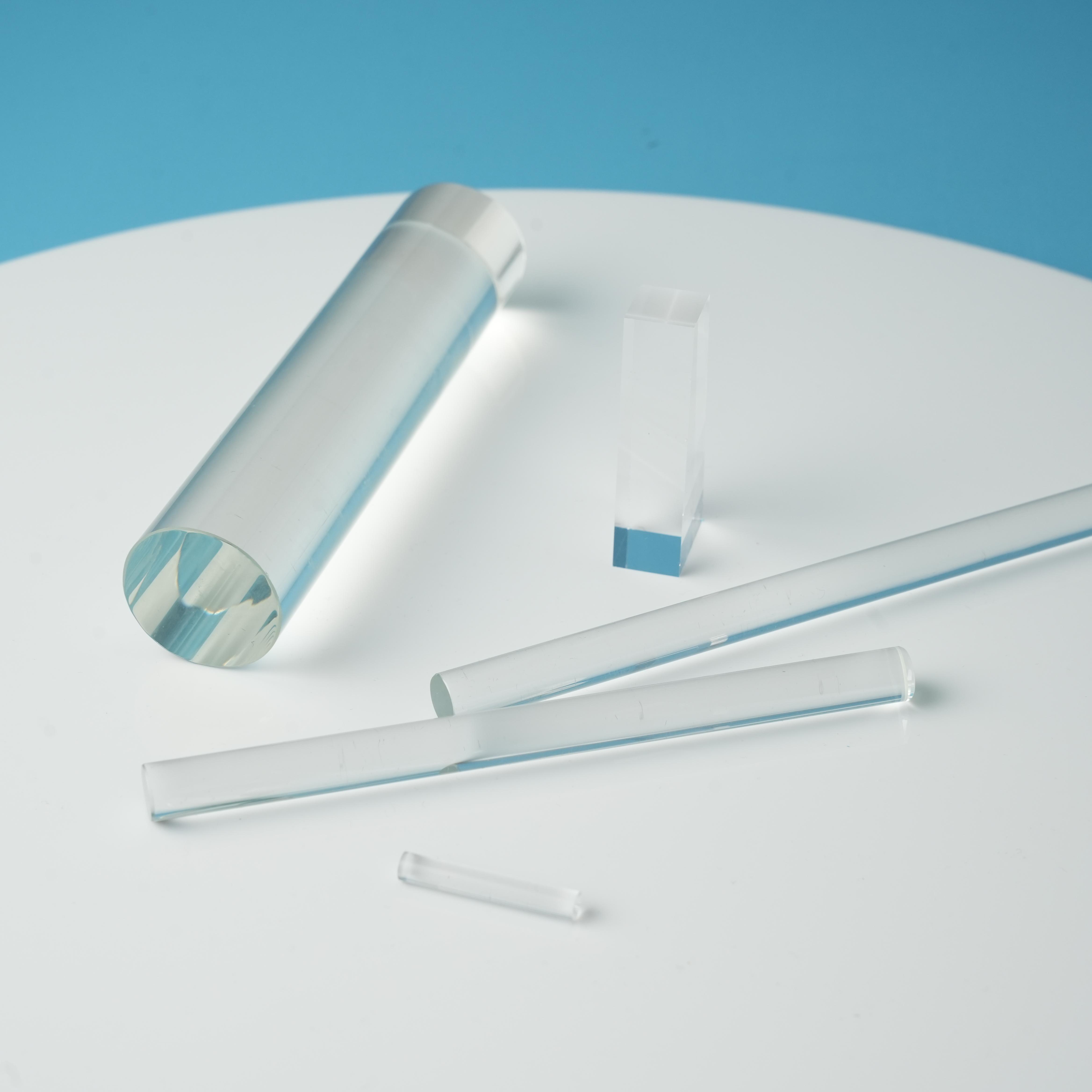
Factory Custom Shape Transparent High Borosilicate Temperature Resistant Optical Glass Light Guide Rod Rod Lens for Laboratory
A strong fit for laboratory fixtures, light-guide assemblies and photonics prototypes that require heat resistance and repeatable alignment. Custom shapes, edge finishing and dimensional tolerance can be reviewed against the drawing.

Wholesale OEM Shape Size Borosilicate Glass 175mm Diameter AR Coating Double Plano Convex Achromatic Fresnel Lens BO GLASS Stage
Recommended for stage, studio and architectural spotlights using high-power LED modules. The 175 mm class offers a practical balance between beam control, thermal stability, AR coating efficiency and fixture weight.
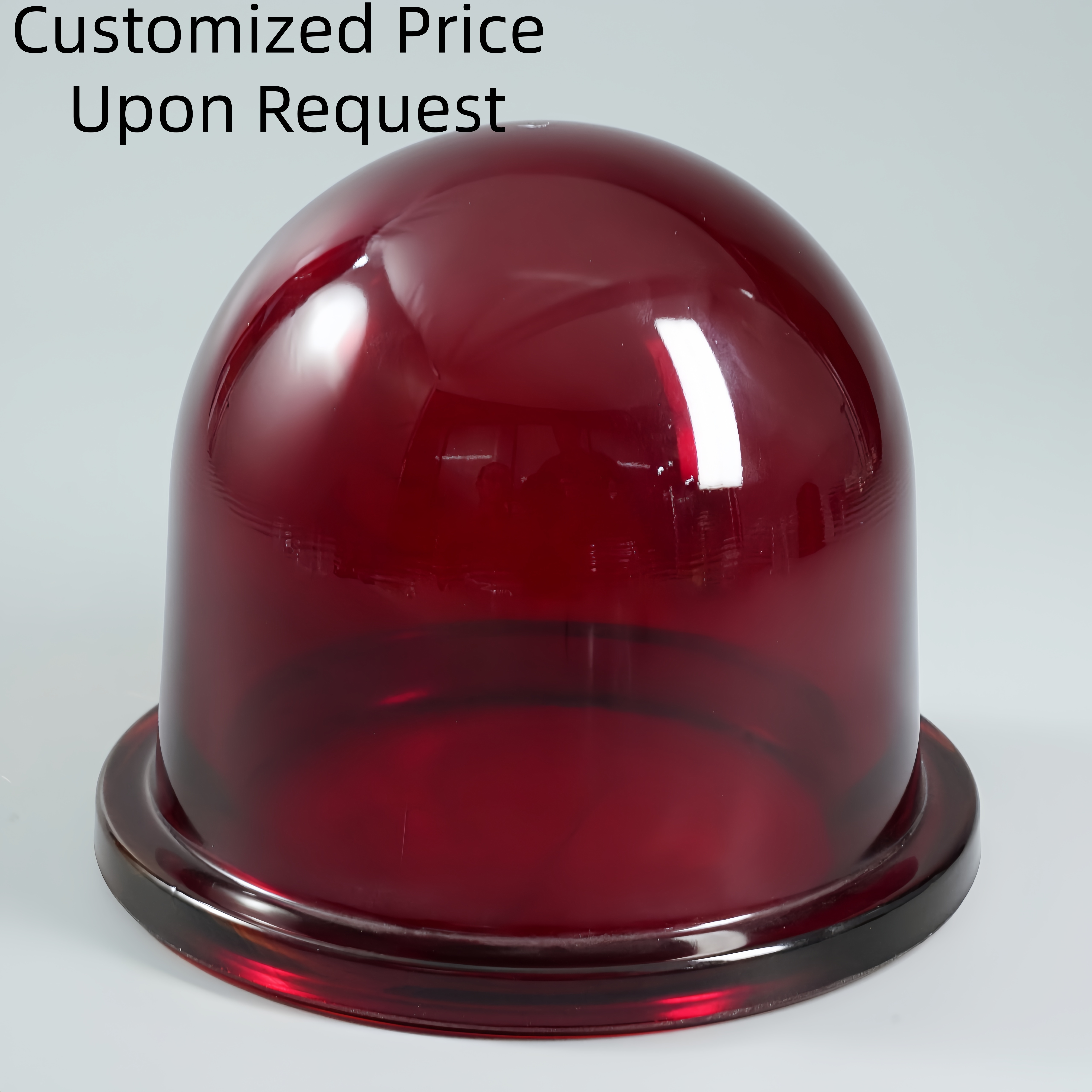
High-temperature Resistant Pressed Glass Shade, Explosion-proof & Crack-proof, Outdoor Street Light Specific
Recommended for street lighting, hazardous-area fixtures and outdoor luminaires where heat, impact and thermal shock are the dominant failure modes. Pressed construction supports repeatable geometry and efficient volume production.
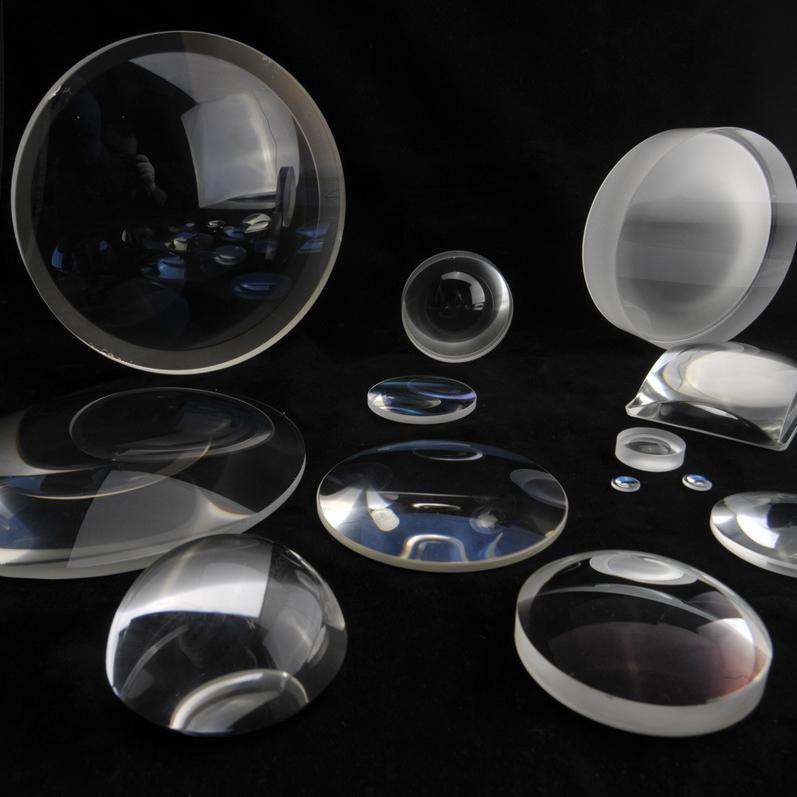
Custom High Quality Diameter 80Mm 127Mm 250Mm Spherical K9 Optical Coating Glass Plano Convex Lens for Big Magnifying
Best for magnifying systems, condensers, inspection optics and custom focusing assemblies. K9 optical glass and coating options provide a practical route for precision projects that need repeatable optical performance.
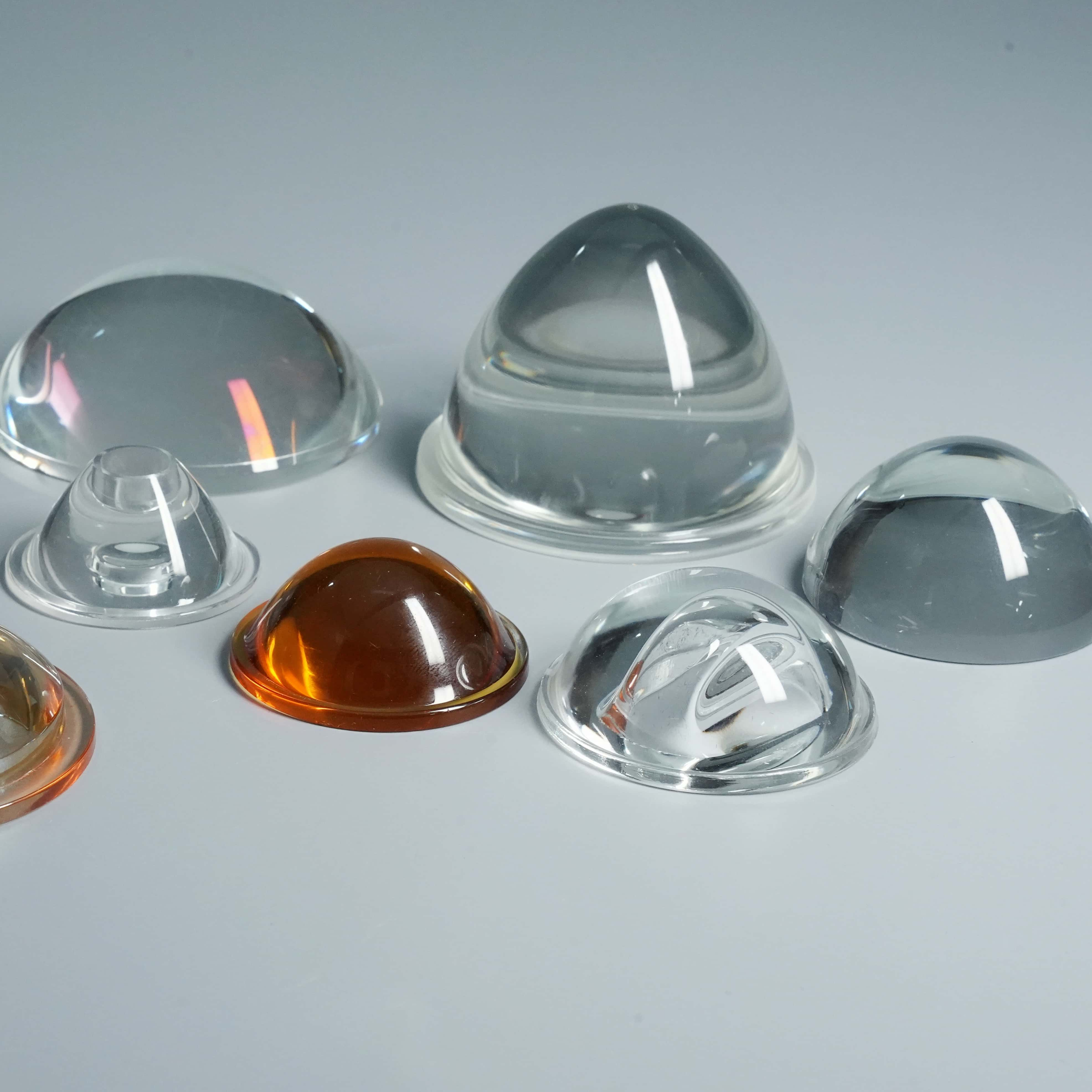
Custom Borosilicate Glass LED Grow Light Convex Lens with Anti-Reflective Coating for Indoor Farming Full Spectrum Lighting
Recommended for indoor farms, greenhouses, vertical farming and research lighting. Borosilicate glass with AR coating helps maintain full-spectrum output while tolerating the thermal load of high-power horticultural LED fixtures.
Why Custom Cover Glass Is an Engineering Purchase, Not a Commodity SKU
Searching for the China best custom cover glass manufacturer and wholesalers usually returns a long list of suppliers with similar product photos. The real difference is not the number of catalog pages; it is whether the supplier can translate a finished luminaire or optical system into a stable glass specification. Cover glass sits at the intersection of thermal load, sealing pressure, impact risk, optical transmission, coating durability and regulatory compliance. A cover that looks correct on a drawing can still fail after repeated thermal cycles, salt-spray exposure or a cold night behind a high-power LED.
For procurement teams, the lowest unit price is rarely the lowest total cost. A cracked explosion-proof shade, a delaminated AR coating, a color-shifted signal lens or an out-of-tolerance camera dome can trigger field returns, line stoppages and certification delays. That is why experienced buyers evaluate a custom glass manufacturer through four lenses: design assistance, material discipline, process control and supply transparency. These are the same criteria our Shanghai-based team uses when reviewing a new drawing for borosilicate domes, pressed lampshades, Fresnel lenses, optical windows and LED lenses.
As a manufacturer and trading company based in Shanghai, Shanghai Tambi Glass Industrial Co., Ltd. supports drawing-based OEM and ODM projects for lighting and optical OEMs. The company reports more than ten years of experience, a team of 11–50 people and annual export revenue in the US$2.5M–5M range. Its product focus covers explosion-proof glass lampshades, signal light domes, glass covers, LED lenses, Fresnel lenses, prisms, optical domes and bandpass filters. Buyers can review the company profile, factory video, strength page and production and quality page before placing a sample order.
Procurement insight: a glass supplier should be able to explain not only what material is used, but why that material, wall thickness, annealing route and coating stack fit the operating conditions of your fixture. If those answers are vague, the quotation is incomplete regardless of price.
The Future of Custom Cover Glass Procurement: 2026–2030
Wholesale and OEM buyers are moving away from catalog-only purchasing. The next buying cycle will reward suppliers who can document material choices, reduce qualification risk and support multi-SKU programs with predictable quality.
Drawing and simulation first
RFQs will increasingly include 3D drawings, sealing-stack details, LED thermal data and field-exposure assumptions. Suppliers that return manufacturability notes with the quotation will shorten qualification cycles.
Traceability becomes routine
Material lot, coating run, dimensional inspection and visual acceptance records will be requested as standard for aviation, marine, hazardous-area and sensing projects — not only for regulated aerospace orders.
Whole-system cost replaces unit price
Procurement teams will compare total landed cost, field failure risk, replacement logistics and warranty exposure. A slightly higher glass price can be justified when it prevents cracked covers or coating failures.
Wholesale families, not single parts
Distributors and wholesalers will consolidate qualified glass families — dome covers, Fresnel lenses, pressed shades and optical windows — with shared inspection plans and packaging standards to reduce supplier sprawl.
Product Development Trends in Borosilicate and Optical Cover Glass
Lighting and sensing designs are becoming more compact, more powerful and more exposed to harsh environments. Glass specifications are evolving in response.
Thin-wall designs with thermal margin
High-power LED fixtures need lighter covers without sacrificing thermal-shock resistance. Borosilicate 3.3, controlled wall thickness and optimized annealing remain central to reliable thin-wall designs.
AR, hydrophobic and UV-stable coatings
Anti-reflective coatings are being specified with environmental durability in mind. Outdoor cameras, LiDAR windows and horticulture lenses benefit from coatings that resist humidity, cleaning and UV aging.
Domes for imaging and LiDAR
Hemispherical and custom optical domes are increasingly used for IP cameras, robotics, LiDAR and scientific instruments, where pressure resistance, optical clarity and coating uniformity matter together.
Color-stable signal glass
Aviation, marine and obstruction lighting require stable chromaticity and transmission. Pressed or tempered red, green and clear domes must be controlled not only by drawing but by batch consistency.
Pressed-to-precision hybrid supply
Some programs begin with pressed covers and progress to precision-ground optical features. Suppliers that combine pressing, grinding, polishing and coating can reduce the number of vendors in the chain.
Standardized optical glass families
Wholesale buyers benefit when borosilicate, K9/BK7, B270 and fused silica options are organized into repeatable families with documented tolerance bands and coating choices.
Material Selection Matrix: Borosilicate 3.3, Tempered Soda-Lime, Fused Quartz and BK7/K9
Selecting the correct glass early reduces cracked covers, coating failures and costly field returns. The table below summarizes common engineering references used during drawing review.
| Material | Thermal expansion | Typical max. working temperature | Key strength | Best for | Procurement note |
|---|---|---|---|---|---|
| Borosilicate 3.3 | ≈ 3.3 × 10⁻⁶/K | ≈ 450 °C | Excellent thermal-shock resistance | Explosion-proof shades, high-power LED covers, Fresnel lenses | Specify surface temperature, rain-contact risk and sealing method. |
| Tempered soda-lime | ≈ 9.0 × 10⁻⁶/K | ≈ 250 °C | High impact strength and economical cost | Outdoor covers, floodlight glass, vandal-resistant lenses | Confirm tempering pattern, edge quality and impact requirement. |
| Fused quartz | ≈ 0.55 × 10⁻⁶/K | ≈ 1000 °C+ | UV transmission and extreme heat resistance | UV optics, high-temperature windows, laboratory viewports | Clarify UV wavelength range and whether coating is required. |
| Optical BK7 / K9 | ≈ 7.1 × 10⁻⁶/K | ≈ 300 °C | Homogeneous optical properties, nd ≈ 1.517 | Precision lenses, prisms, mirrors, filters, magnifying optics | Provide optical drawing, tolerance and coating target with RFQ. |
Values are typical references for initial planning. Final specification must be confirmed against your drawing, lamp surface temperature, impact rating, sealing design, coating requirement and the standard your fixture must meet. For borosilicate versus tempered soda-lime decisions, ask for a sample validation plan rather than relying on a single data point.
Why Shanghai Tambi Glass Is a Verifiable Custom Cover Glass Partner
Experience is useful only when it is visible in the process. Our advantage comes from combining lighting-glass knowledge, optical finishing and export discipline in one supply chain.
Drawing-based OEM / ODM support
Send a 2D/3D drawing or physical sample. Engineers review wall thickness, draft, sealing faces, tolerance and optical path alignment before tooling. This DFM step helps reduce sample iterations and production surprises.
Broad material and coating capability
Borosilicate 3.3, tempered soda-lime, fused quartz, BK7/K9 and related optical materials can be matched with AR coating, optical coating, color and edge-finishing requirements. One supply chain can cover pressed, blown, ground and coated parts.
Lighting and optical application knowledge
Our team works with airport, marine, oil and gas, stage, automotive, LiDAR, scientific, food and medical, and horticulture applications. Each application stresses glass differently, so the specification starts from the operating condition.
Inspection and export discipline
Sampling, dimensional checks, visual inspection, coating review and divider-packed export cartons are planned around fragile glass parts. Custom packaging and labeling for distributors can be arranged for wholesale programs.
Fast technical response
Our average technical response time is within six hours. Include dimensions, material, operating temperature, annual volume and coating target in the inquiry to receive a more useful engineering and commercial review.
Transparency before commitment
Review our supplier assessment, credit index, trade capacity, trade history and buyer feedback before placing a sample order.
A Six-Step OEM Workflow That Reduces Sample-to-Production Risk
Clear checkpoints matter more than broad promises. This is how a drawing-based project moves from review to export packing.
Drawing review
DFM check of thickness, draft, tolerance, sealing face, optical path and coating requirement. The goal is to identify manufacturing risk before tooling starts.
Mold and tooling
New or existing molds for pressing, blowing, grinding or finishing are selected according to part geometry, volume and appearance requirement.
Sampling
Samples are measured and sent for fit, light and environmental evaluation. Changes are agreed before mass production, not after shipment.
Forming and annealing
Controlled annealing or tempering helps relieve stress and improve thermal-shock resistance in lighting covers, domes and optical parts.
Coating and QC
AR or color coating, dimensional inspection, visual inspection and functional checks are aligned with the approved sample and drawing.
Export packing
Foam or pulp dividers, reinforced export cartons and palletization protect fragile glass parts for sea or air freight. Distributor labeling is available.
Applications and Product Fit: Where the Glass Specification Decides Performance
Every application stresses glass differently. A good supplier specifies material and processing from your operating conditions, not from a generic catalog.
Aviation and airport lighting
Obstruction, runway edge and in-pavement light lenses need stable red and clear transmission, heat resistance and dimensional repeatability. We support fixture makers whose products are designed to FAA L-810-style requirements.
Marine and offshore
Handblown and pressed covers for navigation and ship signal lights must resist salt spray, UV and temperature cycling. Color and optical transmission should be controlled along with the sealing design.
Oil, gas and chemical
Explosion-proof lampshades and emergency-light enclosures must tolerate heat, impact and corrosive atmospheres. Borosilicate and tempered options are selected according to thermal and impact risk.
Stage and entertainment
Fresnel, prism and effect lenses must survive high-power LED and COB heat. Coating efficiency, beam control and thermal shock resistance directly influence fixture performance.
Automotive and outdoor LED
Projection lenses, IP68 lenses and reflectors for headlights, floodlights and street lighting require repeatable optics, impact strength and weather resistance.
LiDAR and scientific instruments
Pressure-rated domes, hemispherical windows, prisms and bandpass filters support sensing systems where coating uniformity and optical transmission are critical.
Food and medical equipment
Chemically resistant sight glasses and covers suit machinery that is washed down frequently. Edge quality and surface finish are especially important in hygienic environments.
Horticulture lighting
AR-coated borosilicate convex lenses help keep full-spectrum LED output efficient in indoor farms, greenhouses, vertical farming and research lighting.
Custom Cover Glass Procurement FAQ
These are the questions procurement and engineering teams most often ask before requesting samples, tooling or wholesale pricing.
Can you manufacture glass covers and lenses to my own drawing?
What is the typical minimum order quantity?
Should I choose borosilicate glass or tempered soda-lime glass?
Do you supply glass for FAA L-810 and EN 50293 lighting fixtures?
How fast do you reply to technical inquiries?
How are fragile glass parts packed for export?
Can you add anti-reflective coating, color or other optical treatment?
How do you control thermal-shock and cracking risk?
Can wholesale buyers request custom packaging and repeat-order programs?
Send Your Drawing for a Six-Hour Engineering Review
Share dimensions, material tolerance, operating temperature, coating target and annual volume. Our team will respond with manufacturability notes, a sample route and wholesale pricing logic for borosilicate covers, optical windows, Fresnel lenses, domes and explosion-proof shades.
Inquire Now Technical inquiries: info@tambiglass.com · Shanghai, China · Drawing-based OEM / ODM · Wholesale programs supported