Eight Engineered Glass Products That Fit Real Buyer Intent
The most useful way to evaluate a “China best cast glass manufacturer” is not to compare catalogue photos, but to compare how the parts perform inside an IP camera, a hazardous-area luminaire, a runway fixture, a LiDAR sensor or a medical machine. These eight buyer-tested directions represent the practical search intent behind cast, pressed, blown and optical glass sourcing.

OEM Borosilicate Glass Optical Dome Cover for Outdoor IP Cameras UV Resistant Waterproof Housing Anti-Reflective Coating
UV-resistant optical dome with AR coating for outdoor camera housings that must resist weather, cleaning and image degradation.
View product →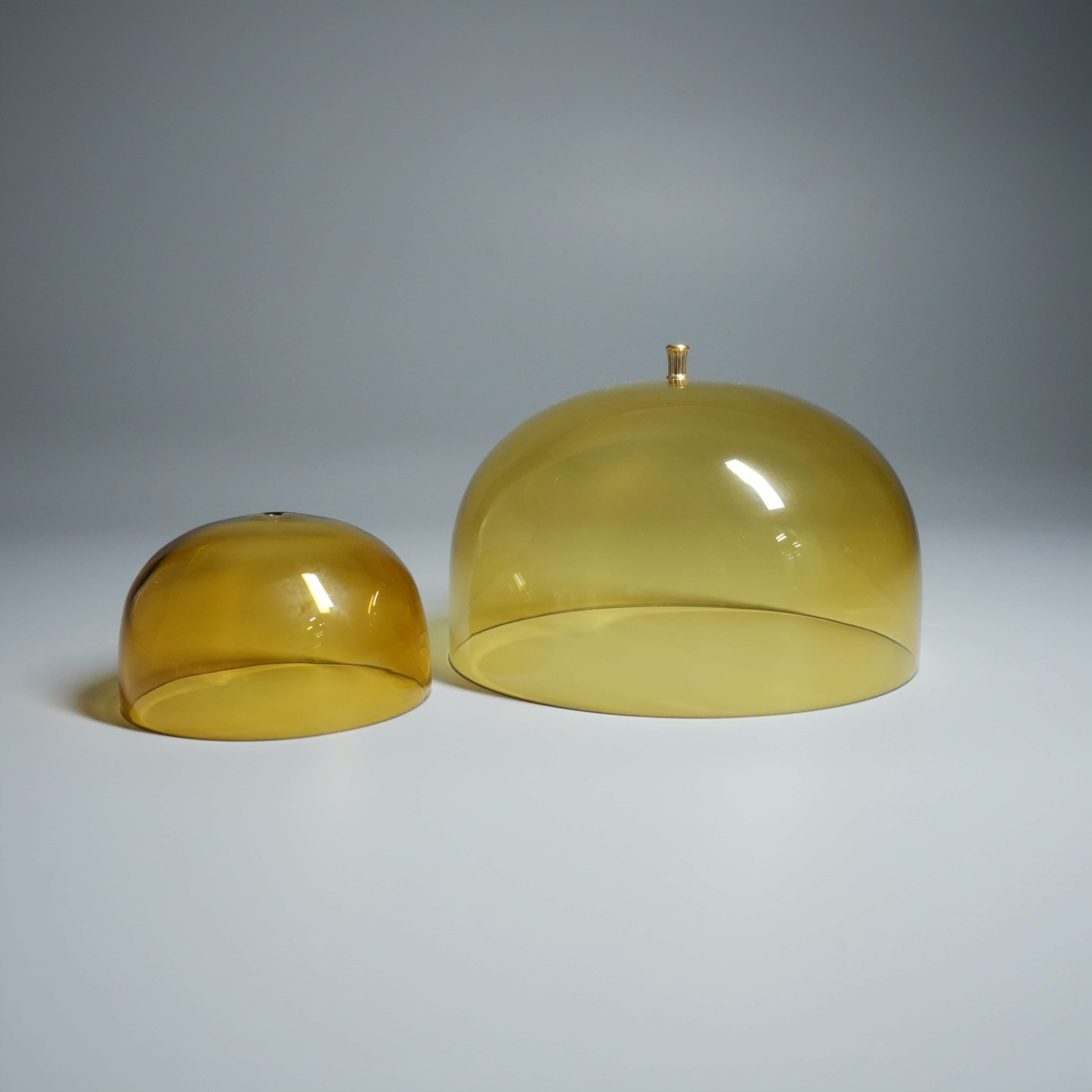
Certified Glass Cover for Food Machinery and Medical Equipment, Chemical Resistant
Chemical-resistant glass cover for washdown environments, sight windows and equipment where cleanability and visual inspection matter.
View product →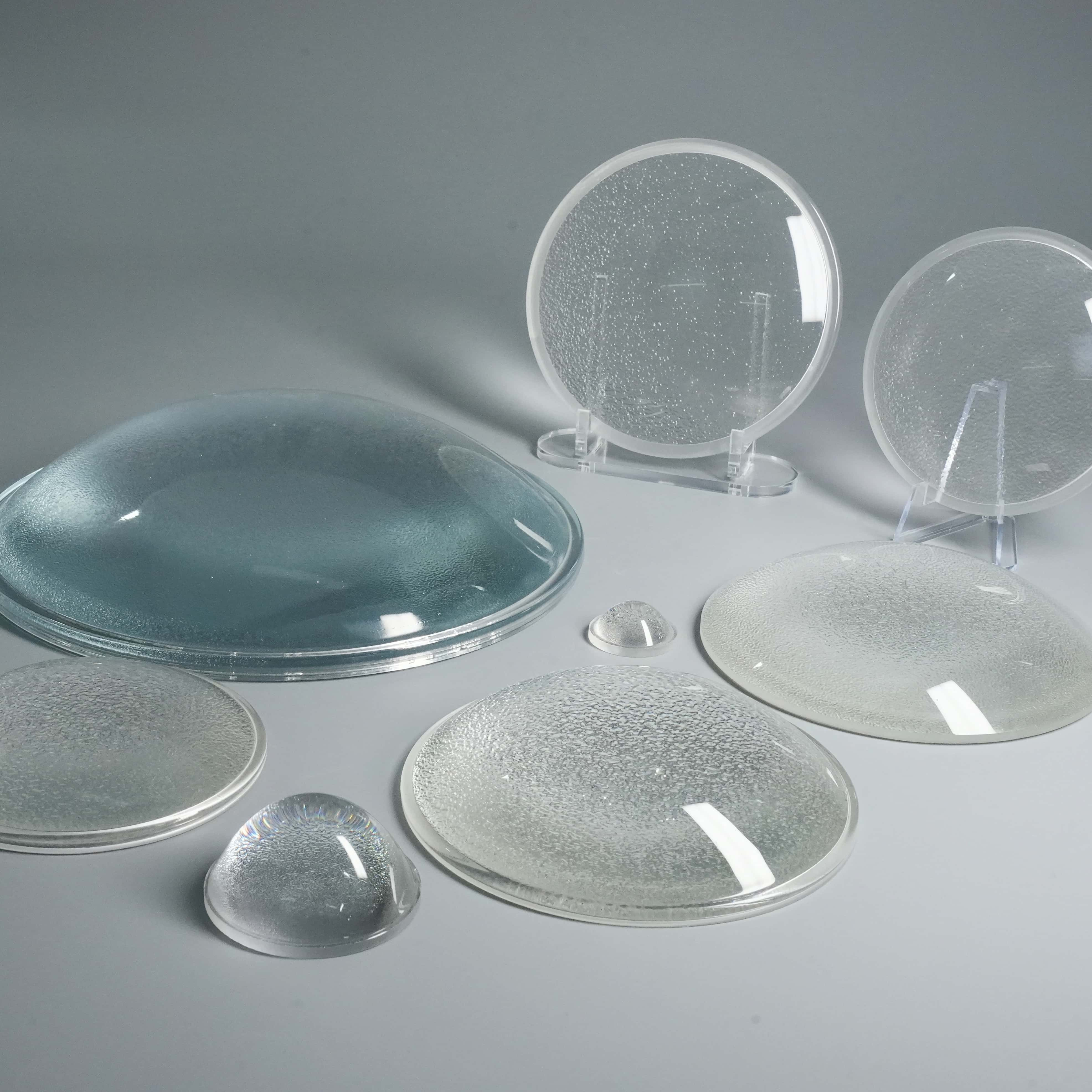
Bo Glass Asymmetric LED Lens Roadway Street Light Reduces Light Pollution Glare Borosilicate Glass UV Protection OEM
Asymmetric borosilicate LED lens for roadway lighting, balancing light distribution, glare control and UV protection.
View product →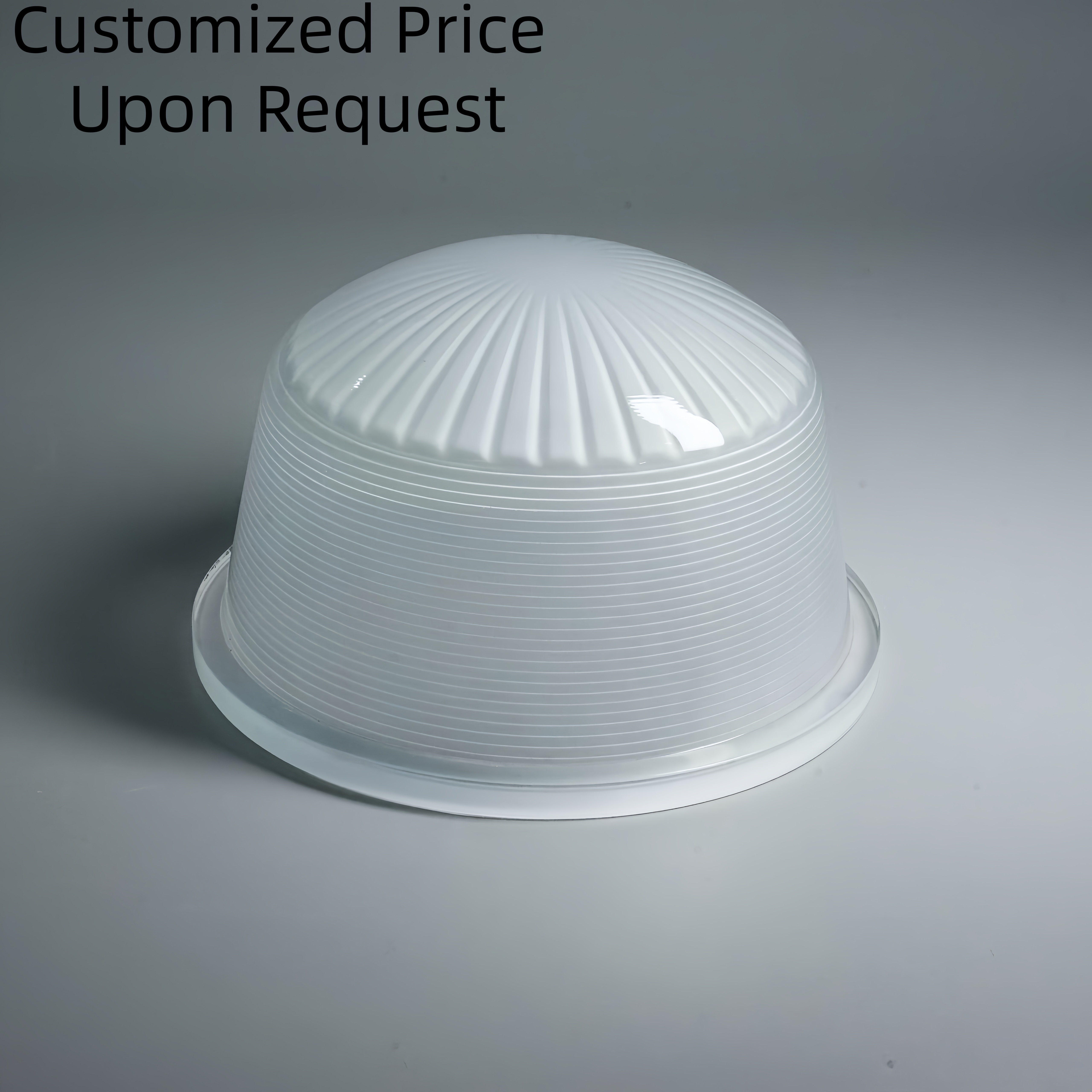
Transparent Explosion-proof Glass Shade, High Light Transmittance, Industrial Workshop Lighting
High-transmittance protective shade for industrial workshop lighting where impact, heat and dust resistance are essential.
View product →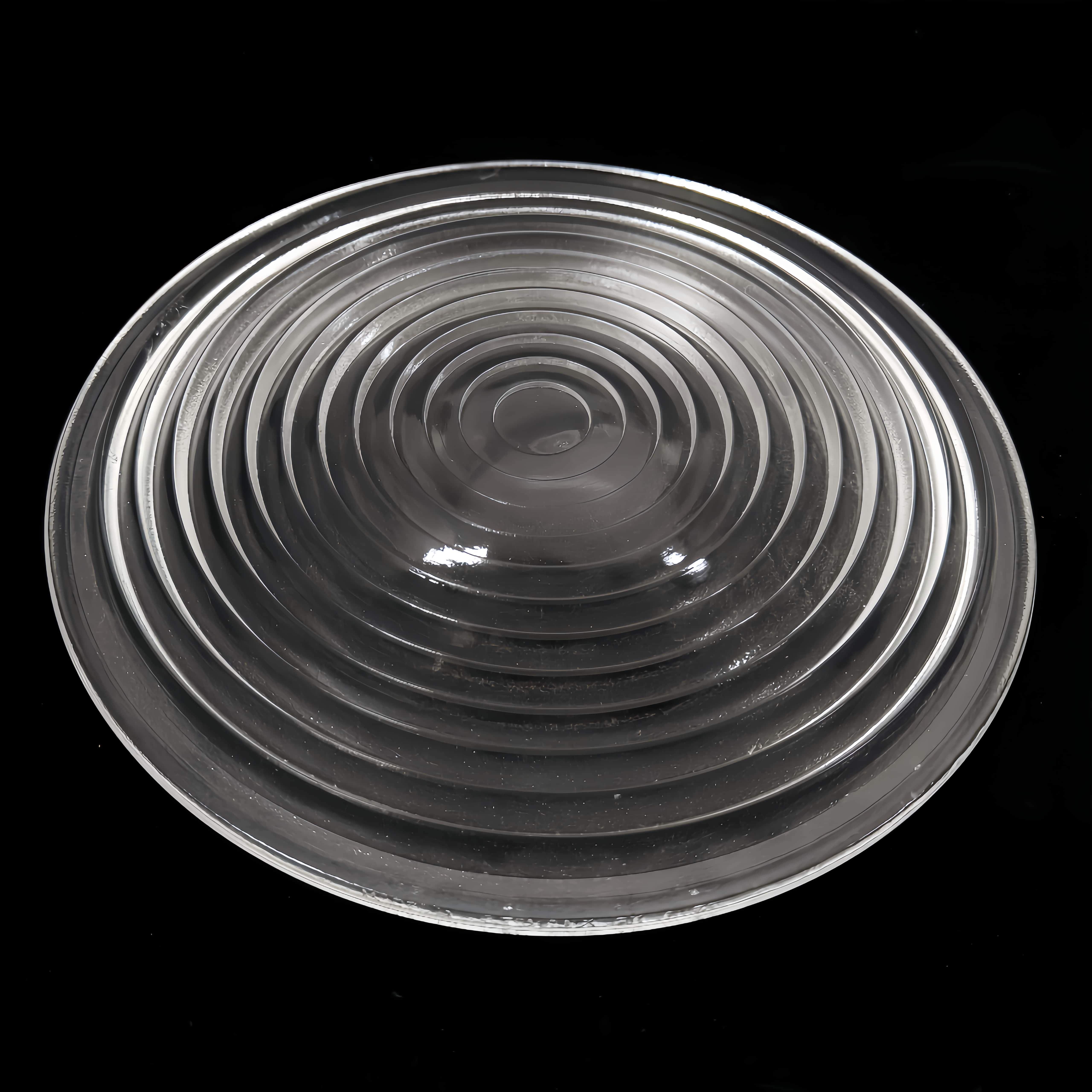
Precision Molded Borosilicate Glass Fresnel Lens Stage Lighting Anti-Reflective Coating FAA/ICAO Standards 175mm BO GLASS OEM
Molded borosilicate Fresnel lens with AR coating for high-power LED collimation and demanding stage-lighting output.
View product →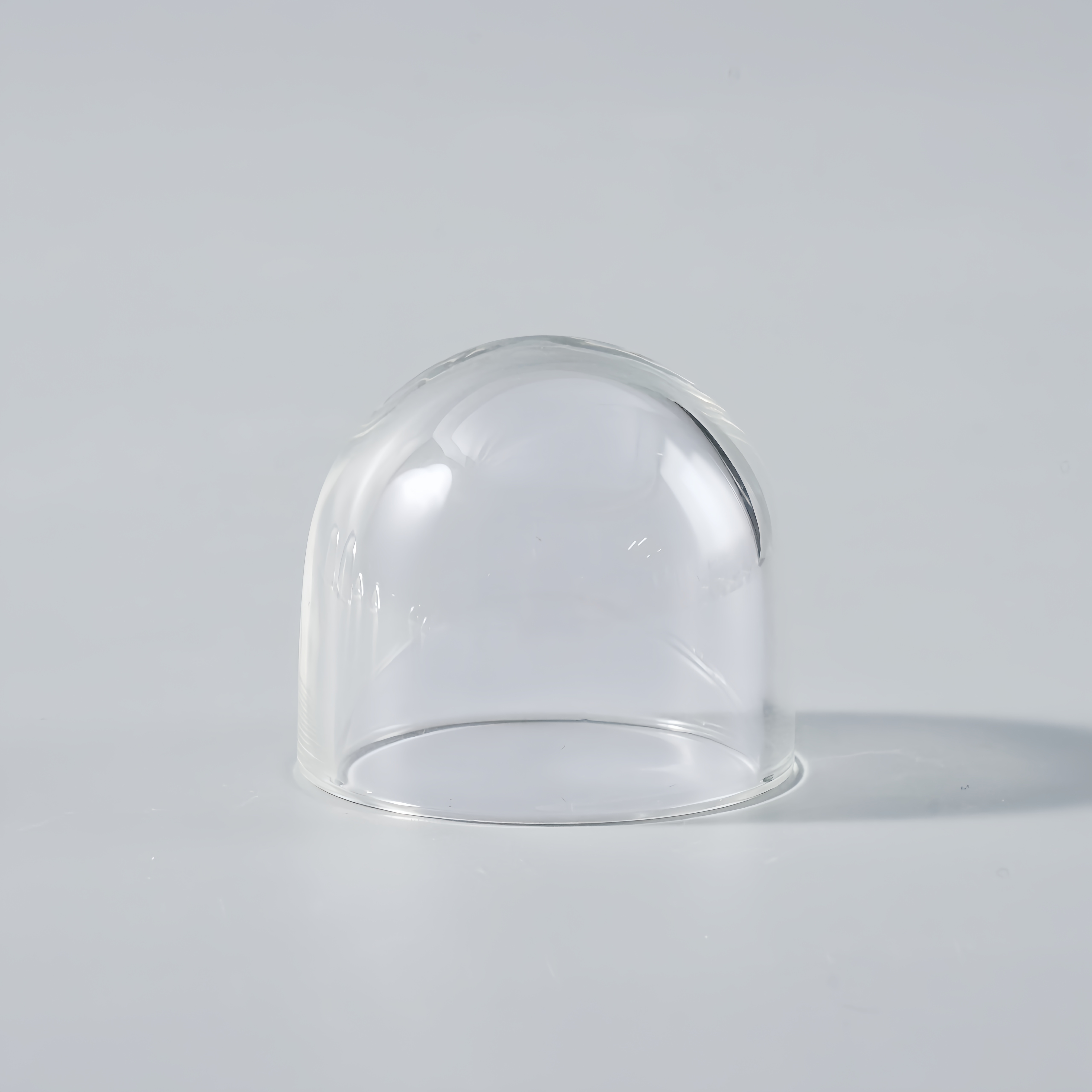
Customizable OEM Optical Glass Domes Broadband AR Coating Precision Hemispherical Windows for LiDAR Sensors Scientific
Hemispherical optical window with broadband AR coating for LiDAR, scientific instruments and precision sensing enclosures.
View product →
FAA Compliant Borosilicate Heat Resistant Glass Lens Runway In-Pavement Taxiway Lights IP68 Waterproof Optical Equipment Clear
Heat-resistant optical lens for runway and taxiway in-pavement fixtures, designed around IP68 waterproof assemblies.
View product →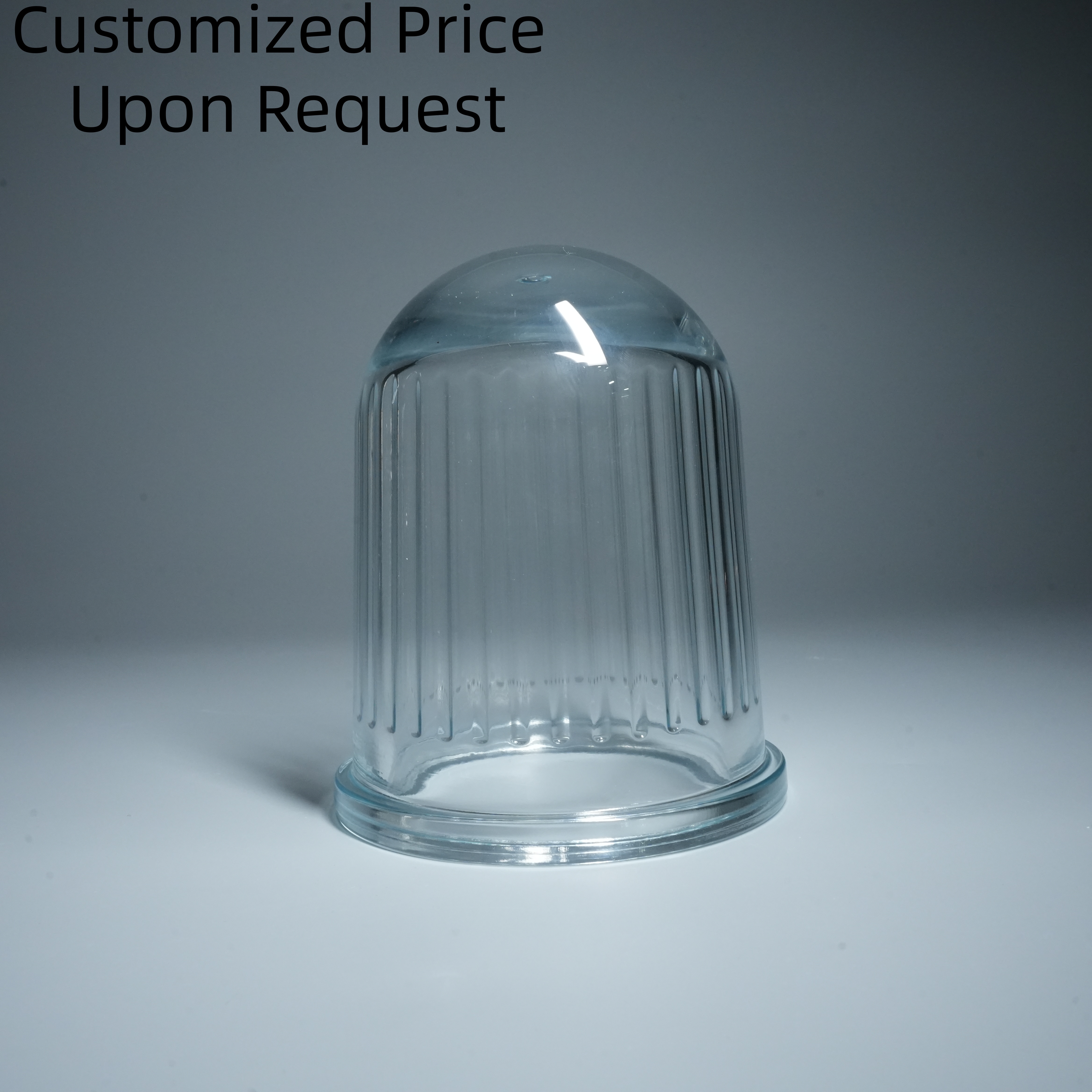
Borosilicate Transparent Explosion-proof Shade, Heat-resistant & Crack-proof, Transparent Protective Cover
Transparent borosilicate protective shade for fixtures exposed to heat cycles, impact risk and sudden temperature change.
View product →What the Query Really Means: Cast Glass Manufacturer vs. OEM Optical Glass Partner
In international sourcing, “cast glass” is often used as a broad semantic shortcut for pressed, molded, hand-formed or custom-machined glass components. The technical buyer’s real intent is usually more specific: a glass part that survives heat, impact, moisture, chemicals or optical distortion inside a finished fixture.
A procurement manager searching for China best cast glass manufacturers & manufacturer may be comparing very different product families at the same time: borosilicate lamp covers, tempered signal domes, explosion-proof shades, Fresnel lenses, optical domes and coated filters. A useful supplier page must therefore answer three layers of intent: what material should be used, what process can make the shape, and what evidence proves the supplier can repeat the result.
For Google-quality editorial usefulness, this white paper separates product recommendation from supplier selection. The goal is information gain: buyers should leave with a clearer RFQ, a better drawing review and a lower risk of field failure, not simply a longer list of glass products.
Design Engineering Intent
The engineer needs DFM feedback on wall thickness, draft angle, sealing faces, optical path alignment and coating compatibility before a mold is cut. A strong manufacturer reviews the drawing first, then recommends material and process.
Procurement Intent
The buyer needs MOQ, tooling status, sample lead time, export packing, landed cost and repeat-order consistency. These factors matter more than a generic “lowest price” claim on a marketplace listing.
Quality & Compliance Intent
The quality team wants traceability, inspection reports, dimensional records, color and transmission verification, and a supplier whose premises can be audited through onsite verification or factory video.
Inside Shanghai Tambi Glass Industrial Co., Ltd.
For buyers applying experience, expertise, authoritativeness and trust to supplier selection, the strongest evidence is operational: how drawings are reviewed, how glass is formed, how samples are measured and how export orders are packed.
Shanghai Tambi Glass Industrial Co., Ltd. is a manufacturer and trading company focused on lighting and optical glass, with more than ten years of experience in the field. The company is based in Shanghai, China, operates with a team of 11–50 people and reports annual export revenue in the US$2.5M–5M range. Its product scope covers borosilicate glass covers, explosion-proof lampshades, signal light domes, LED lenses, Fresnel lenses, prisms, optical filters and custom optical domes.
What distinguishes a technical glass supplier is not the number of product photos, but the ability to connect fixture conditions to glass specifications. Tambi’s design team of senior lighting and molding engineers reviews every drawing for wall thickness, draft, sealing faces and optical path alignment before tooling starts. The company combines pressed, blown, ground and coated processes under one supply chain and works with long-term partners in Europe, North America and Japan.
For procurement teams, verification matters. Tambi Glass presents supplier assessment, credit index, transaction level, trade capacity, trade history, ratings and reviews, plus a factory video. These are practical E-E-A-T signals: they help a buyer confirm that the supplier is a real operating business, not simply a trading page with copied product images.
Drawing-Based OEM / ODM
Most orders begin with a 2D/3D drawing or physical sample. Dimensions, tolerance, material, color, coating and sealing requirements are reviewed before mold options are proposed.
Material Breadth
Borosilicate 3.3, tempered soda-lime glass, fused quartz and optical BK7 / H-K9L allow the specification to follow the application rather than a single stock material.
Process Integration
Pressed, handblown, ground and coated production routes sit within one supply chain, which simplifies samples, tooling decisions and repeat production.
Engineering Review Before Tooling
Wall thickness, draft angle, sealing faces and optical path alignment are checked early to reduce cracked covers, fit problems and costly mold revisions.
Verifiable Supplier Evidence
Supplier assessment, credit index, transaction level, trade capacity, trade history, ratings and reviews give procurement teams independent checkpoints.
Export-Ready Packing
Glass parts are separated by foam or pulp dividers, packed in reinforced export cartons and palletized for sea or air freight. Custom labels and distributor packaging can be arranged.
How to Shortlist the Right Product Without Over-Specifying
Use the operating condition first, then the drawing, then the price. This sequence prevents the common mistake of selecting a glass type that is optically correct but thermally or mechanically wrong for the fixture.
| Buyer Intent / Application | Recommended Product Direction | Why It Fits |
|---|---|---|
| Outdoor IP camera housing | Borosilicate optical dome cover with AR coating | UV resistance, weather protection and reduced reflection help maintain image quality in exterior surveillance. |
| Food machinery sight window | Certified chemical-resistant glass cover | Washdown chemicals, visual inspection and cleanability require a stable, easy-to-clean glass surface. |
| Roadway / street LED lighting | Asymmetric borosilicate LED lens | Designed to shape light distribution, reduce glare and control light pollution while protecting the LED module. |
| Industrial workshop hazardous lighting | Transparent explosion-proof glass shade | High light transmission with a protective barrier for dusty, hot or impact-prone production areas. |
| Stage and entertainment lighting | Molded borosilicate Fresnel lens with AR coating | Precision optical form and heat resistance support high-power LED collimation and repeatable beam control. |
| LiDAR and scientific sensing | Broadband AR-coated hemispherical optical dome | Precision hemispherical windows protect sensors while maintaining transmission across the sensing band. |
| Runway and taxiway in-pavement lights | FAA-compliant borosilicate heat-resistant lens | Heat resistance, clear optics and IP68-oriented design support demanding airfield fixture assemblies. |
| Explosion-proof protective cover | Heat-resistant, crack-proof borosilicate shade | Low thermal expansion helps tolerate lamp heat and sudden temperature change without sacrificing transparency. |
The table is a starting point for RFQ discussion, not a substitute for drawing review. Final selection depends on lamp surface temperature, impact rating, sealing method, certification requirements and annual volume.
What Cast Glass Buyers Will Require Through 2027
Price comparison is becoming automated. The harder procurement questions are shifting toward total cost of ownership, audit-ready evidence, certification alignment and supply continuity.
Total Cost of Ownership
Buyers will compare breakage rate, packing quality, field returns, sample iteration speed and inspection cost alongside the unit price. A cheap cover that cracks in transit is not a cheap order.
Traceability & Documentation
Material reports, dimensional inspection, visual inspection and packing records will be requested earlier in the qualification process, especially for signal and hazardous-area lighting.
Certification Alignment
Fixture makers need glass suppliers who understand how a lens or dome supports FAA L-810, EN 50293, IP68 or other program requirements without overclaiming the final fixture certificate.
Digital-First Supplier Verification
Procurement teams increasingly qualify suppliers through online evidence before first contact: company profile, onsite verification, factory video, trade history and product-specific technical pages.
Dual Sourcing & Tooling Strategy
OEMs will ask whether an existing mold can be used, who owns the tooling, and how a second source could be qualified without repeating every sample iteration. Clear tooling terms reduce long-term risk.
Sustainable Packaging & Lower Breakage
Foam, pulp dividers, reinforced cartons and palletization are becoming part of the specification. Lower breakage supports both sustainability goals and predictable landed cost.
Product Development Trends in Cast, Pressed and Optical Glass
Glass is being asked to do more than cover a light source. It is becoming part of the optical system, the thermal path, the safety envelope and the sensor interface.
High-Power LED Thermal Design
Borosilicate 3.3 remains a strong choice for covers and lenses exposed to high LED surface temperatures and sudden rain or washdown contact because its thermal expansion is low.
Advanced Optical Coatings
AR, bandpass and longpass coatings are moving from laboratory parts into routine OEM products, improving transmission and spectral control for sensing, stage lighting and instruments.
LiDAR & Sensor Windows
Hemispherical domes and precision windows must balance mechanical protection with optical transmission, coating uniformity and dimensional repeatability as sensing systems become more compact.
Aviation & Marine Signal Optics
Color stability, UV protection and dimensional consistency are central for obstruction, runway, taxiway and marine signal fixtures where visibility and maintenance intervals matter.
Food & Medical Cleanability
Chemical-resistant covers and sight windows are being specified for equipment that is washed down frequently, where surface stability and visual inspection are part of daily operation.
Explosion-Proof Modularity
Thick-wall borosilicate and tempered shades are being adapted to modular fixture platforms, where a single optical envelope may need to fit multiple wattages, gaskets and mounting systems.
Borosilicate 3.3 vs. Tempered Soda-Lime vs. Fused Quartz vs. BK7
A quick engineering comparison for early RFQ discussions. Final material selection should always be confirmed against the drawing, lamp surface temperature, impact rating and the standard your fixture must meet.
| Material | Thermal expansion (×10⁻⁶/K) | Typical max. working temp. | Key strength | Best for |
|---|---|---|---|---|
| Borosilicate 3.3 | ≈ 3.3 | ≈ 450 °C | Excellent thermal-shock resistance | Explosion-proof shades, high-power LED covers, Fresnel lenses |
| Tempered soda-lime | ≈ 9.0 | ≈ 250 °C | High impact strength and economical cost | Outdoor covers, floodlight glass, vandal-resistant lenses |
| Fused quartz | ≈ 0.55 | ≈ 1000 °C+ | UV transmission and extreme heat resistance | UV optics, high-temperature windows, specialty optical parts |
| Optical BK7 / H-K9L | ≈ 7.1 | ≈ 300 °C | Homogeneous optical properties, nd ≈ 1.517 | Precision lenses, prisms, mirrors and optical filters |
Values are typical references for preliminary engineering discussion. Production specifications should be confirmed by drawing, sample measurement and application testing.
From Drawing to Delivery: A Controlled Six-Stage Workflow
Clear checkpoints reduce surprises between sample approval and mass production. This is especially important for cast, pressed and optical parts where a small dimensional change can affect sealing, light output or installation.
Drawing Review
DFM check of thickness, draft, tolerance, sealing face and optical path alignment before tooling is quoted.
Mold & Tooling
Existing or new molds are selected around pressing, blowing, grinding or coating requirements.
Sampling
Samples are measured and sent for fit, light, sealing and assembly testing by the buyer.
Forming & Annealing
Controlled annealing or tempering helps relieve internal stress and improve dimensional stability.
Coating & QC
AR or color coating, dimensional inspection and visual inspection are completed before packing.
Export Packing
Divider-packed cartons and palletized packing protect fragile glass parts during sea or air freight.
Cast Glass Procurement FAQ
Direct answers to the questions sourcing teams ask before they send a drawing or approve a sample order.
Is “cast glass” the same as pressed, molded or hand-formed lighting glass?
Can you manufacture glass covers and lenses to my own drawing?
What is the typical minimum order quantity?
Should I choose borosilicate glass or tempered soda-lime glass?
Do you supply glass for FAA L-810 and EN 50293 lighting fixtures?
How fast do you reply, and how are fragile glass parts packed for export?
Have a Drawing or a Target Application? Get an Engineering Review.
Share your dimensions, material preference, operating temperature, impact requirement and annual volume. The team will review manufacturability, suggest the most reliable glass direction and advise on samples, MOQ and export packing.
info@tambiglass.com