CE Certified Spherical Lens Suppliers & Exporters
Procurement-grade optical glass guidance for borosilicate lenses, BK7 spherical optics, domes, windows and prisms — supported by drawing-based engineering, 10+ years of manufacturing experience and documentation for CE marking.
Eight Optical & Lighting Glass Products for Custom Sourcing
These product families reflect the practical range behind successful OEM programs: prisms, runway lenses, precision spherical optics, LED domes, pressed shades, waterproof lampshades, optical windows and LiDAR hemispheres. Each item can be reviewed against your drawing, gasket design, coating target and annual volume.

BO-GLASS Quartz BK7 K9 AR-Coated High-Precision Right-Angle Prism
ODM/OEM right-angle prism for optical path folding, instruments and precision assemblies. AR coating, dimensional tolerance and edge finish reviewed from your drawing.
View product →
FAA-Compliant Borosilicate Heat-Resistant Glass Lens for Runway In-Pavement Lights
Heat-resistant borosilicate lens for runway and taxiway fixtures. Designed for IP68 assemblies where thermal shock, light transmission and dimensional fit matter.
View product →
Custom Precision Optical 1–200 mm BK7 Spherical Quartz Glass Lens
Half-ball, concave and biconvex lens options with anti-reflective coating. A strong starting point for LED collimation, sensing modules and instrument prototypes.
View product →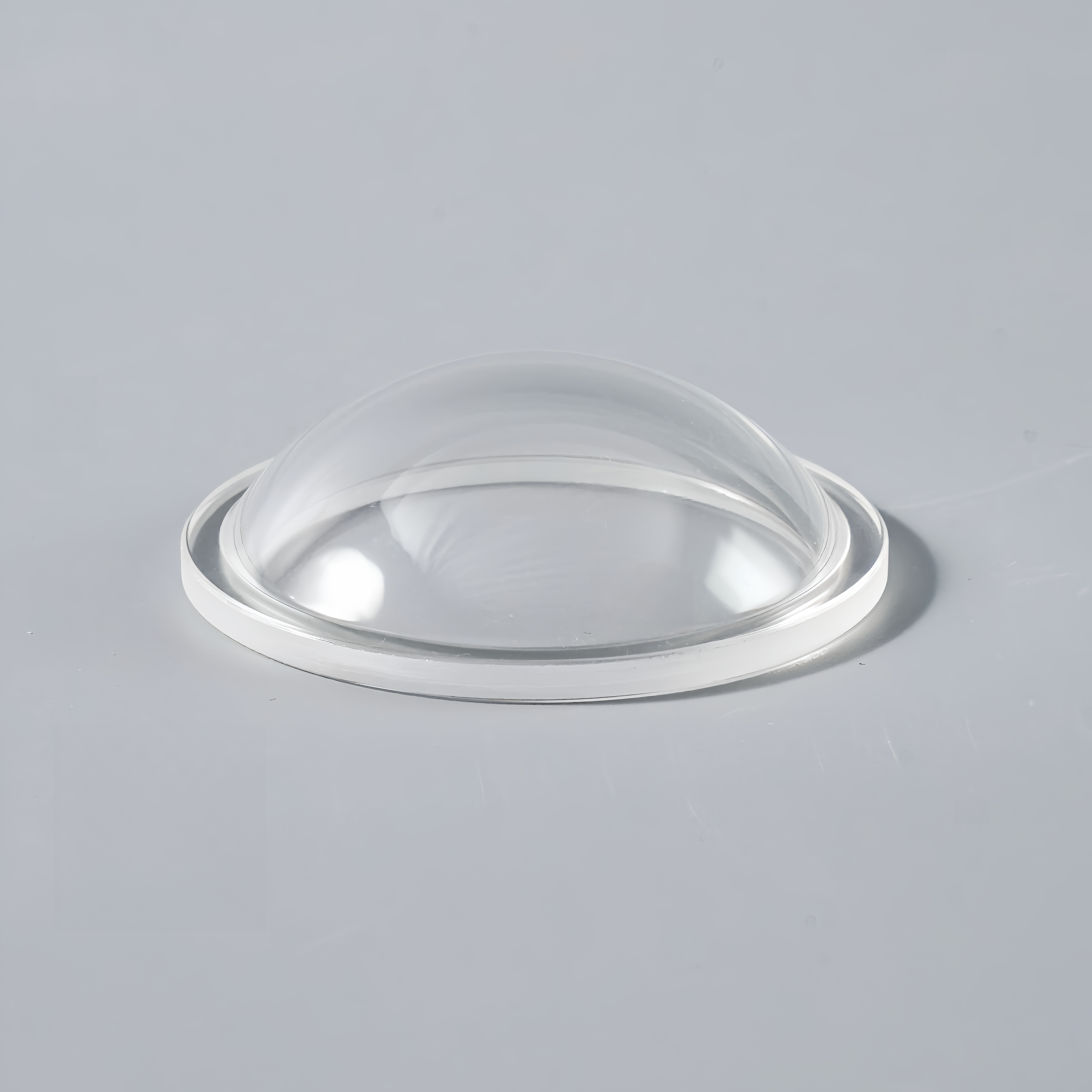
High-Light Transmission Clear Borosilicate Glass Dome Lens for LED Outdoor Lighting
Impact-resistant and anti-scratch dome lens for outdoor LED fixtures. Suitable for OEM customization of diameter, wall thickness, transmission and sealing face.
View product →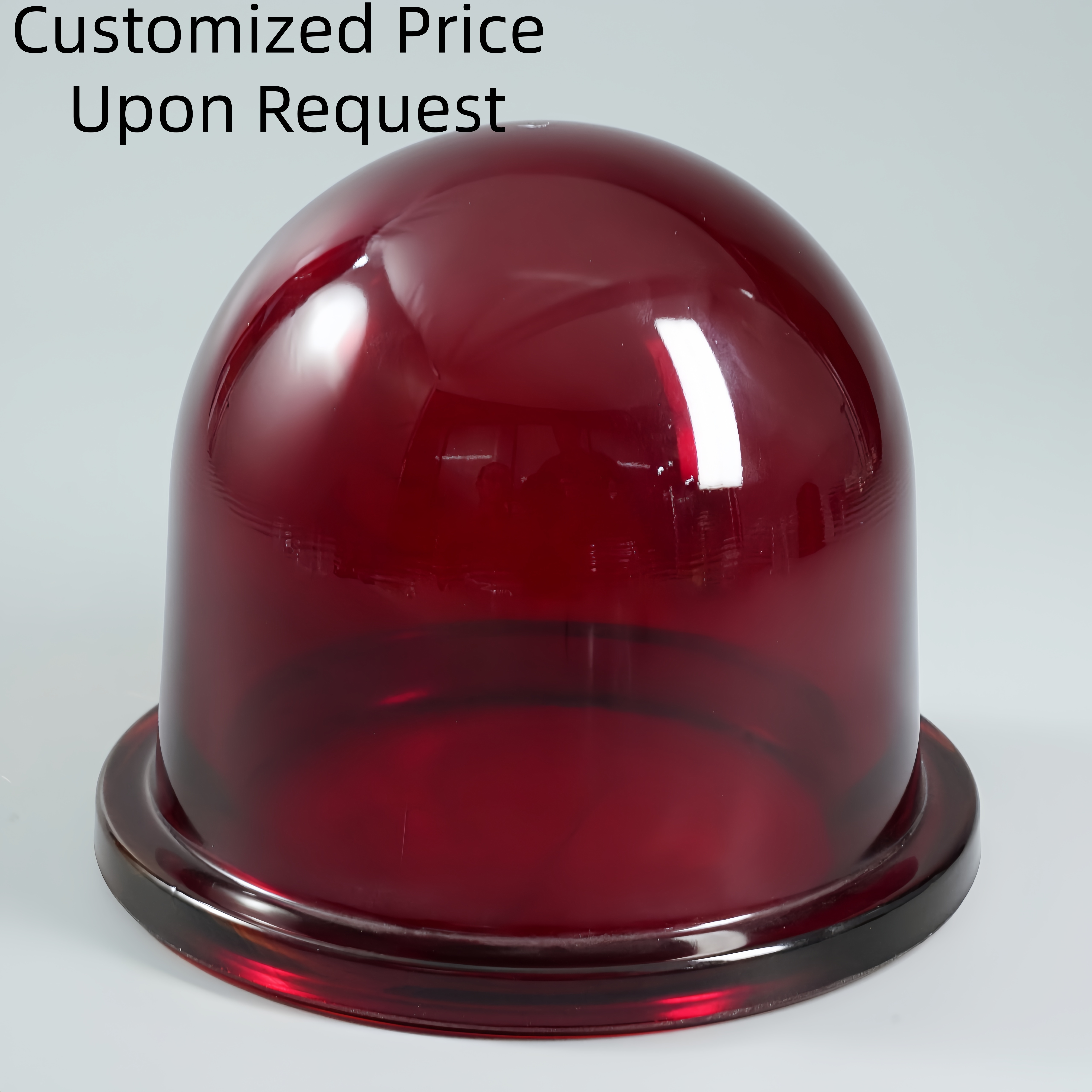
High-Temperature Resistant Pressed Glass Shade for Outdoor Street Lights
Explosion-proof and crack-proof pressed shade for street light enclosures. Designed around lamp surface temperature, impact exposure and gasket compatibility.
View product →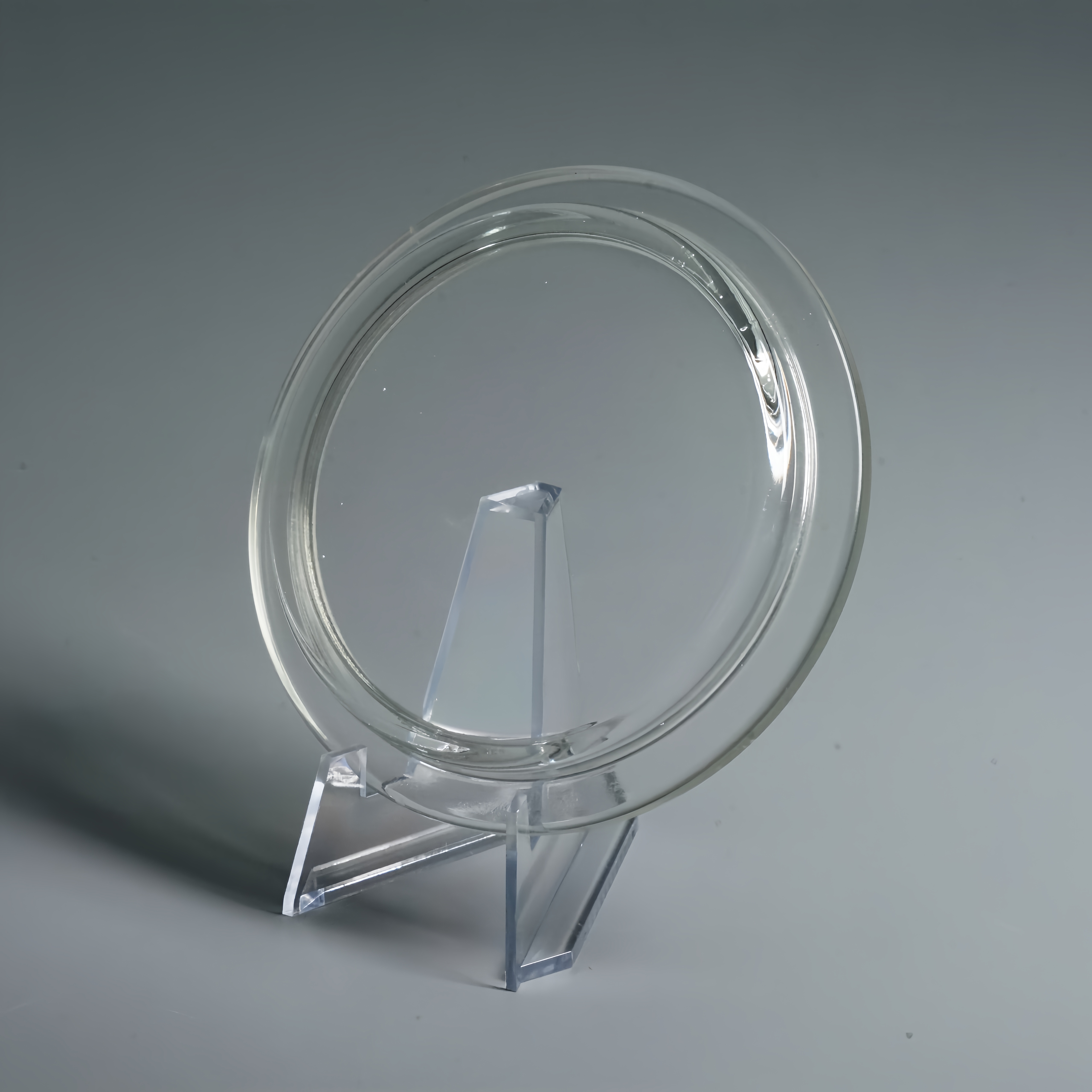
Custom Waterproof Outdoor Stage Glass Lampshade Factory
Coastal, Victorian and stage fixture styles with optional silk printing. Waterproof, high-temperature and impact-resistant options for OEM projects.
View product →
Manufacturer OEM Borosilicate UV Fused Silica Coated Optical Window
High-transmittance optical window for instruments, sensors and protective enclosures. Coating, flatness and edge treatment can be matched to your assembly.
View product →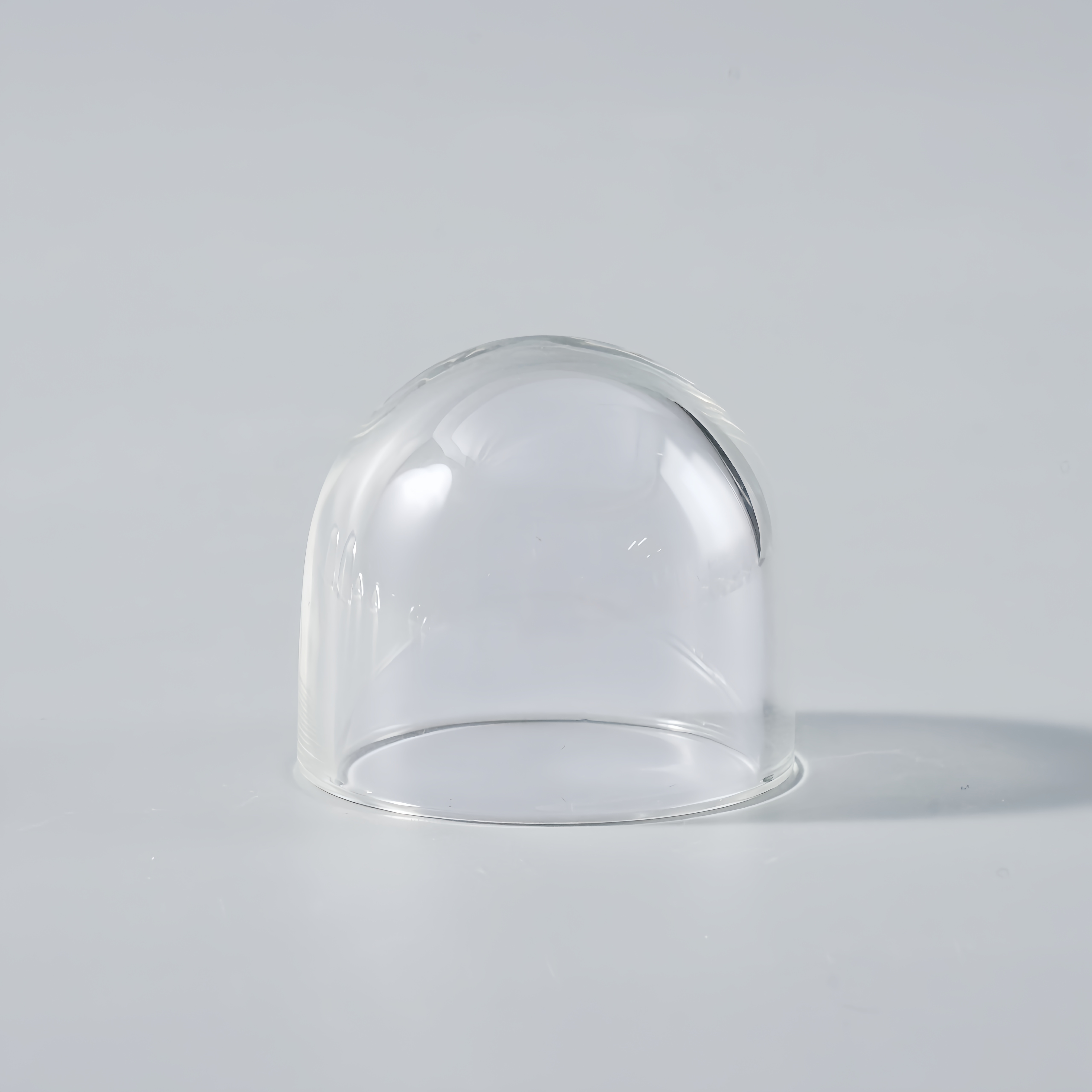
Customizable OEM Broadband AR-Coated Hemispherical Domes for LiDAR Sensors
Precision hemispherical windows for LiDAR, scientific instruments and sensor protection. Discuss transmission band, coating curve, pressure load and tolerance stack.
View product →“CE Certified Suppliers” Is a Shortcut for Risk Reduction
Buyers searching for CE certified spherical lens suppliers and exporters are usually not buying a lens as a decorative stand-alone part. They are protecting a finished lighting or optical product: an LED luminaire, an airport obstruction light, a marine signal fixture, a LiDAR sensor window or a hazardous-area lamp enclosure. The real sourcing question is whether the lens supplier can support the documentation, dimensional consistency and material performance behind the finished product’s CE marking.
CE marking is normally declared at the finished product, luminaire, instrument or module level, not by a raw glass lens alone. A responsible component supplier should therefore be transparent about its role. Shanghai Tambi Glass Industrial Co., Ltd. supports OEM buyers with drawing review, material declarations, dimensional inspection reports, coating data and packaging controls so that the customer can complete its own conformity assessment with fewer unknowns.
Spherical lenses are also not one commodity. A plano-convex lens for LED collimation, a meniscus lens for wide-angle distribution, a thick-wall borosilicate cover for explosion-proof lighting and a hemispherical dome for LiDAR require different glass chemistry, annealing discipline and metrology. The most reliable exporter is not simply the one with the lowest quotation; it is the one that asks the right engineering questions before tooling begins.
- Glass grade declaration between borosilicate 3.3, BK7, fused quartz and tempered soda-lime
- Dimensional report covering diameter, thickness, radius, runout and sealing face
- Coating curve or witness sample data for AR, broadband or color-targeted layers
- Thermal-shock, impact and surface-quality evidence for the intended fixture environment
- Production batch traceability and change-control notification before mass production
- Export packing validation with dividers, reinforced cartons and palletization
Supplier Qualification Snapshot
When comparing spherical lens exporters, use a structured scorecard rather than a single price sheet. A practical review covers technical fit, evidence quality and communication speed.
- Drawing-based OEM/ODM capability
- Borosilicate, tempered glass, fused quartz and optical BK7
- AR coating and precision optical finishing
- Application experience in aviation, marine, hazardous-area and LiDAR optics
- Onsite-verified supplier profile and export records
- Average response time within 6 hours
How Spherical Lens Buyers Will Compare Suppliers Next
Procurement is shifting from a price-per-piece exercise to a risk-managed engineering purchase. The supplier that can prove repeatability, document material performance and respond quickly during sample loops will have an advantage over suppliers that compete only on unit cost.
Procurement Priority Index
Directional priority signals based on typical OEM sourcing reviews for custom optical and lighting glass. Use this as a discussion framework, not a statistical forecast.
What Is Changing in Spherical Lens and Optical Glass Design
Higher LED power, denser sensor packaging and stricter field-reliability targets are changing the specification of optical glass components. The trend is toward more application-specific glass, better coating control and stronger production evidence.
Borosilicate for hotter LED modules
Borosilicate 3.3 remains a preferred choice where high lamp surface temperature and sudden rain exposure can create thermal-shock risk.
Broadband AR and hard coatings
Buyers increasingly request transmission curves and durability expectations for anti-reflective coatings used on domes, windows and lenses.
LiDAR and precision hemispheres
Sensing applications require tighter form control, clearer optical paths and better coating uniformity across hemispherical surfaces.
Color-stable signal glass
Aviation, marine and obstruction lighting projects need stable red, green or clear transmission across production batches.
Gasket-ready sealing interfaces
Optical performance cannot be separated from sealing. Edge finish, flatness and wall thickness are specified together with the gasket design.
Traceable, lower-stress annealing
Controlled annealing and inspection records help reduce invisible stress that can later become cracking or chipping in the field.
How to Choose the Right Glass Material for Spherical Lenses
Material selection should follow operating temperature, thermal shock, impact exposure, transmission band and certification requirements. The comparison below reflects the practical logic our engineers use during drawing review.
| Material | Thermal expansion | Typical max working temperature | Key strength | Best for |
|---|---|---|---|---|
| Borosilicate 3.3 | ≈ 3.3 × 10⁻⁶/K | ≈ 450 °C | Excellent thermal-shock resistance | Explosion-proof shades, high-power LED covers, runway lenses and Fresnel optics |
| Tempered soda-lime | ≈ 9.0 × 10⁻⁶/K | ≈ 250 °C | High impact strength and economical cost | Outdoor covers, floodlight glass, vandal-resistant lenses and street lighting shades |
| Fused quartz | ≈ 0.55 × 10⁻⁶/K | ≈ 1000 °C+ | UV transmission and extreme heat tolerance | UV optics, high-temperature windows and scientific instrument components |
| Optical BK7 / H-K9L | ≈ 7.1 × 10⁻⁶/K | ≈ 300 °C | Homogeneous optical properties, nd ≈ 1.517 | Precision spherical lenses, prisms, mirrors and optical filters |
Typical reference values only. Final selection must be confirmed against your drawing, lamp surface temperature, impact rating, coating requirement and the standard your finished fixture or instrument must meet.
Why Shanghai Tambi Glass Supports Demanding Lens Programs
Shanghai Tambi Glass Industrial Co., Ltd. is a manufacturer and trading company focused on custom borosilicate glass covers, explosion-proof lampshades, signal light domes, LED lenses, prisms and optical filters for lighting and optical OEMs worldwide. Our role is to turn a drawing or physical sample into a repeatable glass component that fits your housing, gasket, coating target and export schedule.
Drawing-Based OEM / ODM
Our engineers review wall thickness, draft, tolerances, sealing faces and optical path alignment before tooling. Most orders start from a 2D or 3D drawing, a physical sample or a clear application brief.
Material and Process Breadth
We work with borosilicate glass 3.3, tempered glass, quartz, fused silica and BK7, combining pressed, blown, ground and coated processes under one supply chain.
Application Experience
For more than a decade we have focused on how glass behaves inside real luminaires and instruments, including heat build-up, rain-induced thermal shock, impact loads and signal color accuracy.
Documentation for CE Marking
Where requested, we support buyer documentation with material declarations, dimensional inspection reports, coating data and RoHS/REACH information. The finished product manufacturer remains responsible for CE conformity.
Responsive Technical Communication
Our average response time is within 6 hours. Sample quantities are available for evaluation, with typical MOQs ranging from 50 pieces for optical lenses to 100–500 pieces for pressed or blown lighting covers.
Export Packing and Verification
Fragile glass parts are separated by foam or pulp dividers, packed in reinforced export cartons and palletized for sea or air freight. Our supplier profile includes onsite verification, trade capacity and buyer review signals.
A Controlled Six-Step Process for Custom Spherical Lens Programs
Clear checkpoints reduce surprises between sample approval and mass production. The process can be adapted for pressed lighting covers, ground optical lenses, domes, windows and prisms.
Drawing Review
DFM review of thickness, draft, tolerance, optical path, gasket face and coating requirement.
Mold and Tooling
New or existing molds selected for pressing, blowing or grinding, with tooling scope confirmed before sampling.
Sampling
Samples measured and sent for your fit, light and thermal evaluation. Feedback is folded into the final drawing.
Forming and Annealing
Controlled forming and annealing or tempering help relieve stress and improve thermal-shock behavior.
Coating and QC
AR or color coating, dimensional inspection and visual checks are performed before packing release.
Export Packing
Divider-packed cartons and palletized logistics designed for fragile optical and lighting glass parts.
Common Procurement Questions About Spherical Lens Sourcing
These are the questions technical buyers, lighting OEMs, distributors and optical system developers ask most often before requesting a sample or quotation.
Are you a CE-certified spherical lens manufacturer or exporter?
Can you manufacture spherical lenses to my own drawing or sample?
What is the typical minimum order quantity?
Should I choose borosilicate glass or tempered soda-lime glass?
How do you control optical quality and dimensional consistency?
Do you supply AR-coated domes and lenses for LiDAR and sensing applications?
How are fragile glass lenses and domes packed for export?
How fast do you reply to technical inquiries?
Have a Drawing? Get an Engineering Review Within 6 Hours.
Share your dimensions, material, operating temperature, coating target and annual volume. Our team will review the most reliable glass solution for your spherical lens, dome, window or lighting glass program.
Inquire Now