Recommended Glass Globe and Precision Optical Products
The eight products below are frequently specified by OEM buyers who need custom glass components with stable dimensions, optical performance and export-ready documentation. Every item can be adapted in size, thickness, colour, coating, edge finish and sealing face to suit your housing, gasket and final assembly requirements.
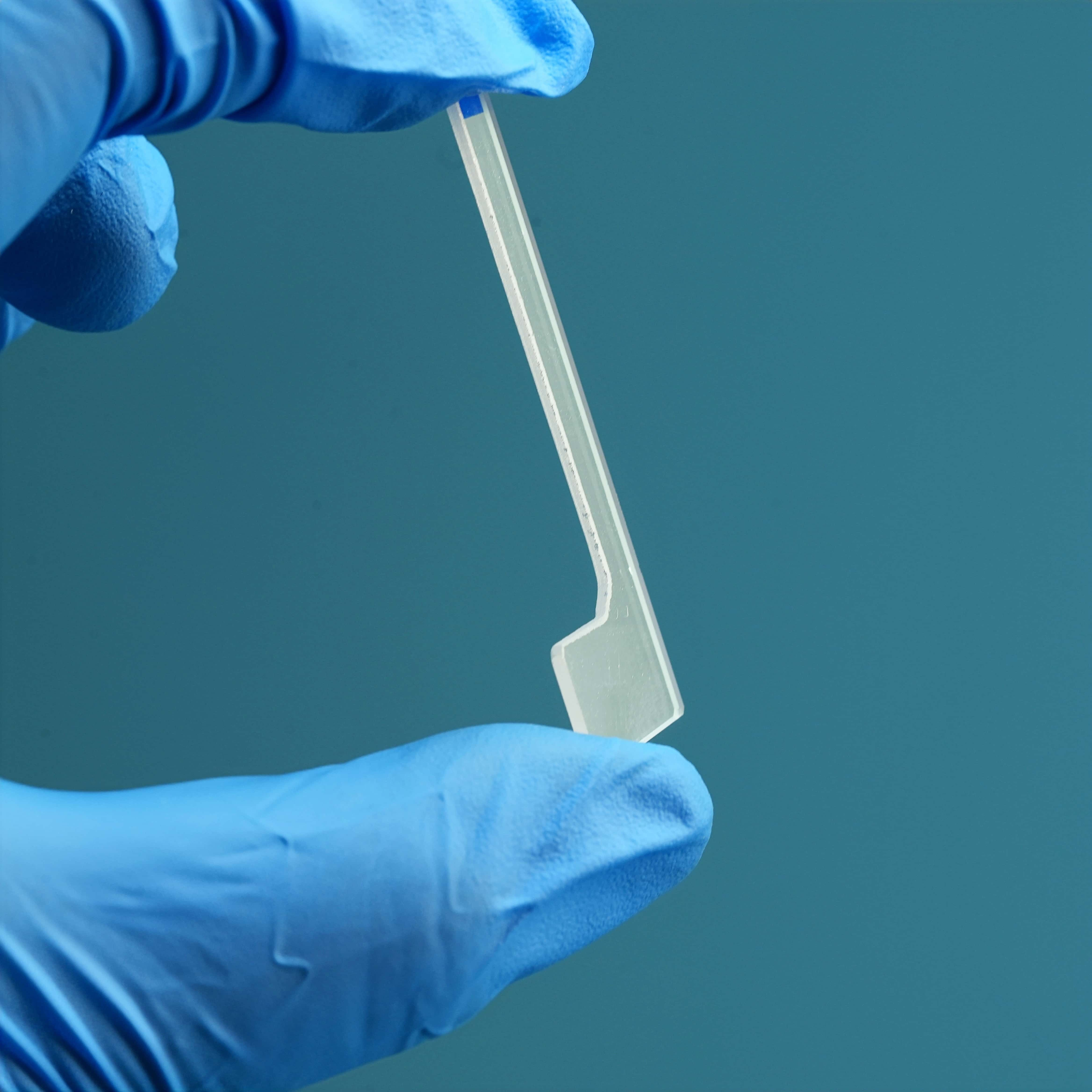
Anamorphic Prism Pair for Laser Beam Shaping
Circularizes elliptical diode-laser beams for fiber coupling and beam delivery, with custom prism angles and low wavefront distortion.
- Custom prism geometry
- Fiber coupling support
- Prototype to volume

Custom BK7 & Quartz Spherical Lenses
Clear BK7, quartz and half-ball, concave or biconvex formats with anti-reflective coating for instruments and lighting systems.
- 1–200 mm clear aperture
- AR coating options
- Drawing-based tolerances
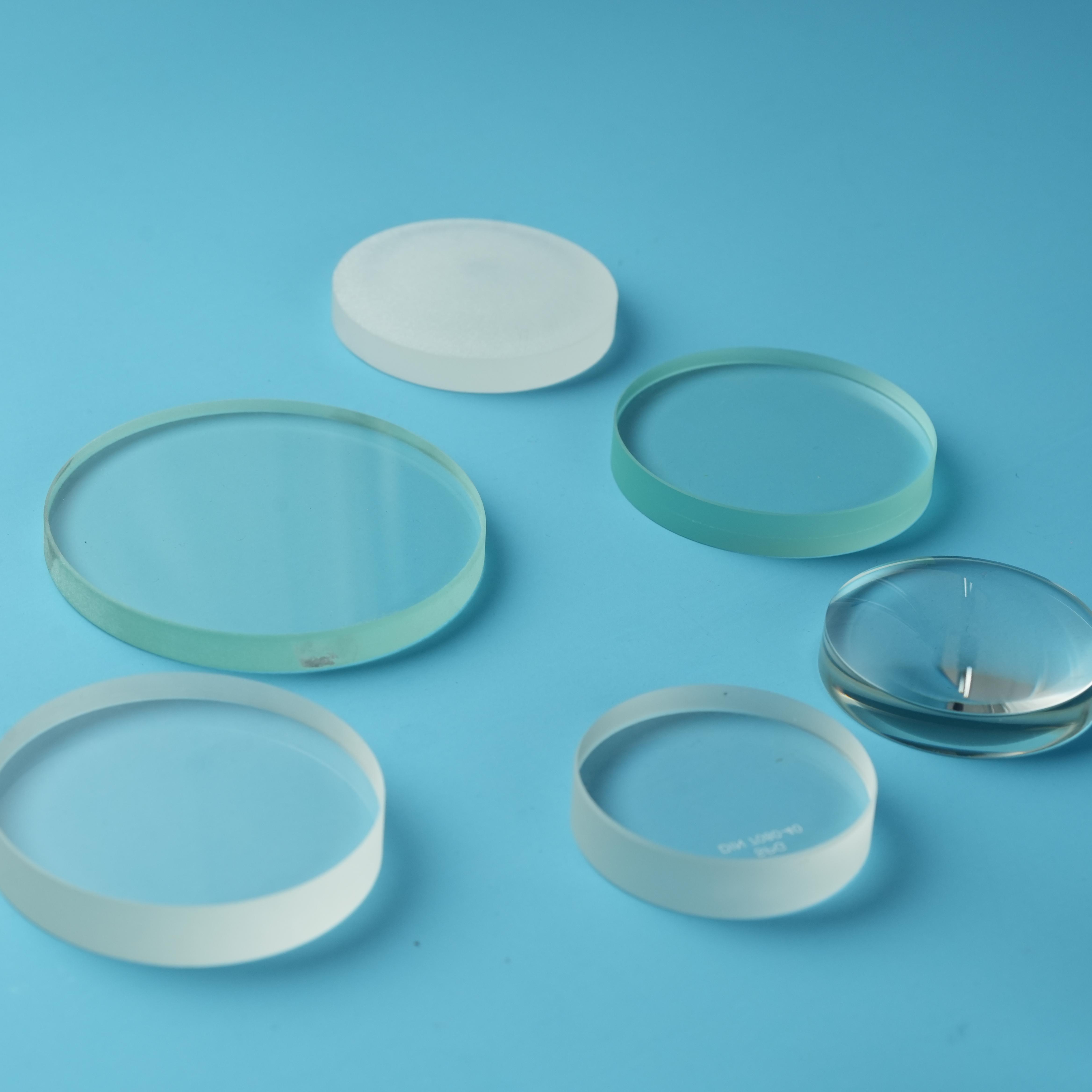
AR-Coated Borosilicate & K9 Windows
Square or round 50 mm-class windows with substrate selection, transmission targets and sealing faces for protective housings.
- Borosilicate, K9, BK7, B270
- AR-coated surfaces
- Custom outline and holes

Borosilicate / Fused Silica Windows
High-transmittance UV fused silica and borosilicate windows for sensors, instruments and protective optical covers.
- High transmission
- UV-grade options
- Coated or uncoated
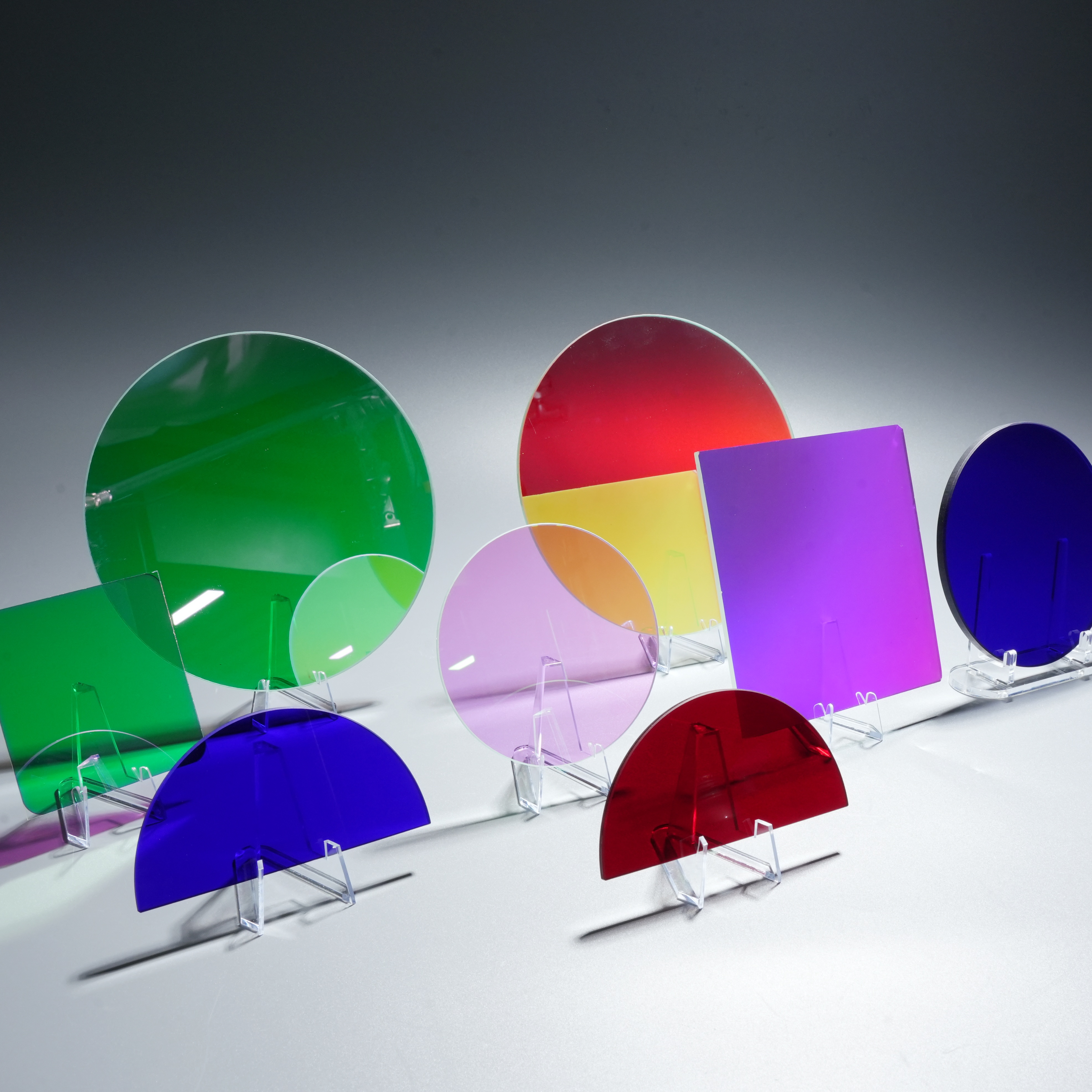
590 nm Coated Bandpass Filter
Custom wavelength, bandwidth and diameter for sensing, imaging and signal separation with stable coating performance.
- Bandpass / longpass
- 49 mm and custom sizes
- Coated borosilicate

Borosilicate Dome for Outdoor IP Cameras
UV-resistant, waterproof dome cover with anti-reflective coating for outdoor surveillance and imaging housings.
- Hemispherical and custom profiles
- UV and water resistance
- AR-coated options
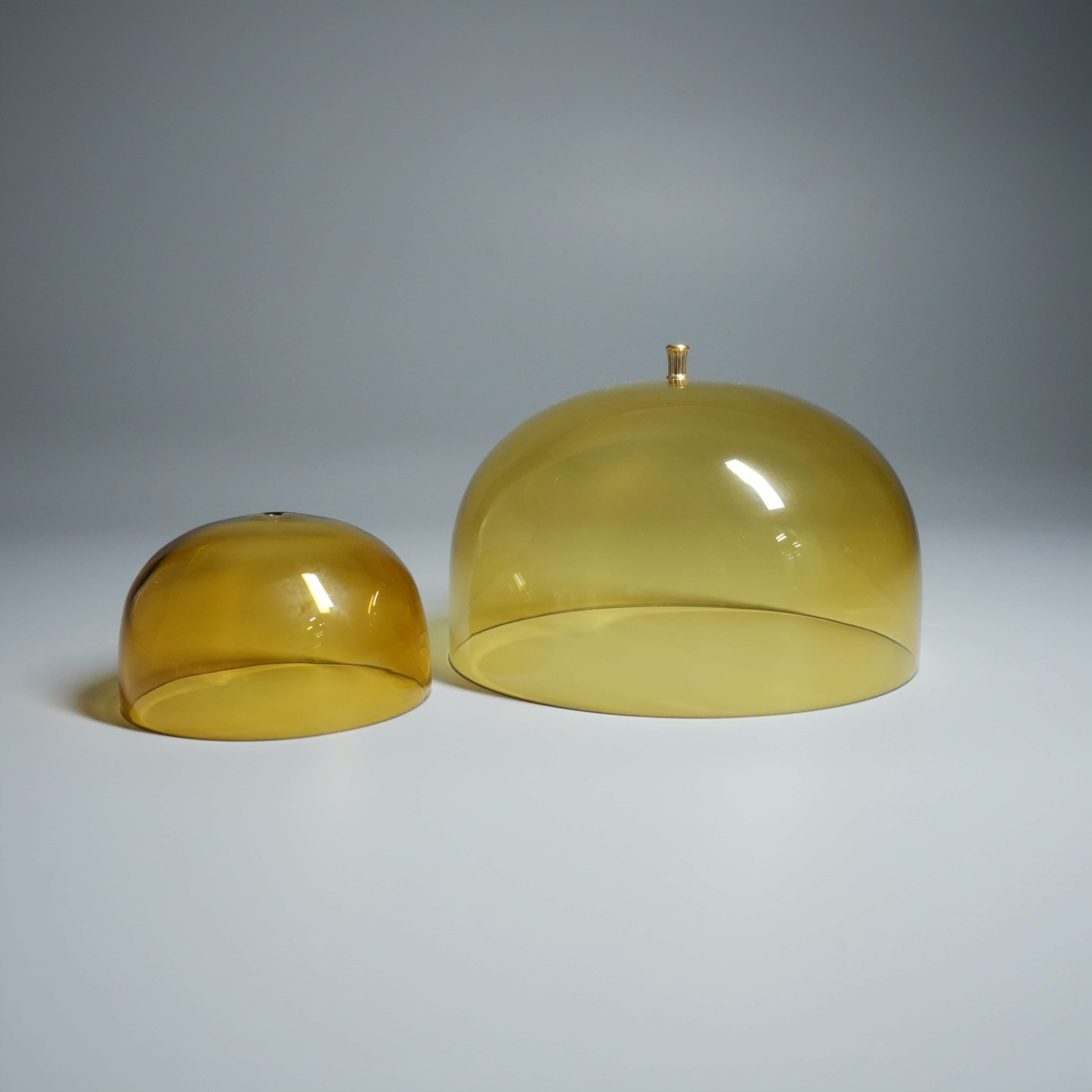
Certified Glass Cover for Food & Medical Equipment
Chemical-resistant, cleanable glass covers with documentation support for food-contact and medical equipment projects.
- Chemical resistance
- Cleanable surfaces
- Documentation support
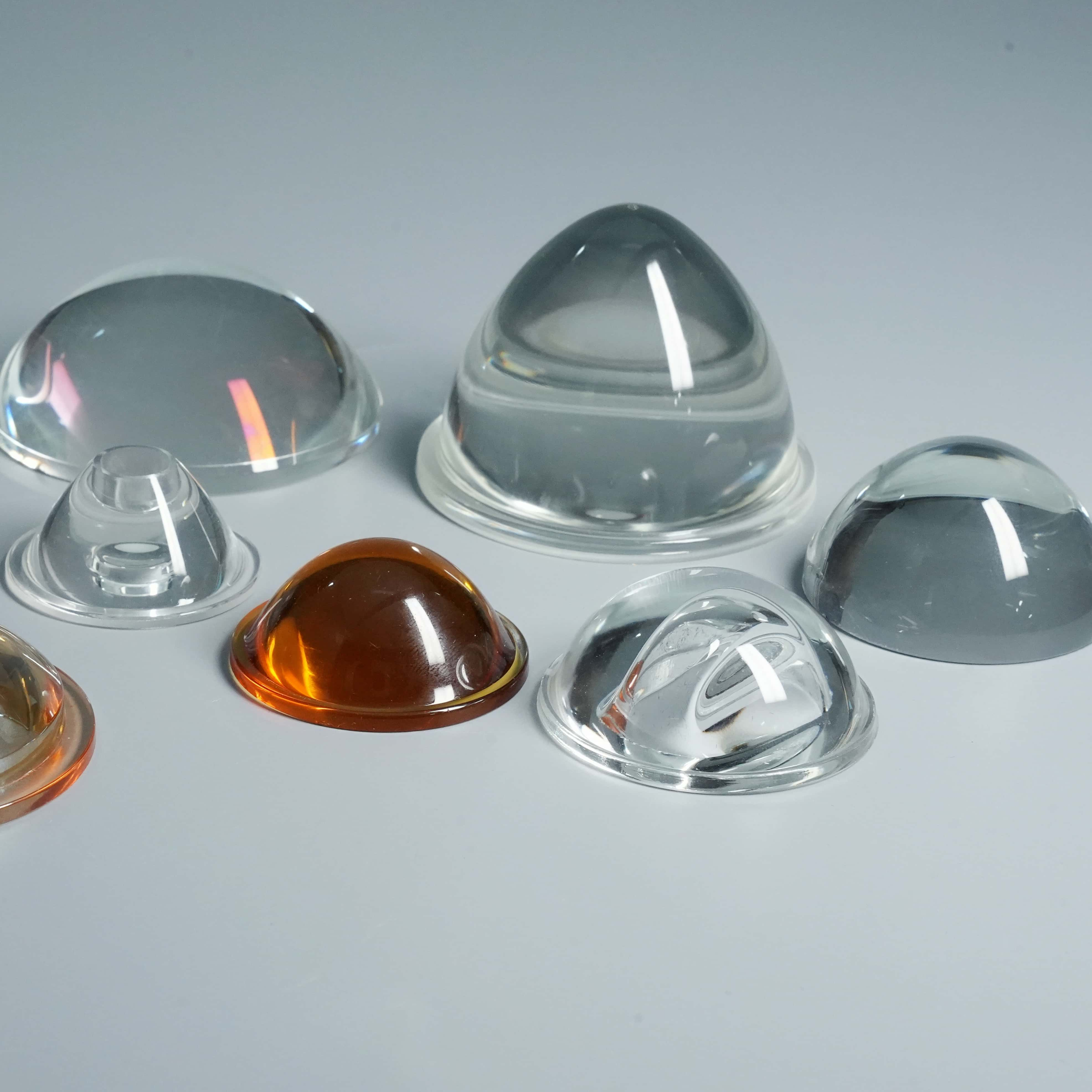
AR-Coated LED Grow Light Convex Lens
Borosilicate convex lens for full-spectrum indoor farming, with thermal stability and high light transmission.
- Full-spectrum transmission
- Thermal stability
- Custom beam angles
Product URLs are retained exactly as supplied. Final material, coating and tolerance specifications are confirmed against your drawing, operating temperature, impact requirement and destination-market compliance file.
What “CE Certified” Should Mean for a Glass Globe Buyer
CE marking is a declaration attached to a finished product, not an intrinsic property of raw borosilicate glass. For a luminaire, machine enclosure or sensor housing, the final manufacturer remains responsible for the Declaration of Conformity. A serious glass-globe supplier therefore supports the CE file with component evidence: material identity, dimensional capability, optical performance, coating durability, thermal-shock resistance and change control.
This distinction matters in procurement. A generic “CE certificate” for glass can create false confidence if the final fixture is subject to the Low Voltage Directive, EMC, RoHS, Ecodesign/EPREL, ATEX, Machinery, Medical Device Regulation or food-contact rules. The better question is not simply “Is the glass CE certified?” but “Which evidence package proves this globe is fit for our CE-marked assembly?”
For buyers in Europe, North America and Japan, that means the glass globe must be reviewed as part of the complete thermal, optical and sealing system. Wall thickness, annealing quality, edge finish, gasket contact, coating adhesion and colour consistency all influence field performance. Tambi Glass reviews these variables before tooling, then keeps sample and inspection records available for the project file.
Evidence to request in a glass globe RFQ
- Glass grade and batch traceability: borosilicate 3.3, tempered soda-lime, fused quartz or BK7/H-K9L.
- 2D/3D dimensional report, wall thickness, draft and sealing-face flatness.
- Transmission, colour, haze and AR-coating data against the agreed optical target.
- Thermal-shock, annealing or tempering records where the fixture generates heat.
- Impact, IP, chemical-resistance or food-contact test evidence when applicable.
- RoHS/REACH declarations, packaging validation and change-notification terms.
| Material | Thermal expansion (×10⁻⁶/K) | Typical max. working temperature | Key strength | Best-fit glass globe / optical use |
|---|---|---|---|---|
| Borosilicate 3.3 | ≈ 3.3 | ≈ 450 °C | Excellent thermal-shock resistance | Explosion-proof shades, high-power LED covers, Fresnel lenses, sight glasses |
| Tempered soda-lime | ≈ 9.0 | ≈ 250 °C | High impact strength and economy | Outdoor covers, floodlight glass, vandal-resistant lenses |
| Fused quartz | ≈ 0.55 | ≈ 1000 °C+ | UV transmission and extreme heat resistance | UV optics, high-temperature windows, scientific instruments |
| Optical BK7 / H-K9L | ≈ 7.1 | ≈ 300 °C | Homogeneous optical properties, nd ≈ 1.517 | Precision lenses, prisms, mirrors and filters |
Typical reference values only. Final selection must be confirmed against your drawing, lamp surface temperature, impact rating, cleaning chemistry, food-contact status and the standard your finished fixture must meet.



Why Global Buyers Use Tambi Glass as Their Glass Globe Factory
Shanghai Tambi Glass Industrial Co., Ltd. is a manufacturer and trading company focused on custom borosilicate and optical glass for lighting and equipment OEMs. More than a decade of work with lighting fixtures has built practical knowledge of heat build-up behind high-power LEDs, thermal shock when rain hits a hot cover, impact loads in hazardous areas and colour stability in signal lights.
Our senior lighting and moulding engineers review wall thickness, draft, sealing faces and optical path alignment before tooling starts. Production combines pressed, blown, ground and coated processes under one supply chain, reducing coordination risk when a project needs a pressed dome, an AR-coated lens and a precision window in the same qualification cycle.
Tambi is an onsite-verified supplier with assessment, credit, transaction and trade-capacity records available for procurement review. Buyers in Europe, North America and Japan use the factory for drawing-based OEM/ODM projects that require reproducible dimensions, material declarations and export-ready packing.
- Drawing-based OEM/ODM
- Borosilicate, tempered, quartz, BK7
- AR and optical coatings
- Onsite-verified supplier records
Drawing-first DFM review
Engineers check wall thickness, draft, tolerance, sealing faces and optical alignment before mould investment.
Material and coating depth
Borosilicate 3.3, tempered soda-lime, fused quartz, BK7 and AR or colour coatings are matched to the application.
Traceable quality records
Material reports, dimensional checks, sample approval and inspection records support buyer qualification.
Responsive export supply
Average reply within 6 hours, divider-packed cartons and palletized freight for fragile glass parts.
Glass Globe Procurement Trends Buyers Should Plan For
Purchasing teams are moving away from lowest-piece-price buying toward qualified total cost, documented performance and supply resilience. For glass globes and optical glass components, the RFQ is becoming a technical risk review as much as a commercial negotiation.
Evidence-led sourcing
RFQs increasingly ask for material certificates, coating data, thermal-shock evidence, RoHS/REACH declarations and change-control terms before samples are approved.
Supply resilience
Dual-qualified moulds, approved sample libraries and backup material routes reduce the risk of line stops when launch volumes change.
High-mix, lower-volume customization
Regional variants, smaller launches and faster redesign cycles favour suppliers that can handle 50–500 piece runs without losing dimensional discipline.
Total cost of ownership
Water ingress, colour drift, thermal cracking and replacement labour often outweigh a small unit-price saving on glass globes.
Digital technical exchange
CAD files, optical targets, inspection reports and video audits shorten the distance between buyer engineering and factory process planning.
Sustainability and traceability
Glass recyclability, energy use, packaging reduction and material traceability are becoming part of supplier scorecards and ESG reporting.
Product Development Trends for Glass Globes, Domes and Lenses
Glass is no longer a passive cover in many designs. It is part of the thermal path, the optical stack, the ingress-protection strategy and the serviceability plan. These trends are shaping new drawings reviewed by our engineering team.
Thermal design for high-power LED and laser systems
Borosilicate 3.3 and controlled annealing are increasingly specified where high-power light sources create thermal gradients.
Coatings become part of the specification
Broadband AR, hydrophobic, anti-fog and hard-coat layers now require adhesion, abrasion and transmission acceptance criteria.
Freeform and precision moulded optics
Complex curves and integrated optical features reduce assembly steps and improve beam control in compact fixtures.
Sensor fusion and LiDAR domes
Hemispherical windows now combine optical transmission with pressure, impact and environmental requirements.
Hygienic and harsh-environment design
Food, medical and chemical equipment buyers demand cleanable surfaces, chemical resistance and documentation for washdown environments.
Low-carbon manufacturing and recyclability
Energy-efficient forming, reduced packaging and material traceability are becoming differentiators in global OEM supply chains.
Where These Glass Globes and Optical Components Perform
Each application stresses glass differently. We specify material and processing from your operating conditions, not from a generic catalogue page.
Aviation and obstruction lighting
Heat-resistant lenses and domes with stable red or clear transmission for runway, taxiway and tower fixtures.
Marine and offshore signal lights
Handblown and pressed covers for navigation lights exposed to salt spray, UV and temperature cycling.
Oil, gas and chemical areas
Explosion-proof lampshades and emergency-light enclosures for hazardous, corrosive and dusty zones.
Outdoor IP cameras and LiDAR
UV-resistant, AR-coated domes and windows for imaging, sensing and IP68-style housing designs.
Food, medical and laboratory equipment
Chemically resistant sight glasses and covers for equipment that is frequently cleaned or washed down.
Horticulture and stage lighting
AR-coated convex and Fresnel lenses that preserve full-spectrum output and survive high-power LED heat.
Questions Buyers Ask About CE Certified Glass Globes
These answers reflect the technical and commercial questions we receive from lighting OEMs, optical instrument makers, food-equipment suppliers and medical-device manufacturers.
Can you manufacture glass globes and optical components to my own drawing?
Does a glass globe itself carry CE marking?
Which documents can you provide for CE, ATEX, food or medical projects?
What is the typical minimum order quantity?
Should I choose borosilicate 3.3 or tempered soda-lime glass?
Can you supply glass for FAA L-810 or EN 50293 lighting fixtures?
How do you control thermal shock, stress and annealing quality?
How fast do you reply to technical inquiries?
How are fragile glass globes packed for export?
Can you match colour, transmission and coating performance across repeat orders?
Have a Drawing? Get a Component Review Within 6 Hours.
Share your dimensions, glass grade preference, operating temperature, annual volume and destination market. Our engineers will review the glass globe, dome, cover, window, lens or filter against your fixture and compliance requirements.
info@tambiglass.com