0%

Choosing an Optical Lens supplier in China is not just a price comparison. Buyers need to match lens performance with the demands of their product, production volume, and testing process. A lens for a security camera may require different coatings and tolerances from one used in medical imaging or industrial inspection. Small details matter.

This guide introduces ten Chinese manufacturers for global buyers to research. It considers factors such as product range, customization options, manufacturing experience, quality controls, and export communication. These points can help narrow a shortlist, but they cannot replace direct verification. Ask for technical drawings, material specifications, coating details, and sample measurements. Check how the supplier handles revisions, inspection records, and realistic lead times. A clear answer is useful. A vague one deserves a follow-up.

There is no single best factory for every project. Some buyers need high-volume consistency; others need prototypes and close engineering support. Even a polished catalog may leave important questions unanswered. That is worth remembering. Before placing a production order, compare samples against your own acceptance criteria and confirm which specifications the supplier can guarantee in writing. The manufacturers below offer a starting point for that process, not a substitute for careful evaluation.
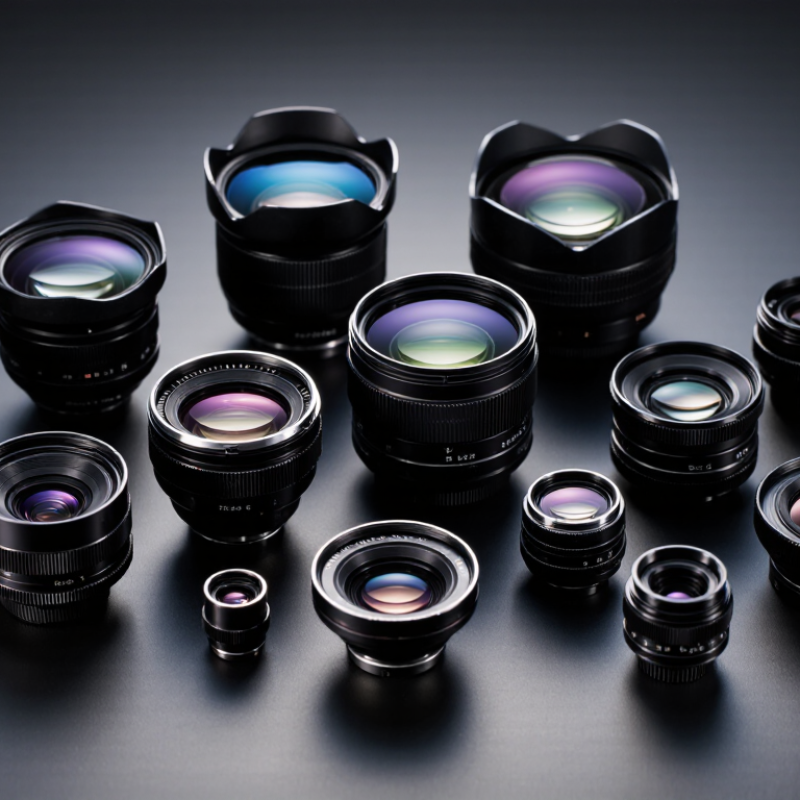
China Top 10 Optical Lens Manufacturers for Global Buyers?

Overview of China’s Optical Lens Manufacturing Industry

China’s optical lens manufacturing industry serves imaging, medical, automotive, and industrial applications. Its production base combines optical design, precision grinding, polishing, coating, and inspection. Capabilities vary widely: a supplier suited to compact camera modules may not handle large-diameter or high-precision optics. Details matter. Buyers should compare tolerances, coating specifications, and measurement methods, not just quoted prices.

Grand View Research’s 2024 Optical Lenses Market report estimated the global market at about US$19.4 billion in 2023, with a projected 6.7% compound annual growth rate from 2024 to 2030. This is a worldwide estimate, not a China-only figure. It signals broad demand, but does not prove every factory can meet the same quality level. In practice, sample consistency and documented inspection results are more useful than a polished capability list. Even a small mismatch in edge thickness can affect assembly.

Tips: Request sample measurements and coating test records. Ask how the supplier controls batch variation. A few clear questions can reveal gaps early.

China’s Optical Lens Manufacturing Industry: Typical Optical Material Refractive Indices

Refractive index is one factor buyers consider when selecting lens materials; optical performance, weight, durability, and manufacturing requirements also matter. Values shown are representative figures near the sodium D line and vary by material grade and wavelength. This is a material reference chart, not a comparison of company output or market share.

Main Types of Optical Lenses and Their Applications

Optical lens types shape how light is focused, corrected, or spread. Spherical lenses have curved surfaces and are common in cameras, projectors, and inspection equipment. Aspheric lenses reduce distortion and can support compact designs, such as phone cameras and barcode scanners. Achromatic lenses combine different glass elements to limit color fringing in microscopes and measurement systems. Cylindrical lenses focus light along one axis, making them useful for laser line generation and machine vision. Small details matter.

Application alone does not determine the right lens. Working distance, sensor size, field of view, wavelength, and lighting all affect performance. A lens that looks suitable on a specification sheet may produce soft edges or unwanted reflections in the actual setup. In practice, the neat chart rarely tells the whole story. Testing with the intended sensor and target is more reliable than choosing by focal length alone.

Tips: Check the lens’s usable image circle and mounting dimensions before purchase. For close-up inspection, confirm minimum focusing distance and depth of field. Keep samples under the same lighting and working distance you expect in use. Not always easy. A small change in spacing can alter focus, so leave room for adjustment during assembly.

How to Evaluate Chinese Optical Lens Manufacturers

When evaluating Chinese optical lens manufacturers, compare their capabilities against your actual application, not just catalog specifications. Share a clear drawing with focal length, diameter, center thickness, surface quality, and allowable tolerances. Ask how each measurement is inspected and what equipment is used. A tolerance listed on a quotation means little without a defined inspection method.

Request sample lenses and review them under consistent lighting. Check for scratches, edge chips, coating marks, and uneven reflections. For imaging applications, test focus and distortion in the intended assembly; a lens that looks clean may still perform poorly. Small details matter. Ask for inspection records from a recent production batch, plus details on coating durability and lot traceability. If a supplier cannot explain a test result plainly, treat that as a question to investigate, not automatic proof of poor quality.

Evaluate production stability as well as sample performance. Discuss monthly capacity, lead times, packaging, and how defects are handled. A factory visit or live video walkthrough can help verify equipment and process controls, though neither replaces independent testing. Compare several suppliers using the same sample requirements and scoring criteria. I would still leave room for uncertainty: drawings can miss real-world conditions, and early samples may not reflect every production lot. Build a small pilot order into the evaluation before committing to larger volumes.

Profiles of 10 Optical Lens Manufacturers in China

China’s optical-lens manufacturers vary in scale and technical focus, so these ten profiles describe capability types rather than ranked, named companies. One group specializes in precision spherical lenses for instruments. Another molds aspherical elements for compact optical assemblies. A third supplies camera lenses, while a fourth focuses on machine-vision optics for factory inspection. Medical-imaging suppliers often prioritize stable image quality and careful surface finishing. Coating specialists offer options such as anti-reflection layers. Custom-workshops handle small prototype runs. High-volume producers focus on repeatable dimensions and batch consistency. Glass-processing firms support grinding and polishing. Some suppliers combine several of these capabilities.

Details matter. Ask for optical drawings, tolerance ranges, coating specifications, and sample inspection records. A lens may look clear under room lights yet perform poorly at its intended wavelength. Request measurements suited to the application, such as focal length, centering, or modulation transfer function. Check how the supplier handles edge chips and lot traceability. These checks can reveal gaps before a larger order. Still, paperwork alone is not proof of consistent production. Independent sample testing is worth considering, especially when specifications are tight. That step takes time, but skipping it can be costly.

Sourcing, Quality Checks, and Export Considerations for Global Buyers

A useful supplier comparison starts with a precise request, not a broad search for the lowest price. Specify lens material, diameter, focal length, tolerances, coating needs, and expected order volume. Ask whether the factory handles design, tooling, polishing, coating, or only assembly. These details affect lead time and traceability. Request a drawing and a sample made to the same specifications as production. A sample may look perfect and still reveal little about batch consistency.

Check measurable performance under agreed conditions. Depending on the application, inspect focal length, surface defects, centering, dimensions, and coating uniformity. Ask for test methods and acceptance limits before production begins. For imaging lenses, request relevant resolution or modulation transfer data, rather than relying on appearance alone. Keep approved samples and inspection records. Small discrepancies matter. One honest complication: supplier test reports may use different setups, so results are not always directly comparable.

Before shipment, confirm protective packaging, carton markings, quantities, and document requirements with the supplier and freight provider. Glass lenses need clean, cushioned packing; moisture protection may also matter during long transit. Clarify who handles export paperwork and who pays freight, insurance, and import charges. Verify current destination requirements with qualified trade professionals. A checklist helps, but it will not catch every surprise. Recheck critical dimensions on a pilot batch, and document any approved changes in writing.

China Top 10 Optical Lens Manufacturers for Global Buyers? — Sourcing, Quality Checks, and Export Considerations

Use this comparison checklist to evaluate and rank suppliers. It focuses on verifiable capabilities and buyer checks; it does not identify or rank specific companies.

No. Evaluation area Evidence to request Buyer quality check Export and sourcing note
1 Product and process fit Product catalog, lens drawings, material options, process list, and examples relevant to the intended application. Confirm the supplier can make the specified lens type, geometry, coating, and tolerances; distinguish in-house processes from subcontracted work. Define the application, operating environment, and destination market before requesting quotations.
2 Optical specifications A controlled drawing or specification covering dimensions, focal length, surface quality, centering, and other required optical characteristics. Check that acceptance criteria and measurement methods are stated. ISO 10110 is a series of standards used for optical-element drawings and specifications. Agree on units, drawing revision, inspection records, and how deviations will be approved.
3 Materials and traceability Material grade, supplier documentation where available, batch identification, and a traceability procedure. Ask how incoming materials and production lots are identified and how records can be linked to the shipment. Confirm any destination-market material declarations or restricted-substance requirements that apply to the product.
4 Quality management Current quality-management-system certificate, its scope, issuing body, and certificate validity; request the inspection and nonconformance procedures. Verify certificate details with the issuer or accreditation information. ISO 9001 concerns quality-management systems; certification alone does not prove a particular lens meets its specification. Check whether the certified scope covers the relevant site and activities, rather than relying on a logo or certificate image alone.
5 Inspection and measurement Inspection plan, equipment list, calibration records, sample inspection report, and defined sampling or acceptance plan. Review sample reports against the drawing. Confirm measurement equipment and methods are suitable for the characteristics being checked. Specify whether inspection records or a certificate of conformity must accompany each shipment.
6 Coating and surface durability Coating design or specification, applicable performance data, and the supplier’s test and handling procedures. Confirm test conditions and acceptance limits match the intended use; request representative samples where coating performance is critical. State cleaning, packaging, storage, and handling requirements to reduce contamination or surface damage in transit.
7 Production capacity and lead time Quoted sample and production lead times, minimum order quantity, capacity assumptions, and a production schedule for the requested volume. Compare the quotation with a sample order and confirm how schedule changes, shortages, and rework are communicated. Separate manufacturing time from transit time, customs clearance, and any buyer approval or inspection period.
8 Sampling and change control First-article or sample approval process, revision-control method, and written notice procedure for changes to materials, processes, or production location. Approve a documented sample against agreed criteria before authorizing volume production; retain the approved drawing and sample record. Include change-notification and reapproval requirements in the purchase order or quality agreement.
9 Packaging and transport Packaging specification, protection method, carton details, and any handling or storage instructions appropriate to the lens. Evaluate a shipment-ready sample package and agree on a process for recording transit damage or shortages. Confirm packaging, insurance, shipment documents, and responsibility for freight and customs tasks before dispatch.
10 Commercial terms and compliance Itemized quotation, payment terms, warranty and claims process, proposed HS classification, and applicable compliance declarations. Check that quoted specifications, tooling charges, inspection costs, and delivery terms match the purchase order. Confirm classification with a qualified customs professional when needed. Name the Incoterms® 2020 rule and precise place in the contract; confirm export and import responsibilities, required documents, and destination-country rules.

Note: Certification, testing, labeling, and import requirements depend on the product and destination market. Confirm applicable requirements with the supplier and relevant trade or regulatory professionals.

FAQS

What does China’s optical lens industry produce?

It supports imaging, medical, automotive, and industrial applications. Production may include design, grinding, polishing, coating, and inspection.

Does market growth guarantee consistent lens quality?

No. A global report estimated the market at about US$19.4 billion in 2023. Growth does not prove every supplier meets the same standards.

Which lens types suit common applications?

Spherical lenses appear in cameras and projectors. Aspheric lenses can support compact designs. Achromatic lenses help limit color fringing, while cylindrical lenses focus light along one axis.

How can I choose a lens for my equipment?

Consider working distance, sensor size, field of view, wavelength, and lighting. Test it with the intended sensor and target. A specification sheet is not enough.

What details should a lens drawing include?

Share focal length, diameter, center thickness, surface quality, and allowed tolerances. Confirm how each value will be measured.

How should I inspect sample lenses?

Use consistent lighting. Check for scratches, edge chips, coating marks, and uneven reflections. Test focus and distortion in the intended assembly.

What should I ask about production quality?

Request recent inspection records, coating durability details, and lot traceability. Ask how defects are handled and how batch variation is controlled.

Is a factory visit enough to verify a supplier?

No. A visit or video walkthrough can show equipment and process controls, but independent testing still matters. I may be cautious, but a tour cannot show every production lot.

Should I place a large order after sample approval?

Consider a small pilot order first. Compare its results with the samples and confirm lead times, packaging, and capacity. Real assemblies can still reveal surprises.

Conclusion

China’s optical lens manufacturing industry serves a wide range of needs, from imaging and vision systems to consumer, industrial, and scientific applications. Optical Lens products vary in material, design, precision, and performance, so buyers should first define their intended use, required specifications, expected production volume, and budget. Understanding the differences among common lens types can help narrow the search and support clearer communication with potential suppliers.

When evaluating manufacturers, global buyers can consider production capabilities, quality-control procedures, customization options, communication, and experience with export orders. Comparing samples and technical documentation can help confirm whether a supplier meets project requirements. Before placing an order, buyers should also agree on inspection criteria, packaging, lead times, shipping arrangements, and after-sales support. A careful sourcing process can reduce misunderstandings and help establish a dependable supply relationship.

Ethan

Ethan

Ethan is a professional marketing specialist with a strong understanding of the company’s products, their practical applications, and the needs they are designed to meet. He brings together product knowledge, clear communication, and a customer-focused perspective to help readers make informed......